Deep Dive: Could You Build a Solar Panel Factory in Antigua and Barbuda?
When most people think of Antigua and Barbuda, they picture beaches, blue water, and that easy-going island vibe. That’s fair. But if you scratch beneath the travel brochure surface, there’s more to the story—especially when it comes to energy.
The reality? For a long time, Antigua and Barbuda has leaned hard on imported fossil fuels. It’s an expensive and not always steady system. Lately, the government has been taking solar seriously, harnessing its abundant sun in a way that finally makes sense.
Now here’s where things get interesting. With solar systems popping up everywhere, the default move is to import panels. But what if the main opportunity isn’t just installing them, but building them here from the ground up? That’s an angle worth exploring. This rundown covers the country’s business environment, its economic drivers, and the untapped potential for anyone thinking about actually manufacturing solar panels in Antigua and Barbuda.
Table of Contents
The Macro Environment: Antigua and Barbuda’s Business Climate
Ready to unlock your solar potential?
Start with our Free E-Course to grasp the fundamentals. Then, if you’re serious about turning your solar dream into a thriving reality, our Premium Business Plan E-Course offers personalized, one-on-one guidance to get you there.
Before putting money into any new venture, you have to look at the big picture. Antigua and Barbuda is different—heavily driven by tourism, with a government hungry for real growth and clear goals around sustainability. Foreign investment? They want it.
Economic Overview
This island nation runs on tourism, which typically makes up more than half its economy—sometimes close to two-thirds. But it doesn’t take a genius to see the risk in relying so heavily on travelers. That’s why the government keeps banging the drum about diversifying.
The country is bouncing back after the pandemic, aiming for steadier, more varied growth. On the financial side, the local currency (XCD) is pegged to the US dollar. If you’ve ever lost sleep over wild currency swings, you’ll appreciate the stability here.
Ease of Doing Business
Real talk—the World Bank’s 2020 report put Antigua and Barbuda at 113th out of 190 countries. That’s not exactly a dream for anyone who hates red tape. But officials know this, and they’ve publicly committed to improving the climate for investors. To start a business here, you’ll need to pay close attention to the processes for registration, getting credit, and navigating the legal system. One bonus: the country uses English common law, which is pretty straightforward if you’ve done business in a British-influenced system before.
Political and Social Stability
You won’t see political chaos here. Antigua and Barbuda is a stable parliamentary democracy within the Commonwealth, so you’re not waking up to a new government every year. The people are educated and more aware than ever about green energy and climate change. This means the public is already receptive to renewables.
Taxation and Fiscal Setup
Here’s something you don’t see every day: Antigua and Barbuda doesn’t have a personal income tax, capital gains tax, or inheritance tax. Depending on how you structure your business, that can save you a bundle. Corporate taxes are also on the lower side compared to similar places. Plus, there are often extra perks for green energy or manufacturing projects—worth digging into, as these deals change when the government rolls out new policies.
Ready to make big Profits?
The solar Industry is Booming
WE HELP NEWCOMERS to the solar industry start their own solar module production line. Customers can make BIG PROFITS by selling modules and finding investors, without wasting money and time on things they don't need!
The Solar Sector: Current State and Opportunities
Let’s be blunt: Antigua and Barbuda gets blasted by the sun. Solar irradiation is about as good as it gets in the Caribbean, and the government isn’t wasting it.
Solar Resources and Infrastructure
Projects already on the ground prove this isn’t just talk:
- The “Green Barbuda” effort aims to have Barbuda run almost entirely on solar during daylight hours. It’s a robust setup, too, built to survive major hurricanes.
- The V.C. Bird International Airport has a 3 MWp solar plant helping to power its operations.
As of early 2024, the country’s renewable energy capacity is 10.23 MW, all from solar. If you produce more power than you use, you can sell it back to the grid. Like in most growing solar markets, grid reliability and expansion need constant attention.
Government Policies and Support
The message from the top is clear: Antigua and Barbuda wants to reach 86% locally generated renewable energy by 2030. Some are already talking about 100%. The country has a policy roadmap and a formal action plan to get there.
External partnerships are making a difference, too. The UAE-Caribbean Renewable Energy Fund, for example, has helped bankroll some big projects. So far, the main incentives have targeted solar installations, but there’s a pattern: this government likes to make things easier for anything “green,” like waiving taxes on electric vehicles. With that attitude, it’s reasonable to think local manufacturing would get a thumbs-up, too.
Current Solar Market
Demand is high—for homes, businesses, and utility-scale projects. High electricity bills and a desire for energy security are fueling the rush. And here’s what matters most: almost every solar panel on the islands is imported. That’s not a gap—that’s a wide-open door.
Deep Dive: The Case for Solar Module Manufacturing
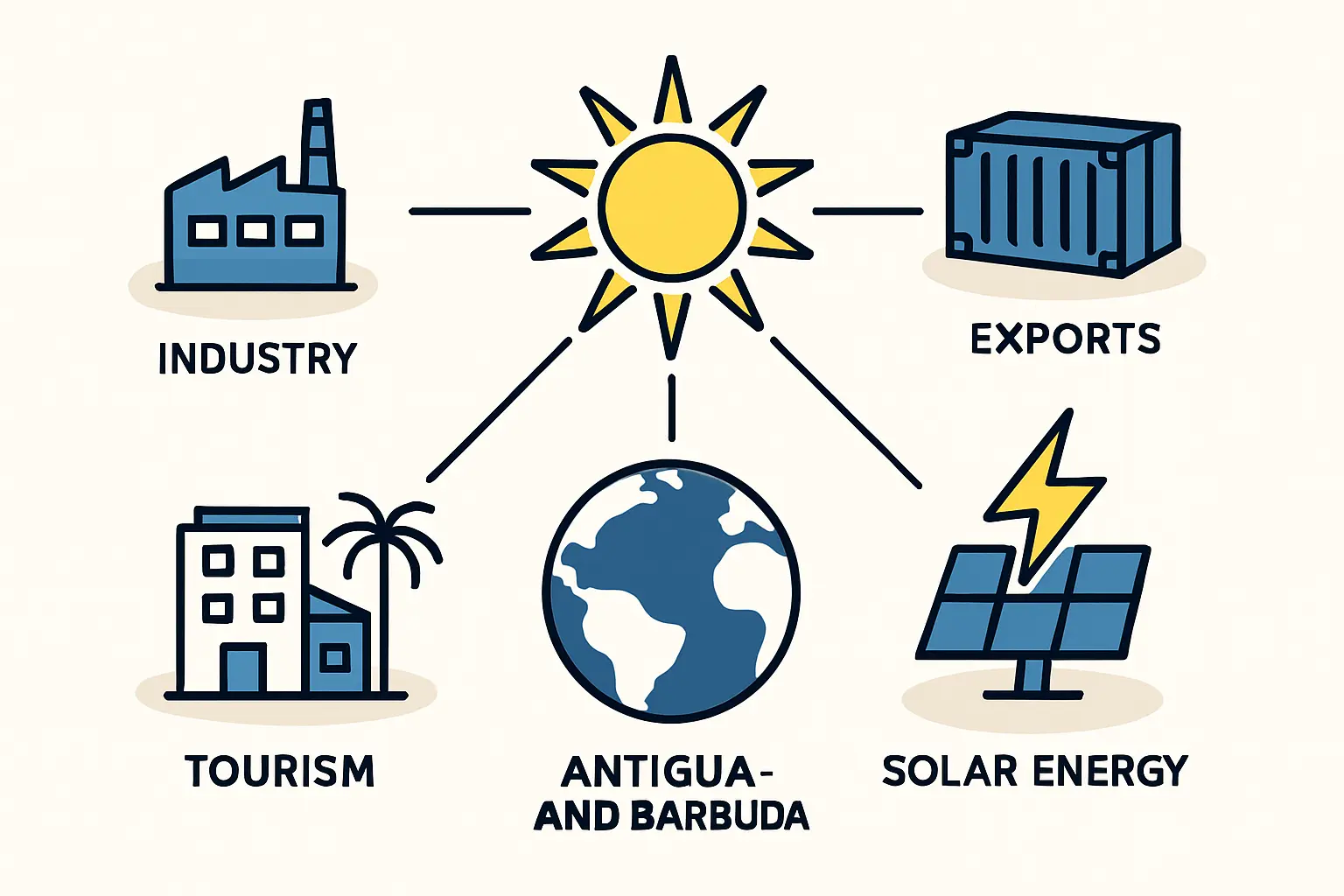
Buying solar panels overseas works for now. But the real way to move the needle is to build them locally. That could pay off for investors, the country, and even the wider region.
Market Potential
- Local Demand: With government backing, there’s a built-in customer base. If the country wants to hit its renewable targets, it will need a lot more panels.
- Regional Export: Antigua and Barbuda sits at a crossroads for CARICOM and the OECS. Neighboring islands also want to ditch imported hardware and chase green goals. If you build panels here, you’re suddenly positioned to serve the whole region.
- Customized Products: There’s room for more than just cookie-cutter panels. What about designing solar modules that can withstand a hurricane? Or panels sized for boats to serve the local marine sector? The niche markets are there if you know where to look.
Feasibility
- Labor: There’s an educated workforce, but you should expect to invest in specialized training for solar manufacturing. The foundational skills are there, but specific expertise will need to be built.
- Industrial Land: You’ll need to find suitable land with reliable power and proper waste management solutions. There’s big potential if the government decides to develop a green tech park.
- Logistics: Everything hangs on getting raw materials in and finished goods out. Ports and customs must flow smoothly, or you’re stuck.
- Challenges: Competing with cheap global panels is no joke. You’ll have to get creative and plan for supply chain headaches.
Financial Viability
Without a deep-dive study, here’s what jumps out:
- The government is likely to offer incentives for manufacturing green tech locally.
- You can eliminate a lot of international shipping costs.
- There’s a powerful story to be told about panels “Made in Antigua and Barbuda,” helping the country stand on its own two feet.
Navigating the Investment Landscape
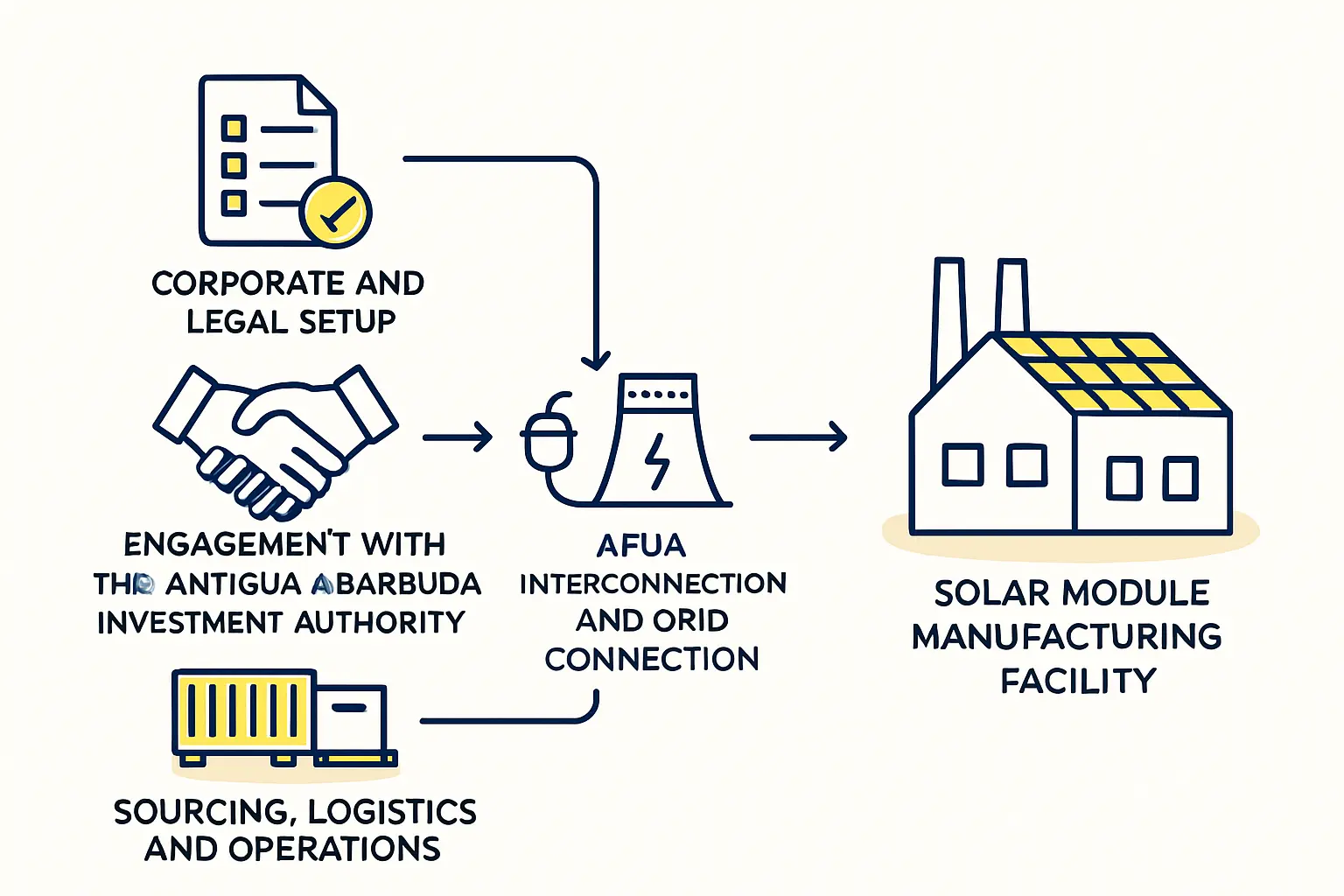
If you want to do this for real, you’ll need to know who to talk to, where the money is, and what can go wrong.
Key Agencies
Start with the Antigua and Barbuda Investment Authority (ABIA). It’s your main resource for getting through the paperwork and connecting with the right people.
Financing
Money for these projects can come from many places:
- Caribbean banks
- Development finance institutions that favor green projects
- Climate funds or green bonds
- Private investors looking for a sustainable edge
For context, a Stardust Solar franchise recently sold in Antigua for $50,000. In other words, outside money is already sniffing around.
Risks
Don’t ignore the downsides:
- Economic: Tourism still dominates, which makes the economy vulnerable to global shocks. On the flip side, manufacturing panels actually helps diversify and reduce that risk.
- Environmental: Hurricanes are a given. Any factory needs to be built to take a hit, and if you can make storm-ready panels, you’re solving a real problem.
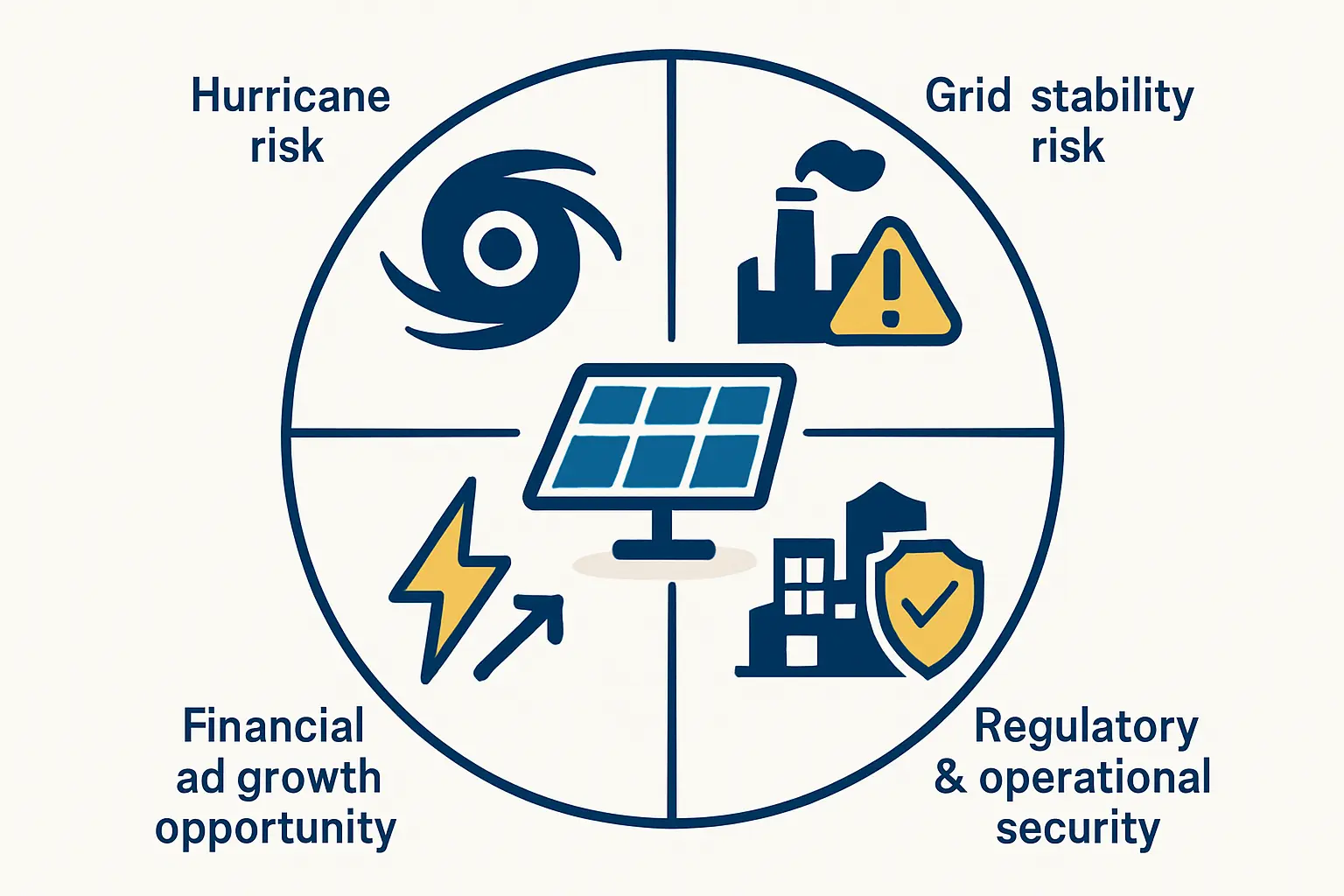
- Policy: The current government is all-in on renewables—but no one can predict the future. Lock things down legally.
- Operations: Getting supply chains humming, staff trained, and quality control dialed in is a challenge anywhere. You’ll need a solid plan.
Why Antigua and Barbuda? What Sets It Apart
Here’s a quick list of why this country is a prime candidate for solar manufacturing:
- Its location puts you in the perfect spot to serve neighboring islands.
- You’ve got a government on your side.
- The local workforce is ready for solid, long-term jobs.
- The tax advantages are hard to beat.
- Disaster resilience is in high demand; you’ll have buyers if your products deliver.
- The regional market is bigger than it looks; these challenges aren’t unique to Antigua and Barbuda.
- You’d be helping the country move toward energy independence.
Conclusion: Should You Go For It?
The short version: Antigua and Barbuda has the right mix of need, government support, workforce, and market opportunity. Manufacturing solar panels here isn’t just about business—it’s about making a real impact and being part of something bigger.
You’ll need to do your own numbers, but the building blocks are solid. For the right operator, this is a place to build a legacy, create good jobs, and drive change across the region—not just chase profits.
Thoughts? Have you seen similar plays in other Caribbean countries? Drop your take below.