With its abundant sunshine, Armenia is quickly becoming a prime destination for solar energy development. Its average annual solar energy flow is significantly higher than the European average (1,720 kWh/m² versus 1,000 kWh/m²).
The government’s ambitious renewable energy goals, often featured in Armenia renewable energy news, create a compelling opportunity for solar panel manufacturing. As of early 2024, Armenia’s installed solar capacity reached an impressive 402 MW, with solar energy becoming a significant contributor to domestic electricity generation. This growth signals fertile ground for investment.
However, like any venture in a dynamic market, establishing a solar module manufacturing facility in Armenia comes with unique challenges. A thorough understanding of potential risks and robust mitigation strategies is paramount for success.
Whether you’re an entrepreneur, an established company, or a public-sector stakeholder, this guide offers practical, experience-based insights to help you navigate the path from concept to a successful solar factory.
Table of Contents
THE ARMENIAN SOLAR LANDSCAPE: A SNAPSHOT
Before delving into the risks, it’s crucial to appreciate the context:
- Strong Solar Potential: Armenia enjoys high solar irradiation, making solar power a highly viable and efficient energy source.
- Government Support: The Armenian government is actively promoting renewable energy through various policies and is targeting an increased share of solar in its energy mix. Major projects like the planned 200 MW Aig-1 Solar Power Plant, expected to begin construction in early 2026, underscore this commitment.
- Growing Market: Domestic demand for solar panels is on the rise, driven by both utility-scale projects and autonomous energy producers. By 2024, over 11,000 of these autonomous solar producers were contributing significantly to the nation’s 402 MW solar capacity.
- Existing Local Production: Armenia already has established local manufacturing capabilities. Companies like Solaron (with a 60 MW annual capacity using Ecoprogetti lines) and LA Solar (with a 350 MW capacity leveraging Swiss Meyer Burger technology and exporting a significant portion of its products) demonstrate that solar manufacturing in the country is viable.
It is this backdrop of opportunity that makes a careful risk assessment all the more critical for sustainable success.
DEEP DIVE: POTENTIAL RISKS FOR SOLAR PANEL MANUFACTURING IN ARMENIA
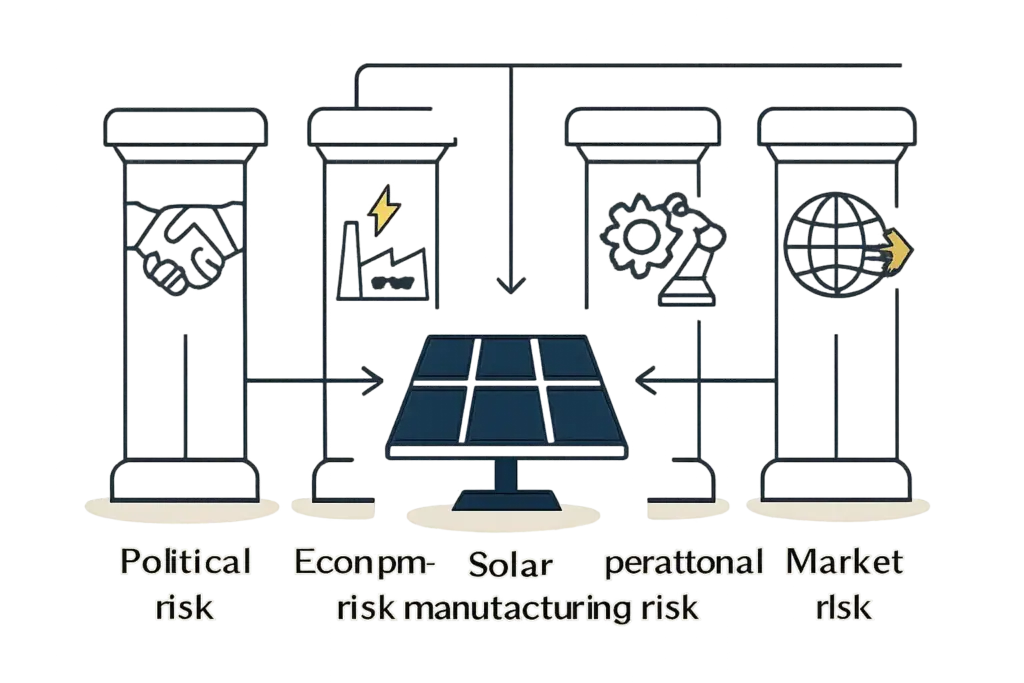
Understanding the full spectrum of potential challenges is the first step toward mitigating them. For anyone considering an investment in an Armenian solar factory, the risks generally fall into the following categories:
1. Political and Regulatory Risks
- Political Stability: While Armenia has made democratic strides, regional geopolitical factors and internal political dynamics can introduce uncertainties that warrant careful monitoring.
- Legal and Regulatory Framework: Investors need clarity and consistency in the legal system—from property rights and contract enforcement to dispute resolution. Bureaucratic hurdles and the efficiency of permitting processes can also impact project timelines.
- Trade Policies: Tariffs on imported raw materials (like silicon, glass, and EVA) and components, as well as export regulations for finished modules, can significantly affect cost structures and market access.
- Policy Changes: Sudden shifts in renewable energy support schemes, subsidies, or feed-in tariffs can impact the financial viability of manufacturing operations and the demand for locally produced panels.
2. Economic and Financial Risks
- Currency Volatility: Fluctuations in the Armenian Dram (AMD) against major international currencies (USD/EUR) can directly impact the cost of imported materials and the value of repatriated profits.
- Access to Finance and Cost of Capital: Securing affordable financing can be a challenge. The cost of capital in emerging economies, including Armenia, can be higher than in more developed markets.
- Inflation and Macroeconomic Stability: High inflation rates or general economic instability can erode profitability and investor confidence.
- Market Competition: Local manufacturers face intense competition from established global players, particularly from China, which benefits from massive economies of scale and lower production costs. Global overcapacity can also put downward pressure on prices.
- Local Market Dynamics: The purchasing power of the local market and its sensitivity to solar panel prices are crucial considerations.
3. Operational Risks
- Supply Chain Vulnerabilities: A heavy reliance on imported raw materials and components (polysilicon, solar glass, EVA films, backsheets, aluminum frames, junction boxes) can leave operations vulnerable to disruptions from geopolitical issues, logistics bottlenecks, or supplier unreliability.
- Infrastructure: Adequate and reliable infrastructure is crucial. This includes transportation (roads and potentially rail for bulk materials), a consistent power supply for the factory, and access to water.
- Skilled Labor: The availability of a skilled workforce, including technicians, engineers, and R&D personnel, is vital for efficient manufacturing and quality control. Significant training programs may be required.
- Technological Risks: The solar PV industry is defined by rapid technological advancements. To stay competitive, manufacturing lines require continuous upgrades, and diligent equipment maintenance is critical.
- Quality Control: Adhering to international quality and performance standards (e.g., IEC, UL) is essential for both domestic credibility and access to export markets.
- Occupational Health and Safety (OHS): Solar panel manufacturing involves handling hazardous materials and operating complex machinery, which demands stringent OHS protocols.
4. Market-Specific Risks (Armenia & Region)
- Domestic Market Size and Absorption: While growing, the absolute size of the Armenian domestic market needs careful assessment to ensure it can absorb the output of new manufacturing facilities alongside existing players.
- Grid Integration: The capacity and stability of the national electricity grid to integrate increasing amounts of solar energy can influence the overall pace of solar adoption.
- Regional Export Potential: Exporting to neighboring countries (like Georgia, Iran, Russia, or the EU via Georgia) presents significant opportunities, but it also involves navigating geopolitical complexities, trade agreements, and varying standards.
- Consumer Awareness and Adoption: Continued efforts may be needed to educate consumers and businesses on the benefits and reliability of locally manufactured solar panels.
5. Environmental Risks
- Hazardous Materials Management: The manufacturing process uses chemicals and materials that can pose environmental risks if not managed properly. This includes the disposal of manufacturing by-products and, eventually, end-of-life panels.
- Regulatory Compliance: Meeting Armenian environmental regulations for industrial operations—including emissions, waste disposal, and water usage—is mandatory.
- Resource Consumption: Solar panel manufacturing can be water- and energy-intensive. Efficient resource management is crucial not only for environmental sustainability but also for cost control.
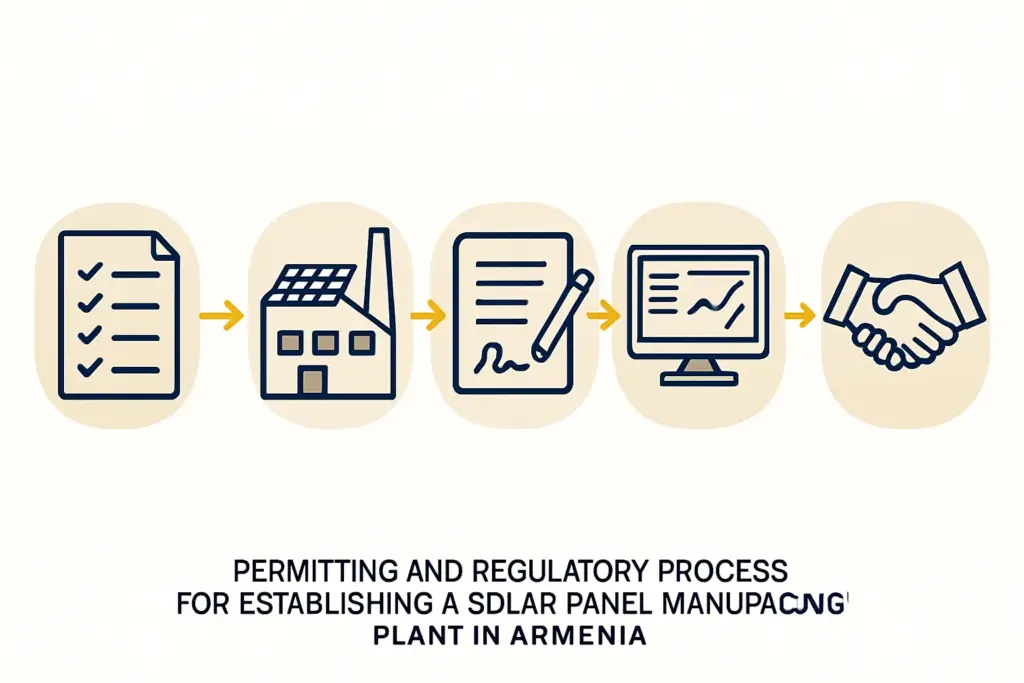
STRATEGIC MITIGATION: NAVIGATING THE CHALLENGES
A proactive approach to risk mitigation can significantly enhance the viability of a solar panel manufacturing project in Armenia.
1. Addressing Political & Regulatory Risks
- Due Diligence: Conduct thorough legal and political due diligence. Engage reputable local legal counsel deeply familiar with the business environment.
- Local Partnerships: Strongly consider partnering with established local businesses or stakeholders who understand the domestic landscape and regulatory environment.
- Government Engagement: Maintain open and consistent communication channels with relevant government agencies and industry associations. Advocate for stable and transparent regulatory frameworks.
- Insurance: Where appropriate, explore political risk insurance to protect your investment.
2. Mitigating Economic & Financial Risks
- Robust Financial Planning: Develop comprehensive financial models that include sensitivity analyses for currency fluctuations, inflation, and material costs.
- Hedging Strategies: Explore currency hedging instruments to manage foreign exchange exposure.
- Diverse Funding Sources: Explore a mix of financing options, from local banks and private equity to international development financial institutions (DFIs like EBRD, which has already supported LA Solar).
- Value Proposition: Instead of competing solely on price, focus on quality, technology, local service, and reliability. Highlight the tangible benefits of locally manufactured products.
- Phased Investment: Consider a phased approach to your investment, scaling up operations as market demand and financial stability are proven.
3. Overcoming Operational Risks
- Supply Chain Diversification: Avoid reliance on a single source. Diversify suppliers for critical raw materials and components, explore regional sourcing options where feasible, and build strategic relationships.
- Local Workforce Development: Invest in comprehensive training programs to build a skilled local workforce. Consider collaborating with local vocational schools and universities.
- Quality Management Systems (QMS): Implement robust QMS based on international standards like ISO 9001. Invest in modern, reliable manufacturing technology and rigorous testing protocols from the start.
- Technology Partnerships: Collaborate with experienced technology providers for state-of-the-art production lines and ongoing technical support. Companies like PVknowhow.com, for example, offer turnkey solar production lines and technology transfer.
- OHS Implementation: Develop and strictly enforce comprehensive occupational health and safety management systems that are compliant with international best practices.
- Inventory Management: Implement a smart inventory management system to buffer against potential supply chain disruptions for key imported components.
4. Tackling Market-Specific Risks
- Market Research: Conduct in-depth market research on domestic demand, competitor activities, and realistic export opportunities.
- Product Differentiation: Offer products tailored to local conditions or niche markets, such as high-efficiency modules, bifacial panels, or solutions for specific agricultural or industrial applications.
- Distribution Networks: Build strong local and, potentially, regional distribution channels and after-sales service networks. This can be a major competitive advantage.
- Advocacy for Grid Improvements: As an industry stakeholder, support or advocate for necessary grid upgrades to facilitate higher solar penetration.
5. Managing Environmental Risks
- Environmental Management System (EMS): Implement a formal EMS (like ISO 14001) to manage your environmental impacts systematically.
- Waste Management Plan: Develop and follow a comprehensive waste management plan that focuses on reduction, reuse, recycling, and the responsible disposal of any hazardous materials.
- Resource Efficiency: Design the factory and its processes for optimal water and energy efficiency. Consider using renewable energy sources for the factory itself.
- Compliance: Ensure full and proactive compliance with all Armenian environmental laws and regulations.
THE ARMENIAN ADVANTAGE: WHY INVEST DESPITE THE RISKS?
Despite the challenges, Armenia offers distinct advantages for solar panel manufacturing:
- Excellent Solar Resource: The fundamental driver—abundant sunshine—ensures high productivity for any solar installations in the country.
- Government Commitment: Strong government backing for renewable energy creates a supportive policy environment for investors.
- Growing Regional Demand: Proximity to other developing solar markets in the Caucasus region and beyond offers tangible export potential.
- Established Local Expertise: The presence of existing manufacturers like Solaron and LA Solar indicates a foundation of local know-how and a basic supply chain ecosystem are already in place. This provides a precedent and a potential pool of skilled labor.
- Strategic Location (Conditional): If regional stability permits, Armenia can serve as a valuable manufacturing hub connecting various markets.
- Free Economic Zones: Opportunities like the Alliance free economic zone (where LA Solar is located) can offer significant tax and customs benefits.
CONCLUSION: PAVING THE WAY FOR SOLAR SUCCESS IN ARMENIA
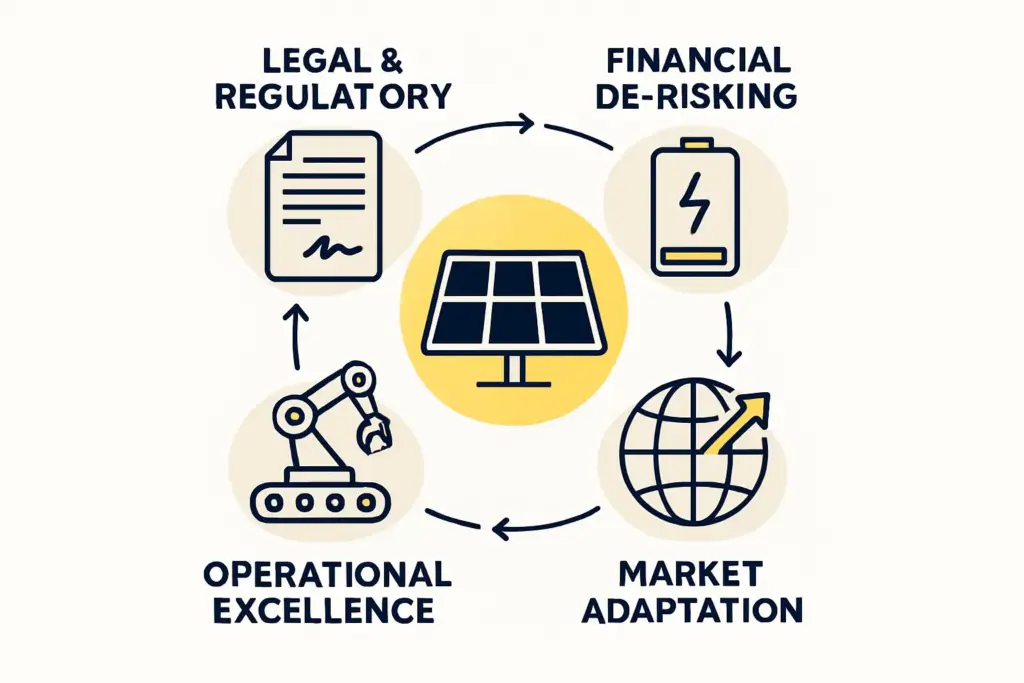
Investing in solar panel manufacturing in Armenia presents a tremendous opportunity driven by natural advantages and a supportive policy landscape. However, realizing this potential hinges on a clear-eyed assessment of the diverse risks involved—from political and economic uncertainties to operational and market challenges.
Ready to make big Profits?
The solar Industry is Booming
WE HELP NEWCOMERS to the solar industry start their own solar module production line. Customers can make BIG PROFITS by selling modules and finding investors, without wasting money and time on things they don't need!
By proactively identifying these risks and implementing tailored mitigation strategies, investors can successfully navigate the complexities of this emerging market. A thorough investment plan for a solar factory—built on due diligence, strategic partnerships, technological excellence, and a commitment to quality and sustainability—can pave the way for a successful and impactful venture. Armenia’s solar future is bright, and well-prepared investors can play a crucial role in shaping it.
Ready to turn this opportunity into a successful venture? Visit our free e-course to learn the basics, or explore our expert services for direct support. For a comprehensive roadmap, our Premium Business Plan E-Course offers personalized guidance to get your project off the ground. Let’s build your solar success story together.
FREQUENTLY ASKED QUESTIONS (FAQS)
Q1: What are the primary political risks for solar manufacturing in Armenia?
A: Key political risks include regional geopolitical tensions, domestic political stability, potential changes in renewable energy policies, and bureaucratic hurdles in permitting. Mitigating these involves thorough due diligence, engaging local legal counsel, and staying informed on policy developments.
Q2: How significant is the competition from Chinese solar panel manufacturers in Armenia?
A: Competition from large-scale Chinese manufacturers is a major factor globally, including in Armenia. [IEA] The most effective strategy for local producers is to compete on quality, advanced technology, and responsive local service rather than attempting to match the lowest price.
Q3: What are the main supply chain challenges for solar panel manufacturing in Armenia?
A: The primary challenge is the reliance on imported raw materials like polysilicon, solar glass, EVA, and aluminum frames. This creates vulnerability to global price changes, shipping delays, and customs. Diversifying suppliers and managing inventory are key mitigation tactics.
Q4: Is skilled labor readily available in Armenia for solar manufacturing?
A: While Armenia has a technically educated workforce, the highly specialized skills needed for advanced solar manufacturing will likely require development. Investment in robust training programs, possibly in partnership with local educational institutions, will likely be necessary. [PVKnowhow highlights skilled labor as a general industry need]
Q5: What kind of government incentives are available for solar manufacturing in Armenia?
A: The government supports renewable energy, and specific incentives can include tax benefits, particularly in free economic zones like Alliance, streamlined permitting, or support in accessing finance. Engage directly with bodies like Invest Armenia for the most current information.
Q6: What are the key environmental considerations for setting up a solar factory in Armenia?
A: Key considerations include the management of hazardous materials, proper waste disposal (including end-of-life panels), efficient water and energy use, and full compliance with Armenian environmental regulations. [HBR, Green.org] Implementing a formal Environmental Management System is highly recommended.
Q7: Can Armenian-made solar panels be competitive in export markets?
A: Armenian-made panels can be competitive in export markets, as demonstrated by LA Solar, which already exports a significant portion of its production. [lasolarfactory.com, EBRD] Competitiveness hinges on achieving international quality certifications (like IEC), offering a strong price-performance ratio, and effectively navigating regional trade agreements and logistics.