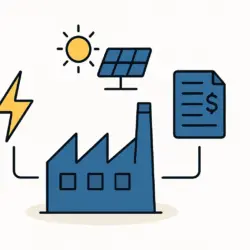
The Thai government is offering a new tax deduction for homeowners who install rooftop solar panels, aiming to boost the nation’s solar power capacity. This government incentive for solar panels allows individuals to deduct up to 50% of the installation cost from their personal income tax, capped at THB 50,000. The program is a crucial part of Thailand’s wider strategy to decrease its reliance on fossil fuels and enhance energy security.
Details of Thai solar tax incentives and homeowner eligibility
To encourage the installation of rooftop solar panels, the Thai government is rolling out a new tax incentive program. This initiative allows homeowners to deduct up to 50% of the installation cost from their personal income tax, with a maximum deduction of THB 50,000 (US$1,370). Energy Minister Pirapan Salirathavibhaga announced the program will begin in 2024 and span five years, potentially costing the government around THB 1.5 billion (US$41.1 million) in lost tax revenue.
Through this program, the government aims to add 300 megawatts of solar capacity to the national energy grid. Homeowners who participate can also sell excess electricity back to the grid at a rate of 2.25 baht (US$0.062) per kilowatt-hour, with these payments credited to their monthly electricity bills.
To qualify for the tax deduction, homeowners must install solar panels with a capacity of at least 3 kilowatts. This requirement is designed to ensure that participating installations contribute meaningfully to the country’s energy grid and the program’s overall impact. For more details, visit Thailand solar initiative: 7 Powerful Benefits of the Solar for All Program.
Goal of Thai solar tax incentives: Increasing national solar capacity
The program’s primary goal is to add 300 megawatts to Thailand’s solar power capacity, part of a wider strategy to reduce fossil fuel dependency and increase renewable energy use. For context, Thailand generated 3,372 megawatts of solar energy in 2022, accounting for 4.8% of its total electricity production.
Beyond promoting renewable energy, the program is designed to strengthen national energy security. Thailand currently imports about 60% of its energy, leaving the country vulnerable to global price fluctuations. By increasing domestic solar power generation, the government aims to reduce this reliance on imported fossil fuels. Learn more about Thailand’s energy transition at Thailand solar market Expansion: 7 Amazing Developments in 2023.
Financial effects of Thai solar tax incentives on homeowners and government
The tax deduction is expected to make solar panel installation more affordable, helping homeowners manage the upfront cost of solar panels in Thailand and encouraging greater participation. By lowering this financial barrier, the government aims to make solar power more accessible. The Energy Minister noted that the initiative also aligns with broader efforts to promote energy efficiency and sustainability.
Despite the projected THB 1.5 billion cost in lost tax revenue, the Energy Minister is confident the long-term benefits—including increased renewable energy capacity and improved energy security—will outweigh the initial expense. The government views this initiative as a key investment in the country’s future energy infrastructure. For an in-depth look, explore Thailand solar rooftop law: 5 Essential Changes for Simplified Installations.
Thai solar tax incentives and the path to net zero by 2065
This program supports Thailand’s ambitious goal of achieving net-zero carbon emissions by 2065. To meet this target, the government plans to increase the share of renewables in its energy mix to 50% by 2050. The rooftop solar initiative is a key component of this broader strategy, helping the country transition to a sustainable energy system.
The government’s plan also includes other renewable energy projects, such as wind and hydropower, aimed at diversifying the country’s energy sources for a more resilient system. The rooftop solar program is an essential step in this transition, helping to build the necessary infrastructure and raise public awareness about renewable energy. For further insights, check out Thailand Solar Power Quota Increased to 400 MW Annually for 2024.
Ultimately, the Thai government’s new tax incentive for rooftop solar installations is designed to increase national solar capacity while reducing reliance on fossil fuels. By making solar power more affordable and accessible through a significant personal income tax deduction, the government expects to add 300 megawatts of clean energy to the grid. This initiative is a critical step in helping Thailand move closer to its goal of achieving net-zero carbon emissions by 2065.