
For an entrepreneur entering the solar manufacturing sector, the choice of location has far-reaching financial implications. While logistics and labor are critical, government incentives can fundamentally alter a project’s viability and profitability.
This guide details the government grants, Barbados tax benefits, and financial programs available for setting up a solar module production facility in Barbados. It shows how these incentives can significantly reduce initial capital expenditure and improve long-term returns, transforming a potential investment into one of the most compelling Barbados business opportunities in the renewable energy sector.
Table of Contents
Why Barbados is Actively Encouraging Solar Investment
The Barbadian government’s support for solar manufacturing is a core component of its National Energy Policy (2019-2030). This policy aims to transition the nation away from its reliance on imported fossil fuels, enhancing energy security, stabilizing electricity costs, and creating a new pillar for economic growth.
As a nation committed to achieving 100% renewable energy by 2030, Barbados offers one of the most compelling fiscal environments in the Caribbean for investors. This level of government commitment creates a stable and predictable policy environment essential for long-term planning.
By incentivizing local production of solar modules, the government aims to:
- Build a local supply chain: Reduce dependence on international logistics for its own green energy projects.
- Create skilled employment: Develop a workforce with expertise in high-tech manufacturing.
- Establish an export hub: Position Barbados as a key supplier of solar technology to the wider Caribbean (CARICOM) region.
Core Financial Incentives for Solar Module Manufacturers
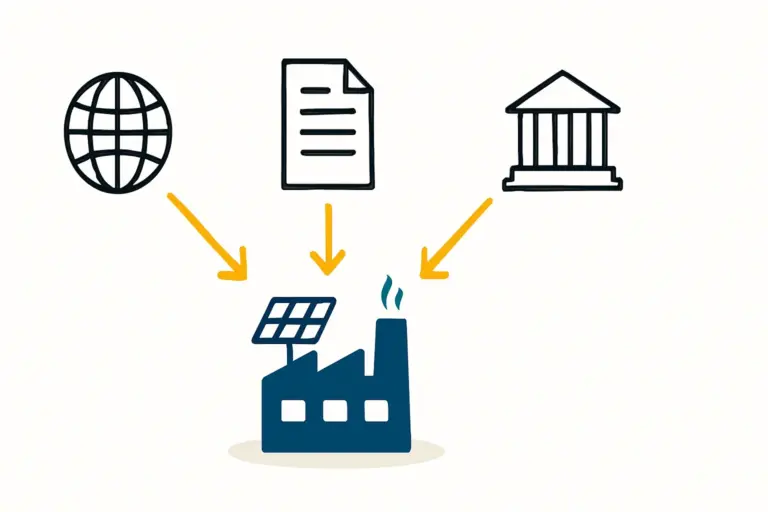
The government of Barbados offers a multi-layered incentive package through legislation specifically designed to attract foreign direct investment in strategic sectors. For a solar module manufacturer, the most relevant programs are the Fiscal Incentives Act and the Special Development Areas Act.
The Fiscal Incentives Act: The Primary Benefit Framework
The Fiscal Incentives Act is the cornerstone of Barbados’ offering. Designating a project as an “Approved Enterprise” unlocks a powerful set of benefits for a solar manufacturing company.
Key advantages include:
-
A Tax Holiday of up to 10 Years: Approved manufacturing enterprises are exempt from corporate income tax for up to a decade. This directly impacts profitability during the crucial early years of operation.
-
Duty-Free Importation: All machinery, equipment, spare parts, and raw materials needed for the construction and operation of the factory can be imported without customs duties or other import taxes. This substantially lowers the upfront investment required to start a solar panel factory (https://www.pvknowhow.com/investment-required-to-start-a-solar-panel-factory/), as heavy machinery accounts for a major portion of the initial budget.
Ready to make big Profits?
The solar Industry is Booming
WE HELP NEWCOMERS to the solar industry start their own solar module production line. Customers can make BIG PROFITS by selling modules and finding investors, without wasting money and time on things they don't need!
-
Exemption from Withholding Taxes: Dividends and other distributions paid to shareholders from profits accrued during the tax holiday are exempt from withholding tax.

These benefits create a highly favorable environment for capital-intensive projects like solar module assembly. Based on experience from J.v.G. turnkey projects, reducing initial equipment costs through duty waivers can improve a project’s internal rate of return (IRR) by several percentage points.
Special Development Areas Act: Location-Based Advantages
In addition to national fiscal incentives, the government offers further benefits for businesses established in designated “Special Development Areas.” This act is designed to encourage economic activity in specific geographic zones.
For an investor selecting a factory building (https://www.pvknowhow.com/the-ideal-factory-building-for-solar-panel-manufacturing/), choosing a location within one of these areas unlocks additional financial relief:
- Initial and annual allowances on capital expenditures for the building and equipment.
- Exemptions from property transfer tax and stamp duty on the purchase of the property.
This location-specific incentive provides another layer of cost reduction, targeting a project’s real estate and infrastructure expenses.
Export Allowance and Market Access
Recognizing that a modern solar factory will likely serve more than the local market, Barbados also incentivizes export-oriented production. Companies can claim an export allowance, which is a tax credit on profits generated from sales outside the CARICOM market.
This allowance, combined with Barbados’ trade agreements, makes the island a strategic base for accessing markets across the Caribbean and beyond. An entrepreneur can establish a facility to serve the guaranteed local demand driven by the 2030 energy goal while simultaneously building an export business for long-term growth.
Navigating the Application Process: A Practical Perspective
Accessing these substantial incentives requires a formal application. This process is managed by Invest Barbados, the country’s primary investment promotion agency, which serves as a dedicated facilitator and main point of contact for foreign investors.
The process involves submitting a detailed proposal outlining the project’s scope. A well-structured solar business plan (https://www.pvknowhow.com/how-to-write-a-solar-business-plan/) is the foundation of a successful application. Officials at Invest Barbados assess a project’s viability based on factors such as:
- The level of capital investment.
- The number of jobs to be created.
- The use of technology and potential for knowledge transfer.
- The company’s market strategy, including export potential.
A clear, comprehensive plan demonstrating a thorough grasp of the manufacturing process and business case is essential to securing “Approved Enterprise” status promptly.
A Comparison: How Barbados’ Incentives Impact the Bottom Line
To understand the tangible impact of these programs, consider a simplified comparison for a hypothetical 50 MW solar module factory.
| Investment Factor | Standard Jurisdiction (No Incentives) | Barbados (With Incentives) |
|---|---|---|
| Equipment & Materials Import | Full Cost + Avg. 15% Import Duty | Full Cost (No Duty) |
| Initial Building Costs | Full Cost + Property Taxes | Potential relief if in a Special Development Area |
| Corporate Tax (First 10 Yrs) | Standard Rate (e.g., 20-30%) applied to profits | 0% (Tax Holiday) |
| Net Result | Higher initial CAPEX and lower net profit in early years. | Significantly lower initial CAPEX and higher retained earnings for reinvestment and growth. |
Summary
In summary, Barbados presents a uniquely attractive proposition for entrepreneurs in the solar manufacturing industry. The government has strategically aligned its national energy goals with a robust package of financial incentives designed to directly mitigate investment risk and enhance profitability.
Understanding these programs is the critical first step in financial planning for your solar factory (https://www.pvknowhow.com/solar-panel-manufacturing-plant-cost/). For investors ready to seize this opportunity, the logical next step is to develop a comprehensive business plan and technical production concept. Expert guidance can provide the clarity and confidence needed to navigate the planning stages and secure your venture’s success.
Frequently Asked Questions (FAQ)
How long does the approval process for these incentives typically take?
The timeline can vary depending on the project’s complexity and the application’s completeness. However, Invest Barbados is mandated to facilitate the process, and a well-prepared business plan can help expedite approvals, which typically take several months.
Are these incentives only for large-scale factories?
No. While the framework is well-suited for large investments, it is flexible enough to support various scales. The key criterion is the project’s economic contribution and viability. This makes it feasible for entrepreneurs looking at starting a small solar factory (https://www.pvknowhow.com/how-to-start-a-small-solar-factory-with-less-than-30-employees/) as a first step.
Do I need a local partner in Barbados to qualify for these incentives?
A local partner is not a mandatory requirement for foreign investors. However, collaborating with local entities can sometimes streamline administrative and logistical processes, and joint ventures are often viewed favorably.
What happens after the 10-year tax holiday expires?
After the incentive period ends, the company transitions to the standard corporate tax regime. Barbados has a highly competitive general corporate tax rate, making it an attractive location even after the holiday expires.
Is there government support for training a local workforce?
Yes, the Barbadian government is committed to workforce development through programs like the National Transformation Initiative. There may be opportunities to secure grants or partner with local technical colleges to develop training programs tailored to the specific skills required for solar module manufacturing.

Solar plan investment