An entrepreneur entering the solar manufacturing space might view Barbados’s goal of 100% renewable energy by 2030 as simply an ambitious national target. A more experienced investor, however, recognizes it as a powerful, government-backed signal of opportunity. This commitment transforms the island into one of the most promising locations for a solar panel factory, supported by a clear policy framework and incentives for industry pioneers.
Navigating a new country’s regulatory landscape can be complex, involving multiple government agencies, specific legal requirements, and a deep understanding of local standards. This guide provides a clear, step-by-step overview of the approvals and permits required to establish a solar manufacturing operation in Barbados. It is designed for business professionals—experts in their own fields but new to the regulations of solar manufacturing.
Table of Contents
Why Barbados? The Strategic Advantage for Solar Manufacturing
At the heart of Barbados’s appeal is its National Energy Policy (NEP) 2019-2030. More than just a document, this policy is a strategic roadmap that actively encourages investment in renewable energy infrastructure. For an entrepreneur, this means the government is a potential partner, not an obstacle.
The country’s pro-investment stance is championed by Invest Barbados, the national investment promotion agency. This agency acts as a crucial facilitator, guiding foreign investors through the necessary procedures. Barbados’s position as a stable, well-regulated Caribbean hub also provides logistical and financial advantages for serving regional and international markets. As experience from J.v.G. turnkey projects shows, a supportive government framework is one of the most critical factors in shortening project timelines and mitigating risks.
The Core Regulatory Pathway: Key Agencies and Their Roles
Successfully establishing a factory requires working with several key government bodies. Understanding the function of each is the first step toward a smooth, efficient process.
Invest Barbados: Your First Point of Contact
For any foreign investor, the journey begins with Invest Barbados. This agency serves as your primary liaison, providing essential information on the business climate, investment incentives, and specific requirements for your sector. Their role is to streamline the process, connecting you with the right departments and ensuring your applications are correctly prepared.
Corporate Affairs and Intellectual Property Office (CAIPO): Formalizing Your Business
Before seeking operational permits, your business must be legally established. The Corporate Affairs and Intellectual Property Office (CAIPO) handles the registration of companies and business names. Whether incorporating a new local entity or registering an external company, CAIPO is the authority that ensures your business is formally recognized under Barbadian law.
Town and Country Development Planning Office (TCDPO): Securing Your Location
No physical construction or building modifications can begin without approval from the TCDPO. This office is responsible for land use planning and granting development permission. For a solar factory, this requires submitting detailed plans for the proposed facility, which are assessed against national building codes and zoning regulations. The TCDPO’s role is to ensure all development is safe, orderly, and in harmony with the surrounding environment.
Environmental Protection Department (EPD): Ensuring Sustainable Operations
As Barbados is a Small Island Developing State (SIDS), environmental protection is a paramount concern. The Environmental Protection Department (EPD) is responsible for safeguarding the nation’s natural resources. For a manufacturing project, the EPD will almost certainly require an Environmental Impact Assessment (EIA). This comprehensive study evaluates the factory’s potential environmental effects—from waste disposal to water usage—and outlines mitigation measures. Securing an environmental license from the EPD is a prerequisite for operation.
Ready to make big Profits?
The solar Industry is Booming
WE HELP NEWCOMERS to the solar industry start their own solar module production line. Customers can make BIG PROFITS by selling modules and finding investors, without wasting money and time on things they don't need!
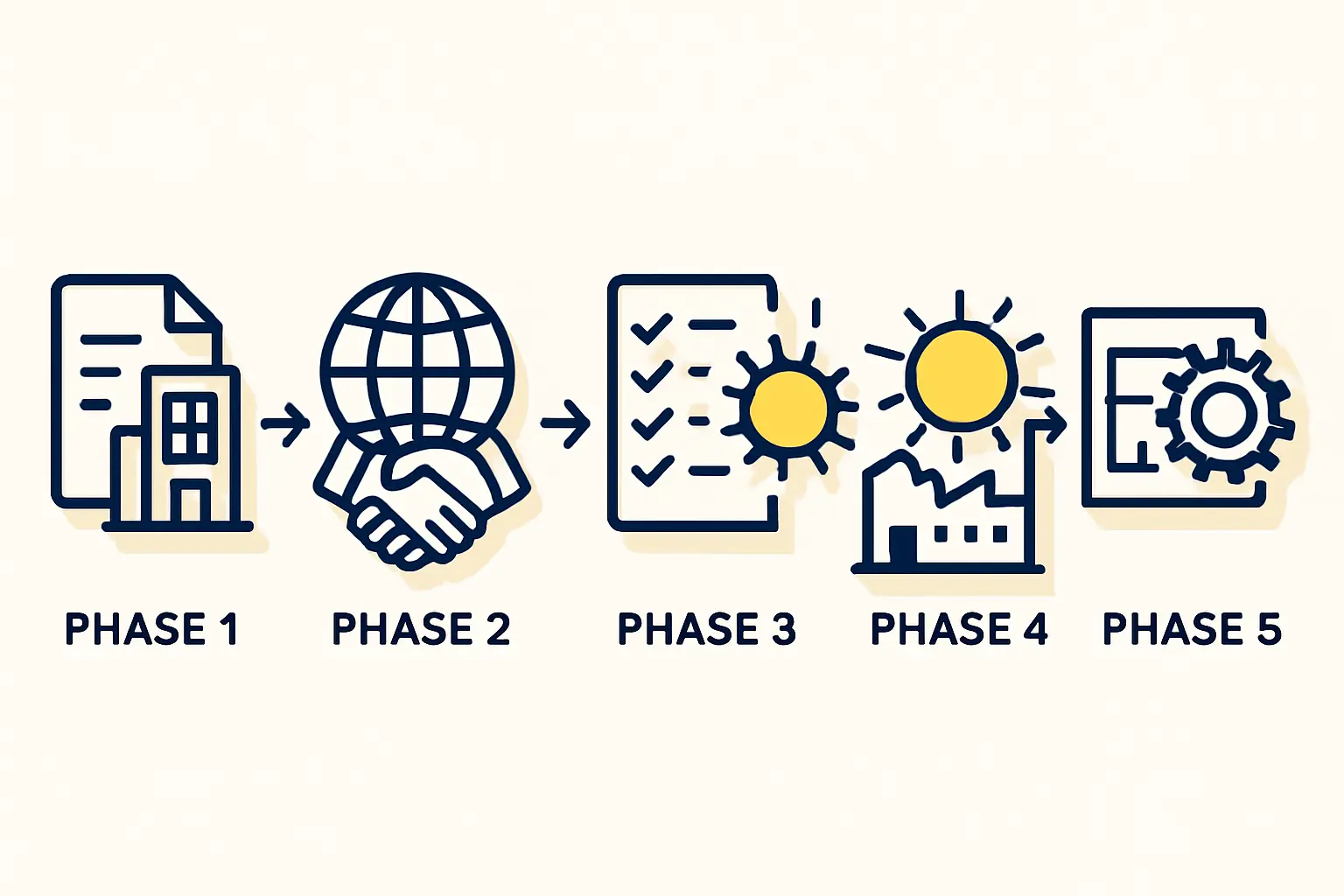
A Step-by-Step Approval Process for Your Factory
While the list of agencies may seem daunting, the process follows a logical sequence. A methodical approach, supported by professional guidance, makes it entirely manageable.
Step 1: Initial Engagement and Business Registration
Your first move is to contact Invest Barbados to discuss your project. Concurrently, you should begin registering your company with CAIPO. This foundational legal step is required before you can sign leases, open bank accounts, or apply for other permits.
Step 2: Site Selection and Due Diligence
Identifying a suitable location is critical. The Barbados Investment and Development Corporation (BIDC) manages several industrial parks that are ideal for manufacturing. These sites are typically pre-zoned for industrial use, which simplifies the planning approval process. Once a site is chosen, conduct thorough due diligence to ensure it meets all logistical and technical requirements.
Step 3: The Planning Permission and Environmental Assessment Phase
This is often the most detailed and time-consuming stage. You will submit your application for planning permission to the TCDPO. In parallel, you will commission and submit an EIA to the EPD. The two processes are interlinked, as planning permission is often contingent upon a favorable EIA report.
Step 4: Applying for Fiscal Incentives
Once your project has initial approvals, you can formally apply for fiscal incentives under legislation such as the Fiscal Incentives Act. These benefits can significantly reduce the overall solar panel manufacturing plant cost by providing tax holidays and, crucially, duty-free importation of essential equipment for solar panel production. This is a major financial advantage that directly impacts your project’s profitability.
Step 5: Construction and Final Licensing
With planning permission granted, you can obtain final building permits and begin constructing or renovating your facility. During this phase, the plans for a turnkey solar panel production line are put into action. Upon completion of construction and a final inspection by the EPD and other relevant bodies, you will be granted the final licenses to begin commercial operations.

Common Challenges and How to Prepare for Them
Entrepreneurs who successfully establish operations in new markets know to prepare for a few common hurdles.
- Bureaucratic Timelines: Government processes, while structured, can take time. Build buffer time into your project plan and engage with all agencies early. Patience and persistence are key.
- Securing Local Expertise: Navigating the nuances of Barbadian law and environmental regulations is best done with local support. Engaging reputable legal and environmental consultants is not an expense but an investment in a smoother, more predictable outcome.
- Meeting Environmental Standards: The EIA process is rigorous. Your operational plan must demonstrate a clear commitment to sustainable practices, including waste management, resource consumption, and pollution control.
Frequently Asked Questions (FAQ)
How long does the entire approval process typically take?
While every project is different, a realistic timeline for navigating all approvals—from initial registration to final operational licensing—is typically 9 to 18 months. Early and thorough preparation can help expedite the process.
What are the main costs associated with regulatory compliance?
Beyond standard application fees, key costs include legal counsel for company registration and contract reviews, and environmental consultants to prepare the Environmental Impact Assessment (EIA).
Do I need a local partner to start a business in Barbados?
While not legally mandatory, having a local partner is highly advisable for a foreign investor. A local partner or team of consultants can provide invaluable insight into the business culture and regulatory environment.
What happens after the factory is approved?
Once operational, your products must meet quality standards set by the Barbados National Standards Institution (BNSI). These local standards often align with international certifications, such as those from the International Electrotechnical Commission (IEC). Ensuring your products are certified is crucial for market access.
Your Next Steps on the Path to Manufacturing in Barbados
Barbados presents a compelling, policy-driven opportunity for solar manufacturing. Success, however, is not automatic; it requires a methodical, well-researched approach that respects the local regulatory framework. The critical first step is developing a comprehensive business plan that integrates these legal and environmental milestones from the outset.
For entrepreneurs embarking on this journey, understanding how to start a solar panel manufacturing business provides the foundation for building such a plan. Educational platforms like pvknowhow.com offer structured courses and resources that demystify the technical, financial, and logistical aspects of launching a solar factory, helping you turn a complex vision into a viable project.