An investor considering a new solar module factory might look at a map of Belize and see abundant open space. But the success of a multi-million-dollar investment often hinges on a single decision made long before the first foundation is poured: selecting the right site.
This choice is not merely about acquiring land; it’s a strategic move that will impact operational costs, logistical efficiency, and profitability for the life of the facility. This framework outlines the key technical and commercial criteria for evaluating potential factory sites in Belize, helping to de-risk the investment and lay the groundwork for a successful manufacturing enterprise.
Table of Contents
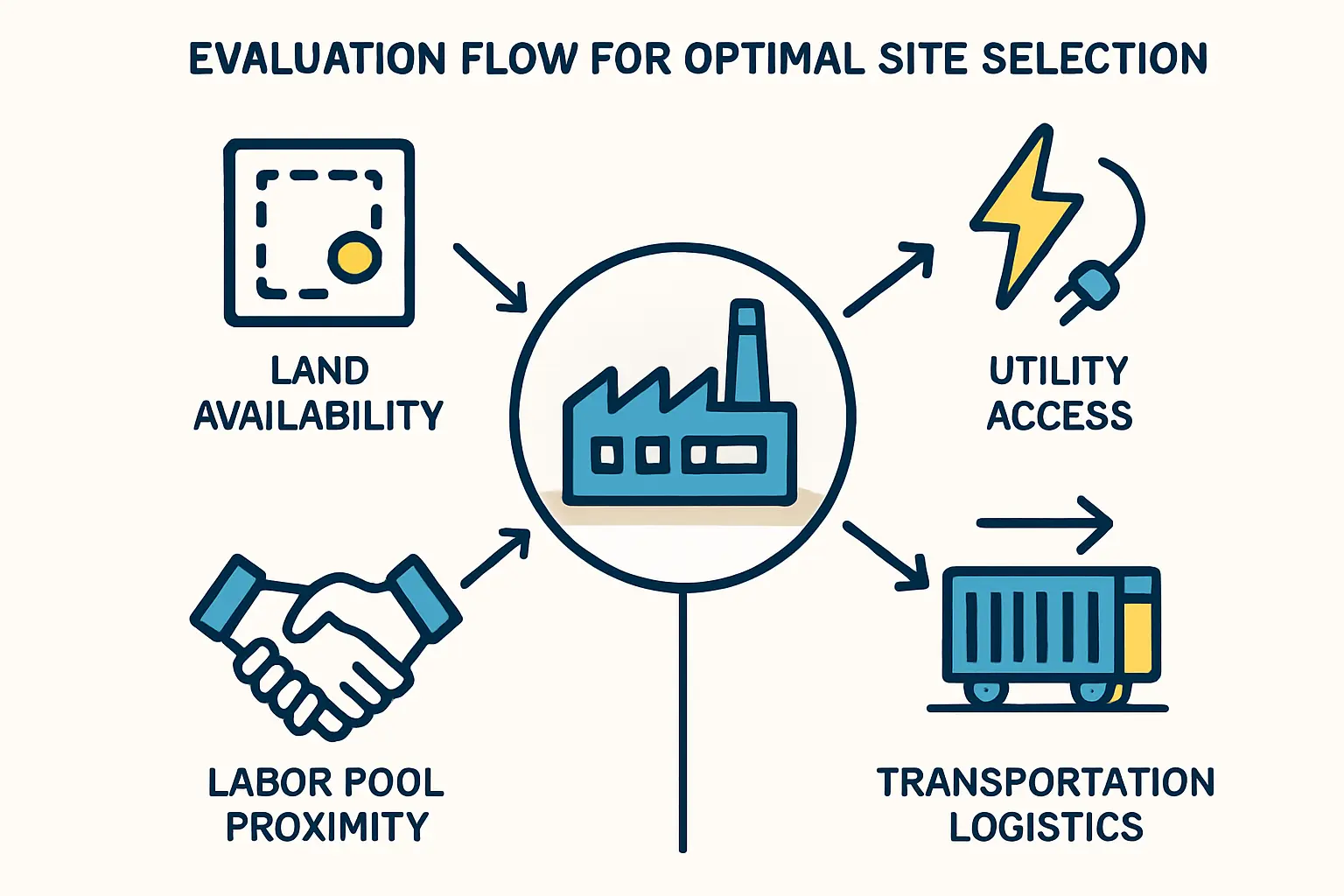
Foundational Criteria: The Four Pillars of Site Selection
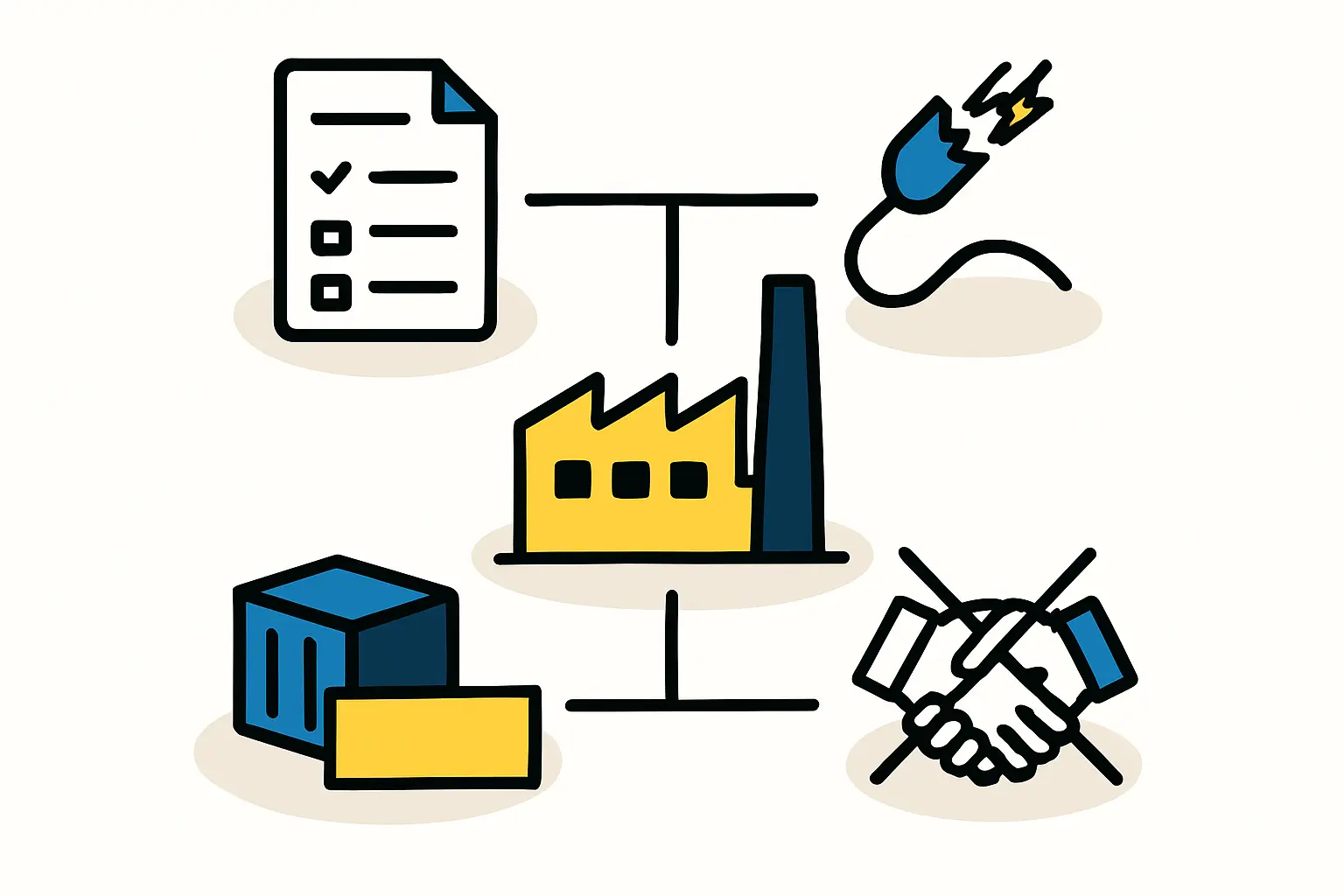
Evaluating a potential location for a solar module factory comes down to four essential pillars. An informed decision requires a thorough analysis of each.
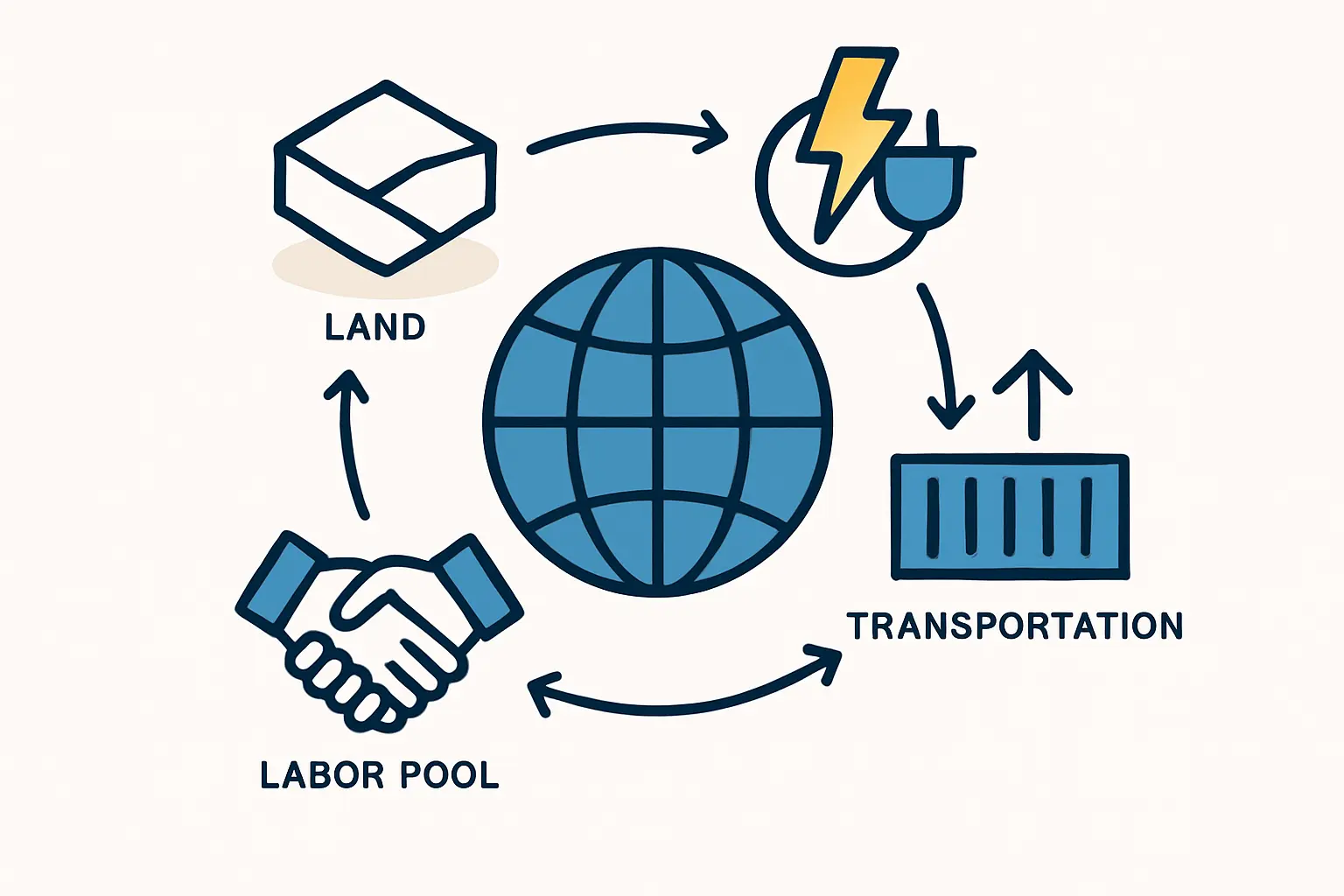
- Land and Utilities: The physical plot and its access to essential services.
- Logistics and Transportation: The efficiency of moving raw materials in and finished products out.
- Labor and Skills: The availability of a suitable workforce.
- Regulatory Environment: The impact of zoning, permits, and special economic programs.
A weakness in any one of these areas can create significant operational challenges and unforeseen costs.
Land Availability and Utility Access
The assessment begins with the physical land and its connection to critical infrastructure. A solar panel factory, even a semi-automated one, has specific requirements that go far beyond a simple plot of land.
Land Requirements
A typical semi-automated production line with an annual capacity of 20–50 MW requires a building of approximately 3,000–4,000 square meters. The total land area needed, however, is considerably larger—often between 5,000 and 10,000 square meters. This additional space is crucial for:
- Inbound Logistics: Unloading and temporary storage of 40-foot containers carrying raw materials like glass, solar cells, and aluminum frames.
- Outbound Logistics: Staging and loading finished solar modules for shipment.
- Ancillary Structures: Office space, staff facilities, and utility buildings (e.g., for backup generators).
- Future Expansion: Securing enough land to accommodate future growth is a prudent long-term strategy.
Utility Infrastructure
Reliable utilities are non-negotiable for manufacturing, making detailed, site-specific due diligence essential in Belize.
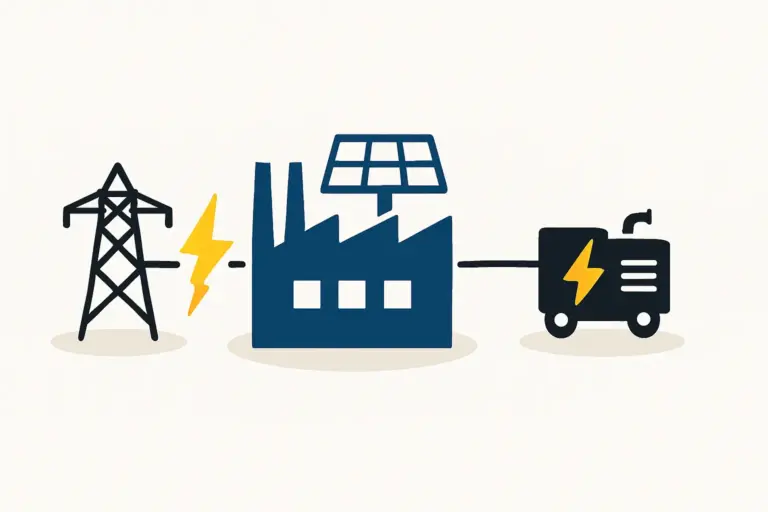
- Electricity: Belize Electricity Limited (BEL) is the country’s sole distributor of commercial electricity. While the national grid covers most of the country, production facilities cannot afford downtime. Experience from industrial projects in similar markets shows that relying exclusively on the national grid is a high-risk strategy. For this reason, budgeting for a backup diesel generator large enough to power the entire production line is essential for operational continuity.
- Water: Manufacturing processes and employee sanitation require a stable water supply. Potential sites must be assessed for their connection to the public water system managed by Belize Water Services (BWS) or for the viability of an on-site well.
- Telecommunications: A modern factory depends on stable, high-speed internet for communication, monitoring, and enterprise resource planning (ERP) systems. Although Belize has made significant progress in connectivity, the availability of fiber optic connections must be verified at the specific location.
Logistics and Transportation Infrastructure
A solar factory is a node in a supply chain. Raw materials sourced primarily from Asia must be imported, and finished modules must be transported to local project sites or to a port for export.
Road Network
The primary road arteries in Belize are the Philip S. W. Goldson Highway (connecting to Mexico) and the George Price Highway (connecting to Guatemala). A potential factory site must have reliable, year-round access to this main network. Inspecting the secondary roads leading to the site is also critical to confirm they can accommodate heavy 40-foot container trucks.
Seaports
Ready to make big Profits?
The solar Industry is Booming
WE HELP NEWCOMERS to the solar industry start their own solar module production line. Customers can make BIG PROFITS by selling modules and finding investors, without wasting money and time on things they don't need!
Proximity to a deep-water port is a major driver of cost and efficiency. Belize has two primary port facilities:
- The Port of Belize City: The country’s largest and best-equipped port, handling containerized cargo and general freight. Its location in the main commercial hub makes it a primary logistical asset.
- The Port of Big Creek: Located in the south, this is another official port of entry and a key facility for the region’s agricultural exports. It offers an alternative for factories in the southern districts.
Inland transportation costs from the port to the factory are a recurring expense that must be factored into the business model.
Airport
The Philip S. W. Goldson International Airport (PGIA) near Belize City is the main gateway for international travel and high-value air freight. Proximity to the airport is important for receiving technical experts and for the urgent shipment of spare parts.
Labor Force and Skills Availability
A semi-automated solar module production line with a 20-50 MW capacity typically requires 25 to 35 employees. This includes assembly line workers, technicians, quality control personnel, and administrative staff.
Belize has a young, English-speaking population, which is a significant advantage for training and operations. The ideal site should be within a reasonable commuting distance of a population center like Belize City, Belmopan, or Orange Walk Town to ensure a sufficient labor pool. Locating a factory in a remote area makes it difficult to attract and retain qualified staff.
While the general workforce is adaptable, specialized training on the production machinery is essential. This knowledge transfer is a critical part of any turnkey solar factory setup, ensuring the local team becomes fully competent in operating and maintaining the equipment.
The Strategic Advantage of Special Economic Zones (SEZs)
For any entrepreneur exploring solar market opportunities in Belize, understanding the country’s special economic zones is critical. The Export Processing Zone (EPZ) program offers substantial financial incentives that can fundamentally improve the viability of a manufacturing investment.
An EPZ is a designated area where businesses engaged in manufacturing for export receive a range of fiscal benefits. According to the Belize EPZ Act, companies operating within a zone are typically granted:
- Exemption from import and export duties on raw materials, capital equipment, and finished goods.
- Exemption from corporate income tax for a specified period.
- Exemption from property and land taxes.
- Streamlined customs and administrative procedures.
Locating a factory within a designated EPZ can drastically reduce both initial capital expenditure (through duty-free machinery imports) and ongoing operational costs. This regulatory advantage should be a primary factor in the site selection process.
A Practical Evaluation Framework
When comparing potential sites, a simple scoring matrix can help formalize the decision-making process and ensure all key factors are considered objectively.
| Factor | Key Question | Ideal Outcome |
|---|---|---|
| Land Size | Is there 5,000–10,000 m² of usable, level land? | Sufficient space for current needs and future expansion. |
| Grid Power | Is a connection to the BEL grid available? | Confirmed grid access with a fully commissioned backup generator. |
| Road Access | Can a 40-foot container truck access the site year-round? | Paved or well-maintained all-weather road access. |
| Port Proximity | What is the distance and cost to the Port of Belize City or Big Creek? | Minimized inland transport distance and cost. |
| Labor Access | Is the site within 30-45 minutes of a major town? | Easy access to a reliable pool of potential employees. |
| EPZ Status | Is the site located within a designated EPZ? | Full eligibility for all fiscal and customs incentives. |
Frequently Asked Questions (FAQ)
Q1: What is the typical land size required for a small to medium-sized solar factory?
A: For a production line with a capacity of 20–50 MW per year, a land parcel of 5,000 to 10,000 square meters (approximately 1.2 to 2.5 acres) is recommended. This provides adequate space for the factory building, materials storage, logistics, and potential future expansion.
Q2: How important is being inside an Export Processing Zone (EPZ)?
A: It is highly significant from a financial perspective. The exemptions from import duties on machinery and raw materials, along with tax holidays, can dramatically lower the initial investment and improve the long-term return on investment, representing a major strategic advantage.
Q3: Can I rely solely on the national electricity grid for production?
A: Based on extensive experience with industrial startups in similar markets, this approach is not advisable. To prevent costly production stoppages, a reliable backup power source, such as a suitably sized diesel generator, should be considered a mandatory part of the initial factory setup.
Q4: Which district in Belize is generally considered the best for industrial development?
A: The Belize District offers a strong combination of logistical advantages, including the nation’s main seaport and international airport, as well as the largest labor pool. However, sites in other districts like Cayo or Stann Creek (near the Port of Big Creek) may present unique opportunities and should be evaluated on their own merits using the criteria outlined above.
Ultimately, selecting the right site is a foundational step requiring careful, methodical analysis. By evaluating potential locations against these technical, logistical, and regulatory criteria, an investor can mitigate risks and establish a solid foundation for a thriving solar manufacturing operation in Belize. This due diligence is the first critical milestone on the path to production.