For many entrepreneurs in the solar industry, the primary challenge is finding a stable, predictable customer base, which can make competing in the global market daunting. Yet, significant opportunities are often found closer to home through domestic, government-backed initiatives, particularly in nations with ambitious rural development goals.
Bolivia is a compelling example of just such a market, where national policy has created a clear demand for off-grid solar solutions. This analysis explores the business case for a solar module manufacturing facility in Bolivia focused on supplying the country’s rural electrification programs—a market driven not by speculation but by concrete government objectives and pressing social needs.
Table of Contents
Understanding the Bolivian Market Context
The foundation of this business opportunity lies in Bolivia’s energy landscape. According to the Ministry of Hydrocarbons and Energies (MHE), approximately 1.8 million people—representing around 270,000 households in rural and isolated areas—still lack access to electricity. To address this, the government has set a clear national goal: 100% electricity coverage by 2025.
Bolivia’s challenging geography, spanning the Andes mountains and the Amazon basin, makes extending the national grid to every remote community both technically and financially unfeasible. As a result, decentralized, off-grid solutions—predominantly solar photovoltaic (PV) systems—have become the cornerstone of the national electrification strategy. This creates a substantial, multi-year demand for solar modules directly supported by state policy.
The Strategic Advantage of Local Production
While importing solar modules is an option, a local manufacturing facility offers distinct advantages that can make it a more competitive and resilient supplier for government and NGO projects.
Bypassing Logistical Hurdles
Bolivia’s landlocked geography presents significant logistical hurdles for importing fragile goods like solar modules. Shipments must pass through neighboring countries, incurring extra costs, administrative delays, and a higher risk of damage.
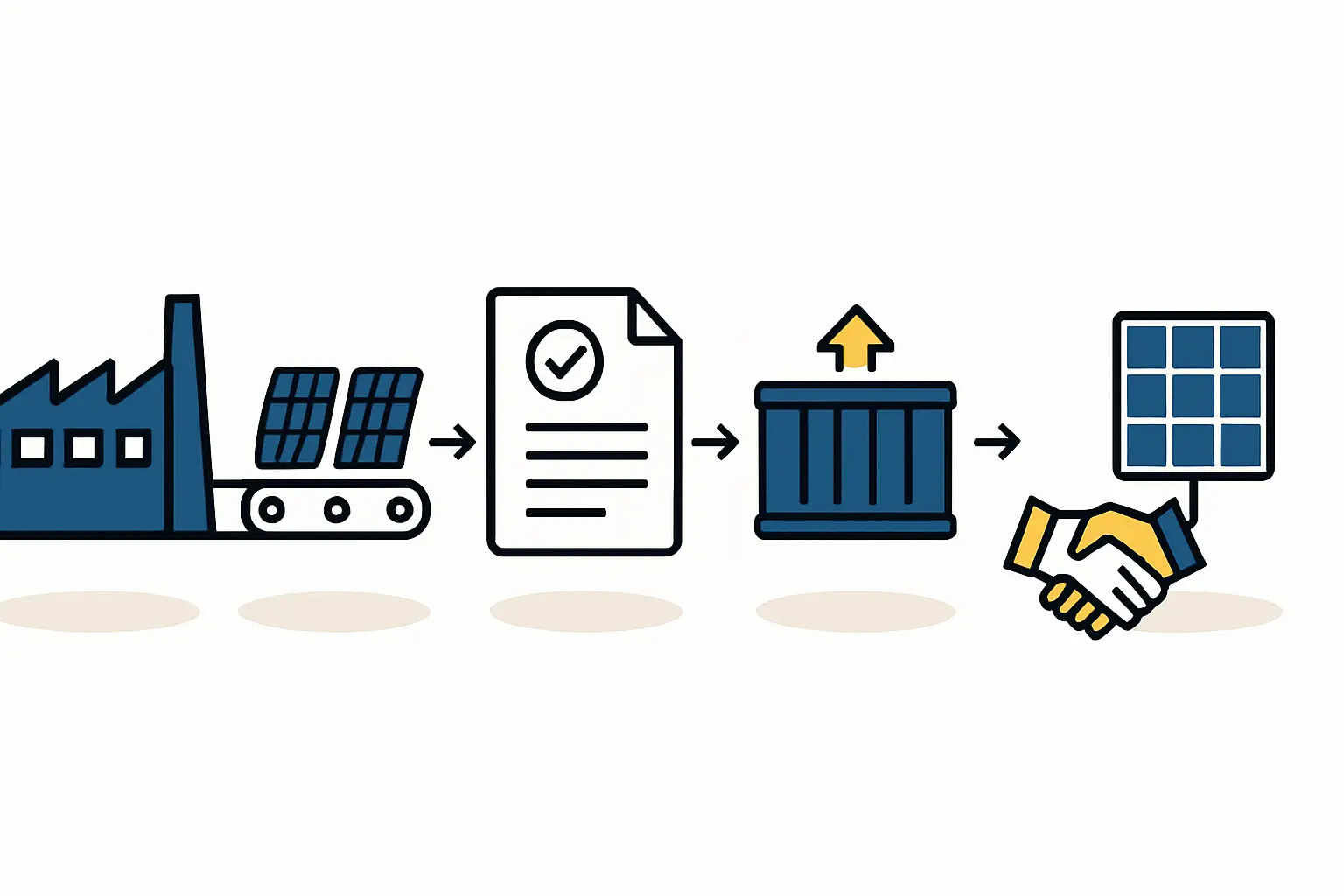
A local assembly line circumvents many of these issues by importing more compact and durable raw materials, like solar cells, instead of finished panels. This approach to domestic production ensures a more reliable supply chain, reduces transportation costs, and minimizes product loss—all critical factors when fulfilling large government tenders with strict delivery schedules.
Aligning with Government Incentives
The Bolivian government actively encourages investment in renewable energy through legislation. Key policies, like Law No. 757 for the Promotion of Investment and Law No. 1205 on the Generation and Transmission of Electric Energy, provide a framework of incentives. These often include tax exemptions or reductions on imported equipment and components used to manufacture renewable energy technologies.
A local producer can leverage these fiscal benefits to lower production costs and improve price competitiveness against fully imported modules, which are typically subject to higher duties.
Meeting Project-Specific Needs
Rural electrification projects often require modules with specific characteristics. Smaller, lower-wattage panels (e.g., 100-200W), for instance, are frequently easier to transport over difficult terrain and better suited for individual household systems. A local manufacturer can quickly adapt production to meet the exact specifications of a tender, offering a level of customization and responsiveness that international suppliers cannot easily match.
Ready to make big Profits?
The solar Industry is Booming
WE HELP NEWCOMERS to the solar industry start their own solar module production line. Customers can make BIG PROFITS by selling modules and finding investors, without wasting money and time on things they don't need!
Sizing the Opportunity: A Practical Framework
The goal of electrifying 270,000 rural households provides a clear metric for estimating the total addressable market. A typical solar home system for basic lighting and appliance charging requires an average of 300 watts of solar capacity.
Based on this conservative estimate, the total market demand for these programs is approximately:
270,000 households × 0.3 kW per household = 81,000 kW or 81 Megawatts (MW)
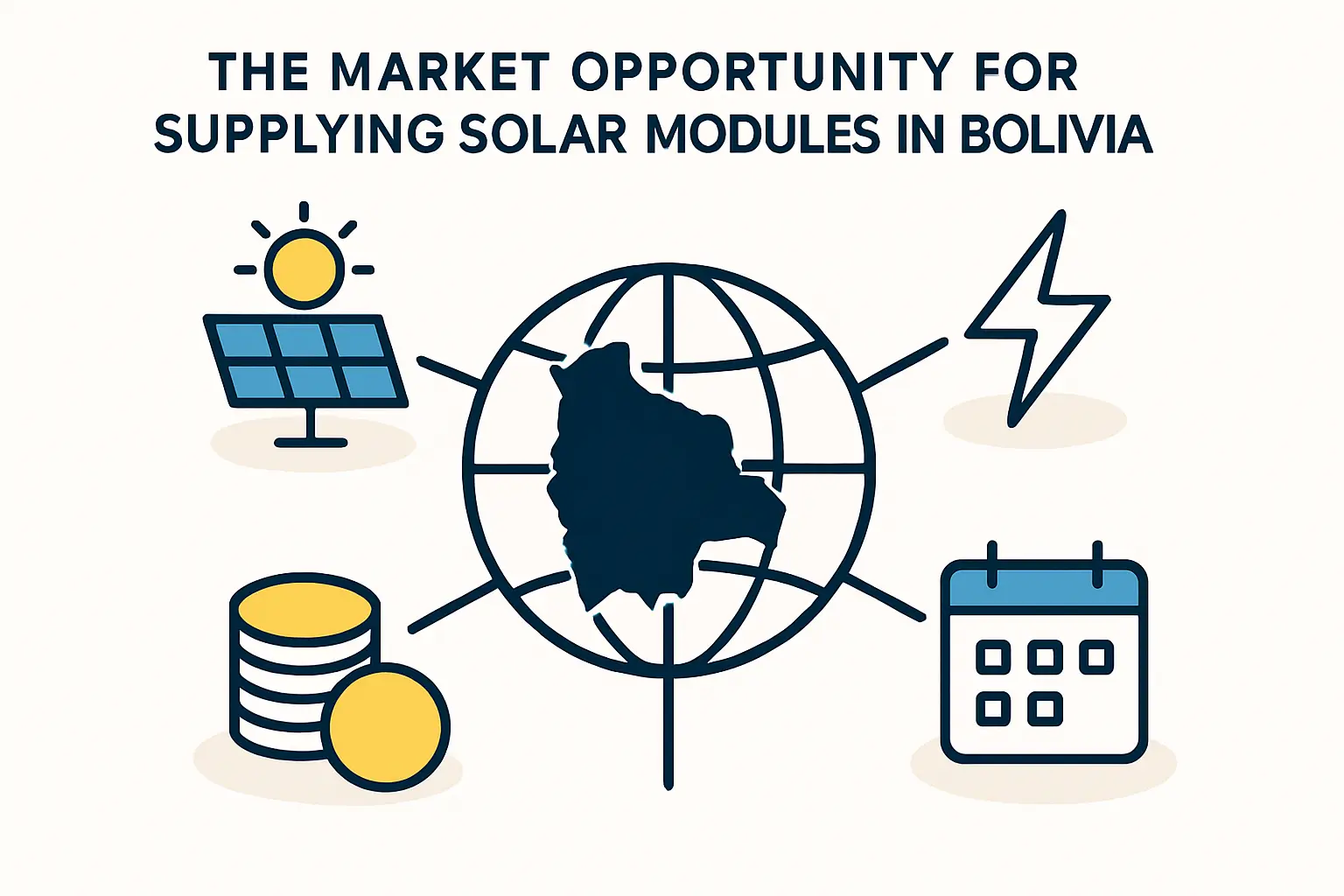
This 81 MW represents the total volume of solar modules required to complete the current national program. Phased over several years, this demand creates a sustained pipeline of orders. A 20–50 MW solar module production line would be well-positioned to capture a significant share of this multi-year demand and establish itself as a key partner in achieving Bolivia’s development goals.
Operational Considerations for a Bolivian Solar Factory
Establishing a manufacturing presence requires careful planning that goes beyond market analysis. Experience from J.v.G. turnkey projects in similar emerging markets highlights two critical areas.
Workforce and Training
A small-scale solar panel manufacturing business requires a team of trained technicians and operators, making a robust training program an essential component of the business plan. By investing in local talent, a company not only ensures operational excellence but also aligns with national objectives for job creation and technology transfer, strengthening its position as a valuable local partner. A typical 20-50 MW semi-automated line can be operated by approximately 25-30 employees per shift.
Supply Chain for Raw Materials
While the finished product is assembled locally, most raw materials—solar cells, EVA encapsulant, backsheets, and tempered glass—will have to be imported. The business plan must therefore establish reliable supply chains for these components. Although this still involves importation, managing a supply chain for raw materials is fundamentally more efficient and less risky than importing large, fragile finished modules.
Frequently Asked Questions (FAQ)
What is the primary customer for a solar factory in Bolivia?
The primary customers are government agencies, like the Ministry of Hydrocarbons and Energies (MHE), and the state-owned electricity companies that execute electrification programs. National and international non-governmental organizations (NGOs) working in rural development are also significant customers.
Is it cheaper to import modules from China?
While a Chinese module’s factory gate price may be lower, its total landed cost in Bolivia can be significantly higher. This includes international shipping, inland transportation, insurance, import tariffs, and the cost of potential damage or delays.
A local manufacturer, especially one benefiting from tax incentives, can often compete effectively on the total cost while offering superior reliability and customization.
What kind of solar modules are needed for these projects?
The demand is typically for smaller, highly durable modules suitable for standalone systems. Standard 60-cell or 72-cell modules are common, and cost-effective technologies like polycrystalline are often preferred to maximize the reach of project budgets. A key advantage is the ability to produce robust panels that can withstand transportation on unpaved roads.
What level of investment is required?
The cost of manufacturing equipment is a key factor, but understanding local market dynamics is equally critical. A semi-automated production line with a 20-50 MW capacity can be established with a well-defined capital investment, providing a scalable entry point into the market.
Conclusion: A Defined Path to Market Entry
Bolivia’s market for off-grid solar represents a structured, predictable business opportunity. The demand is not speculative; it is quantified by government policy and driven by clear national needs. For an entrepreneur, this context reduces market risk and provides a direct line of sight to a primary customer base.
By establishing a local manufacturing facility, a business can build a powerful competitive advantage based on logistical efficiency, alignment with government incentives, and the ability to meet specific project requirements. With a solid market understanding and a well-planned operational setup, entering the Bolivian solar sector becomes a tangible objective for entrepreneurs seeking to build a sustainable and impactful business.