For many international entrepreneurs, the solar manufacturing landscape appears dominated by large-scale Asian producers. Competing on volume or price alone can seem insurmountable, especially when targeting the rapidly growing markets in the Middle East and North Africa (MENA).
However, focusing on location, quality certification, and logistics—not just production—can unlock a significant competitive advantage. This analysis explores the compelling business case for establishing a solar module factory in Cyprus. Its unique position combines the benefits of EU membership with unparalleled proximity to the MENA region, creating a powerful export model for discerning investors.
The Geographic Advantage: Bridging Europe and the Middle East
At first glance, a map reveals Cyprus’s obvious locational benefit: it sits at the crossroads of Europe, Asia, and Africa. For a solar module manufacturer, this is more than a geographical curiosity—it’s a core logistical asset.

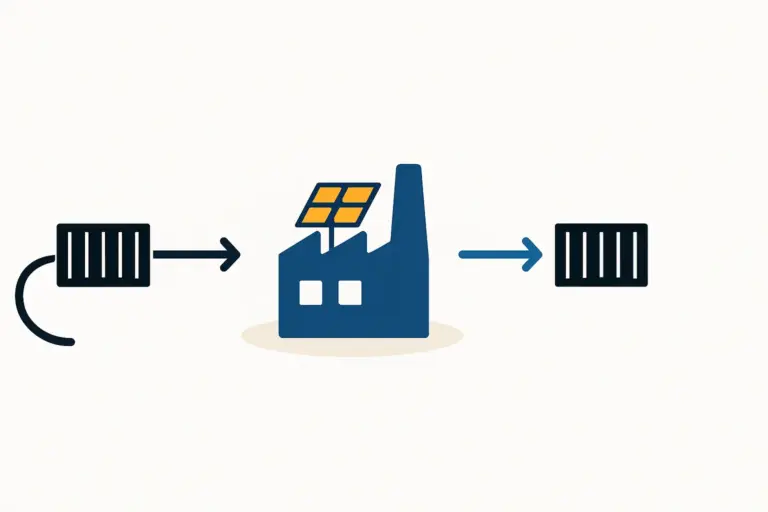
Factories in East Asia face shipping times of several weeks to reach key MENA ports, whereas a manufacturing base in Cyprus dramatically shortens this timeline. The major ports of Limassol and Larnaca are strategically positioned for rapid deployment:
- Port Said, Egypt: Approximately 1-2 days shipping time.
- Beirut, Lebanon: Approximately 1 day shipping time.
- Ashdod, Israel: Approximately 1 day shipping time.
The result is faster order fulfillment, lower inventory carrying costs, and a more responsive supply chain—all critical advantages when supplying large-scale energy projects with tight deadlines.
The “Made in EU” Stamp: A Mark of Quality and Trust
As a full member of the European Union, goods produced in Cyprus carry the “Made in EU” designation. In the global solar market, this is a powerful differentiator. For institutional buyers, commercial developers, and government tenders in the MENA region, this label signifies adherence to some of the world’s most stringent quality and safety standards.
Achieving the necessary EU certification for solar modules is a rigorous process, but it builds immediate trust and credibility. This certification assures clients that the modules have been manufactured to precise specifications (such as IEC and TÜV standards) regarding performance, durability, and safety.
This mark of quality can justify a premium price point and open doors to projects where reliability is non-negotiable, setting a Cypriot-based producer apart from competitors focused solely on cost.
Navigating Trade: Tariffs, Agreements, and Market Access
Beyond quality perception, EU membership offers tangible financial benefits through established trade agreements. The Euro-Mediterranean Association Agreements, for instance, are bilateral treaties between the EU and several Mediterranean countries, including Egypt, Jordan, Israel, and Lebanon.
Ready to make big Profits?
The solar Industry is Booming
WE HELP NEWCOMERS to the solar industry start their own solar module production line. Customers can make BIG PROFITS by selling modules and finding investors, without wasting money and time on things they don't need!
These agreements are designed to promote economic integration by creating a free-trade area. For a solar module manufacturer in Cyprus, these agreements often allow products to be exported to partner countries with reduced or eliminated customs duties. This creates a significant cost advantage over modules imported from countries without similar trade arrangements, making the final product more competitive in the target market.
Producing within the EU also insulates a business from certain trade disputes and anti-dumping duties that can be levied on products from other regions, adding a layer of financial predictability and stability to the export model.
A Favourable Business Environment for Manufacturing
A strategic location is only viable if supported by a stable and business-friendly environment. Cyprus offers a robust framework for international investors:
- Low Corporate Taxation: At 12.5%, the corporate tax rate in Cyprus is one of the lowest in the European Union.
- Strong Legal Framework: The legal system is based on English common law, providing a familiar and reliable structure for international contracts and business operations.
- Skilled Workforce: The country has a well-educated, multilingual workforce, with English widely spoken in professional circles.
Together, these factors create an environment where establishing and operating a manufacturing facility is straightforward and financially efficient. With proper guidance, the process from initial planning to a fully operational production line is highly manageable. Entrepreneurs investigating this opportunity often begin by developing a comprehensive business plan for a solar factory that accounts for these local advantages.
The Assembly Process: From Plan to Production
Setting up a solar module factory is a significant undertaking, but the process is structured and achievable. It involves securing a facility, procuring machinery, training staff, and establishing quality control protocols.
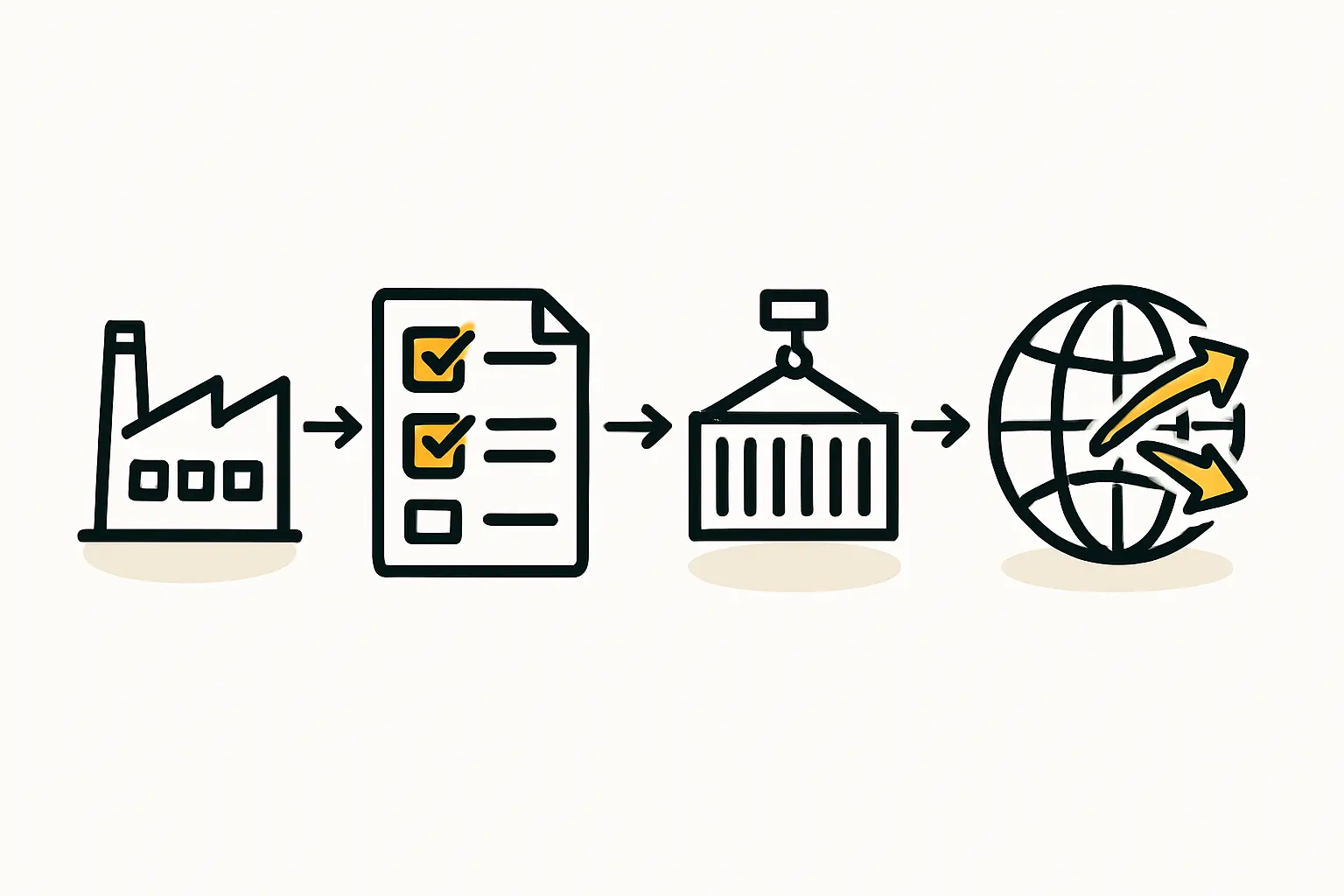
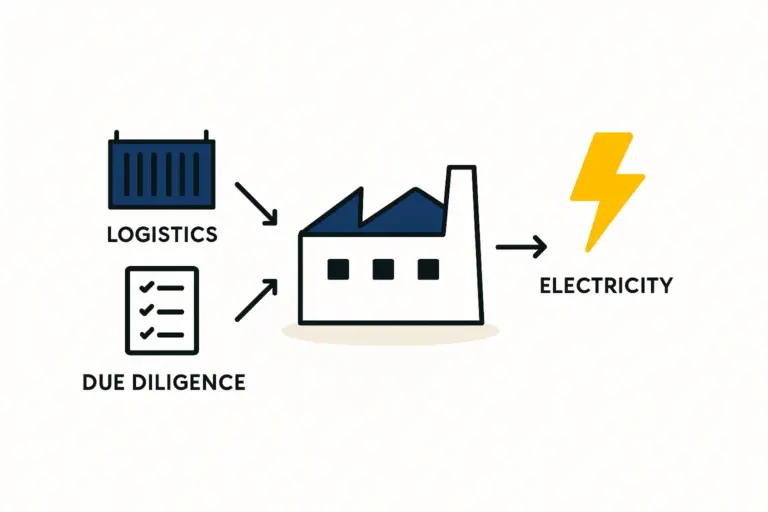
Modern solar module manufacturing turnkey solutions streamline the entire process. Based on experience from J.v.G. turnkey projects, a new facility can become operational in under a year with focused planning. The initial cost of setting up a solar module factory is a key consideration, but the clear market access and competitive advantages of a Cyprus location make the investment more secure. Educational platforms like pvknowhow.com provide structured guidance to help entrepreneurs navigate each stage of this process, from financial modeling to final certification.
Frequently Asked Questions (FAQ)
Why not manufacture directly within a MENA country?
While local manufacturing has its own benefits, a Cyprus-based factory offers a unique combination of advantages: the prestigious “Made in EU” branding, preferential access through EU trade agreements, and the political and economic stability of an EU member state. This blend is difficult to replicate directly within the target markets.
What is a typical production capacity for a new factory in Cyprus?
A common starting point for a new solar module assembly line is between 50 MW and 200 MW per year. This scale is substantial enough to serve large projects while remaining manageable for a new entrant. The production lines are modular and can be scaled up as the business and market demand grow.
How complex is it to obtain EU certifications for solar modules?
The process is detailed and requires strict adherence to quality and manufacturing standards, but it follows a well-defined pathway. Reputable turnkey line providers typically integrate the certification process into their setup and training programs, guiding the new factory through every step required to meet the standards of bodies like TÜV.