At first glance, establishing a high-technology manufacturing facility in a remote atoll nation like Kiribati might seem counterintuitive. The logistical hurdles appear immense.
Yet for a discerning investor, the region’s unique economic landscape reveals a compelling business opportunity rooted in a fundamental need: affordable, reliable energy. This analysis examines the strategic decision at the heart of such a venture: should a new solar module factory focus exclusively on supplying the domestic market in Kiribati, or should it be positioned as an export hub for neighboring Pacific Island nations? The answer rests on a careful evaluation of local demand, logistical costs, and long-term growth potential.
Understanding the Kiribati Context: A Market Defined by Need
The business case for local solar manufacturing in Kiribati is built not on convenience, but on economic necessity. Two key factors define the nation’s energy infrastructure:
-
High Electricity Costs: With an electricity tariff around $0.40 USD per kilowatt-hour, Kiribati has some of the highest energy prices in the world. This cost places a significant burden on households, businesses, and government services.
-
Diesel Dependency: Over 90% of the country’s electricity comes from imported diesel fuel, making the economy highly vulnerable to volatile global oil prices and supply chain disruptions.
These factors create strong, inherent demand for a cheaper, locally sourced energy alternative. Alongside this demand, government initiatives like the Kiribati 20-Year Vision signal strong political will to transition towards renewable energy, suggesting a favorable investment environment. A local solar module factory directly addresses this national priority by offering a path toward energy independence and economic resilience.
Business Model 1: Focusing on the Local Kiribati Market
A strategy centered on the domestic market is the most direct approach, prioritizing import substitution and energy security.
The Demand Side
Primary customers within Kiribati would include government bodies for utility-scale projects, commercial enterprises seeking to reduce operational costs, and residential users burdened by high electricity bills. While the total market size is modest compared to larger countries, the demand is acute and immediate. A local manufacturer can also offer solutions tailored to specific community needs, such as microgrids for outer islands.
Financial and Operational Advantages
A local-first model presents a compelling financial case. By manufacturing in-country, a business can circumvent the substantial shipping costs and import tariffs that apply to modules from Asia or Europe. This cost advantage allows for competitive pricing while still achieving healthy margins.
Ready to make big Profits?
The solar Industry is Booming
WE HELP NEWCOMERS to the solar industry start their own solar module production line. Customers can make BIG PROFITS by selling modules and finding investors, without wasting money and time on things they don't need!
From an operational standpoint, this model is simpler. Logistics are confined to inter-island transport, customer relationships are direct, and the business can build a strong brand as a national industrial champion. This makes it a lower-risk, foundational strategy focused on securing a stable and predictable revenue stream. A comprehensive solar panel manufacturing business plan would be essential to model the precise cost savings and pricing structure.
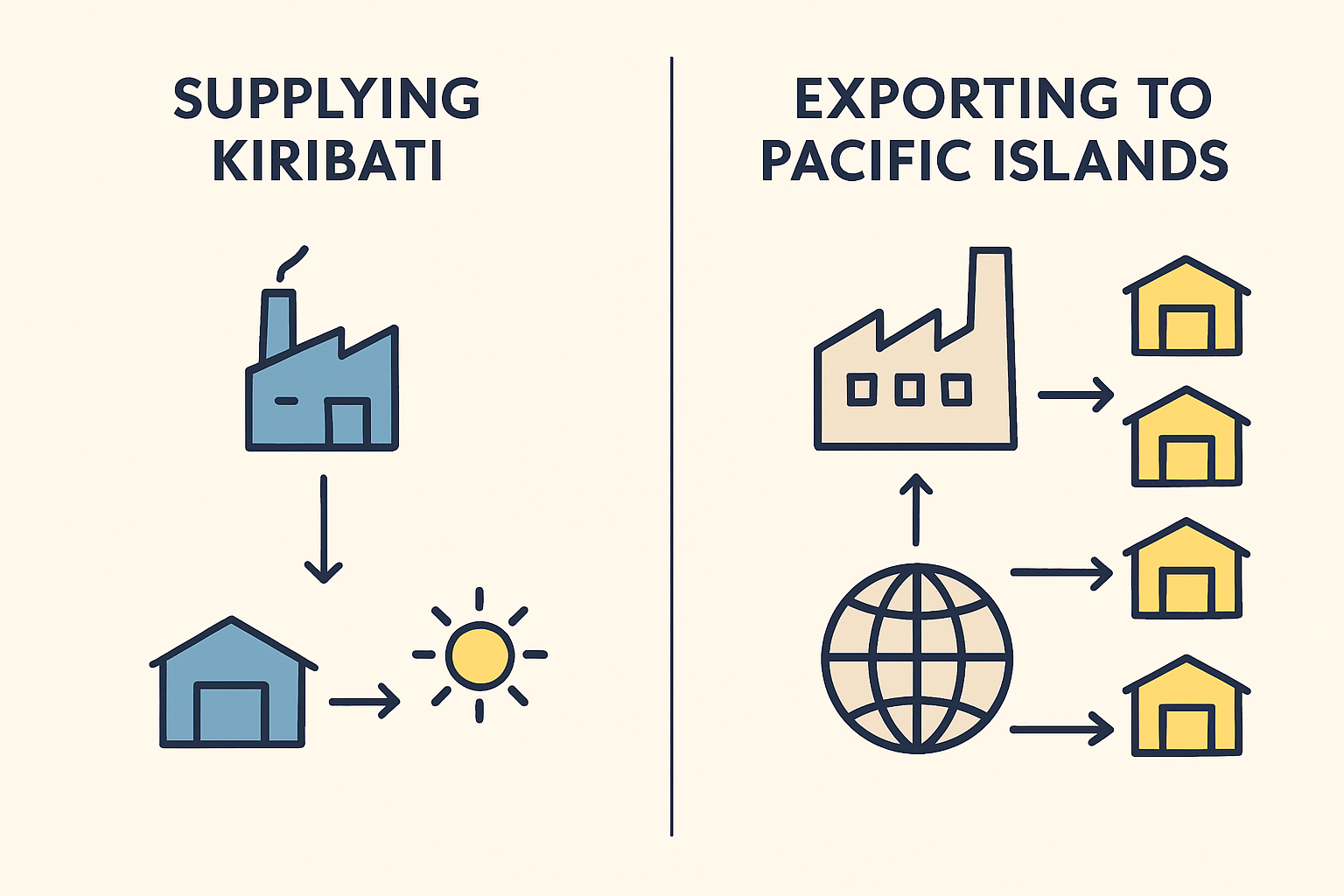
Business Model 2: Serving as a Regional Pacific Export Hub
An alternative, more ambitious strategy positions the Kiribati factory as a manufacturing hub for other Pacific Island Countries (PICs) like Tuvalu, Nauru, and the Marshall Islands.
The Regional Opportunity
These neighboring nations share nearly identical energy challenges, including a high reliance on imported diesel and exorbitant electricity costs. A Kiribati-based factory could offer them a geographically closer and potentially more affordable source for solar modules than traditional suppliers in Asia. This approach expands the total addressable market significantly, creating opportunities for economies of scale.
Logistical Realities and Costs
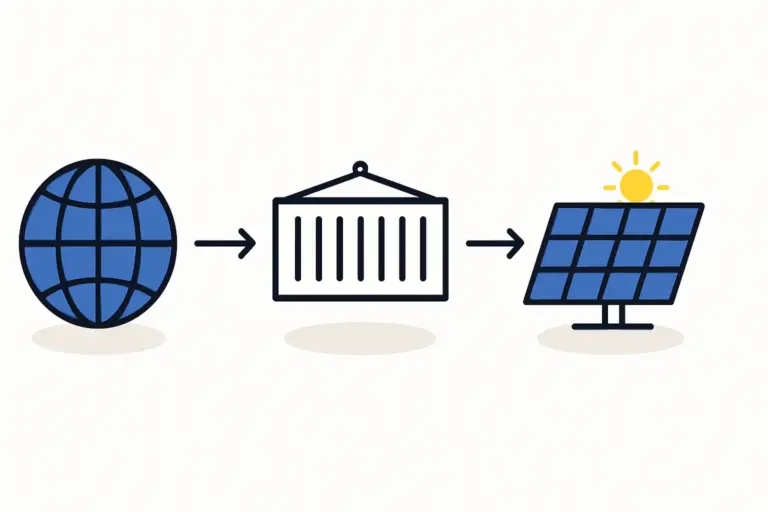
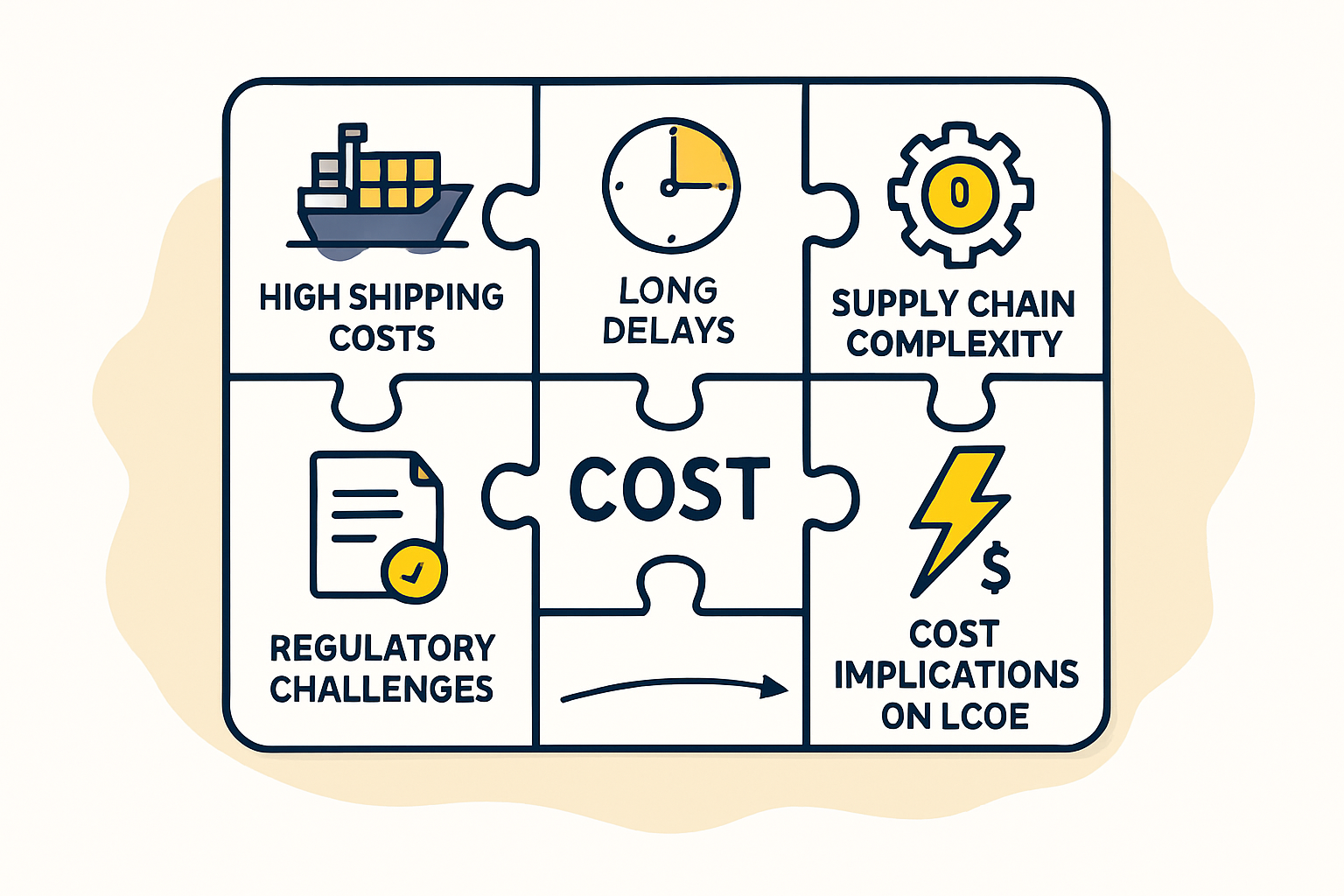
This model’s success hinges on mastering regional logistics. While geographically closer, transport between island nations can be infrequent and expensive. Viability hinges on several factors:
- Port Infrastructure: The capacity of ports in Kiribati and target countries to handle regular shipments of finished goods.
- Shipping Schedules: The frequency and reliability of maritime routes.
- Cost of Transport: Ensuring that shipping costs do not erode the price advantage over modules from larger manufacturing hubs.
Experience from turnkey projects in similar environments shows that a thorough logistical analysis is a non-negotiable prerequisite for an export-oriented model.
Comparative Analysis: Choosing the Right Strategy
The choice between a local focus and a regional export model is a classic trade-off between risk and reward. The local model offers lower risk and operational simplicity, while the export model presents greater growth potential but with greater logistical complexity and market volatility.
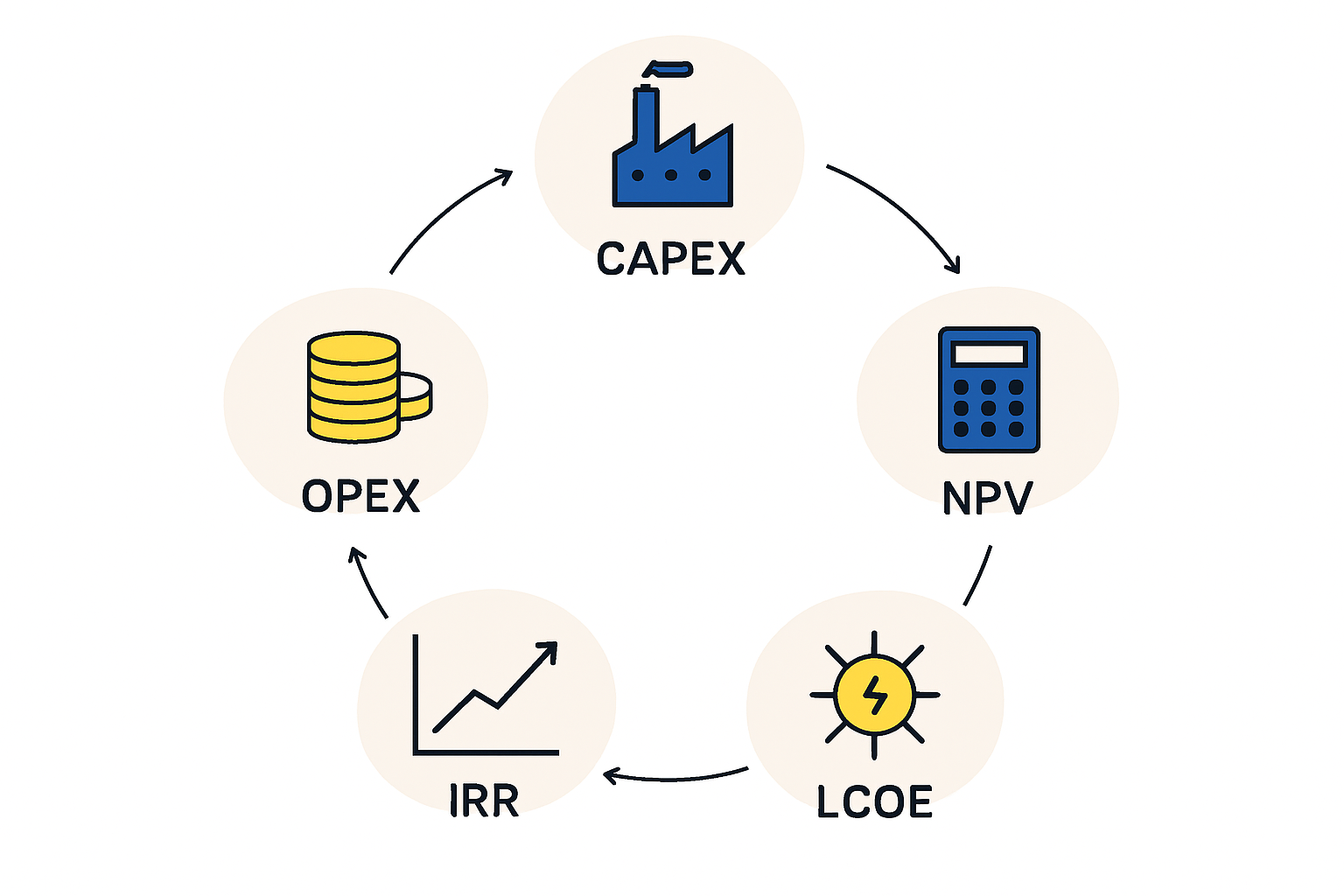
A detailed financial projection is necessary to determine the required investment for a solar module factory for each scenario, as an export model likely requires more initial capital for inventory and market development.
A prudent approach could be a phased strategy. A new enterprise might begin by focusing on the Kiribati market to establish stable operations, refine processes with a turnkey solar panel production line, and build a strong financial foundation. Once the local market is well-served and the business is profitable, it can incrementally expand into export markets, using early successes to fund its growth.
Frequently Asked Questions (FAQ)
What is the primary driver for solar energy in the Pacific Islands?
The main driver is economic. The high and volatile cost of electricity generated from imported diesel makes solar power a financially attractive alternative for governments, businesses, and households.
How can a small local factory compete with large-scale manufacturers in China?
A local factory competes not on per-unit production cost alone, but by eliminating thousands of kilometers of international shipping costs, avoiding import tariffs, offering faster delivery times, and providing tailored local support. This “landed cost” for the end customer is often significantly lower.
What are the main non-financial risks for such a project?
Key risks include potential disruptions to the maritime supply chain for raw materials, the challenge of training and retaining a skilled local workforce, and navigating the administrative and regulatory environments of different island nations if pursuing an export strategy.
Is government support essential for this type of project?
While a project can be viable on its own commercial merits, strong government support offers a significant advantage. This can include tax incentives, streamlined permitting processes, or long-term power purchase agreements (PPAs) that guarantee a buyer for the electricity produced, thereby de-risking the investment.
Conclusion: From Analysis to Action
A solar module factory in Kiribati represents a viable and potentially lucrative investment, driven by the region’s urgent need for affordable and sustainable energy. The fundamental choice between a domestic focus and regional export depends on an investor’s appetite for risk, access to capital, and long-term vision.
The most pragmatic path is often a phased one: secure the home market first, then expand from a position of strength. Regardless of the strategy, success demands meticulous planning, a deep understanding of regional logistics, and a solid business plan. Transforming this promising concept into a successful industrial reality requires structured guidance and technical expertise.