Entrepreneurs planning to establish a solar module factory often focus on sourcing high-quality machinery and raw materials. For a project in a remote location like the Republic of Kiribati, however, the greatest challenge is not procurement but logistics. The journey of solar cells, tempered glass, and aluminum frames from a global supplier to a factory floor in Tarawa is a complex undertaking that requires meticulous planning. Success hinges on a deep understanding of the unique shipping routes, port capabilities, and customs procedures of this Pacific island nation.
This guide offers a practical framework for navigating the logistical hurdles of importing solar manufacturing components to Tarawa, ensuring that materials arrive safely, on time, and within budget.
Understanding the Logistical Landscape of Kiribati
Kiribati’s geography—a collection of 33 low-lying coral atolls spread across a vast expanse of the central Pacific Ocean—defines its logistical environment. All sea-bound freight for the capital, South Tarawa, is handled through the Port of Betio, the nation’s primary commercial lifeline.
While recent infrastructure development has aimed to improve its capacity, entrepreneurs must still account for inherent challenges. The Kiribati Ports Authority (KPA) manages operations, but the port often struggles with significant congestion and limited yard space. The relatively shallow draft of the harbor also restricts the size of vessels that can call directly, often necessitating the use of smaller ships and transshipment hubs in places like Fiji. Understanding these fundamental constraints is the first step in building a resilient supply chain.
Key Import Components and Their Logistical Needs
A solar module assembly line requires a steady flow of specific raw materials, each with unique handling requirements. To simplify planning, these can be grouped by their logistical characteristics:
- Fragile and Heavy: Large sheets of tempered glass are the most challenging component. They are heavy, susceptible to breakage, and require specialized crating and careful handling during offloading and transport.
- Bulky and Structural: Aluminum frames, while not as fragile as glass, occupy significant volume in a shipping container. Efficient packing is key to managing costs.
- Sensitive and High-Value: Solar cells are the most delicate and valuable component. They are sensitive to moisture, micro-cracks from impact, and electrostatic discharge, often warranting specialized packaging and potentially climate-controlled storage.
- Standard Components: Materials like EVA film, backsheets, and junction boxes are less demanding but still require protection from the harsh tropical marine environment, particularly its high humidity.
Comparing Sea Freight and Air Freight to Tarawa
Choosing the right transportation method is a critical decision that balances cost, speed, and volume.
Sea Freight: The Primary Option for Bulk Materials
For the vast majority of materials needed for solar manufacturing—particularly glass, frames, and rolls of backsheet—sea freight is the only viable option. The primary shipping lines serving Kiribati include Neptune Pacific Line, Pacific International Lines (PIL), and Kyowa Shipping.
Due to Tarawa’s remote location, direct sailings from major manufacturing hubs are rare. Shipments are typically routed through larger regional ports, such as Suva in Fiji, where they are transferred to smaller vessels for the final leg of the journey. This transshipment process adds several weeks to the total transit time and creates another potential point of delay. A typical sea freight shipment from Asia to Tarawa can take anywhere from four to eight weeks.
Key considerations for sea freight include:
- Containerisation: Using 20-foot or 40-foot containers is standard. Proper blocking and bracing inside the container are critical to prevent cargo from shifting during rough seas.
- Moisture Control: The high humidity on ocean voyages can damage sensitive electronics and materials. Using desiccants and moisture-barrier bags inside crates is an essential precaution.
- Insurance: Comprehensive cargo insurance is non-negotiable to cover potential damage or loss during transit and transshipment.
A container ship at the Port of Betio, Tarawa. Efficiently managing the arrival and clearance of such shipments is crucial for maintaining a production schedule.
Ready to make big Profits?
The solar Industry is Booming
WE HELP NEWCOMERS to the solar industry start their own solar module production line. Customers can make BIG PROFITS by selling modules and finding investors, without wasting money and time on things they don't need!
Air Freight: For High-Value, Time-Sensitive Components
Air freight to Bonriki International Airport (TRW) serves a more strategic purpose. While prohibitively expensive for bulk materials, it is an essential tool for:
- Urgent Machine Spare Parts: If a critical machine on the production line fails, air freight can deliver a replacement part in days instead of weeks, minimizing costly downtime.
- Initial Batches of Solar Cells: For commissioning the factory or for small, high-value production runs, air freighting solar cells can mitigate the risk of damage associated with long sea voyages.
- Critical Documents: In some cases, original shipping documents may need to be sent ahead by air courier.
Airlines like Fiji Airways and Nauru Airlines connect Tarawa to regional hubs. However, shipments from Europe, North America, or Asia will require multiple transfers, and planners must account for customs clearance at each transit point.
Navigating Customs and Tariffs in Kiribati
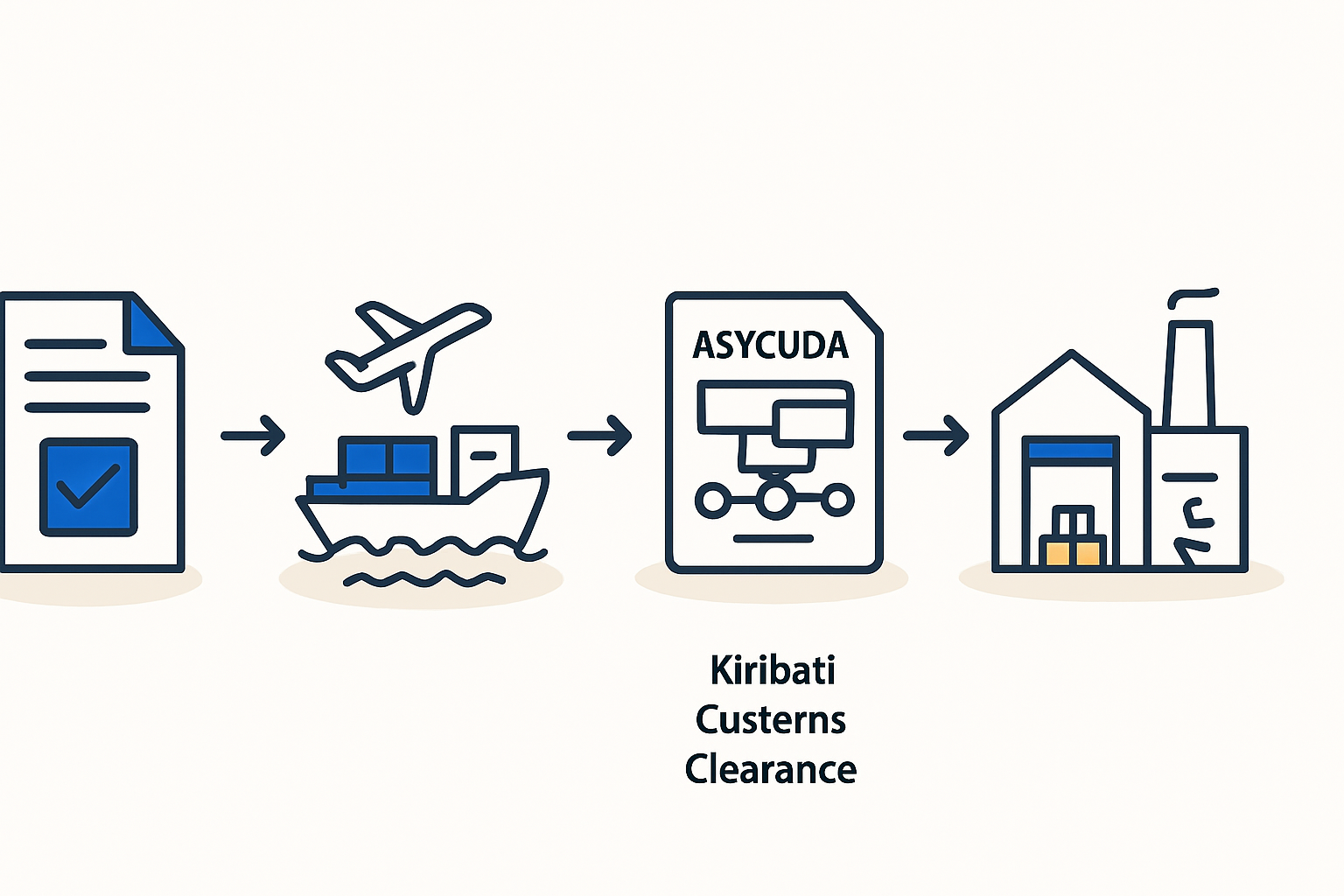
Once goods arrive at the Port of Betio, they must be cleared by the Kiribati Customs Service. A smooth clearance process depends entirely on accurate and complete documentation. Delays here can lead to significant demurrage (fees for using port equipment beyond the allotted time) and storage charges.
The essential documents required typically include:
- Bill of Lading (B/L): The contract between the shipper and the carrier.
- Commercial Invoice: Details the transaction, including the value of the goods.
- Packing List: An itemized list of the contents of each crate or pallet.
Entrepreneurs should anticipate paying import duties and a Value Added Tax (VAT). The specific rates can change, so engaging a local customs broker well in advance is highly advisable. A broker can provide up-to-date information on tariffs and handle the clearance process on the ground—an invaluable service for a business owner operating from overseas. Understanding these costs is integral to calculating the total investment for a solar factory.
Overcoming Common Supply Chain Challenges
Several on-the-ground challenges in Tarawa can disrupt even the most well-planned supply chain.
Port Congestion and Offloading Delays
Frequent congestion at the Port of Betio is a primary challenge. Limited crane capacity and yard space can leave containers waiting for days to be offloaded and processed. This reality must be factored into project timelines; building a buffer of several weeks into the shipping schedule is a prudent risk mitigation strategy.
Limited yard space at the primary commercial port can create bottlenecks for incoming shipments of manufacturing materials.

Inland Transportation and Storage
Moving a 40-foot container from the port to a factory site presents its own set of challenges on South Tarawa’s narrow and often congested roads. Arranging for local transport with the capacity to handle heavy loads well before the shipment arrives is vital.
Furthermore, secure warehousing is essential. A key finding from J.v.G. Technology turnkey projects is that establishing adequate storage facilities is as important as the factory itself. Sensitive materials like solar cells and EVA film require a dry, climate-controlled environment to prevent degradation from heat and humidity. These considerations should be part of the initial facility planning and building requirements for the plant.
Climate and Environmental Factors
The tropical marine environment, with its high salinity and humidity, is corrosive to unprotected metals and detrimental to electronic components. All imported machinery and materials must include appropriate corrosion protection. Storing raw materials in conditions that shield them from these elements is crucial for ensuring the quality and longevity of the final solar modules.
Frequently Asked Questions (FAQ)
How long does sea freight typically take to reach Tarawa?
Transit times vary significantly based on the port of origin and transshipment schedules. From major ports in Asia, expect transit times of 4 to 8 weeks. From Europe or North America, this can extend to 10 weeks or more.
What are the main documents needed for customs clearance in Kiribati?
The core documents are the Bill of Lading, Commercial Invoice, and Packing List. Depending on the goods and country of origin, a Certificate of Origin or other specific permits may be required.
Is it better to use a local or international freight forwarder?
The ideal solution is often an international freight forwarder that has a proven and reliable local partner or agent in Tarawa. This approach combines global tracking capabilities with essential on-the-ground expertise for customs and inland transport.
What is the biggest unforeseen logistical cost?
Demurrage and container detention fees are the most common unexpected costs. These arise when containers are not cleared from the port and returned to the shipping line within the free time allowed, often due to documentation errors or customs delays.
Conclusion and Next Steps
Successfully establishing a solar module manufacturing operation in Tarawa depends on a logistics strategy that is as robust as the production technology itself. Anticipating challenges like port congestion, transshipment delays, and the harsh climate is key to building a resilient supply chain.
Careful planning, partnership with experienced logistics providers, and meticulous attention to documentation are not administrative burdens; they are foundational elements for project success. Acknowledging and preparing for these complexities from the outset will prevent costly delays and ensure the factory can begin operations smoothly and on schedule.
For those considering such a venture, the next step is to integrate this logistical understanding into a comprehensive business plan. Exploring a structured overview of how to start a solar module factory can provide the broader context needed to turn a promising idea into a viable enterprise.