When entrepreneurs explore new frontiers in solar manufacturing, their primary focus is often the factory floor. The success of such an enterprise, however, hinges just as much on what happens before raw materials arrive and after finished modules depart.
The efficiency, cost, and reliability of a nation’s port logistics can determine the viability of the entire business model. Sri Lanka, with its strategic maritime position, presents a compelling case study in logistical excellence.
This article analyzes Sri Lanka’s logistical landscape, focusing on its two principal ports—Colombo and Hambantota. It provides an overview for business professionals considering the country as a base for solar module manufacturing, from importing raw materials to exporting finished products.
The Geographic Advantage: Why Sri Lanka’s Location Matters
Sri Lanka’s most significant asset is its location. Situated directly on the main East-West shipping route in the Indian Ocean, it serves as a natural nexus connecting Asia with Europe, the Middle East, and Africa. Over 60,000 vessels traverse these sea lanes annually, carrying two-thirds of the world’s oil and half of all container shipments.
This strategic positioning means a solar manufacturing facility in Sri Lanka is not on the periphery of global trade but at its very center. This prime location minimizes shipping deviations, transit times, and associated costs for both inbound raw materials and outbound finished goods.
Analyzing Key Ports for Solar Supply Chains
The choice of port directly influences a solar factory’s supply chain, which relies on a steady flow of specific components. Sri Lanka offers two distinct yet complementary options.
The Port of Colombo: The Established Transshipment Leader
The Port of Colombo is one of the busiest and most efficient ports in the world, consistently ranking in the top 25 for container traffic. Handling over 7 million TEUs (Twenty-foot Equivalent Units) annually, it is a well-established transshipment hub with deep-water terminals capable of accommodating the largest container vessels.
For a solar manufacturer, Colombo’s primary advantages are:
-
Connectivity: The port offers extensive connections to over 100 countries, ensuring reliable access to suppliers of essential Raw Materials for Solar Panels from China, Southeast Asia, and Europe.
-
Efficiency: The port is known for its relatively quick turnaround times. Customs clearance, while requiring proper documentation, is a well-established and predictable process. Standard container clearance can typically be completed within 3 to 5 business days, assuming all paperwork is in order.
Ready to make big Profits?
The solar Industry is Booming
WE HELP NEWCOMERS to the solar industry start their own solar module production line. Customers can make BIG PROFITS by selling modules and finding investors, without wasting money and time on things they don't need!
-
Infrastructure: Robust road and rail networks connect the port to industrial zones across the western province, facilitating the smooth transfer of goods to a factory.

Hambantota Port: The Emerging Industrial Gateway
Located on the southern coast, the Hambantota International Port is a modern, deep-water port developed with a focus on industrial and bulk cargo. Operated in partnership with China Merchants Port Holdings, it is integrated with a large industrial zone, making it an ideal location for new manufacturing ventures.
Hambantota’s key benefits include:
-
Industrial Integration: The port’s proximity to a dedicated industrial zone minimizes inland transportation costs and complexities. Establishing a factory within the zone itself creates a seamless workflow from import to processing and export.
-
Growth Potential: Designed for massive expansion, the port is less congested than Colombo, which can be an advantage for large-scale operations and handling specialized or bulk cargo.
-
Strategic Partnerships: The port’s management brings significant global logistics expertise, offering streamlined services for manufacturers setting up within its ecosystem.
Navigating the Import-Export Process for a Solar Factory
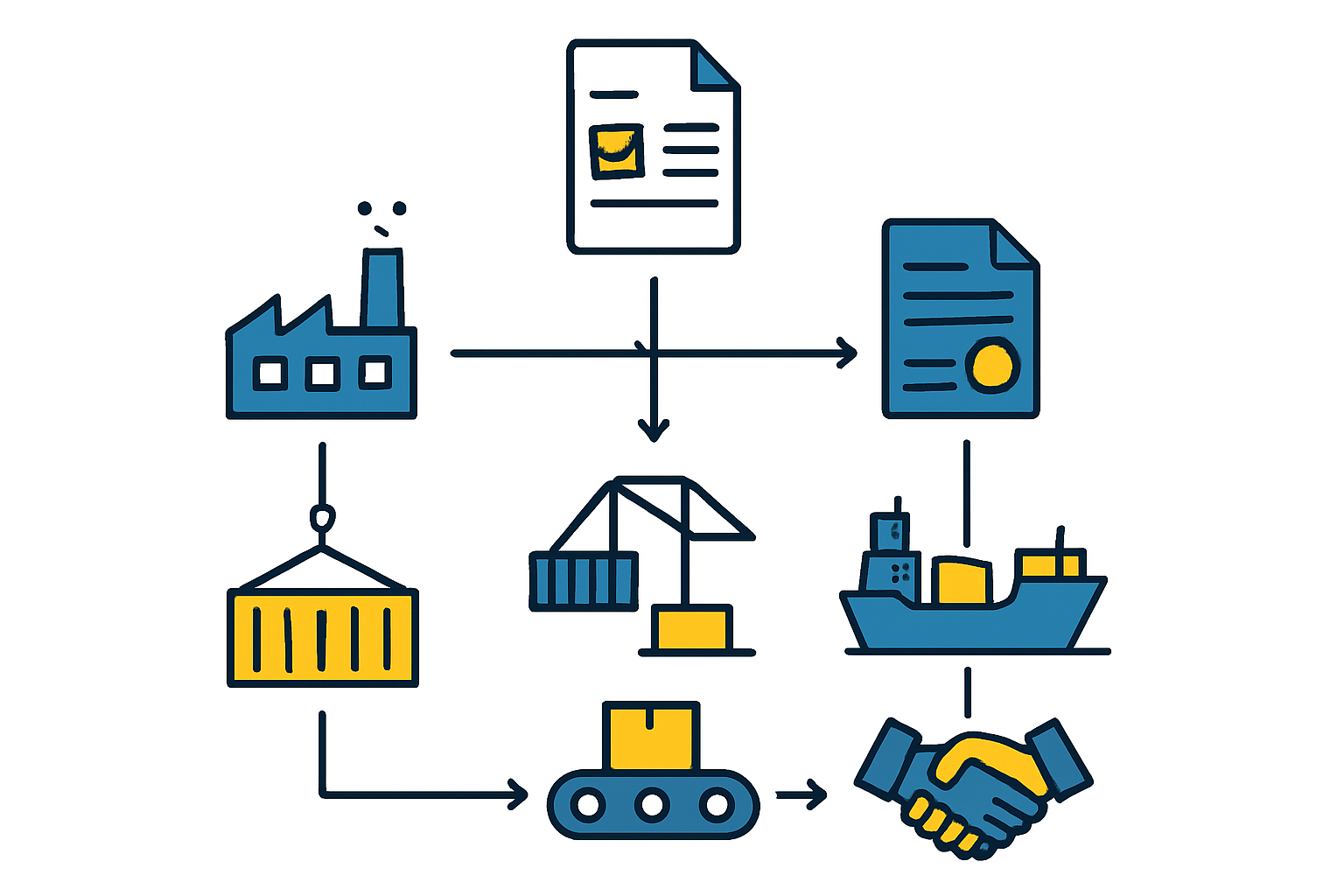
A clear understanding of import and export procedures is essential for any Solar Panel Manufacturing Business Plan. These processes involve documentation, customs duties, and coordination with logistics partners.
Importing Raw Materials: A Step-by-Step Overview
Solar module assembly requires a steady stream of imported components such as solar glass, aluminum frames, EVA film, backsheets, and junction boxes. The typical import process involves:
-
Shipping & Documentation: The supplier ships the goods and provides a Bill of Lading, commercial invoice, and packing list.
-
Customs Declaration: A local customs agent files a declaration on the importer’s behalf.
-
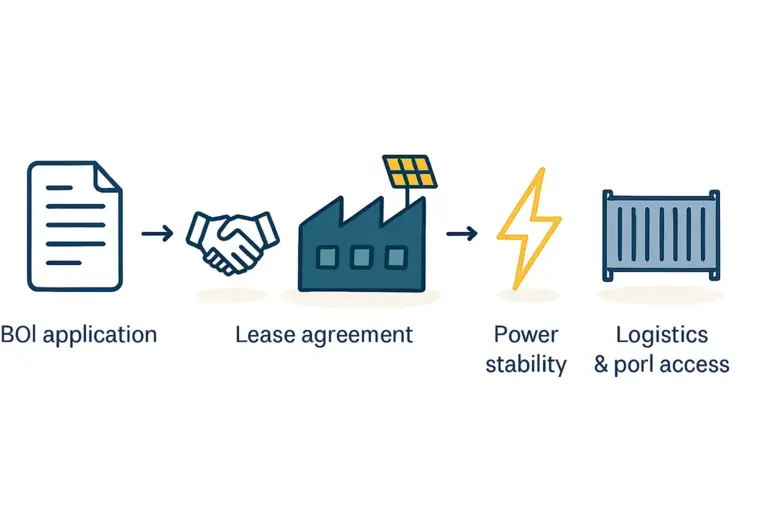
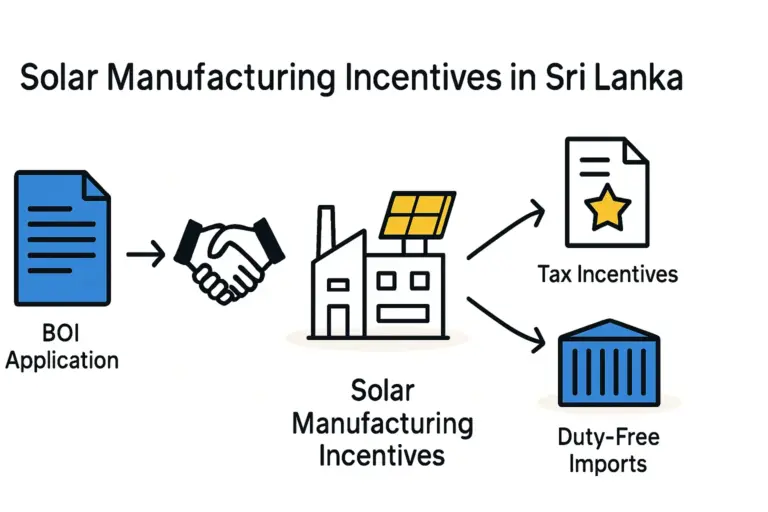
Duty & Tax Assessment: Sri Lankan Customs assesses applicable duties and taxes. However, companies registered with the Board of Investment (BOI) of Sri Lanka may be eligible for significant concessions or duty-free importation of machinery and raw materials—a critical factor that can substantially improve a project’s financial model.
-
Clearance & Delivery: Once duties are paid (or waivers applied) and the shipment is inspected, the goods are cleared for delivery to the factory.
Exporting Finished Solar Modules: Reaching Global Markets
Once solar modules are manufactured and certified, they are ready to be packaged and shipped to international customers. Sri Lanka’s logistical framework supports this through:
-
Free Trade Agreements (FTAs): Sri Lanka has FTAs with several countries, including India and Singapore, and benefits from the GSP+ scheme with the European Union. These agreements can reduce or eliminate import tariffs for buyers in those markets, making Sri Lankan-made modules more competitive.
-
Global Shipping Access: From Colombo or Hambantota, finished modules can be shipped directly to key markets. For example, a container shipment to major European ports like Rotterdam or Hamburg typically takes 20–25 days, while reaching Jebel Ali in the UAE takes approximately 8–10 days.
Business Implications: Costs, Timelines, and Risk Mitigation
Effective logistics management is about optimizing costs and minimizing risk. The total solar module manufacturing investment must factor in shipping and customs as ongoing operational expenditures.
-
Shipping Costs: The cost of shipping a 40-foot container from a major Chinese port like Shanghai to Colombo typically ranges from $2,000 to $4,000 USD, though this is subject to significant market volatility. Planning with a reliable freight forwarder is essential for accurate budgeting.
-
Timeline Impact: Port congestion, customs delays, or documentation errors can halt a production line. A well-structured business plan incorporates buffer inventory and allocates sufficient time for clearance to mitigate these risks.
-
Local Partnerships: Engaging an experienced local logistics partner is not an expense but an investment. Experience from J.v.G. turnkey projects confirms that strong local support is critical, as these partners can navigate the nuances of the local customs code, manage documentation, and anticipate potential bottlenecks.

Frequently Asked Questions (FAQ)
What are the main advantages of using Sri Lankan ports for solar manufacturing?
The primary advantages are Sri Lanka’s strategic location on major global shipping lanes, the high efficiency of the Port of Colombo, and the industrial integration offered by Hambantota Port. This combination reduces transit times and logistical costs.
How long does customs clearance typically take in Sri Lanka?
With correct documentation, standard container imports in Colombo can often be cleared within 3–5 business days. Projects under the Board of Investment (BOI) may experience an even more streamlined process.
Are there special economic zones near the ports?
Yes, Hambantota Port is directly connected to a large-scale industrial zone designed to attract foreign investment in manufacturing. Other zones are accessible from the Port of Colombo via the country’s highway network.
What are the primary raw materials that need to be imported?
Key imported materials for a standard solar module assembly line include tempered solar glass, extruded aluminum frames, EVA (ethylene vinyl acetate) encapsulant film, polymer backsheets, junction boxes, and solar cells.
How does port choice affect the cost to start a solar panel factory?
Port choice directly impacts both capital and operational costs. Proximity to an efficient port reduces inland transportation expenses for machinery during setup and raw materials during operation. An efficient port with minimal delays also reduces the need for large, expensive inventories, lowering the working capital required and impacting the total cost to start a solar panel factory.
Conclusion: Integrating Logistics into Your Strategic Plan
Choosing a country for a solar manufacturing plant is a decision with many variables. While factors like labor costs and energy supply are important, the strategic value of world-class logistics cannot be overstated. Sri Lanka’s ports provide a robust and efficient gateway to global supply chains, offering a significant competitive advantage.
A thorough feasibility study must include a detailed analysis of these logistical factors—from shipping routes and customs procedures to inland transport and trade agreements. Entrepreneurs who integrate this understanding from the earliest stages of planning can build a resilient and profitable solar manufacturing operation poised for global success.