Entrepreneurs exploring locations for a new solar module factory often look first to established industrial hubs in Europe. While these locations offer infrastructure, they frequently come with high corporate tax rates and complex regulatory frameworks. Yet, less conventional jurisdictions can offer significant financial advantages. San Marino, a sovereign state in a customs union with the European Union, presents a compelling case for investors in the renewable energy sector, particularly through its highly competitive tax and incentive structure.
This article provides a detailed overview of San Marino’s corporate fiscal environment, tailored for professionals planning to enter the solar module manufacturing market. It outlines the core tax rates, specialized incentives for new industries, and R&D credits that can substantially improve a project’s financial viability.
Understanding San Marino’s Favorable Business Environment
Situated within Italy, San Marino offers unique access to the EU market while maintaining its own fiscal sovereignty. This combination enables the country to foster an environment designed to attract foreign investment. For an industrial venture like a solar module factory, the key advantages lie not just in its location but in the clear, competitive financial legislation central to its economic strategy.
The foundation of this system is the General Corporate Income Tax, known as the Imposta Generale sui Redditi (IGR).
The General Corporate Income Tax (IGR) Framework
San Marino’s standard corporate income tax rate is a flat 17%. This figure is significantly lower than the average corporate tax rate across the European Union, offering an immediate competitive advantage. For a capital-intensive business like solar manufacturing, a lower baseline tax rate translates directly into higher retained earnings for reinvestment, debt servicing, or distribution to shareholders.
Reduced Tax Rate for New Businesses
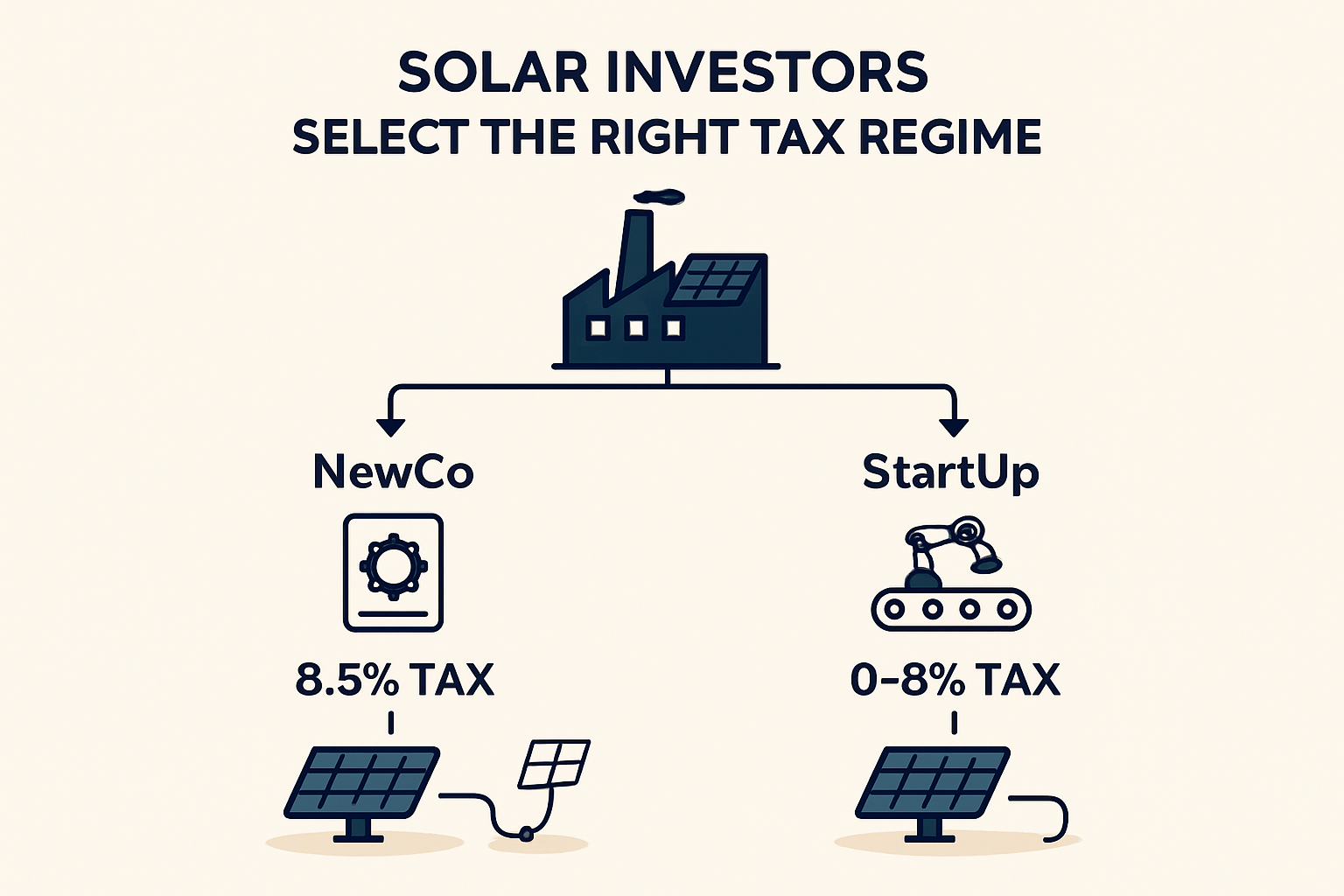
To further encourage new enterprise, San Marino offers a substantial reduction for newly established companies. For the first five years of operation, their corporate income tax rate is halved to 8.5%. This incentive is particularly valuable for a solar factory during its critical start-up phase, as revenues begin to scale and operational efficiency is still being optimized. The reduced tax burden allows the business to build a stronger financial foundation.
Key Financial Incentives for Solar Manufacturing Investments
Beyond its competitive general tax rate, San Marino offers specific incentives directly applicable to setting up and operating a modern solar module production facility. These measures are designed to reward investment in technology, innovation, and industrial assets.
Research & Development (R&D) Tax Credits
The solar industry is driven by continuous innovation in cell efficiency, materials science, and manufacturing processes. San Marino supports this drive for innovation with a generous R&D tax credit system.
A tax credit of 90% is available for costs related to hiring highly qualified research personnel. For other qualifying R&D projects, a tax credit of 70% applies.
For a solar module manufacturer, this could include projects aimed at improving module lamination processes, testing new backsheet materials, or developing quality control systems. These credits effectively lower the net cost of innovation, encouraging companies to maintain a technological edge.
Ready to make big Profits?
The solar Industry is Booming
WE HELP NEWCOMERS to the solar industry start their own solar module production line. Customers can make BIG PROFITS by selling modules and finding investors, without wasting money and time on things they don't need!

Incentives for New Industrial Investments
One of the most powerful tools for a new solar factory is the tax credit for new investments in industrial assets. This applies directly to the purchase of production machinery, which represents a major part of the initial capital expenditure.
The law offers a tax credit on investments exceeding €1,500,000 in the purchase of new capital goods. The credit can be used over a period of 10 years and is calculated as a percentage of the IGR (corporate tax) due for the fiscal year:
- An 80% credit is granted for investments from €1,500,000 to €5,000,000.
- A 90% credit is granted for investments from €5,000,001 to €25,000,000.
- A 95% credit is granted for investments exceeding €25,000,000.
For a typical 20-50 MW solar module production line, where machinery investment can easily fall within these ranges, this incentive can dramatically reduce the company’s tax liability for up to a decade.
Capital Gains and Dividend Taxation
For long-term investors and shareholders, San Marino’s treatment of capital gains and dividends is also highly favorable.
There is a 0% tax on capital gains realized from financial participations. Additionally, a final withholding tax of only 5% is applied to dividends distributed to individuals residing in San Marino.
This structure benefits entrepreneurs who plan to build value in the company over the long term and eventually realize a return on their initial investment.
Practical Implications for a Solar Factory Business Plan
When constructing a financial forecast for a new solar module factory, these tax incentives are not minor details; they are core variables that can fundamentally alter the project’s profitability and payback period. The reduced tax rate in the initial years, combined with significant credits for machinery and R&D, improves cash flow when it is most needed.
These incentives significantly alter the required investment and financing models for a new facility. Based on experience from J.v.G. Technology GmbH turnkey projects, a thorough analysis of local tax benefits is a critical step in the site selection process. A jurisdiction like San Marino can make a project viable that would be marginal in a higher-tax environment.

Frequently Asked Questions (FAQ)
Is San Marino a member of the European Union?
No, San Marino is not an EU member state. However, it is in a customs union with the EU, which means goods, including solar modules manufactured there, can circulate freely within the EU without customs duties or tariffs.
What currency is used for business in San Marino?
San Marino uses the Euro (€) as its official currency, simplifying transactions with EU-based suppliers and customers.
Are these tax incentives automatically applied or do they require a complex application process?
The incentives require formal application and proper documentation to demonstrate eligibility. For instance, qualifying for R&D credits requires clear project definitions and cost accounting. Working with local legal and accounting professionals is standard practice to ensure full compliance and maximization of benefits.
How does this tax system compare to a typical Free Trade Zone?
While Free Trade Zones offer tax benefits within a limited geographical area, San Marino’s incentives are part of a nationwide fiscal policy. This approach provides greater stability and integration with the local economy, rather than creating an isolated industrial park.
Conclusion and Next Steps
For entrepreneurs and investors evaluating locations for a new solar module manufacturing plant, San Marino offers a uniquely advantageous financial framework. The combination of a low general corporate tax rate, a significant discount for new businesses, and substantial credits for capital investment and R&D creates a powerful financial argument.
Understanding this tax and incentive structure is a crucial first step in developing a robust business plan. It allows for more accurate financial modeling, a clearer path to profitability, and a stronger investment case for stakeholders. This preliminary analysis should form the basis for more detailed due diligence into the legal, logistical, and operational aspects of establishing a factory in the region.