Establishing a solar module factory in Yemen presents a significant opportunity. The country has one of the highest solar irradiation levels in the world, offering a clear path toward energy independence and economic growth.
However, a critical question emerges early on: how can a local manufacturer earn the trust of international investors, large-scale project developers, and financial institutions?
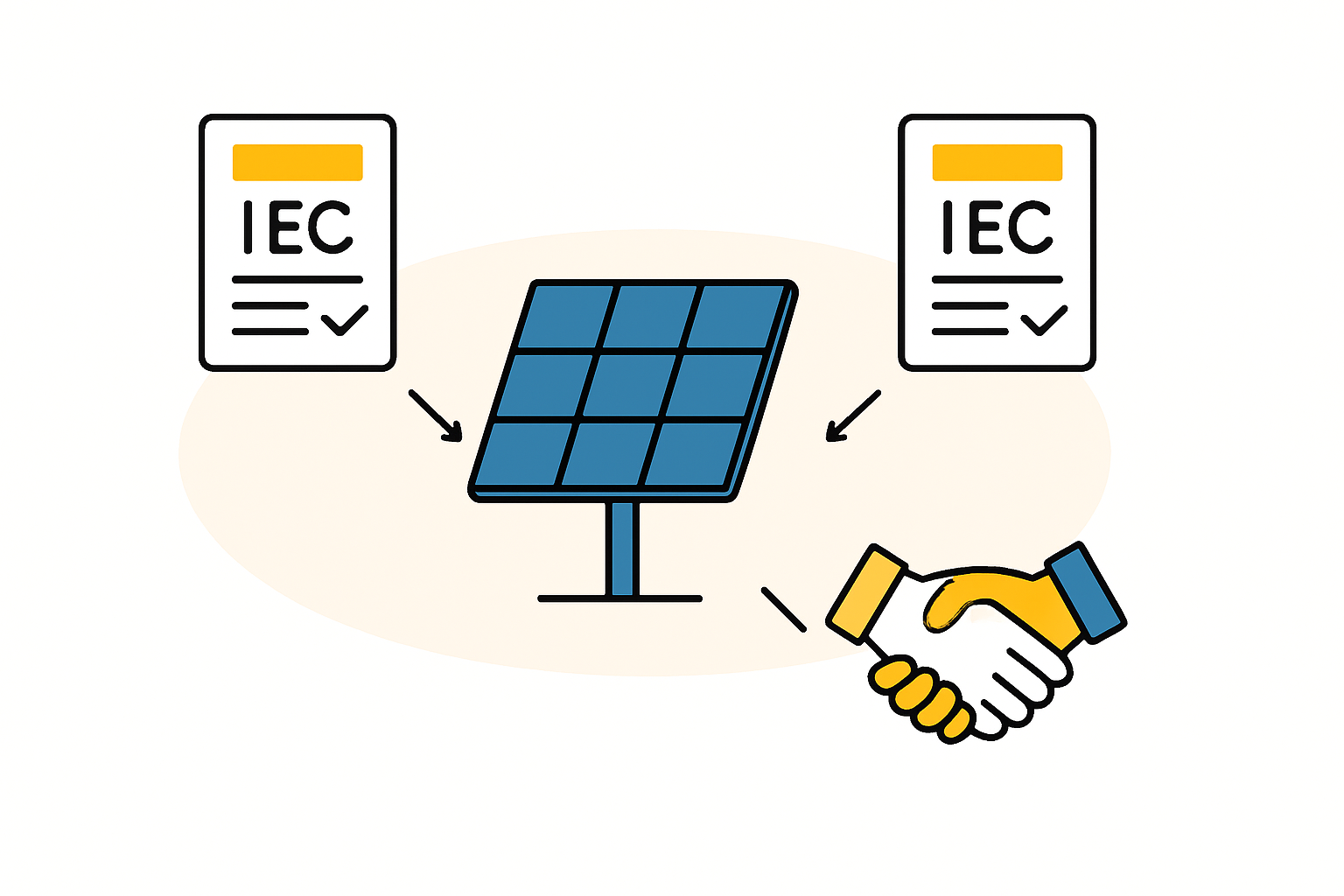
The answer lies in a commitment to verifiable, international quality standards. For a solar module to be considered ‘bankable’—meaning it is deemed a reliable and low-risk asset by lenders—it must meet globally recognized benchmarks. The most important of these is the IEC 61215 standard. This article breaks down the key processes and equipment needed to implement IEC-compliant quality control in a new solar factory in Yemen, with a focus on the region’s unique environmental challenges.
Why International Standards are a Prerequisite for Success
In the solar industry, quality is not merely a feature; it is the foundation of a project’s financial viability. A solar power plant is a long-term investment, typically with a projected lifespan of 25 years or more. Investors and banks need assurance that the modules generating revenue will perform reliably for decades.
Bankability and Market Access
An IEC certification serves as a global passport for a solar module. It signals to the market that the product has undergone rigorous testing and meets stringent criteria for performance, safety, and durability. Without it, a manufacturer is often limited to small, local cash markets and excluded from large-scale, financed projects.
Mitigating Risk
Adhering to a quality management system minimizes production defects, reduces warranty claims, and builds a reputation for reliability. For any new venture, establishing this trust from the outset is crucial for long-term growth. A comprehensive solar factory business plan must allocate sufficient resources to quality assurance infrastructure and personnel.
An Overview of the IEC 61215 Quality Framework
IEC 61215 is a standard for design qualification and type approval. It doesn’t certify every single module but rather confirms that the module’s design and the factory’s manufacturing process can yield a product capable of withstanding long-term outdoor exposure.
The standard involves subjecting a sample set of modules to a series of stress tests that simulate aging effects, including:
- Thermal Cycling: Simulating the stress of daily and seasonal temperature changes.
- Damp Heat: Testing the module’s resistance to long-term humidity and high temperatures.
- UV Exposure: Assessing the durability of materials like the backsheet and encapsulant against solar radiation.
- Mechanical Load Testing: Ensuring the module can withstand wind and snow loads.
A robust in-house quality control system ensures that every module produced meets the same high standard as the certified sample.
Core Quality Control Processes in a Solar Module Factory
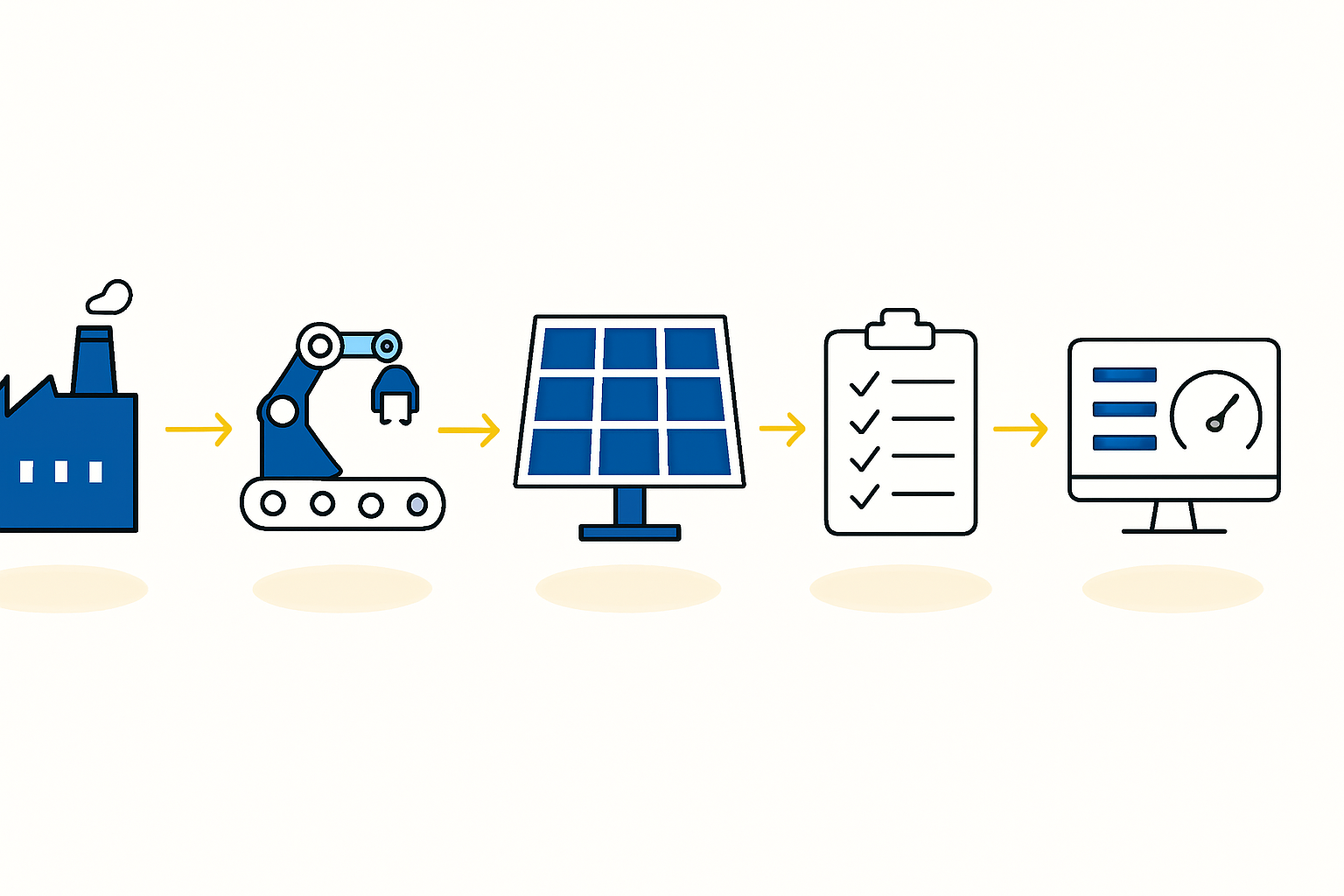
A systematic approach to quality control should be integrated into every step of the solar panel manufacturing process, which can be broken down into four key stages.
Ready to make big Profits?
The solar Industry is Booming
WE HELP NEWCOMERS to the solar industry start their own solar module production line. Customers can make BIG PROFITS by selling modules and finding investors, without wasting money and time on things they don't need!
1. Incoming Goods Inspection
The quality of a finished solar module begins with the quality of its raw materials. This is the first and most critical control point, especially in regions where supply chain consistency can vary. A dedicated team must inspect all incoming materials, including:
- Solar Cells: Visual inspection for defects and flash testing a sample to verify electrical performance.
- Glass: Checking for imperfections, scratches, and correct dimensions.
- EVA Encapsulant & Backsheet: Verifying manufacturer certificates of analysis and ensuring proper, climate-controlled storage.
- Aluminum Frames & Junction Boxes: Confirming dimensional accuracy and material specifications.
2. In-Process Quality Checks (Pre-Lamination)
Once materials enter the production line, continuous monitoring is vital. Before the components are laminated into a permanent sandwich, several checks are crucial—the most important of which is Electroluminescence (EL) testing.
EL testing acts as an X-ray for a solar module, revealing hidden defects like microcracks in the cells that are invisible to the naked eye. These cracks can develop during cell manufacturing or handling and can significantly reduce the module’s power output and lifespan over time. An EL test before lamination allows teams to reject or repair defective strings, saving significant costs.
3. Post-Lamination and Finishing Checks
After lamination, the module’s components are permanently sealed. Quality checks at this stage focus on durability and safety.
- Gel Content Test: A sample of the EVA encapsulant is tested to ensure it has been properly ‘cured’ during lamination. Proper cross-linking is vital for the module’s long-term protection against moisture.
- Hi-Pot (Dielectric Withstand) Test: This safety test applies a high voltage to the module to ensure its electrical insulation is robust, protecting against electric shock.
4. Final Inspection and Performance Testing
Before a module is packaged, it undergoes a final comprehensive check. This includes a final visual inspection and, most importantly, performance testing in a sun simulator, also known as a flasher.
The sun simulator provides a flash of high-intensity light under standardized conditions (25°C, 1000 W/m²) to precisely measure the module’s key electrical characteristics (Pmax, Voc, Isc). This data becomes the module’s official performance rating and is printed on the label. A high-quality, Class A-A-A sun simulator is a cornerstone of any IEC-compliant factory and a standard component in any turnkey solar production line.
Adapting Quality Control for Yemen’s Environment
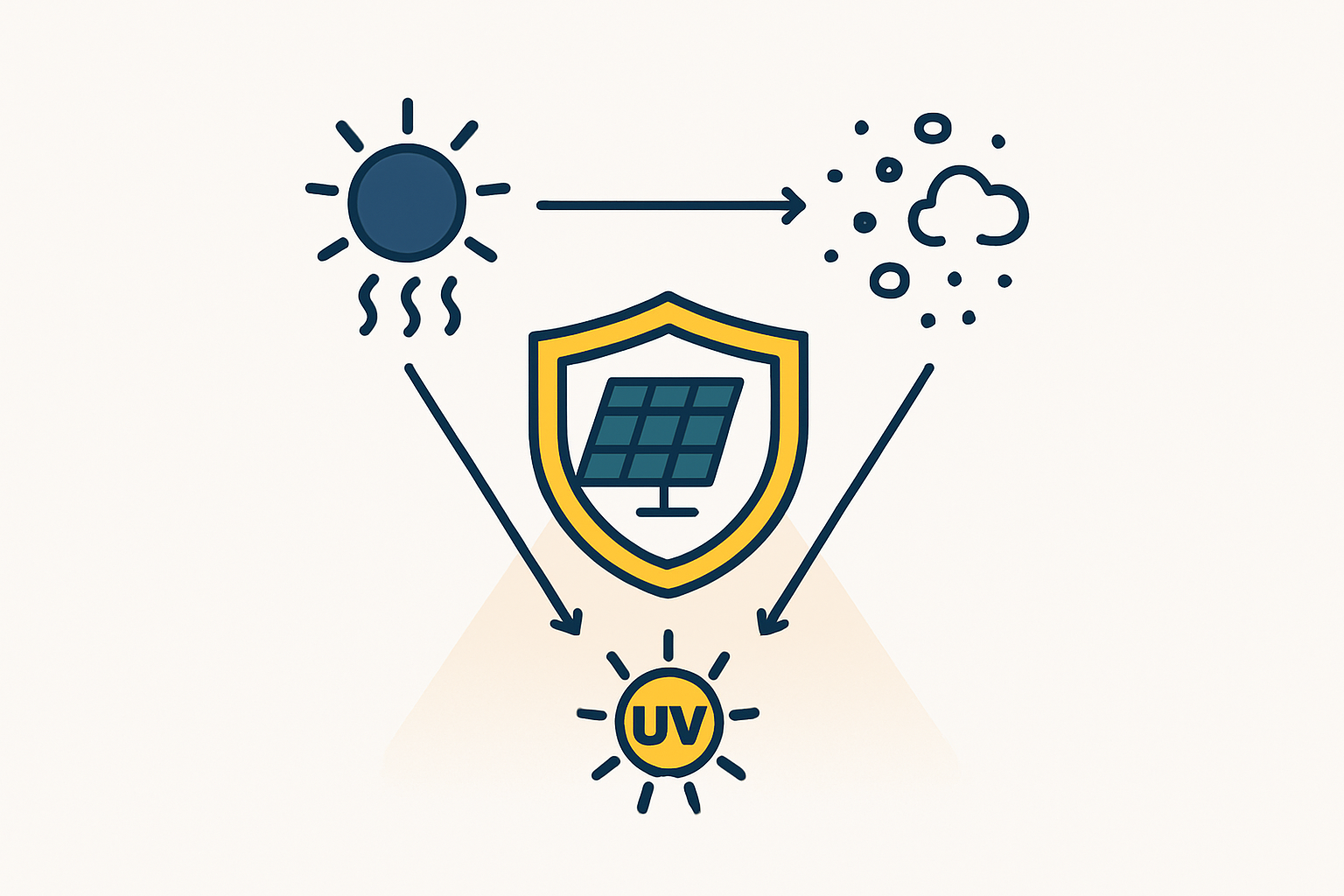
A standard quality plan must be adapted to address Yemen’s specific climate challenges to ensure long-term durability in the field.
- High Temperatures and UV Radiation: The intense sunlight and heat in Yemen accelerate the aging of materials. Selecting high-quality, UV-stabilized backsheets and encapsulants is critical. The Damp Heat and Thermal Cycling tests within the IEC 61215 standard are especially relevant here, verifying a module’s resilience in such an environment.
- Dust and Sand (Soiling): Airborne dust and sand reduce power output by blocking sunlight and can also be abrasive. The module’s frame and junction box must be perfectly sealed to prevent the entry of fine particles. Some manufacturers may also consider using anti-soiling coatings on the glass.
- Supply Chain Considerations: Due to potential logistical challenges, maintaining a larger stock of quality-verified raw materials and implementing an uncompromising incoming goods inspection process is a sound business strategy.
Building a Team for Quality Assurance
Ultimately, quality is driven by people. Any plan for how to start a solar factory must include hiring and training a dedicated quality team. Key roles include a Quality Assurance Manager, who designs and oversees the system, and line inspectors responsible for performing checks at each production stage. Based on experience from J.v.G. Technology GmbH turnkey projects, a quality-first culture, instilled from the top down, is a common thread among all successful manufacturers.
Frequently Asked Questions
What is the difference between quality control (QC) and quality assurance (QA)?
Quality Assurance (QA) refers to the overall system and processes established to ensure quality standards are met (e.g., training manuals, process documentation). Quality Control (QC) covers the specific actions of inspecting and testing products to identify defects. A successful factory needs both.
Is a full climate chamber required inside the factory?
For ongoing product monitoring and process control, an in-house climate chamber for tests like damp heat is highly recommended. For the initial IEC 61215 certification, the tests must be performed by an accredited third-party laboratory. However, having in-house capabilities shows a strong commitment to quality to potential buyers and partners.
How much does essential QC equipment cost?
The investment in core QC equipment like an EL tester and a Class A-A-A sun simulator is a significant but non-negotiable part of the factory’s initial capital expenditure. It typically represents a meaningful percentage of the total machinery budget.
Can modules made in Yemen be certified to international standards?
Absolutely. The IEC certification process is based on product quality and testing results, not the country of origin. If a factory in Yemen implements a robust quality management system and its modules pass the required tests at an accredited lab, they can achieve the same certifications as any other manufacturer worldwide.
The Path to Bankable Module Production
Establishing a solar module factory in Yemen is a complex but achievable goal. While machinery and processes are critical, a rigorous, IEC-compliant quality control system is what transforms a production facility into a bankable, reputable, and globally competitive enterprise.
By focusing on international standards from day one and adapting processes to local environmental conditions, a new Yemeni solar manufacturer can build a foundation of trust, unlock access to large-scale projects, and contribute meaningfully to the region’s energy future.