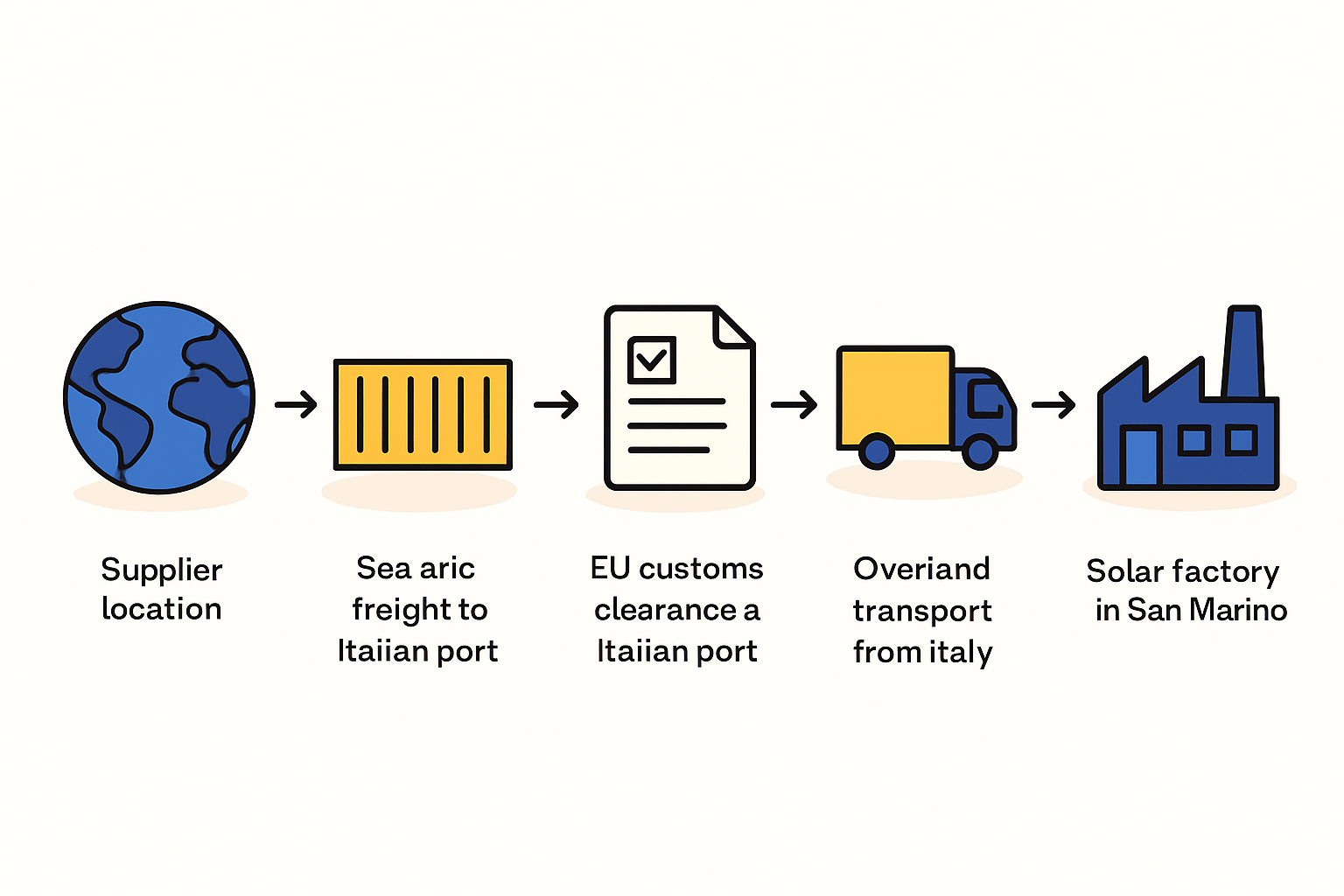
Starting a solar module factory is an ambitious venture, but placing it in a landlocked microstate like San Marino presents a unique set of logistical hurdles. With no coastline, every raw material, from glass panes to solar cells, must make the final leg of its journey overland after arriving by sea. This raises a critical question for any new investor: is such an operation feasible and competitive?
The answer is yes—if a robust logistical framework is established from the outset. Being landlocked is not an insurmountable barrier but a strategic problem demanding careful planning. This article outlines the logistical pathways, customs procedures, and supply chain strategies for operating a successful solar manufacturing plant in San Marino, providing a blueprint that can be adapted for other landlocked regions.
The Geographic and Political Context of San Marino
Building an effective logistics plan starts with understanding the operating environment. San Marino is a microstate entirely surrounded by Italy. While this presents the obvious challenge of having no direct port access, it also offers a significant advantage: its relationship with the European Union.
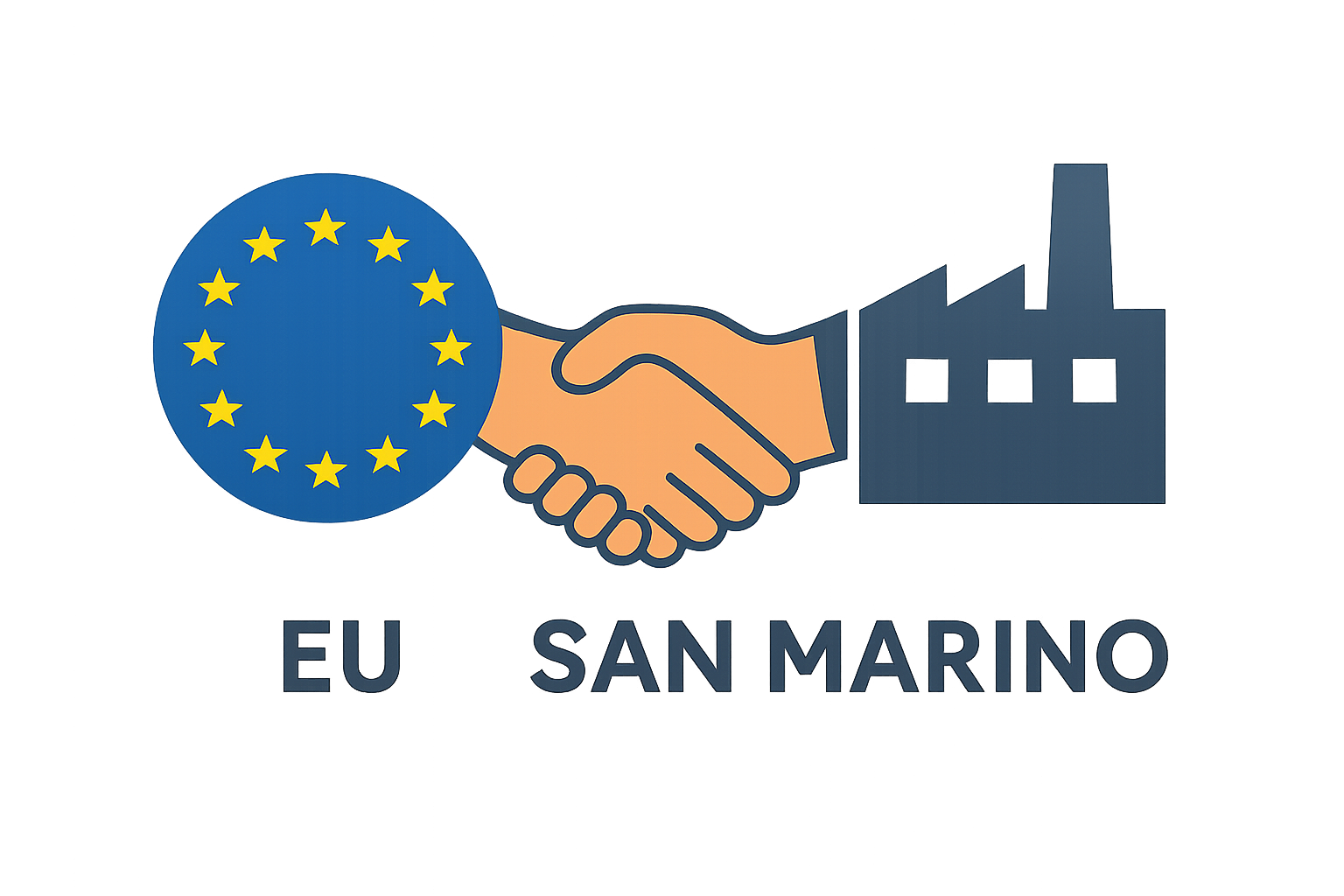
Since 1991, San Marino has been in a customs union with the EU. This agreement is the cornerstone of any successful import strategy, as it means goods moving between San Marino and EU member states, including Italy, are not subject to customs duties. While procedural formalities and Value Added Tax (VAT) considerations still apply, the elimination of tariffs significantly simplifies and reduces the cost of moving goods into the country. This political reality transforms the challenge from a customs problem into a purely logistical one.
Strategic Port Selection for Inbound Shipments
With raw materials arriving from global suppliers, primarily in Asia, the first logistical decision involves selecting the right Italian port of entry. This choice directly impacts transit times, costs, and overall supply chain reliability.
Three primary port clusters serve as logical gateways to San Marino:
1. The Adriatic Ports (Ravenna, Ancona)
- Proximity: These are the closest major ports to San Marino, significantly reducing the cost and time of the final overland leg.
- Suitability: They are well-suited for shipments originating from the Eastern Mediterranean, the Middle East, and Asia via the Suez Canal.
- Consideration: While efficient for regional traffic, they may have less frequent direct services from major Asian hubs compared to larger ports.
2. The Ligurian Sea Ports (Genoa, La Spezia)
- Capacity: As two of Italy’s largest and busiest ports, they offer extensive global shipping connections and can handle the largest container vessels, which often translates to more competitive sea freight rates from Asia.
- Suitability: Ideal for sourcing from multiple global suppliers, especially for businesses consolidating materials from different parts of the world.
- Consideration: The overland distance to San Marino is greater, increasing trucking costs and transit time compared to the Adriatic ports.
The optimal choice often involves a hybrid approach. A factory might use Genoa for bulk shipments of solar cells from a primary supplier in China while leveraging Ravenna for components sourced from Europe or Turkey.
Navigating Cross-Border Transport and Customs
Once a container arrives at an Italian port, its journey to the factory floor begins. This stage involves customs clearance and overland transport.
The Role of the EU Customs Union in Practice
For goods originating outside the EU, the process typically involves a T2 transit document. This allows the container to be moved ‘in bond’—without paying Italian import duties—from the port of arrival directly to San Marino. Customs formalities are then completed with the Sammarinese authorities. This process is far more efficient than clearing customs twice, first in Italy and again in San Marino.
Ready to make big Profits?
The solar Industry is Booming
WE HELP NEWCOMERS to the solar industry start their own solar module production line. Customers can make BIG PROFITS by selling modules and finding investors, without wasting money and time on things they don't need!
Experience from J.v.G. turnkey projects shows that a reliable local customs broker, familiar with Italy-San Marino protocols, is critical. These specialists ensure all documentation is correct, preventing costly delays.
Ground Transportation: The Final Leg
For this final stage of delivery, trucking is the only method. While straightforward, planners must account for:
- Vehicle Size: The road infrastructure within and around San Marino may have limitations on the size and weight of trucks. A common oversight is failing to verify that a standard 40-foot container on a chassis can access the factory site.
- Delivery Scheduling: Coordinating truck arrivals is essential to avoid congestion at the factory’s receiving area, especially when managing just-in-time deliveries of the raw materials required for solar manufacturing (pvknowhow.com/manufacturing/raw-materials).
A Resilient Supply Chain Strategy
A solar factory consumes a steady stream of materials, and any interruption can halt production. For a landlocked facility, a resilient supply chain is not a luxury; it is a necessity.
Just-in-Time (JIT) vs. Strategic Stockpiling
A Just-in-Time inventory strategy, where materials arrive just as they are needed for production, minimizes warehousing costs. However, this approach is highly vulnerable to disruptions like port strikes, shipping delays, or road closures.
A more prudent approach for a new factory is a hybrid model:
- Strategic Stockpiling: Maintain a buffer stock of 4-6 weeks for critical, long-lead-time components like solar cells. The typical lead time for cells from Asia can be 8-12 weeks, making this buffer vital.
- JIT for Bulk Materials: Employ a JIT-style approach for less critical or locally sourced materials like packaging or some chemicals to manage costs.
Diversifying Suppliers and Logistics Partners
Relying on a single freight forwarder or shipping line creates a single point of failure. Working with at least two different logistics partners mitigates this risk. This diversification provides flexibility if one partner experiences service issues and creates competitive tension that helps control costs. Similarly, qualifying secondary suppliers for key components provides a crucial backup against quality or availability issues with the primary source. This strategic redundancy is a key part of de-risking the process of setting up a solar factory (pvknowhow.com/how-to-start-a-solar-factory).

Frequently Asked Questions about San Marino Solar Factory Logistics
What are the primary raw materials to consider for import logistics?
The main components are solar glass, solar cells, aluminum frames, and polymer sheets (EVA and backsheet). Glass and frames are bulky and require careful handling to prevent breakage, while solar cells are high-value and sensitive, requiring secure transport.
Are there customs duties on raw materials imported into San Marino?
Due to the customs union with the EU, there are no duties on goods moving from Italy into San Marino. For goods arriving from outside the EU, duties are handled under the common external tariff system, but the process is streamlined. The main fiscal consideration is VAT.
What is the typical transit time from an Italian port to San Marino?
Once cleared from the port, the trucking journey itself is short, typically a few hours. However, the total time from ship docking to factory delivery can be anywhere from 2 to 7 days, depending on port congestion, customs processing times, and trucking availability.
How do logistics costs impact the overall business plan?
Logistics will be a significant operational expense. When planning initial investment requirements (pvknowhow.com/investment/cost-overview), accurately forecasting inbound freight, customs brokerage fees, and local transport costs is crucial. These factors directly influence the final cost per module.
Planning Your Logistical Framework
Operating a solar module factory in a landlocked location like San Marino is a testament to the power of strategic planning. The challenges of geography can be overcome with a deep understanding of the local customs environment, careful selection of import gateways, and a resilient, diversified supply chain.
For the international investor, the key takeaway is that location is less a barrier than a variable to be managed. A well-structured logistical plan, developed with experienced partners, is as fundamental to success as the production machinery itself. It ensures the consistent flow of materials, which is the lifeblood of any manufacturing operation.