An entrepreneur looking to enter the solar manufacturing sector often begins by searching for a building. A modern, spacious, and affordable facility can seem like the perfect starting point, but focusing on the physical structure alone can lead to critical oversights.
A factory, no matter how ideal, is only as viable as the infrastructure supporting it. A seemingly perfect building with an inadequate power supply or poor logistical access can quickly become an expensive liability.
This article lays out a practical framework for evaluating potential factory locations, focusing on industrial parks and essential utility infrastructure. It outlines the non-negotiable requirements for building a successful and efficient solar module production facility.
Why the ‘Perfect Building’ Is Often the Wrong Choice
A successful manufacturing operation depends on a seamless flow of materials, energy, and finished goods. Choosing a site based primarily on the building’s cost or appearance ignores the operational realities that follow. The true cost of a location includes not just the lease or purchase price, but also the ongoing expenses and potential bottlenecks created by its surroundings.
Consider the challenge of transporting 40-foot containers of delicate solar glass down poorly maintained roads or the production-halting impact of an unstable power grid. These are not minor inconveniences; they are fundamental obstacles to profitability. A systematic site analysis must prioritize the external environment—utilities, logistics, and labor access—before committing to a specific building.
Core Infrastructure Requirements: The Non-Negotiables for a Solar Factory
A solar module assembly line is a sophisticated operation with demanding infrastructure needs. Any potential site must meet the following three critical requirements.
1. Electrical Power: Beyond Just ‘Having Electricity’
A stable, high-capacity, three-phase electrical supply is arguably the most critical utility for a solar factory. Standard commercial power is insufficient. Key machinery, such as laminators and automated stringers, consumes significant energy and requires consistent, high-quality power to function correctly.
Think of it as the difference between a garden hose and a fire hose. While both supply water, only one has the volume and pressure to handle a serious task. An inadequate power supply can lead to:
- Production Halts: Frequent power sags or outages will stop the production line, causing costly downtime.
- Equipment Damage: Voltage fluctuations can damage sensitive electronic components in the solar panel manufacturing equipment.
- Quality Defects: Inconsistent power to a laminator can result in improperly cured modules, leading to high rejection rates.
Grid instability is a common issue in many emerging markets. In these regions, it’s essential to factor in the cost of industrial-grade backup generators or uninterruptible power supplies (UPS) from the outset.
2. Water Supply: The Unsung Hero of Production
While not as power-intensive, a consistent and reliable water supply is vital, primarily for cleaning solar glass before lamination. Any residue, dust, or minerals on the glass can cause defects like delamination later in the module’s life. This process requires purified, deionized (DI) water.
A typical 50 MW factory requires a steady supply to feed its water purification system. When evaluating a site, you must confirm both the availability of water and its pressure and consistency, as these factors impact the efficiency and cost of the DI water system.
3. Logistics and Accessibility: Connecting to the Global Supply Chain
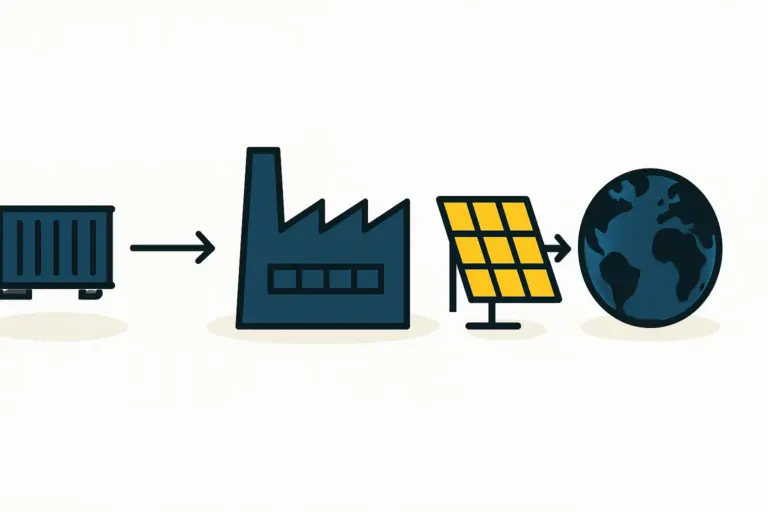
A solar factory is a node in a global supply chain. It receives solar panel raw materials like glass, cells, and aluminum frames—often in 40-foot containers—and ships finished modules to customers. Efficient logistics are non-negotiable.
The ideal location offers:
- Proximity to a Major Port: Minimizes inland transportation costs and delays for imported raw materials.
- Excellent Road Access: Roads must be able to handle heavy trucks, with adequate turning radii and no low bridges or other obstructions.
- Efficient Inbound/Outbound Flow: The site should allow for easy loading and unloading of containers without disrupting other factory operations.
Evaluating Industrial Parks: A Practical Checklist
Industrial parks are often designed to address these core requirements, making them an excellent starting point for site selection. They frequently offer pre-vetted land with established utilities and favorable zoning. The C.A. Paul Southwell Industrial Park in St. Kitts, for example, is strategically located near a deep-water port and airport, providing the logistical advantages essential for manufacturing.

However, never take a developer’s brochure at face value. A thorough due diligence process is essential.
Site Evaluation Checklist:
-
Utility Verification: Request official documentation from the local utility provider detailing the available power capacity (in kVA or MVA), voltage stability, and connection costs. Do not rely solely on the park administration’s claims.
-
Zoning and Permitting: Confirm that the park’s zoning explicitly allows for industrial manufacturing. Pre-zoned land can save months, or even years, in the permitting process—a crucial step when planning how to start a solar panel manufacturing business.
-
Scalability: Does the site offer room for future expansion? A successful 50 MW line may need to double its capacity in a few years. Ensure adjacent plots are available or that the initial plot is large enough to accommodate growth.
-
Labor Pool: Assess the proximity to a population center that can provide a reliable workforce. Consider transportation infrastructure for employees.
-
Security: In many regions, the park’s security is a major consideration. Evaluate fencing, access control, and on-site security services.
J.v.G. Technology GmbH’s global experience in establishing turnkey production lines shows that independently verifying utility promises with third-party engineers is a critical step that prevents costly post-investment surprises.
Beyond the Park: Broader Economic and Political Considerations
The ideal site is also supported by a favorable business environment. Two key factors to consider are:
-
Free Trade Zones (FTZs): Many industrial parks are designated as FTZs, which can offer significant financial advantages, including tax exemptions on imported raw materials and exported finished goods, as well as streamlined customs procedures.
-
Government Support and Stability: A stable political environment and supportive government policies are crucial for a long-term investment. Look for investment promotion agencies that can assist with navigating regulations and securing necessary permits.
In many African, Middle Eastern, and Latin American nations, understanding the role of state-affiliated organizations and having strong local partners is often critical to a project’s success.

Frequently Asked Questions (FAQ)
What is the typical power requirement for a 50 MW solar module factory?
A 50 MW per year single-shift operation typically requires an installed power connection of approximately 500 to 750 kVA. This accounts for all machinery, lighting, and climate control systems.
Can a factory be established in a rural area far from a port?
While possible, it is generally not advisable. The cost of transporting multiple containers of raw materials inland and shipping finished goods back out can severely impact profitability and create logistical vulnerabilities.
How important is the building’s floor for a solar factory?
The floor is extremely important. It must have a high load-bearing capacity—typically at least 1.5 tons per square meter—to support heavy equipment like the laminator, a core component of a turnkey solar production line. The floor must also be perfectly level and sealed to maintain a clean production environment.
What is the minimum ceiling height needed in the production hall?
A minimum clear ceiling height of 6 to 8 meters is recommended. This provides adequate space for installing machinery, overhead cable trays, ventilation systems, and moving materials with forklifts.
Next Steps in Your Site Selection Process
Selecting the right site is a foundational business decision that sets the stage for operational efficiency and long-term profitability. It requires a methodical approach that looks beyond the building itself to the entire ecosystem that will support it.
Your logical next steps are a comprehensive feasibility study and a detailed business plan, which will transform this initial research into a bankable project. These documents will formalize the site analysis, budget for infrastructure costs, and create a clear roadmap for execution. Resources such as the e-courses and guides available on pvknowhow.com can provide a structured framework for this critical planning phase.