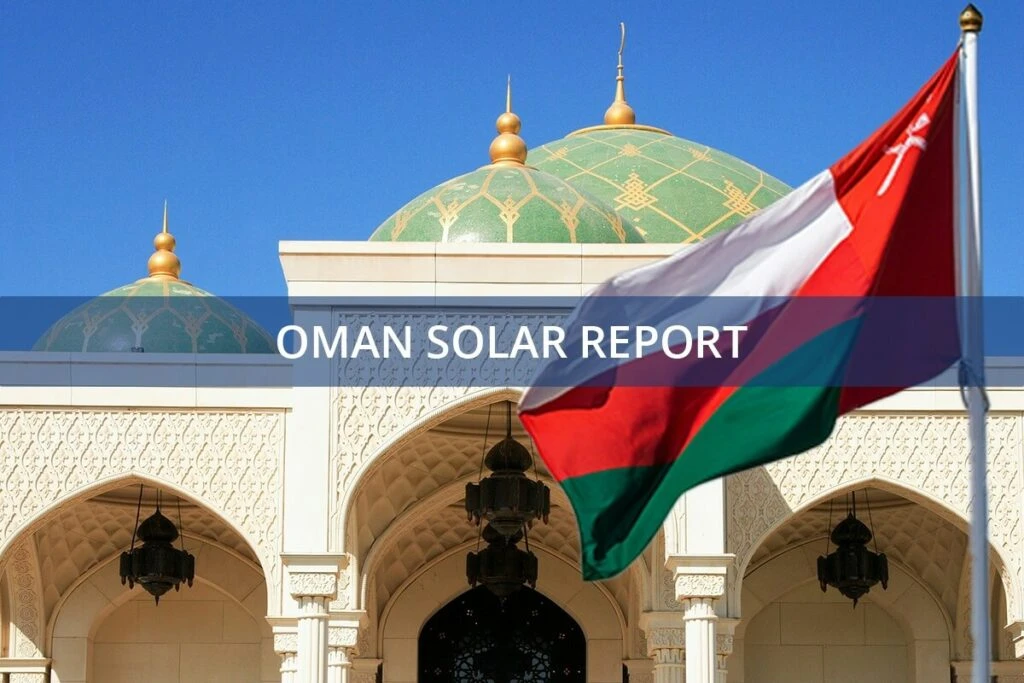
Oman is set to advance its renewable energy sector with plans to reach a financial investment decision (FID) on 2 GW of solar and wind projects by the end of 2025. This initiative is part of the country’s broader goal to add significant renewable energy capacity by 2030.
Advancing the Oman Renewable Energy Sector
Oman is set to significantly advance its renewable energy sector, with plans to reach a financial investment decision (FID) on 2 GW of solar and wind projects by the end of 2025. This push comes as the Oman renewable energy share doubles to 21% in early 2025, demonstrating clear momentum. Mohammed Al Harthy, Vice President of New Energy at OQ, announced these plans at the Energy Transition Conference in Muscat, highlighting the country’s preparation for a new wave of Independent Power Producer (IPP) awards. This initiative is part of a broader goal to add approximately 4.5 GW of solar and 1 GW of wind capacity by 2030.
OQ, Oman’s state-owned energy company, is at the forefront of developing renewables to support the nation’s ambitious energy targets. Al Harthy revealed that the company aims to finalize the FID for the first phase of a 500 MW solar project by the end of the first quarter of next year. This project is expected to be operational by 2026, with the second phase commencing immediately afterward.
Strategic Partnerships and Project Details for Oman Renewable Energy
OQ is also advancing a 300 MW wind project in Dhofar, which is currently in the detailed design phase. This joins a growing list of wind projects, including the 125 MW Dhofar 2 wind IPP scheduled for operation in 2027 and the upcoming Sadah wind IPP. In the solar sector, OQ is collaborating with Marubeni, a Japanese trading house, and engineering firm Amata to develop a 1 GW solar project. This will be constructed in three phases of 500 MW, 250 MW, and 250 MW. These efforts are complemented by recently inaugurated projects like the 500 MW Manah 1 and Manah 2 solar IPPs, showcasing tangible progress.
These renewable energy projects will play a crucial role in supporting Oman’s green hydrogen production targets. The country aims to produce at least 1 million tonnes per year (t/y) of green hydrogen by 2030. OQ’s long-term vision, supported by significant capital injections like the OQGN’s $2B investment boosts Oman renewable energy goals, includes expanding its green hydrogen production capacity to 8 million t/y by 2050. This ambitious goal requires substantial renewable energy generation, estimated at around 80 GW by mid-century.
Oman’s Renewable Energy Goals
Oman’s commitment to renewable energy is part of a broader strategy to diversify its energy sources and reduce reliance on fossil fuels. The country has refined its targets, now aiming for renewables to contribute 30% of its electricity generation by 2030, with an interim goal of 11% by 2025. By 2040, this figure is expected to rise to 35-39% as part of the country’s path toward the Oman 2050 solar target unveiled. The development of solar and wind projects, increasingly coupled with energy storage solutions as seen in the Oman solar battery project: Impressive 2024 power deal, is central to achieving these targets and supporting the green hydrogen sector.
The financial investment decision (FID) is a critical milestone. Once the FID is reached, construction can begin, and the projects can move toward becoming operational. For Oman, reaching FID on these renewable energy projects by the end of 2025—supported by necessary grid reinforcement—is a significant step forward in its energy transition journey.
Future Prospects for Oman Renewable Energy
The successful implementation of these projects will not only help Oman achieve its renewable energy targets but also position the country as a leader in green hydrogen production. With electricity demand projected to increase by 5% annually in some regions, this clean energy expansion is also vital for energy security. Strategic investments, such as the new Oman’s $488M battery project to boost solar energy goals, are essential for stabilizing the grid and maximizing the benefits of intermittent renewable sources.
Oman’s ambitious plans to expand its renewable energy capacity by 2030 and beyond are crucial for the country’s long-term economic diversification. With the support of international partners and a clear vision for the future, Oman is well on its way to becoming a major player in the global renewable energy and green hydrogen markets.
If you’re interested in the technical side of solar energy, consider exploring our free e-course to learn more.