In any industrial project, the most important conversation is about money. Before discussing machines, buildings, or technology, a secure financial foundation is essential. A battery pack production factory is a significant industrial asset, not a small startup. Lenders evaluate it based on tangible plans and financial stability, not just an idea.
Understanding the financing process is therefore one of the first and most critical steps for any entrepreneur or business leader considering a move into this industry. This guide breaks down the practical realities of how such projects are financed, helping you prepare for what lies ahead.
The Two Starting Points for Project Financing
In our experience with industrial projects worldwide, projects typically begin from one of two financial positions. Understanding which situation describes your project is key to planning the next steps effectively.
Scenario 1: Financing is Already Secured
This is the most straightforward and efficient path. In this case, the project owner or investment group has already secured the necessary capital. This could mean:
- The company is using its own equity and has formally allocated the budget.
- A loan from a bank or financial institution has been pre-approved or approved in principle.
- An external investor has already committed the required funds.
With financing secured, the project can move directly into detailed technical planning and implementation. This position significantly reduces project timelines and removes financial uncertainty, freeing the team to focus entirely on execution.
Scenario 2: Financing is in Preparation
This is a more common starting point for new ventures. The project sponsor has a certain amount of equity available but needs to secure additional debt financing from a bank or attract external investors to cover the full project cost.
The primary challenge here is to present a convincing case to potential lenders. Banks and investors do not finance abstract ideas. They require a structured, detailed, and verifiable plan that demonstrates the project’s viability and reduces their risk exposure. This is where professional planning becomes an essential tool to support financing discussions.
The Role of Professional Planning in Securing Capital
Financial institutions require professional factory planning because it answers their most important question: “Is this a viable investment with manageable risk?” A comprehensive plan translates a business concept into a predictable industrial operation.
This planning must cover all critical cost centers, including:
- Production Equipment: A detailed list of all machinery required for the battery production line, from cell testing to final pack assembly.
- Building & Infrastructure: Costs for factory construction or renovation, including specialized requirements like dry rooms, clean areas, and robust electrical systems.
- Working Capital: The initial funds needed to purchase raw materials like cells, enclosures, and electronic components.
- Operational Costs: Projections for labor, energy, certifications, and other ongoing expenses.
A professionally prepared plan demonstrates that the project’s leadership is competent and has considered all major variables. This significantly increases a lender’s confidence and is often a prerequisite for advancing into serious financing discussions.
Ready to make big Profits?
The solar Industry is Booming
WE HELP NEWCOMERS to the solar industry start their own solar module production line. Customers can make BIG PROFITS by selling modules and finding investors, without wasting money and time on things they don't need!
The Business Plan and Feasibility Study: Your Financial Roadmap
To communicate your project to a financial institution, two key documents are typically required: a business plan and a feasibility study.
What is a Feasibility Study?
A feasibility study for a battery factory is a technical and financial document that demonstrates the project is technically and economically workable. It includes detailed cost breakdowns for machinery, infrastructure, and raw materials, along with production output calculations and operational cost models. It forms the engineering foundation of a financing request.
What is a Business Plan?
The business plan outlines the commercial strategy. It details the target market, sales strategy, revenue projections, and long-term financial forecasts such as cash flow and profit-and-loss statements. It takes the data from the feasibility study and presents it in a format that financial institutions can evaluate.
Together, these documents form a comprehensive proposal. However, it is important to understand their role: they support a financing request, but they do not replace the need for the project owner’s own equity. Lenders expect the owner to have a meaningful financial stake in the venture; the documents provide transparency and structure for assessing the remaining funding.
Understanding Planning Costs as a Necessary Investment
Many entrepreneurs wonder why professional planning and feasibility studies come with a cost. Creating financing-ready documentation requires substantial effort from experienced engineers and financial analysts. It is a professional service that forms the foundation of a multi-million-euro industrial investment.
“Free” plans, often provided by machine suppliers, are usually limited to equipment quotations. They typically do not include infrastructure, working capital, or detailed financial modeling and are therefore insufficient for structured financing discussions. Relying on such preliminary documents can lead to unrealistic budgets and serious project risks.
Investing in professional planning is often the first concrete commitment to a project and signals seriousness to financial partners. This approach aligns interests and supports long-term project success.
Strategic Takeaway: The Correct Sequence for Success
Building an industrial facility follows a proven and logical sequence. Attempting to skip steps frequently leads to delays, cost overruns, and financing challenges. The correct order is fundamental:
- Financing Comes First: Clarify and secure your financial foundation early.
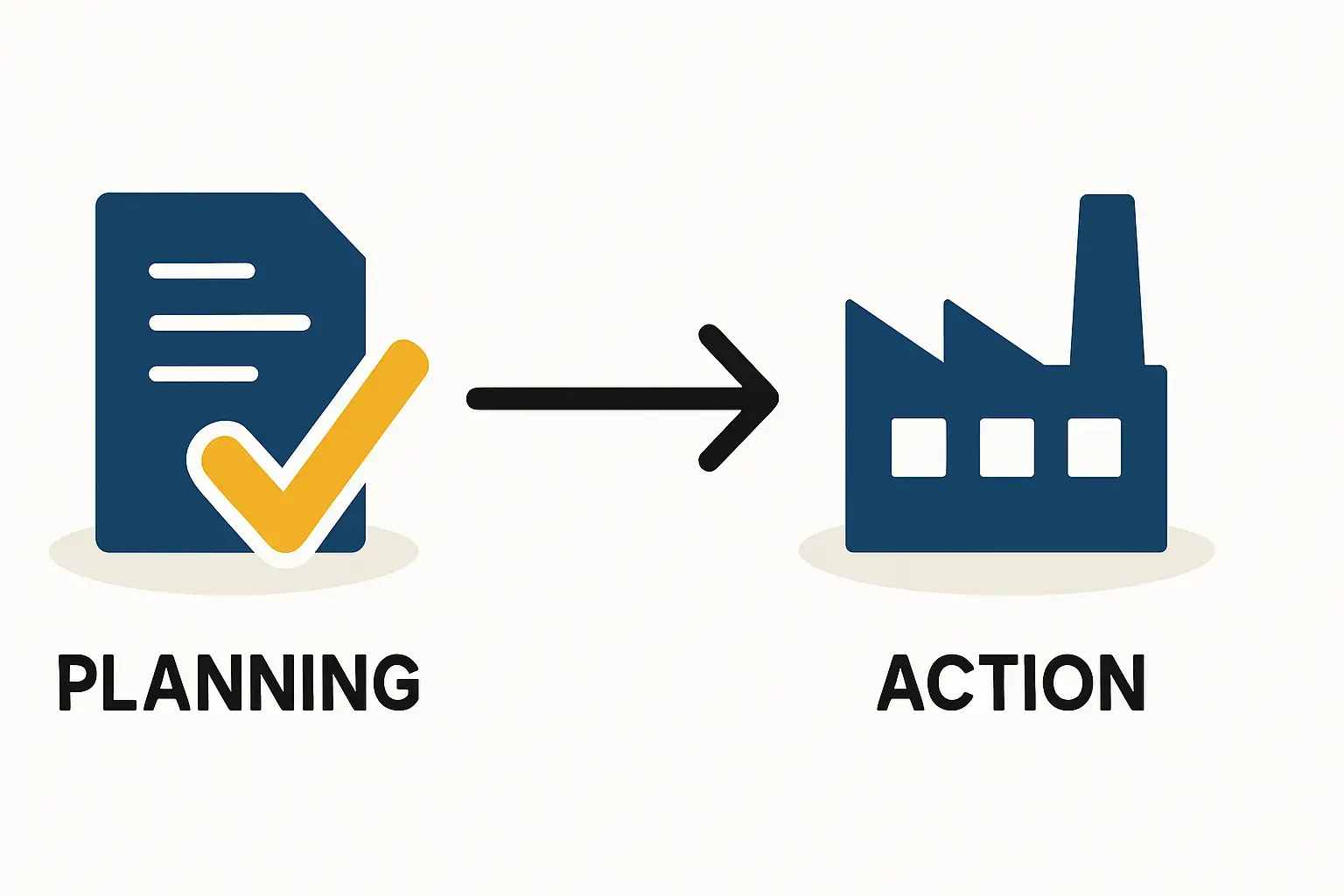
- Planning Precedes Orders: Develop a comprehensive, financing-ready plan before committing to machinery purchases.
- Clarity Prevents Delays: Time invested in financial and technical clarity at the beginning reduces risk and accelerates implementation.
This structured approach transforms a complex vision into a manageable, financeable, and ultimately successful industrial project.