Azerbaijan, a nation historically defined by its vast oil and gas reserves, is now positioning itself as a strategic hub for green energy. With ambitious national targets and significant international investment, the country offers a compelling opportunity for entrepreneurs in the solar module manufacturing industry.
But how do you build a factory in a market where the supply chain is still developing? This guide provides a practical framework for navigating the core components of a solar manufacturing supply chain in Azerbaijan, covering everything from raw material sourcing and logistics to regulatory incentives and on-the-ground realities.
Table of Contents
The Foundation: Understanding Azerbaijan’s National Solar Strategy
The government of Azerbaijan has set a clear goal: increase the share of renewable energy in its total installed power capacity to 30% by 2030. This initiative is backed by a strong policy framework and a commitment to attracting foreign investment.
The strategy builds on the country’s natural advantages, including excellent solar resources with 2,400-3,200 sunshine hours annually and a technical potential of 23,000 MW.
Key government bodies like the Ministry of Energy and the Azerbaijan Renewable Energy Agency (AREA) are spearheading this transition. Major projects are already underway—a clear signal of market momentum. The 230 MW Garadagh solar plant, developed by UAE-based Masdar, is a flagship example. Further investments, including 760 MW of new solar projects from Masdar and agreements with Chinese firms like Jinko Solar and PowerChina, underscore the robust demand for locally produced components.
Sourcing Raw Materials and Components: A Global and Local Mix
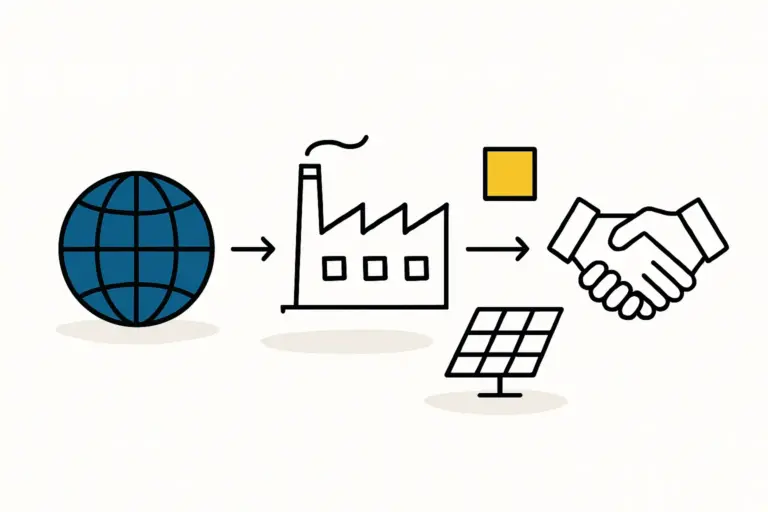
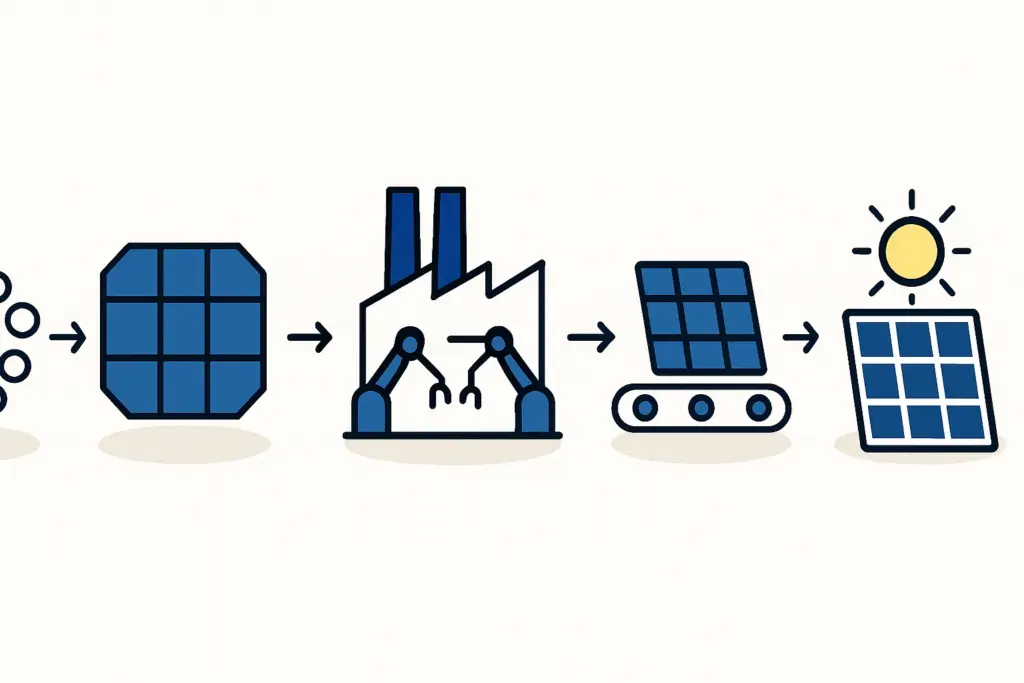
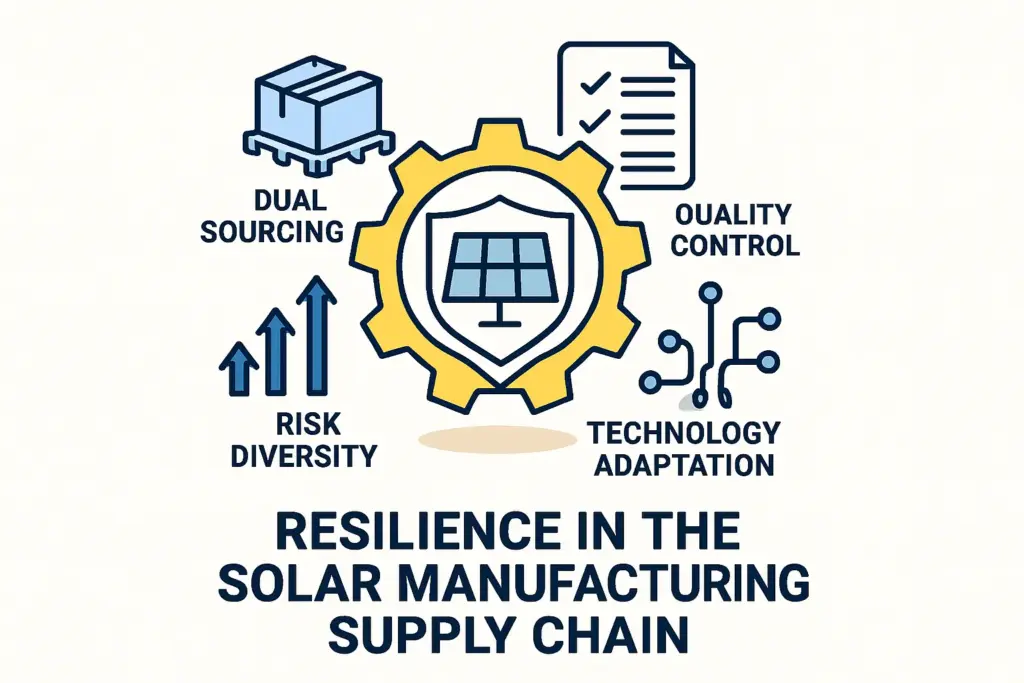
A successful manufacturing operation hinges on a reliable supply of raw materials and components. In Azerbaijan, this means adopting a dual strategy that combines local sourcing with strategic international procurement.
Local Sourcing Potential
Azerbaijan’s industrial base offers potential for sourcing basic materials like aluminum frames and possibly solar glass from existing industries. Tapping into these local suppliers can reduce logistics costs and import dependencies for bulky components.
Global Sourcing Strategy
High-tech components, which form the core of a solar module, will need to be imported. These include:
- Polysilicon
- Solar Wafers
- Photovoltaic (PV) Cells
- EVA Encapsulant Film
- Backsheets
- Junction Boxes
Key international suppliers for these parts are predominantly in China, with Turkey and Europe also serving as important trade partners. Establishing strong relationships with these global suppliers is critical for any new manufacturing venture.
Component Sourcing Overview
- Glass and Aluminum Frames: These can likely be sourced locally in Azerbaijan. The key is to assess local quality standards and production capacity.
- Polysilicon, Wafers, and Cells: As core high-tech components, these will need to be imported from international suppliers, primarily in China and Europe, requiring strong import logistics and thorough supplier vetting.
- EVA and Backsheets: Expect to source these internationally from key markets like China and Turkey. Focus on quality and establishing long-term supply agreements.
- Junction Boxes: These will also be imported from international partners in China and Europe. A critical step is ensuring compliance with regional technical standards.
Logistics and Infrastructure: Moving Your Supply Chain
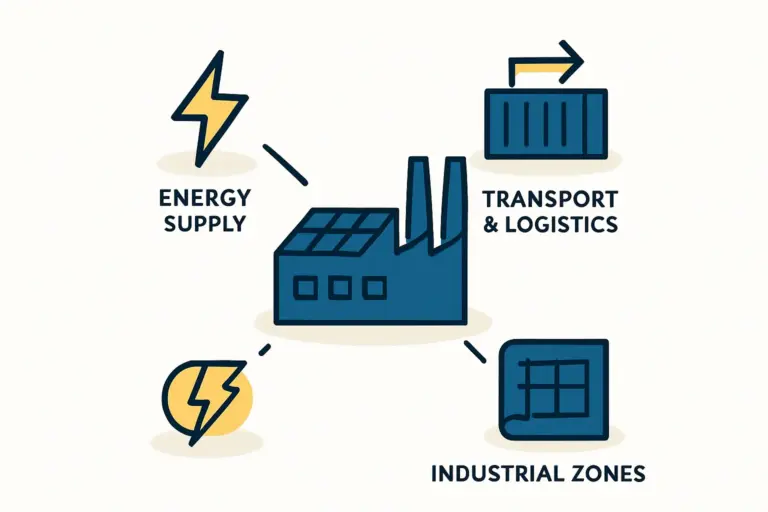
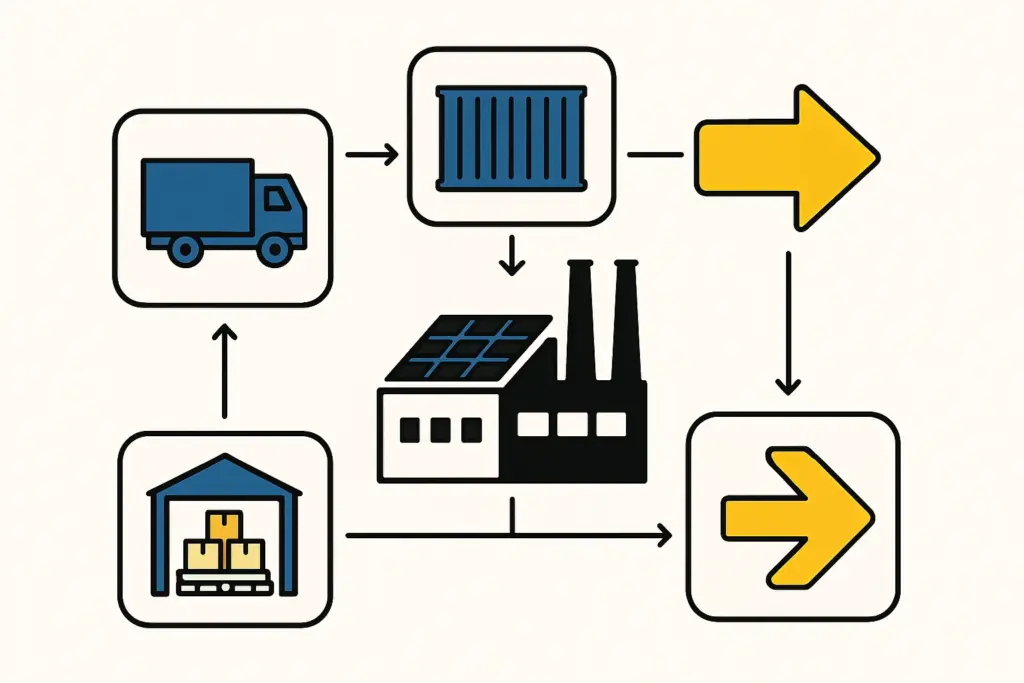
Azerbaijan’s strategic location at the crossroads of Europe and Asia, combined with its well-developed transport infrastructure, positions it as a prime **Azerbaijan supply hub** for manufacturers importing raw materials and exporting finished goods.
The Baku International Sea Trade Port is a central asset, providing access to the Caspian Sea and connecting to international shipping routes. The country’s extensive rail and road networks facilitate efficient overland transport to neighboring markets in Georgia, Turkey, Iran, and beyond.
To plan your logistics effectively, work with experienced local freight forwarders who understand the requirements for handling fragile, high-value solar components. They can navigate customs procedures, manage documentation, and ensure timely delivery to your factory floor.
The Regulatory and Financial Advantage
The Azerbaijani government offers several key incentives designed to make solar manufacturing financially viable, reducing both upfront capital expenditures and ongoing operational costs.
The most significant of these is the “Investment Promotion Certificate.” Businesses that obtain this certificate benefit from a range of powerful advantages for seven years, including:
- A 50% reduction in corporate income tax.
- Exemption from land and property taxes.
- Full exemption from Value-Added Tax (VAT) on imported machinery, technological equipment, and facilities.
- Exemption from customs duties on the same imported equipment.
These exemptions dramatically lower the initial investment required to set up a production line. Furthermore, Azerbaijan’s competitive industrial electricity rate of approximately $0.059 USD per kWh represents a significant operational advantage for an energy-intensive process like solar module manufacturing.
Building and Operating Your Factory: On-the-Ground Realities
Beyond regulations and logistics, understanding the practical aspects of setting up and running your facility is vital. Azerbaijan has a capable labor force with a strong tradition in engineering and technical education. Skilled engineers and technicians are available, and labor costs are competitive with many Western European markets.
Industrial land and warehouse facilities are available for rent or purchase, particularly within designated industrial zones that offer ready-to-use infrastructure. As you develop your business plan, conducting thorough due diligence on local costs for land, construction, utilities, and labor is essential for building an accurate financial model.
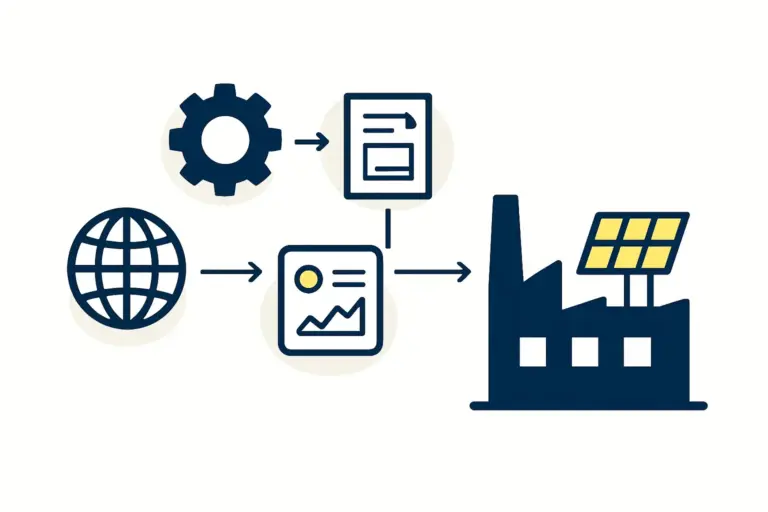
Ready to turn your solar manufacturing vision into reality? Visit our free e-course to learn the basics, or explore our services for expert support. For a comprehensive roadmap, our Premium Business Plan E-Course provides the personalized guidance you need to launch your venture. Let’s build a successful solar future together.
Frequently Asked Questions (FAQs)
Q: What are the main incentives for solar manufacturers in Azerbaijan?
A: The primary incentive is the “Investment Promotion Certificate,” which provides a 7-year, 50% reduction in income tax and full exemptions from property tax, land tax, VAT, and customs duties on imported machinery and equipment.
Q: Can I source all raw materials for solar panels locally in Azerbaijan?
A: No. While basic materials like aluminum frames and potentially glass can be sourced locally, high-tech components such as polysilicon, wafers, and solar cells must be imported from established global suppliers, primarily in China and Europe.
Q: What is the role of foreign investment in Azerbaijan’s solar sector?
A: Foreign investment is critical. Companies like Masdar (UAE), ACWA Power (Saudi Arabia), and various Chinese firms are leading the development of large-scale solar power plants. Their presence creates stable, long-term demand for locally manufactured solar panels and helps build confidence in the market.
Q: Is Azerbaijan’s location good for exporting finished solar panels?
A: Yes. Its strategic location and well-developed sea, rail, and road networks provide excellent access to markets in the Caucasus region, Turkey, Russia, and Central Asia, making it a strong base for regional exports.