Entrepreneurs considering a new venture in solar module manufacturing often focus first on technology, financing, and market access. Yet the success of any industrial project ultimately rests on the quality and availability of its workforce.
For investors looking at Belarus, a nation with a deep industrial history, human capital is both an opportunity and a critical consideration. The country has a unique profile: a legacy of Soviet-era technical excellence poised against the demands of a modern, high-tech industry like photovoltaics.
This analysis delves into the Belarusian labor market, covering the availability of relevant skills, potential training pathways, and typical labor costs. It offers a framework for assessing one of the most vital components of any manufacturing investment.
Table of Contents
The Legacy of Belarusian Industry: A Foundation for Modern Manufacturing
Understanding the current labor landscape in Belarus begins with its industrial heritage. As a manufacturing hub within the former Soviet Union, the country developed a strong emphasis on engineering, technical education, and heavy industry. Renowned enterprises like the Minsk Tractor Works (MTZ) and BelAZ, a world leader in haulage equipment, are not just historical artifacts; they are evidence of a deeply ingrained culture of industrial production.
This background has shaped the workforce in several key ways:
- Strong Technical Aptitude: A generational familiarity with factory environments, mechanical processes, and quality control standards is common.
- Emphasis on Engineering: The education system has long prioritized STEM (Science, Technology, Engineering, and Mathematics) fields.
- Disciplined Workforce: A culture of process adherence and structured work is prevalent—highly beneficial for the precision required in solar module assembly.
Data from the Belarusian Telegraph Agency and the National Statistical Committee of the Republic of Belarus reinforces this picture, showing a national literacy rate of over 99.7%. This educational foundation, paired with the country’s industrial history, provides a robust pool of candidates who can be trained for sophisticated manufacturing roles.
Analyzing the Current Labor Pool: Availability and Skills
While a general industrial culture is advantageous, a solar module factory requires specific competencies. Investors must assess the availability of both high-level engineering talent and a capable semi-skilled workforce for the production line.
Technical and Engineering Talent
Belarus has a strong educational infrastructure, with institutions like the Belarusian State University and the National Academy of Sciences producing a steady stream of graduates in physics, chemistry, and various engineering disciplines. This creates a reliable pipeline for critical roles such as:
- Plant Managers
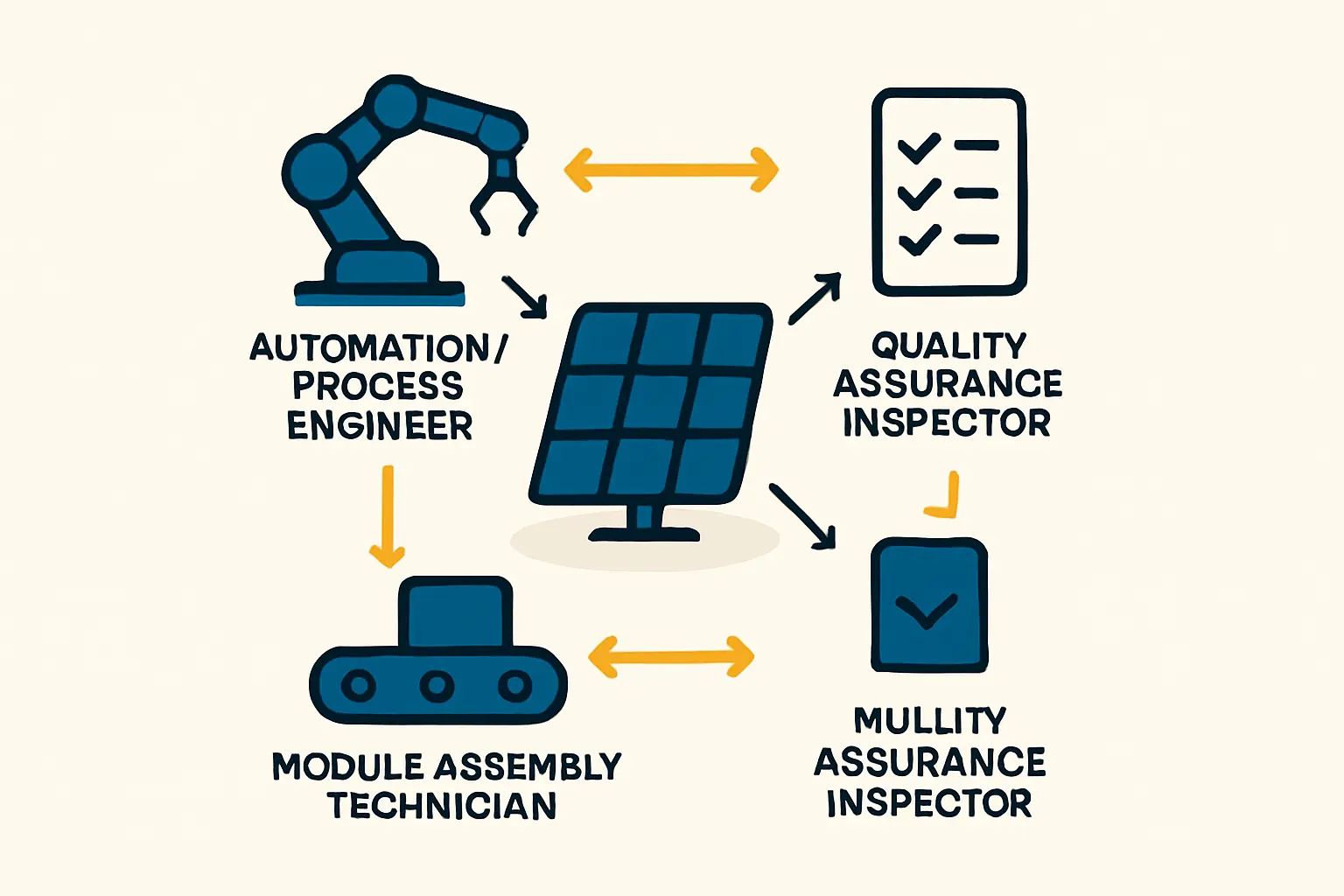
- Process Engineers
- Quality Control Supervisors
- Maintenance Technicians
Although finding individuals with direct experience in photovoltaics may be challenging, the core engineering principles are transferable. An experienced mechanical or electrical engineer from a traditional manufacturing background can readily adapt to the specifics of solar technology with the right training.
Manual and Semi-Skilled Labor
For production line operations—such as cell stringing, lamination, and framing—the key requirements are workers who are detail-oriented, reliable, and capable of following standardized procedures. The Belarusian workforce, particularly in industrial regions around cities like Minsk, Gomel, and Vitebsk, is well-suited for these tasks. Their experience in other manufacturing sectors means that concepts like production targets, quality checks, and workplace safety are already second nature.
Ready to make big Profits?
The solar Industry is Booming
WE HELP NEWCOMERS to the solar industry start their own solar module production line. Customers can make BIG PROFITS by selling modules and finding investors, without wasting money and time on things they don't need!
This existing foundation significantly shortens the learning curve compared to regions without an industrial precedent.
Bridging the Skills Gap: Training for Solar-Specific Roles
Even with a strong foundational skillset, a new workforce will need specialized training to manufacture high-quality solar modules. The transition from general industrial knowledge to PV-specific expertise is a critical step.
The Importance of Structured Training Programs
A new factory needs a dedicated training plan covering every stage of the production line. To master solar-specific tasks, general technical aptitude must be honed through hands-on instruction. Building a proficient team begins with understanding the function of key solar module manufacturing machines.
For instance, workers must learn:
- The precise handling of fragile solar cells for the stringer machine.
- The operating parameters for the laminator to ensure proper encapsulation.
- The testing protocols for the sun simulator to guarantee module performance.
On-Site Training and Knowledge Transfer
Experience from J.v.G. Technology GmbH’s turnkey projects shows that the most effective approach is on-site training delivered by experienced PV engineers. These experts work alongside the newly hired local team, guiding them through each process until they can operate independently and meet quality standards. This hands-on knowledge transfer is essential for building a self-sufficient and capable production team.
This initial investment in training pays dividends through higher production yields, lower defect rates, and consistent product quality.
Labor Costs and Regulatory Environment in Belarus
A key factor for any business plan is operational expenditure, and labor is a significant component. On this front, Belarus offers a competitive advantage.
A Competitive Cost Structure
According to data from national statistical bodies, wages in Belarus are moderate compared to Western Europe and competitive within the Eastern European region. While specific figures fluctuate, an entrepreneur can expect significantly lower labor costs than in countries like Germany or Poland. This allows more capital to be allocated to high-quality materials and machinery while maintaining healthy operating margins.
Navigating Labor Regulations
The Belarusian labor code provides a structured framework for employment, defining standard workweeks, overtime regulations, and employment contracts. Trade unions, a legacy of its Soviet past, continue to play a role in the industrial sector. For a foreign investor, working with local legal counsel is crucial to ensure full compliance with all regulations. The system, however, is generally considered stable and predictable for businesses that follow established rules.
A Practical Perspective: Building Your Team
A frequent question from entrepreneurs is, “How do I build a reliable team of 30–50 people from scratch in a new market?” In Belarus, the process can be approached systematically.
A typical 20–50 MW factory requires a team of approximately 25 to 45 employees. The hiring and development process usually follows these steps:
- Recruit Senior Leadership: Start by hiring a plant manager and key engineers. Look for individuals with degrees from reputable Belarusian technical universities and experience in any form of precision manufacturing.
- Hire Production Staff: Recruit line workers and technicians from local industrial areas. Focus on candidates who demonstrate attention to detail and a history of reliable employment.
- Implement Intensive Training: Conduct a comprehensive, multi-week training program led by external experts before the production line goes live.
- Foster a Quality-First Culture: From day one, emphasize the importance of international quality standards, such as those required for IEC certification.
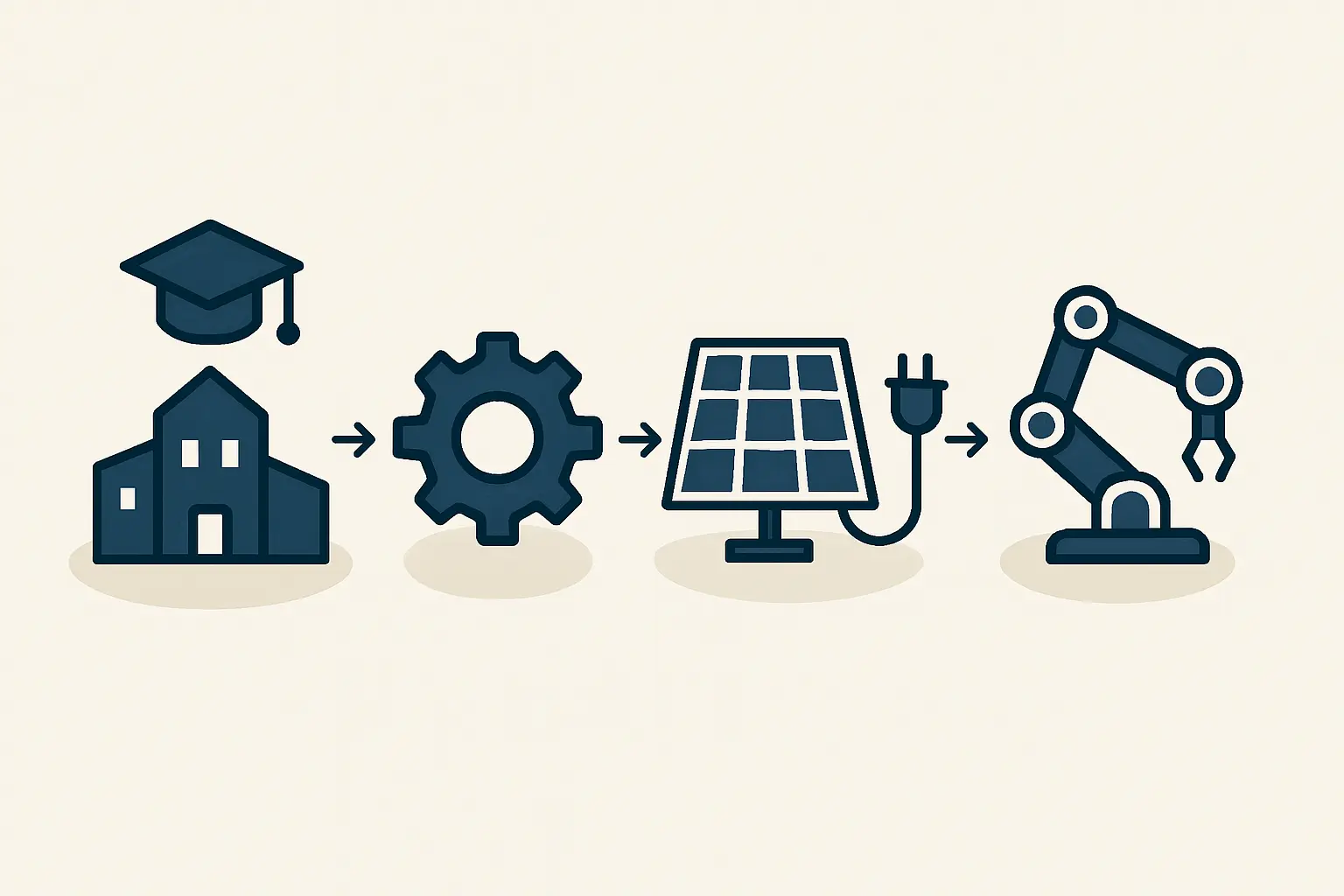
This structured approach, combining local talent with expert-led training, is a proven formula for success.
Frequently Asked Questions (FAQ)
Q: Is it difficult to find English-speaking engineers in Belarus?
A: While Russian and Belarusian are the official languages, many younger engineers and professionals from top universities have a working knowledge of English. For day-to-day plant management and technical documentation, engaging a local translator or a bilingual manager is a practical solution.
Q: What is the typical staff size for a 20 MW solar module factory?
A: A semi-automated 20 MW line can typically be operated with a staff of 25–35 people per shift, including management, quality control, maintenance, and production line workers.
Q: How long does it take to train a new production team for a solar factory?
A: A focused, on-site training program can bring a new team to operational proficiency within four to six weeks. This initial period covers machine operation, quality checks, and safety protocols. Continuous skill development should follow in the subsequent months.
Q: Are local vocational schools a good source for talent?
A: Yes, Belarus has a well-established network of vocational and technical colleges. Partnering with these institutions can be a strategic way to create a long-term pipeline of entry-level technicians with solid foundational skills.
Conclusion: The Human Capital Advantage of Belarus
The Belarusian labor market presents a compelling case for entrepreneurs entering the solar manufacturing industry. The nation’s strong educational system, deep-rooted industrial culture, and competitive wage structure create fertile ground for building a skilled and efficient workforce.
The primary challenge is not a lack of talent but bridging the gap between general technical skill and the specific demands of photovoltaic production. With a strategic approach to recruitment and a robust, expert-led training program, an investor can transform this potential into a tangible operational advantage. Understanding this human capital is a critical first step in building a comprehensive business plan for your solar factory.