An entrepreneur envisions his new solar module factory in Belize as a beacon of modern manufacturing and energy independence. The assembly line is ready, the staff is trained, and local demand is strong.
But production grinds to a halt. A critical shipment of aluminum frames and junction boxes is delayed, stuck in a port halfway across the world. This scenario highlights a fundamental vulnerability common to manufacturers in emerging markets: over-reliance on distant, complex global supply chains.
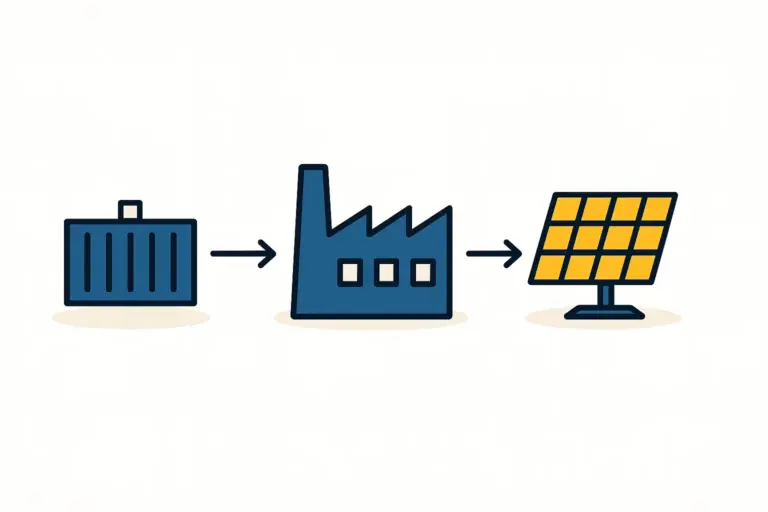
While Belize offers significant advantages for solar manufacturing, including high solar irradiation and a strategic location, its success hinges on supply chain resilience. The standard approach of importing all components from Asia or Europe introduces risks like long lead times, high shipping costs, and geopolitical instability.
This article explores a strategic alternative: a phased integration of local and regional suppliers for auxiliary materials. By leveraging resources within Belize and the wider Caribbean Community (CARICOM), a factory can reduce its dependency on overseas imports, increase operational flexibility, and contribute more substantially to regional economic development.
Table of Contents
The Global Supply Chain Challenge for a Belizean Factory
For a new solar module factory, the default path is to source nearly all materials from established hubs in China, Southeast Asia, or Europe. While this model provides access to high-volume, technologically advanced components, it also creates significant dependencies.
This challenge is amplified by Belize’s economic structure—a trade deficit where imports substantially exceed exports. The country’s reliance on trading partners like the United States, China, and Mexico for finished goods and industrial inputs exposes any new manufacturing venture to the complexities of international logistics.
Key risks of a purely import-based model include:
- Extended Lead Times: Ocean freight from Asia to the Caribbean can take six to eight weeks, tying up significant capital in transit.
- Logistical Volatility: Port congestion, container shortages, and fluctuating shipping rates can introduce unpredictable costs and delays.
- Geopolitical and Economic Risks: Global trade disputes, pandemics, or currency fluctuations can disrupt the supply of critical components with little warning.
Mitigating these risks is crucial for a resilient manufacturing operation. The solution lies not in replacing all imports overnight but in strategically identifying which parts of the supply chain can be localized.
Deconstructing the Solar Module: Sourcing Opportunities
A modern solar module consists of both core high-technology components and essential auxiliary materials. While the core components will likely need to be imported, at least initially, the auxiliary materials present a significant opportunity for local and regional sourcing.
Core Components (Typically Imported):
- Solar Cells: The most technologically sensitive part of the module.
- Solar Glass: Highly specialized, low-iron, tempered glass.
- Encapsulant Film (EVA/POE): Polymers that protect the cells from moisture and impact.
- Backsheet: The durable, multi-layer polymer backing of the module.
Auxiliary & Packaging Materials (The Regional Opportunity):
- Aluminum Frames: Provide structural integrity and mounting capability.
- Junction Boxes: House the bypass diodes and output cables.
- Cables & Connectors: Connect the module to the wider solar array.
- Adhesives & Sealants: Used to bond the frame and seal the module laminate.
- Labels: For branding, specifications, and certification marks.
- Packaging: Cardboard, wooden pallets, and corner protectors for shipping.
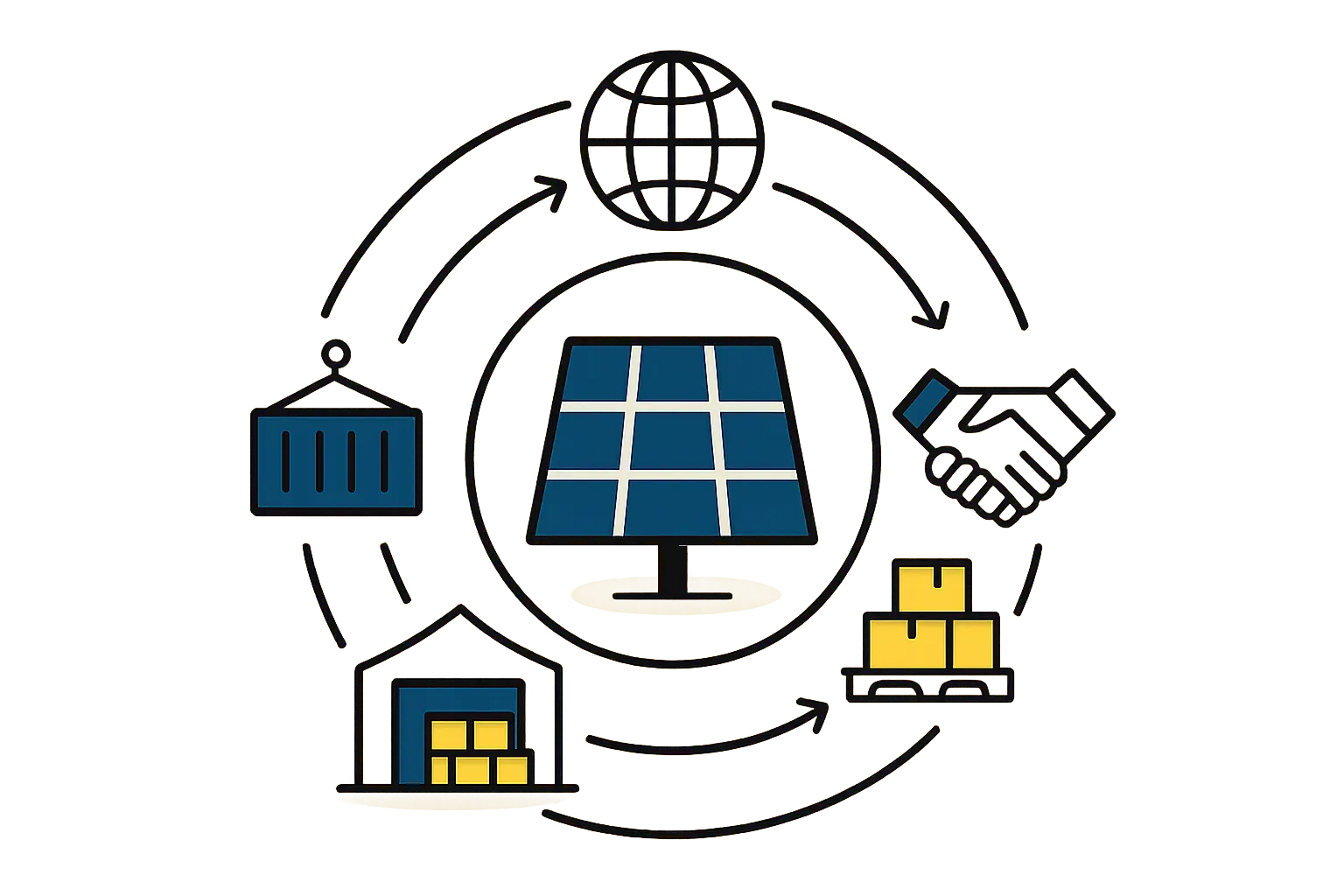
Though essential to the final product, these auxiliary and packaging materials generally require less specialized technology to produce than core components. This makes them ideal candidates for a regional sourcing strategy that builds a more robust and responsive supply chain.
A Strategic Framework for Sourcing within Belize and CARICOM
Developing a regional supply chain is a phased process that begins locally and expands outward. The goal is to build a network of reliable suppliers who can meet quality, volume, and cost requirements.
Phase 1: Local Sourcing within Belize
The first step is to assess the capabilities of Belize’s domestic industrial sector. While small, it has businesses capable of supplying the most straightforward materials.
- Packaging Materials: Belize has lumber resources and sawmills that could produce custom wooden pallets. Local companies may also be able to supply cardboard boxes and protective inserts, reducing reliance on pre-packaged imports.
- Labels: High-quality printing services for product and compliance labels are often available locally.
Understanding the specific industrial landscape is critical for any entrepreneur looking to start a solar factory in Belize. The primary challenge is ensuring local suppliers can meet the consistent quality standards and production volumes an industrial assembly line requires.
Phase 2: Regional Sourcing within CARICOM
For more complex auxiliary materials, the wider CARICOM region holds significant potential. The CARICOM Single Market and Economy (CSME) facilitates trade and economic cooperation among member states, simplifying logistics and reducing tariffs.
Key industrial economies within CARICOM, such as Trinidad and Tobago and Jamaica, present clear opportunities:
- Aluminum Frames: As a major producer of bauxite, the raw material for aluminum, Jamaica may have extrusion facilities capable of producing solar module frames.
- Plastic Components: Trinidad and Tobago’s well-developed petrochemical industry makes it a potential source for injection-molded plastic parts like junction boxes.
- Cables and Connectors: Other regional manufacturing hubs may already produce industrial-grade wiring and connectors that meet international standards.
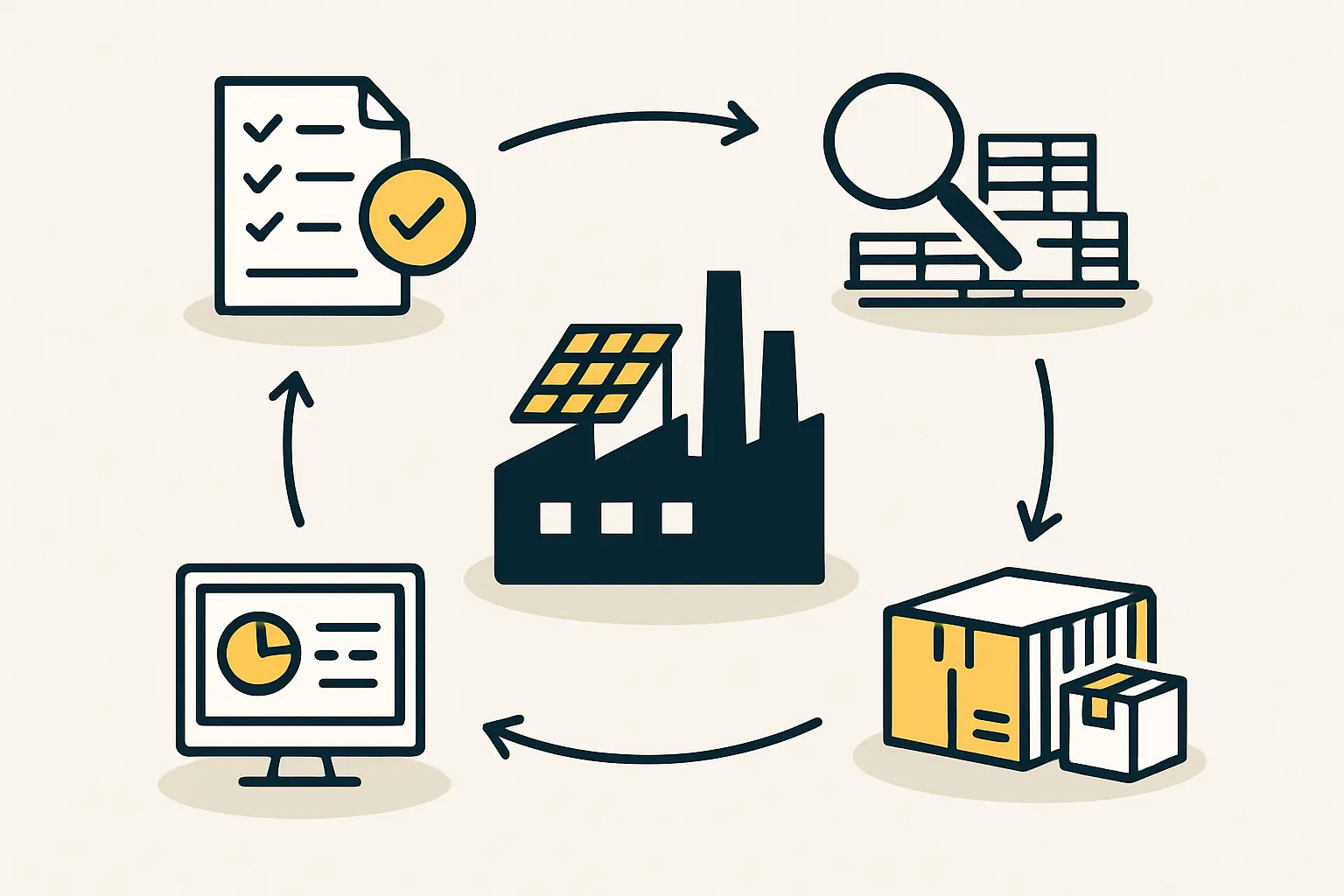
As seen in projects J.v.G. Technology has supported in similar emerging markets, the challenge for entrepreneurs is often not the absence of suppliers but the process of vetting them. Thorough due diligence is essential to verify a potential partner’s ability to deliver consistent quality and volume.
The Business Case: Benefits of a Regionalized Supply Chain
Adopting a local and regional sourcing strategy offers tangible business advantages that go beyond risk mitigation.
- Reduced Lead Times and Increased Agility: Sourcing a container of aluminum frames from a CARICOM partner could cut shipping time from over a month to under two weeks, allowing the factory to be more responsive to changes in demand.
- Lower Working Capital Requirements: Shorter supply chains mean less money is tied up in inventory during transit, which directly lowers the overall investment requirements for a solar factory.
- Enhanced Resilience: A diversified supplier base with regional partners makes the operation far less vulnerable to disruptions in a single global market.
- Strengthened Regional Economy: Sourcing within Belize and CARICOM creates jobs, fosters industrial development, and demonstrates a commitment to the local community—a commitment that can help secure government support and build a strong brand reputation.
Practical Steps and Due Diligence
Transitioning to a regional supply model requires a proactive, structured approach.
- Supplier Identification: Use business directories, engage with national and regional chambers of commerce, and attend trade missions to identify potential suppliers.
- Quality Auditing: “Regional” does not automatically mean “qualified.” Conducting on-site audits to assess a supplier’s manufacturing processes, quality control systems, and capacity is essential. Requesting samples for testing is a non-negotiable step.
- Logistical Planning: Establish relationships with freight forwarders who specialize in intra-CARICOM logistics to ensure smooth, cost-effective transport.
- Contractual Agreements: Develop clear supply agreements that specify quality standards (e.g., ISO 9001), delivery schedules, and payment terms.
The process of qualifying new suppliers for critical components is a specialized task. Educational platforms like pvknowhow.com provide structured guidance on establishing these quality control protocols as part of a turnkey factory setup.
Frequently Asked Questions
Q: What are ‘auxiliary materials’ in solar panel manufacturing?
A: Auxiliary materials are the components—beyond the core solar cells and glass—required to assemble a complete solar module. This includes the aluminum frame, junction box, cables, sealants, and all packaging materials, which are essential for the module’s structure, safety, and durability.
Q: Is it realistic to source core components like solar cells within CARICOM?
A: In the short term, this is unlikely. Manufacturing solar cells and specialized solar glass requires massive capital investment and advanced technology concentrated in a few global hubs. A new factory in Belize should strategically focus on auxiliary materials, where regional capabilities are more accessible.
Q: How does the CARICOM Single Market and Economy (CSME) help?
A: The CSME aims to reduce or eliminate tariffs on goods produced within member states. It also standardizes customs procedures, making it easier, faster, and cheaper to move materials between countries like Belize, Trinidad and Tobago, and Jamaica.
Q: What are the biggest challenges in sourcing locally in Belize?
A: The primary challenges are typically scale and specialization. A local supplier may produce a high-quality product but lack the capacity to deliver the volume required for a continuous production line. This is why a combined local and regional approach is often most effective.
Q: Do I need to visit potential suppliers in person?
A: Yes. For any critical component, an on-site visit and audit are strongly recommended. It is the only way to fully verify a supplier’s capabilities, quality systems, and professionalism. Building a direct relationship is a key part of establishing a reliable supply chain.
Next Steps for Deeper Exploration
Building a solar module factory in Belize is a viable and promising venture. Success, however, hinges on smart strategic planning that extends beyond the factory floor. By moving from total import dependency to strategic regional integration, an entrepreneur can build a more resilient, agile, and impactful business.
For entrepreneurs moving from concept to production, understanding the entire interconnected process is essential. The guide on How to Start a Solar Module Factory provides a comprehensive roadmap covering everything from initial business planning to final certification.