When planning a solar module factory, an entrepreneur’s attention naturally gravitates toward the machinery, the building, and the business plan. With the production line designed and financial models complete, it’s easy to underestimate a critical factor: the journey of raw materials from a global supplier to the factory floor in Belize.
A container of solar cells delayed in customs or a shipment of glass damaged on a rural road can halt a multi-million-dollar operation before it produces a single watt. Understanding the logistics chain is not a secondary task—it is a foundational component of a successful manufacturing strategy in Belize.
This guide delves into the practical realities of importing key solar components through the country’s major ports, exploring the infrastructure, procedures, and potential bottlenecks that will directly impact your production timelines and operational costs.
Table of Contents
The Strategic Importance of Port Selection in Belize
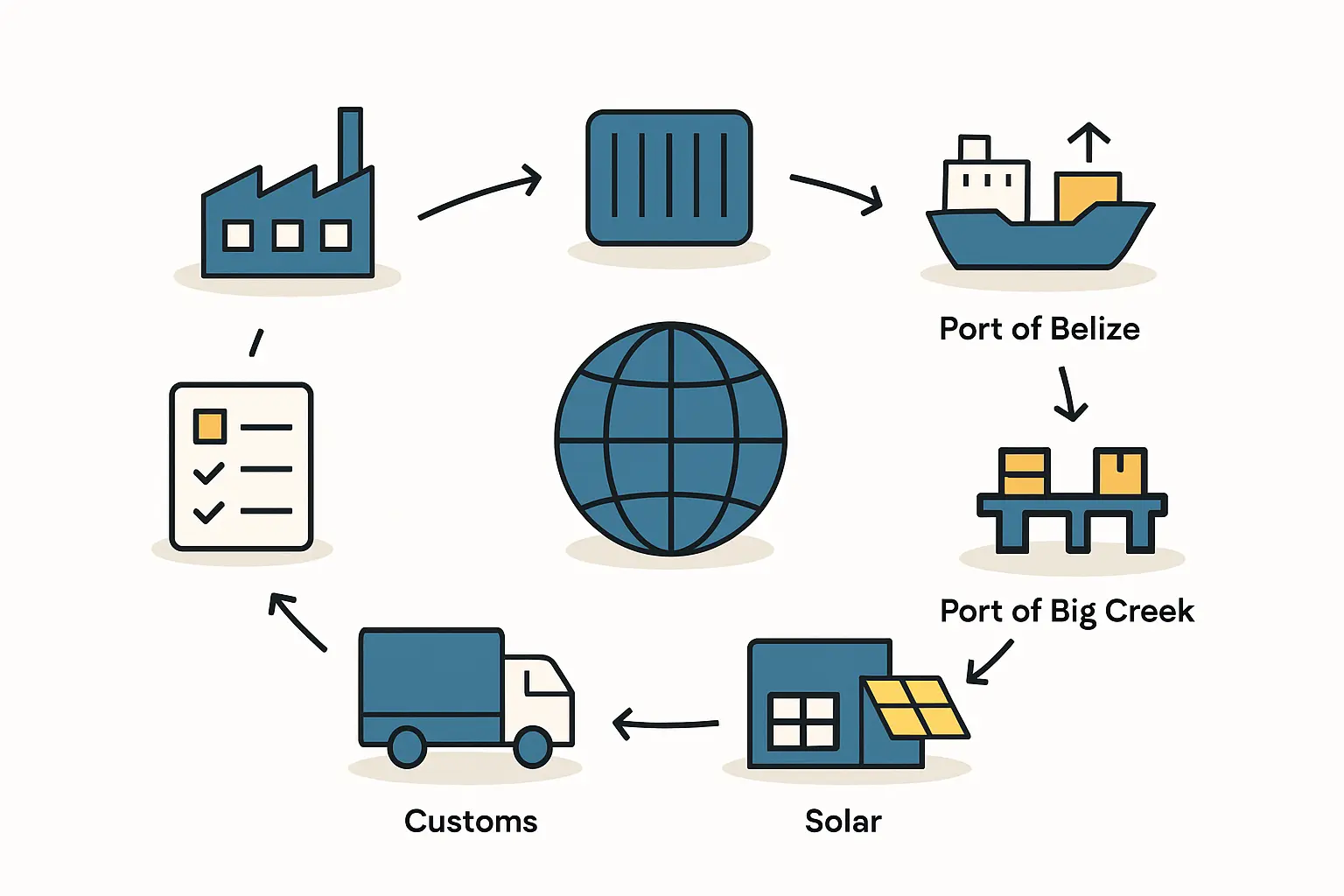
For a new solar manufacturing venture, choosing between Belize’s primary commercial ports is a foundational business decision that influences everything from shipping costs and delivery speed to the risk of cargo damage. The two main gateways for containerized freight are the Port of Belize City and Big Creek Port, each with its own distinct advantages and challenges.
The Port of Belize City (PBC): The Traditional Hub
Located near the country’s largest commercial center, the Port of Belize City is its most established and busiest port. For decades, it has been the primary entry point for goods, giving it a well-developed ecosystem of customs brokers, freight forwarders, and logistics providers.
However, investors must be aware of a significant operational constraint: the port’s shallow draft. Large container ships cannot dock directly at the pier. Instead, they must anchor offshore and have their cargo transferred onto smaller barges in a process called lightening. This extra step adds time, complexity, and cost to every container, creating a bottleneck that must be factored into any production schedule and budget.
Big Creek Port: The Modern Challenger
Farther south, in the Stann Creek District, lies Big Creek Port. Its key strategic advantage is its deep-water access, which allows modern cargo vessels to berth directly. This eliminates the need for lightening, ensuring faster offloading, reduced handling, and lower potential costs, all while minimizing the risk of damage.
While Big Creek offers superior maritime efficiency, businesses must also consider its inland transportation network. Depending on the factory’s location, choosing Big Creek could mean longer road transport than from Belize City. A comprehensive analysis must weigh sea freight efficiencies against inland logistics costs and risks.
Key Solar Raw Materials and Their Import Considerations
A solar module assembly line relies on a steady flow of imported, specialized materials. Belize does not currently have the industrial capacity to produce components like solar cells or tempered glass, which makes a robust import supply chain essential.
The core materials a manufacturer will need to import include:
- Photovoltaic (PV) Cells: The most valuable and sensitive component.
- Tempered Solar Glass: Large, fragile, and heavy.
- EVA (Ethylene Vinyl Acetate) Encapsulant: A polymer sensitive to moisture and storage conditions.
- Backsheets or Glass: The protective rear layer of the module.
- Aluminum Frames: Pre-cut and anodized frame components.
Each of these items presents unique logistical challenges. A container of fragile glass, for instance, requires different handling protocols than a shipment of durable aluminum frames. Understanding the specific requirements for handling and storing these materials upon arrival is vital.
The Belizean Customs and Tariff Landscape
All imported goods must clear the Belize Customs & Excise Department. The country uses the ASYCUDA World system, a digitized platform designed to streamline declarations. While this system brings efficiency, it operates on one simple principle: precision in documentation is non-negotiable.
An incorrect Harmonized System (HS) code, a missing certificate of origin, or an undervalued invoice can trigger significant delays, inspections, and financial penalties. Working with an experienced customs broker who understands both the solar industry and Belizean regulations is crucial to prevent your valuable raw materials from getting stuck at the port.
The Final Mile: Inland Transportation Challenges
Once your container clears customs, the journey isn’t over. The final leg of transport from the port to your factory presents its own set of challenges. The condition of roads, potential for congestion, and even seasonal weather can impact delivery times and the safety of your cargo.
Fragile materials like solar glass are particularly vulnerable to damage on uneven road surfaces. A logistics plan must account for these risks by ensuring that cargo is properly secured and that transport routes are carefully vetted. Overlooking this critical final stage can lead to expensive losses and production downtime.
Building a Resilient Supply Chain
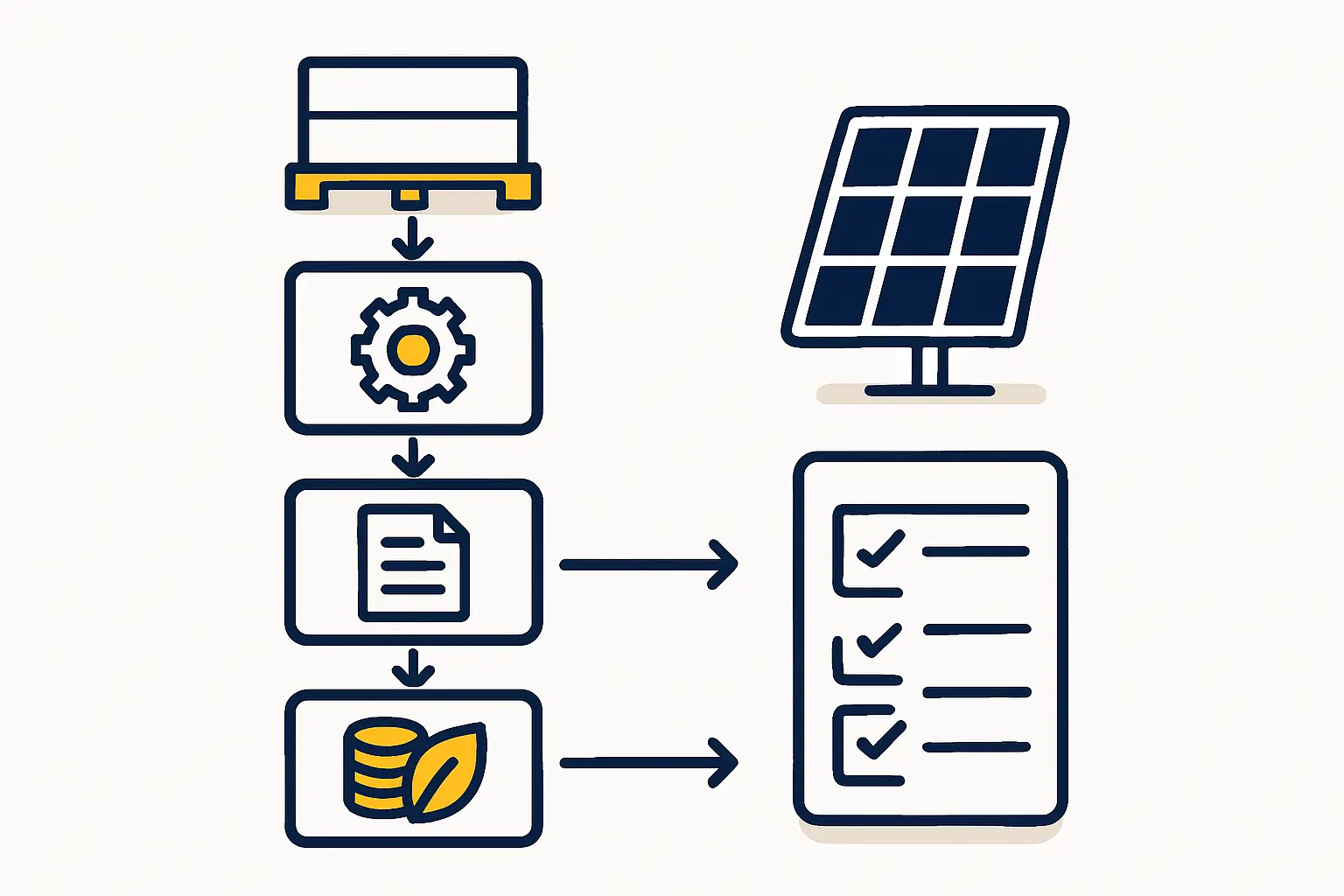
Successfully launching a solar manufacturing operation in Belize requires a deep understanding of these logistical nuances. The port you choose, the accuracy of your customs paperwork, and your inland transport strategy are as vital as the machinery on your factory floor.
Planning your supply chain with this level of detail is the key to minimizing risk and ensuring a smooth, cost-effective operation. If you’re embarking on a solar manufacturing project in Belize, our team has the local expertise to help you build a resilient and efficient logistics network from day one. Reach out to our experts to discuss how we can support your venture.