Many entrepreneurs considering a solar manufacturing venture in Belize initially focus on sourcing technology and securing capital. Before long, however, they face a common question: “Where will we find the skilled workers to run a modern factory?”
With a national economy centered on tourism and agriculture, it’s easy to assume a technical labor pool is nonexistent. This perspective, while understandable, overlooks the country’s most significant asset: its young, literate, and adaptable population.
The success of a solar panel factory in Belize doesn’t depend on finding a pre-existing workforce of solar experts. Instead, it relies on a strategic plan to cultivate one. This article outlines the nature of the Belizean labor market and provides a framework for developing a highly capable team for a solar module production line.
Table of Contents
Understanding Belize’s Labor Landscape: Opportunities and Challenges
An effective workforce strategy begins with a clear understanding of the local landscape. Belize offers a unique mix of demographic advantages and structural challenges. Managed properly, this combination creates a favorable environment for new industrial projects.
The Demographic Opportunity
Belize has one of the youngest populations in the region, with a median age of just 25.9. Combined with a literacy rate over 90 percent, this creates a large pool of trainable candidates ready to learn new skills. For an emerging industry like solar manufacturing, this “blank slate” is a significant advantage, as workers can be trained on best practices from day one without needing to unlearn old habits.
The Skills Gap
Decades of economic focus on services and agriculture means direct experience in semi-automated manufacturing is limited. While youth unemployment is a national challenge at around 17.5 percent, it also represents a ready supply of labor for new ventures. The core challenge, then, is bridging the gap between foundational education and the specific technical skills required for solar production.
Supportive Policy Environment
The Government of Belize has demonstrated a clear commitment to renewable energy through its National Energy Policy. This creates a supportive backdrop for businesses in the solar sector and may include incentives for ventures that generate local employment and contribute to national energy independence. This guide outlines the typical investment requirements for a 20–50 MW setup, including initial staffing estimates.
Core Competencies for a Modern Solar Module Production Line
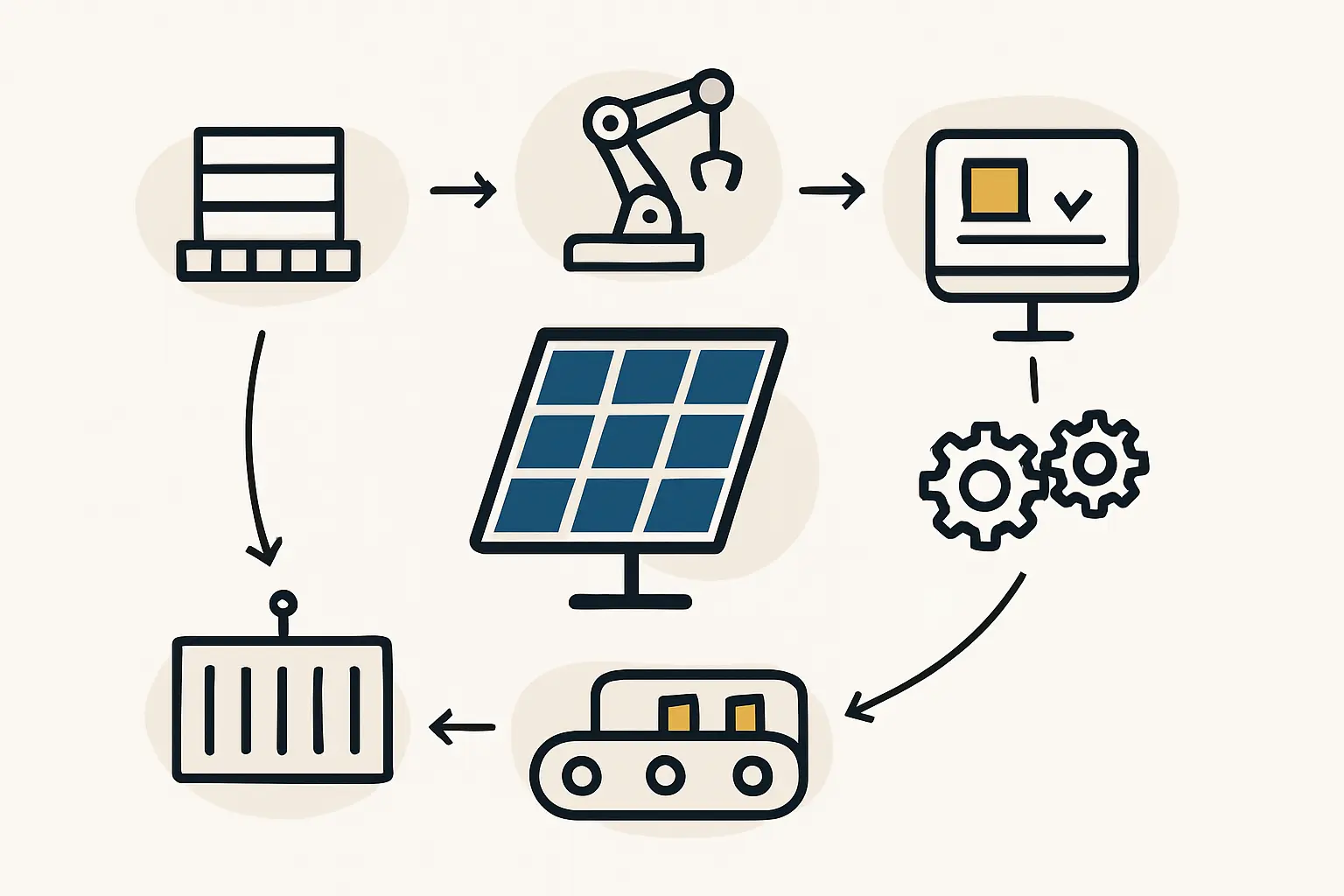
A semi-automated solar production facility doesn’t require a large team of PhDs. Most roles are process-driven and can be mastered with structured training. A typical 20-50 MW line, for example, can be operated efficiently with a team of 25-35 people per shift.
The key roles fall into four categories:
- Technicians and Machine Operators: This is the core of the production team. These team members operate key machinery such as cell stringers, layup stations, laminators, and solar simulators. Ideal candidates are detail-oriented, consistent, and able to follow standardized procedures. Dexterity and a focused attitude are more critical than prior manufacturing experience.
- Quality Control (QC) Personnel: Responsible for inspections at various stages—from incoming raw materials to final module testing—QC staff are essential for ensuring the product meets international standards. They need a keen eye for detail and a methodical approach.
- Maintenance and Engineering Staff: A smaller, more specialized team is needed to perform routine maintenance, troubleshoot equipment, and optimize production processes. Candidates with backgrounds in electrical or mechanical studies from institutions like the University of Belize (UB) are ideal for these roles.
- Management and Administration: This includes supervisors, a plant manager, and staff for logistics, HR, and finance. These roles require business management experience, which can typically be sourced from Belize’s existing professional class.
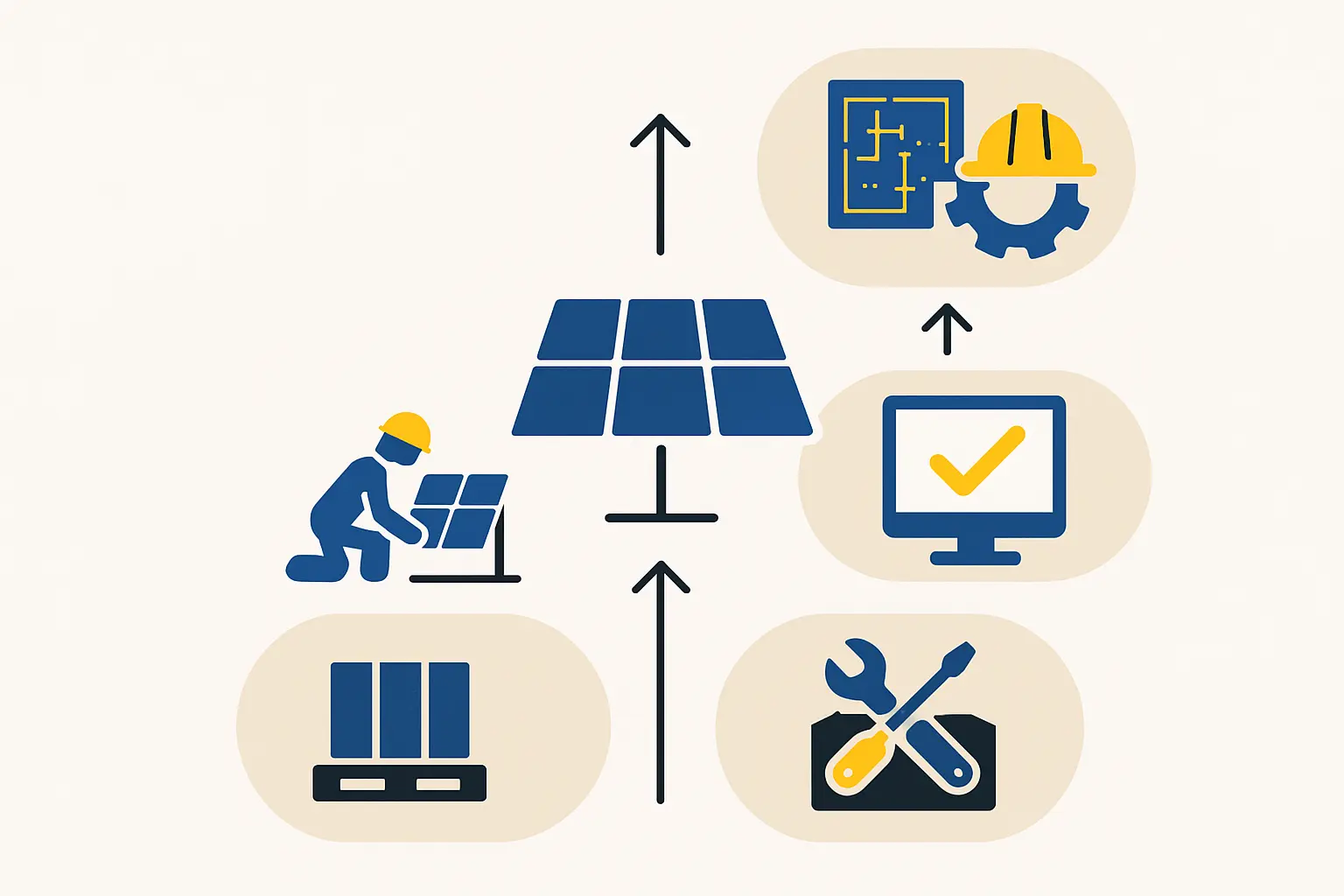
A Strategic Framework for Workforce Development in Belize
Building a skilled team from the ground up is a manageable process when broken down into distinct phases. This approach minimizes risk and ensures competencies are built in a logical sequence.
Phase 1: Foundational Training and Recruitment
The initial phase focuses on establishing a baseline of knowledge before the factory is operational.
- Partnership with Local Institutions: Collaborating with Belize’s network of Institute for Technical and Vocational Education and Training (ITVET) centers and the University of Belize is a powerful first step. Companies can work with these institutions to co-develop a pre-employment curriculum covering basic electronics, workplace safety, and quality principles, creating a pipeline of vetted, motivated candidates.
- Recruitment Strategy: Recruitment should prioritize attitude, cognitive ability, and reliability over existing experience. Targeting the large pool of unemployed but educated youth helps build a loyal and energetic workforce while making a significant social contribution. The success of this phase is closely tied to selecting the right technology; a turnkey solar module production line often includes initial training packages from the equipment supplier.
Phase 2: On-the-Job Specialization
Once the core team is hired and equipment is installed, training becomes highly practical and hands-on.
- Expert-Led Training: With turnkey projects, the commissioning phase is the most critical period for knowledge transfer. Engineers from the equipment supplier should remain on-site for several weeks to train local operators, maintenance staff, and supervisors on the specific functions and processes of each machine.
- Skill Certification: As workers demonstrate proficiency in operating specific equipment, they can be certified internally. This creates clear goals for employees and allows management to track the team’s overall skill level. Most operators can achieve full proficiency within three to six months.
Phase 3: Continuous Improvement and Leadership Development
This final phase focuses on the long-term sustainability and growth of the workforce.
- Cross-Training: Training operators on multiple machines builds redundancy and flexibility into the production line. It also keeps employees engaged and provides a clear path for advancement.
- Developing Local Leaders: The most promising operators and technicians should be identified and groomed for supervisory roles. This practice of promoting from within fosters loyalty and ensures future leaders have a deep, practical understanding of the production process. Such leadership is essential for maintaining the high standards required to achieve and renew the necessary solar panel certifications for international markets.
Practical Considerations: Labor Costs and Regulations in Belize
A robust business plan must be grounded in the financial realities of the local market. Belize’s labor regulations are straightforward, allowing for accurate cost forecasting.
- Minimum Wage: Under recent regulations, the national minimum wage is BZD 5.00 per hour (approximately USD 2.50). While skilled positions will command higher wages, this figure provides a baseline for calculating payroll for entry-level operator roles.
- Standard Work Week: The standard work week in Belize is 45 hours, typically spread over five or six days. Overtime regulations apply for work exceeding these hours.
- Social Security: Employers and employees are required to make contributions to the Belize Social Security Board (SSB). These contributions cover benefits such as sickness, maternity, and retirement and are a standard part of payroll expenses.
These factors combine to create a competitive labor cost environment, especially when compared to more developed manufacturing hubs.
FAQ: Building Your Solar Manufacturing Team in Belize
Q: Do I need to hire experienced solar technicians?
A: No. For most roles, like machine operators and assemblers, it’s more effective to hire for attitude and train for skill. A well-designed training program is more valuable than prior, often irrelevant, experience. Your focus should be on securing a few key technical hires for maintenance and engineering.
Q: What is a realistic number of employees for a startup factory?
A: A semi-automated 20-50 MW production line typically requires a workforce of 25 to 35 employees per shift. This includes operators, QC staff, material handlers, maintenance personnel, and supervisors.
Q: How long does it take to train a new workforce?
A: With a structured, phased approach, basic operator proficiency can be achieved within three to six months. This includes initial classroom instruction followed by intensive on-the-job training led by equipment experts. Specialized technical roles may require a longer development period.
Q: What is the best way to partner with local educational institutions?
A: Begin by contacting the leadership at the University of Belize’s Faculty of Science and Technology and the national ITVET management. Propose a collaborative partnership where your company provides input on curriculum, offers internships, and potentially donates small-scale equipment for hands-on learning. This proactive engagement builds goodwill and a sustainable talent pipeline.

Conclusion: From Potential to Production
The challenge of building a solar manufacturing workforce in Belize is not one of scarcity, but of strategy. The country’s young, educated population represents a powerful resource waiting to be developed. By shifting focus from a search for nonexistent experts to a structured system of recruitment and training, entrepreneurs can build a world-class team.
With a well-defined process and expert guidance, this human potential can be transformed into a productive, skilled workforce capable of manufacturing high-quality solar modules. Structured resources, like the e-courses and planning guides available on platforms such as pvknowhow.com, can help investors navigate this critical aspect of starting a solar factory. This methodical approach turns the perceived liability of an inexperienced labor market into a foundational strength for long-term success.