Entrepreneurs building a solar module factory in Brunei will naturally focus on the local market first, where government support for renewable energy makes the domestic opportunity clear.
However, a narrow focus on local compliance can inadvertently close the door to a much larger prize: the burgeoning ASEAN market. A certification strategy designed only for Brunei falls short for export and creates a significant competitive disadvantage just as the business begins to scale.
This guide explains the essential certification standards for selling solar modules in Brunei and outlines a strategic approach for using them to gain broader access to neighboring export markets. Understanding this regulatory landscape from the outset is critical for transforming a local manufacturing plant into a regional energy player.
Table of Contents
Why Certification is More Than a Local Requirement
For any serious solar module manufacturer, third-party certification isn’t merely a bureaucratic hurdle—it’s a fundamental pillar of the business. It serves as independent validation of a product’s quality, safety, and long-term performance.
For business owners, certification delivers three key benefits:
- Market Access: It’s the non-negotiable ticket to enter regulated markets, both domestic and international.
- Bankability: Financial institutions, investors, and large-scale project developers will only finance projects that use certified, bankable modules. This certification is crucial for securing investor confidence.
- Brand Reputation: It demonstrates a commitment to quality and safety, building trust with customers and distinguishing the brand from lower-quality competitors.
The globally recognized framework for solar module certification comes from the International Electrotechnical Commission (IEC). Its standards form the basis of most national regulations, including those in Brunei and across the ASEAN region.
The Core Standards: IEC 61215 and IEC 61730
For any crystalline silicon terrestrial solar module, two IEC standards are paramount. They aren’t optional; they are the foundation upon which the industry’s trust is built.
IEC 61215: The Performance and Quality Standard
This standard assesses the long-term performance of a solar module. It essentially answers the question: “Will this module perform reliably under various challenging environmental conditions for its entire warrantied life?”
To achieve this certification, modules undergo a series of stress tests, including:
- Thermal Cycling: Simulating the stress of daily and seasonal temperature changes.
- Humidity-Freeze Tests: Assessing resilience in environments with high humidity and freezing potential, a critical factor in diverse climates.
- Damp Heat Tests: Testing the module’s ability to withstand long-term exposure to high temperature and humidity, directly relevant to the tropical climate of Brunei and Southeast Asia.
- UV Exposure: Ensuring the materials can resist degradation from prolonged sunlight.
- Mechanical Load Tests: Simulating stress from wind and snow.
Meeting the IEC 61215 standard confirms that a module’s design, materials, and manufacturing process are robust enough to deliver reliable power for decades. Designing a product that can pass these rigorous tests requires a comprehensive understanding of the solar panel manufacturing process.
IEC 61730: The Safety Standard
While IEC 61215 focuses on performance, IEC 61730 is all about safety. It asks, “Is this module safe for installers to handle and for the public to be around?”
This standard ensures the module is constructed to prevent common electrical and fire hazards. Key safety aspects covered include:
- Electrical Shock Protection: Ensuring proper insulation and safe design to protect installers and maintenance personnel.
- Fire Safety: Testing the flammability of components to minimize fire risk.
- Mechanical Safety: Confirming that the module can withstand physical impact without creating immediate safety hazards, such as exposed live parts.
IEC 61730 is the fundamental safety qualification for a solar module. Without it, a product is considered unsafe and cannot be legally sold or installed in most countries.
A Strategic Approach: Certifying for Brunei and Export Markets
A manufacturer in Brunei has a distinct geographical advantage. With a well-planned certification strategy, the factory can serve as a hub for the entire ASEAN region.
The Pitfall of Local-Only Certification
Brunei, like most nations, bases its national solar standards on the IEC framework. A manufacturer might be tempted to secure certification through a local body recognized only within Brunei. While this satisfies initial domestic requirements, it creates a significant barrier to export. Attempting to certify for each new export market individually is inefficient, costly, and time-consuming.
Unlocking the ASEAN Market Through IEC
The most efficient strategy is to obtain full IEC 61215 and IEC 61730 certification from an internationally accredited body like TÜV Rheinland, VDE, or Intertek. This single set of certificates acts as a passport, as most ASEAN countries—including Malaysia, Singapore, Thailand, Vietnam, and the Philippines—also base their national standards on the IEC.
While some countries may require additional local registration or documentation—a process known as homologation—the core technical validation from an IEC certificate streamlines market entry across the region. This approach avoids redundant testing and allows a manufacturer to respond quickly to opportunities in neighboring countries.
Planning Your Certification Roadmap
Certification isn’t an afterthought; it must be integrated into the business plan from day one. The process begins long before a module is sent to a laboratory.
Step 1: Design for Compliance from Day One
Successful certification starts with a robust product design and a carefully selected Bill of Materials. Every component—from the solar cells and EVA encapsulant to the backsheet and junction box—must already be certified and proven. A well-structured solar panel bill of materials (BOM) is the first and most critical step. Experience from numerous J.v.G. Technology GmbH turnkey projects shows that a pre-vetted, compliant BOM can shave months off certification timelines.
Step 2: Select an Internationally Accredited Certification Body
Partnering with a globally recognized testing laboratory is crucial. Their reports and certificates are accepted worldwide, carrying weight with financial institutions and international customers.
Step 3: Understand the Process and Timeline
The certification process is thorough and takes time. After product specifications and sample modules are submitted, the lab conducts the full sequence of tests. This process typically takes between four and eight months, depending on the lab’s schedule and the product’s complexity. Building this timeline into your business plan is essential for accurate forecasting.
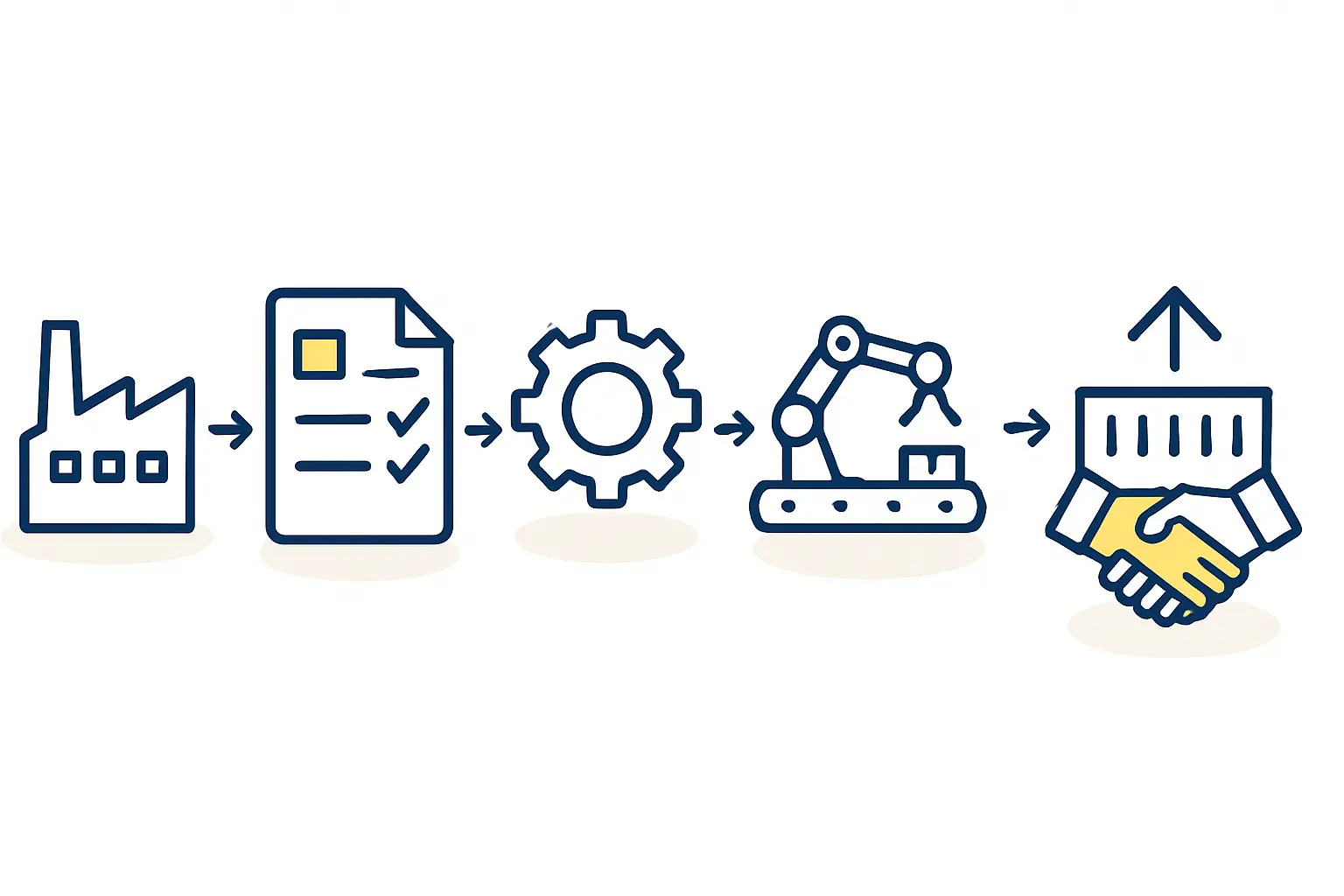
Beyond the Basics: Advanced Certifications for a Competitive Edge
For manufacturers aiming to establish a premium brand, pursuing advanced certifications can provide a significant competitive edge, especially in harsh coastal or agricultural environments.
- IEC 61701: Salt Mist Corrosion Testing: Highly relevant for Brunei and coastal ASEAN markets, this test proves a module’s resistance to corrosion from salt-laden air, ensuring longevity in seaside installations.
- IEC 62716: Ammonia Corrosion Testing: Important for modules deployed near agricultural facilities, this tests for degradation from ammonia exposure.
- PID Resistance Certification: Potential Induced Degradation (PID) can cause significant power loss over time. Certifying a module as PID-resistant is a powerful mark of quality and a key consideration for utility-scale project developers.
Frequently Asked Questions (FAQ) about Module Certification
Q: What is the IEC?
A: The International Electrotechnical Commission (IEC) is a worldwide organization that prepares and publishes international standards for all electrical, electronic, and related technologies. Its standards are recognized globally and form the basis for national regulations in most countries.
Q: What is the difference between IEC 61215 and IEC 61730?
A: IEC 61215 tests for performance and reliability over the module’s lifetime (quality). IEC 61730 tests for electrical and mechanical safety (safety). Both are required.
Q: How long does the certification process typically take?
A: From submitting modules to a test lab to receiving the final certificate, the process generally takes four to eight months. However, the internal preparation of a compliant design and BOM can take several months before testing even begins.
Q: What is the approximate cost of certification?
A: The cost of certifying a module family (e.g., a series of modules with the same core construction but different wattages) for IEC 61215 and IEC 61730 typically ranges from €30,000 to €60,000, depending on the certification body and the scope of testing.
Q: Can I sell modules before they are certified?
A: In most regulated markets, selling or installing modules that have not passed the required national certifications is prohibited. Doing so can result in significant legal and financial penalties.

Conclusion: From Local Manufacturer to Regional Exporter
For a new solar module manufacturer in Brunei, the path to success lies in thinking regionally from day one. By designing a product compliant with international IEC standards and securing certification from a globally recognized body, a business lays the foundation for sustainable, cross-border growth.
This strategic approach transforms the investment in certification from a local requirement into a powerful key for unlocking the vast potential of the ASEAN market. This forward-thinking mindset is what separates a local factory from a regional powerhouse, and it is essential for successfully launching a solar panel manufacturing business with a global outlook.