An entrepreneur planning to supply solar modules to Central Africa often hits a significant financial obstacle before the first container even arrives: import tariffs. A shipment destined for Cameroon, Gabon, or the Republic of Congo typically faces a Common External Tariff (CET) that can increase the final cost by as much as 20-30%. This not only shrinks profit margins but can also make high-quality modules uncompetitive against cheaper, lower-quality alternatives.
However, a strategic approach can turn this trade barrier into a powerful competitive advantage. By establishing a manufacturing base within one of the member countries, a business gains duty-free access to the entire regional market. This article explores how a solar module factory in Chad can serve as a strategic gateway to the six-nation CEMAC trade bloc.
Table of Contents
Understanding the CEMAC Economic Bloc
The Economic and Monetary Community of Central Africa (CEMAC) is a regional trade organization established to promote economic integration among its members. The bloc operates as a customs union—a critical feature for any import-export business model.
The six member states are:
- Cameroon,
- Central African Republic (CAR),
- Chad,
- Republic of Congo,
- Equatorial Guinea and
- Gabon.
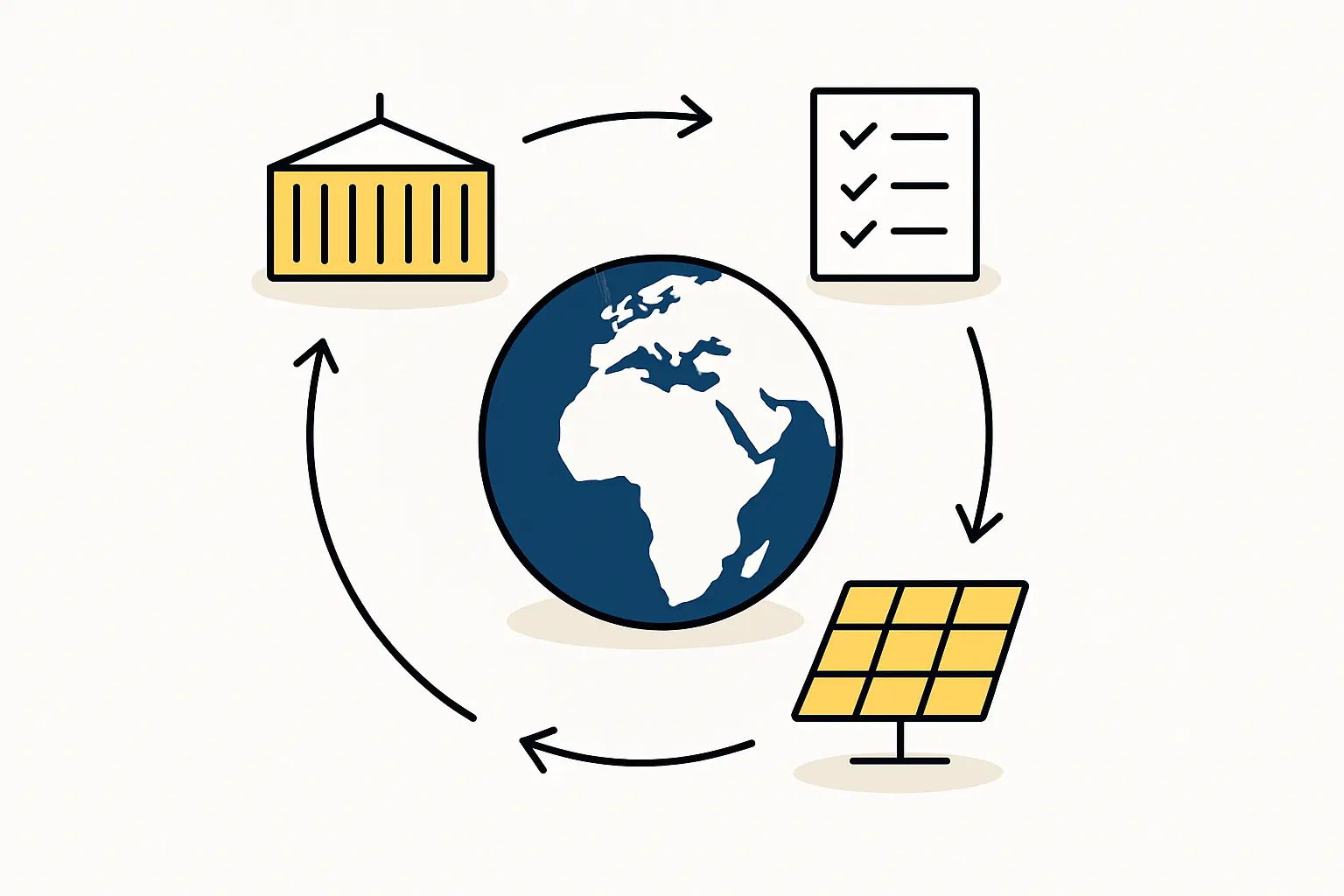
The cornerstone of this customs union is its Common External Tariff (CET). This means goods imported from outside the bloc—whether from China, Europe, or the United States—face the same set of import duties, regardless of which CEMAC country is the port of entry.
In contrast, goods produced within a member state can be traded among other members without incurring these tariffs.
The Financial Impact of the Common External Tariff (CET) on Solar Imports
The CEMAC CET structure is designed to protect local industries by making imported finished goods more expensive. Tariff rates are categorized based on the type of product:
- Category I (0%): Essential goods.
- Category II (5%): Raw materials and capital goods.
- Category III (10%): Intermediate goods.
- Category IV (20%): Finished consumer goods.
- Category V (30%): Luxury goods.
Finished solar modules typically fall under Category IV, facing a 20% tariff that has a direct and substantial impact on the final market price. For example, a container of solar modules with a customs value of $100,000 would incur an additional $20,000 in duties, before other taxes like VAT and transportation costs are added. This financial burden is ultimately passed on to the end customer, slowing the adoption of solar technology.
The Strategic Advantage of Manufacturing Within CEMAC
The key to bypassing the CET is to become an intra-regional producer. By manufacturing solar modules inside a CEMAC country like Chad, the finished products qualify as originating locally. This status grants them duty-free access to all five other member nations.
This strategy offers several distinct advantages:
- Cost Competitiveness: Without the 20% tariff, a locally produced module holds an immediate price advantage over an imported equivalent, assuming comparable production costs.
- Market Access: A single factory can serve a combined market of over 55 million people across six countries, simplifying distribution and sales strategy.
- Brand Positioning: A local manufacturing presence can foster a stronger brand identity, signaling commitment to the region and creating local employment.
- Supply Chain Control: Local production reduces dependency on long, often unpredictable, international shipping routes and offers greater control over inventory.
Why Chad is a Viable Hub for Regional Solar Manufacturing
While any CEMAC country offers the tariff advantage, Chad presents a compelling case as a strategic manufacturing and export hub.
Geographic Proximity
Chad is centrally located and shares land borders with two key CEMAC markets: Cameroon and the Central African Republic. It also has established trade corridors to neighboring countries like Nigeria and Sudan, creating potential for future market expansion beyond the CEMAC bloc.
Logistical Framework
The capital, N’Djamena, serves as the primary logistical center. From here, finished goods can be transported overland to major economic hubs like Douala in Cameroon or Bangui in CAR. While the region’s infrastructure presents challenges, these are surmountable with proper planning. The focus shifts from navigating international sea freight and customs clearance to optimizing regional road transport.
Key Considerations for Establishing a Manufacturing Facility
Transitioning from an importer to a manufacturer requires careful planning. Experience with turnkey projects points to several key areas for entrepreneurs to address.
Satisfying Rules of Origin
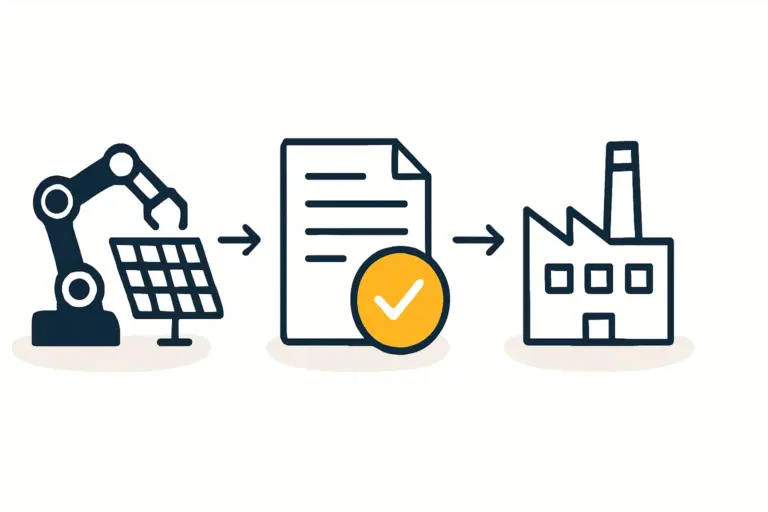
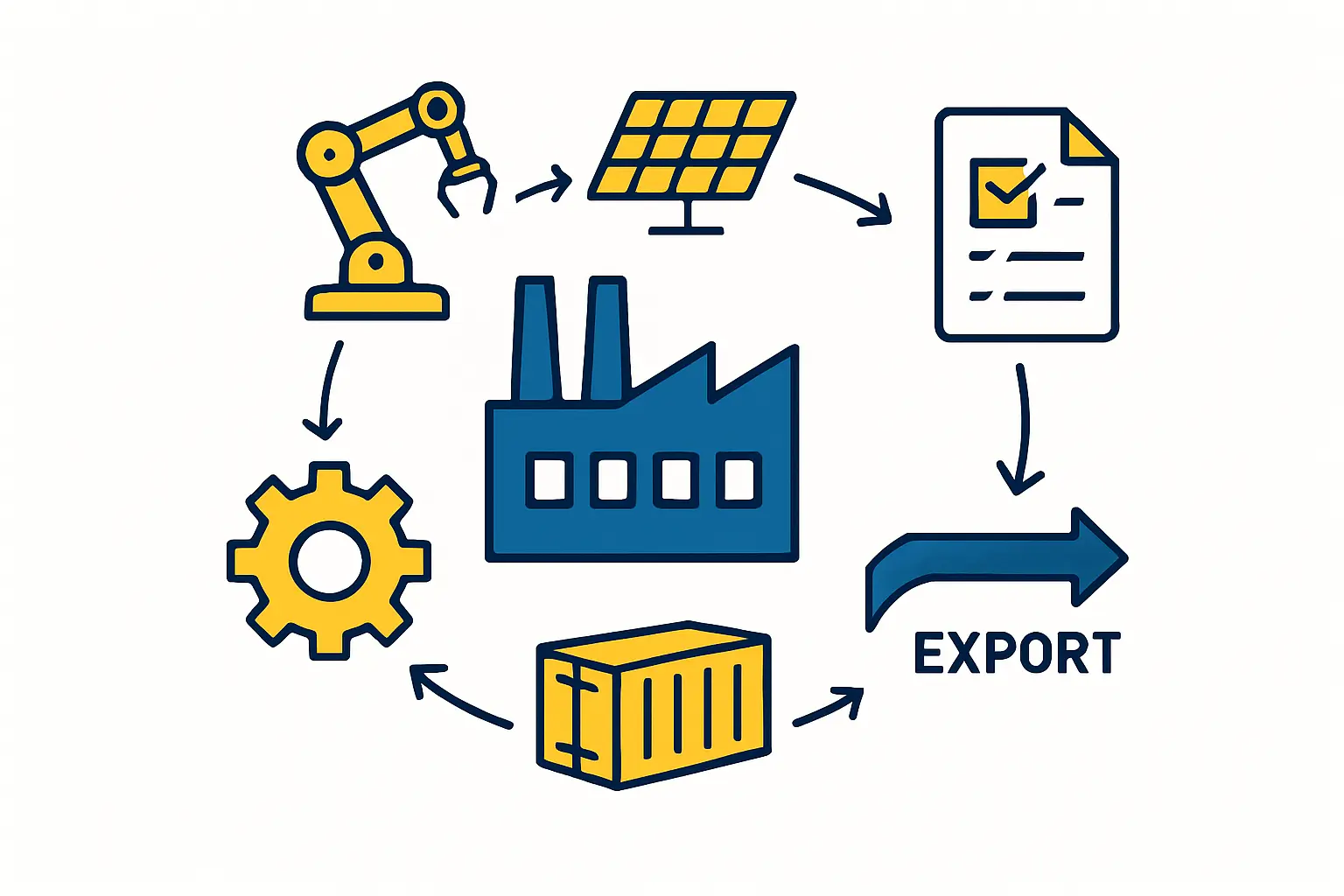
To qualify for duty-free status, a product must undergo ‘substantial transformation‘ within the country. Simply performing the final assembly of pre-fabricated kits may not be sufficient. The complete solar module manufacturing process—from cell stringing and lamination to framing and testing—must be conducted locally. This ensures the finished product is officially recognized as ‘Made in Chad.’
Investment and Equipment
Setting up a factory requires capital investment. However, the investment for a small-scale solar factory is often more accessible than many assume, particularly for an entry-level capacity of 20–50 MW per year. A complete turnkey production line includes all necessary machinery for lamination, cell stringing, framing, and testing—all engineered for efficient operation.
Labor and Technical Skills
A semi-automated production line requires a workforce of around 25-30 people, including operators, technicians, and administrative staff. While specialized solar expertise may not be readily available locally, a committed team can be trained effectively, especially when the equipment supplier provides comprehensive on-site training and support.
Frequently Asked Questions (FAQ)
Q: What defines ‘substantial transformation’ under CEMAC rules of origin?
A: While specific interpretations can vary, it generally means the manufacturing process must create a new product with a different tariff classification than its imported components. For solar modules, assembling imported solar cells, glass, backsheets, and frames into a new, functional photovoltaic module is universally considered a substantial transformation.
Q: Is Chad’s infrastructure reliable enough for consistent manufacturing?
A: Like many emerging markets, infrastructure can be a concern. However, strategic site selection in an industrial zone near N’Djamena can ensure more reliable access to power and transport links. Furthermore, a solar factory can power a significant portion of its own operations with its own products—a unique advantage of this industry.
Q: What is a realistic production capacity for a new factory?
A: A common starting point for entrepreneurs is a semi-automated line with an annual capacity of 20 to 50 megawatts (MW). This scale is large enough to be profitable and serve regional demand, yet small enough to manage the initial investment and operational complexity.
Q: How long does it take to become operational?
A: With a structured approach and an experienced turnkey partner, a production line can be fully commissioned and operational in less than 12 months from the initial order.
 Solar Production Line”/>
Conclusion: From Local Production to Regional Leadership
The CEMAC trade bloc’s tariff structure creates a powerful incentive for local manufacturing. For an entrepreneur looking to supply solar modules to Central Africa, establishing a production facility in Chad is not merely a logistical choice—it is a foundational business strategy.
It allows a company to bypass prohibitive import duties, achieve a sustainable cost advantage, and build a resilient supply chain tailored to the region.
By shifting the business model from importation to local production, a company can secure a protected position within a growing, energy-hungry market of over 55 million people. This strategic pivot is the difference between competing in a market and leading it.