For many international investors, Chad is known primarily for its oil reserves. Yet its most abundant and democratic resource—the sun—remains largely untapped.
With a national electricity access rate of just 11%—dropping to a mere 1% in rural areas—over 15 million people live without reliable power. This immense energy deficit is less a barrier and more a significant business opportunity for entrepreneurs who recognize the potential for local industrialization.
This analysis outlines the compelling business case for establishing a solar module manufacturing facility in Chad, focusing on demand from two critical, underserved sectors: agriculture and off-grid rural communities. It provides a framework for investors to understand the market, tailor products to its unique needs, and build a sustainable enterprise capable of powering national development.
Table of Contents
The Energy Paradox in Chad: An Untapped Opportunity
Chad benefits from some of the highest levels of solar irradiation in the world, receiving between 5 and 7 kWh/m² per day. Yet this natural advantage contrasts sharply with its energy infrastructure. The national grid is limited, and the vast majority of the population relies on costly, inefficient alternatives like diesel generators or has no access to modern energy at all.
The Chadian government, through its “Vision 2030” and National Development Plan, has explicitly prioritized renewable energy to drive economic growth and improve living standards. Achieving the national goal of 50% electricity access by 2030 will be impossible without a massive scale-up of decentralized solar solutions. This policy framework creates a favorable environment for private investment in the local solar value chain.
Investors who establish local manufacturing can position themselves not just as suppliers but as key partners in achieving Chad’s development goals.
Identifying the Core Markets: Where is the Demand?
A successful manufacturing strategy starts with a clear understanding of the end user. In Chad, the demand for solar energy is not abstract; it is tied to fundamental economic and social needs.
The Agricultural Backbone
Agriculture is the cornerstone of the Chadian economy, accounting for over 52% of GDP and employing roughly 80% of the workforce. Productivity, however, is severely constrained by a reliance on rain-fed farming and manual labor. Access to water for irrigation and livestock is a critical challenge that solar technology can directly address.
Solar water pumps offer a reliable and cost-effective way to increase crop yields, support livestock, and improve food security. For a local module manufacturer, this creates consistent demand for durable, efficient modules designed to power these systems. A factory capable of producing panels specifically for pumping applications would tap into an immediate and substantial market.
Rural Electrification and Off-Grid Communities
With 15 million people living off-grid, the market for decentralized power solutions is immense. This includes:
- Solar Home Systems (SHS): Small, stand-alone systems that can power lights, charge phones, and run small appliances for individual households.
- Mini-Grids: Larger systems designed to power entire villages, local businesses, schools, and health clinics.
A local manufacturer can produce modules optimized for these applications—for instance, smaller, portable panels for SHS or standard-sized modules for community mini-grids. This ability to tailor products offers a significant advantage over standardized imported modules, which may not be ideal for local conditions.
Replacing Diesel: The Commercial Incentive
For the small businesses, clinics, and community services currently dependent on diesel generators, the economic argument for solar is powerful. Diesel is expensive, its supply can be unreliable, and generators require constant maintenance.
Solar power offers a lower long-term cost of energy, operational stability, and freedom from volatile fuel prices. A local solar factory is positioned to serve this market by providing a credible, accessible alternative. By demonstrating a clear return on investment, manufacturers can unlock a significant commercial and institutional customer base.
Tailoring Production to Meet Local Demand
The primary advantage of local manufacturing is the ability to align production with market needs, creating a more resilient and competitive business.
Designing Modules for the Chadian Environment
Modules imported from Asia or Europe are often designed for different climates. Chad’s environment, with its high temperatures and seasonal dust, demands exceptionally robust products.
A local factory can focus on producing modules with:
- High-temperature tolerance to ensure performance and longevity.
- Durable construction with strong frames and glass to withstand dust and harsh conditions.
- Varied sizing, from smaller 50W–150W panels ideal for SHS and water pumps to larger 400W+ panels for mini-grid installations.
A solid understanding of what a solar module is enables an investor to make informed decisions about the specific materials and designs best suited for the target market. This level of customization is a powerful differentiator.
Determining Production Scale
The scale of a manufacturing plant should reflect a realistic assessment of market demand and growth potential. A business does not need to start with a gigawatt-scale factory. Based on experience from J.v.G. turnkey projects, a modest, well-planned facility is often the most effective entry point.
For instance, a 25 MW solar module manufacturing plant can be a highly effective start. Such a facility could produce 50,000 to 60,000 modules per year (at 450W per module), enough to power thousands of rural homes, farms, and small businesses annually. This scale is large enough to be impactful yet financially and operationally manageable.
Navigating the Operational Landscape
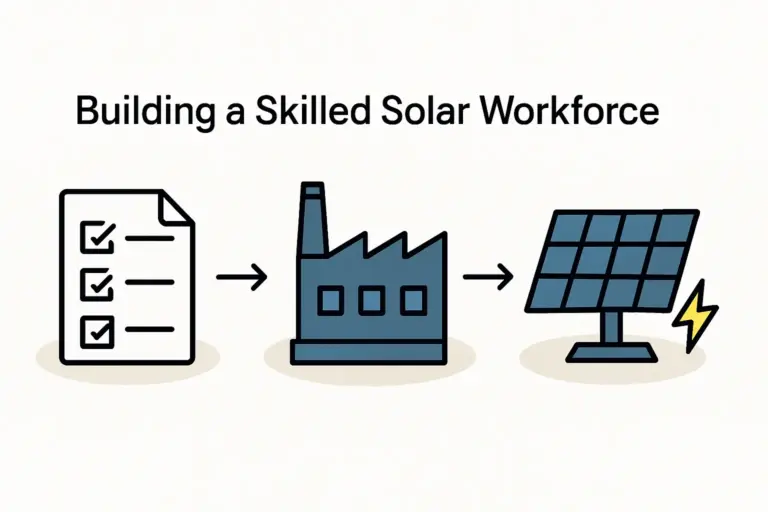
While the opportunity in Chad is clear, investors must be prepared for operational challenges like limited infrastructure, bureaucratic hurdles, and a shortage of technically skilled labor. These are not insurmountable obstacles, but they do require careful planning and strategic partnerships.
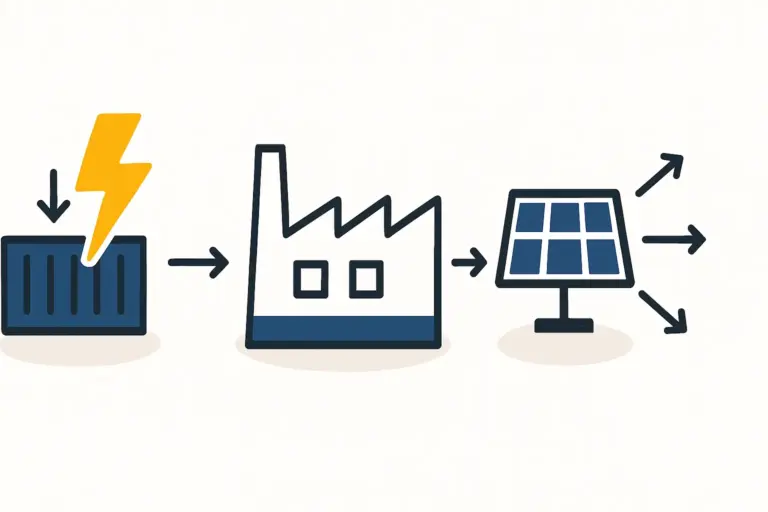
A structured approach is essential for mitigating these risks, and a turnkey solar module manufacturing line is one of the most effective methods. This approach bundles machinery, process engineering, and initial training into a single, integrated package, greatly simplifying the complex setup process—especially for entrepreneurs without a deep background in solar technology.
Frequently Asked Questions (FAQ)
Q: Why manufacture locally instead of simply importing modules?
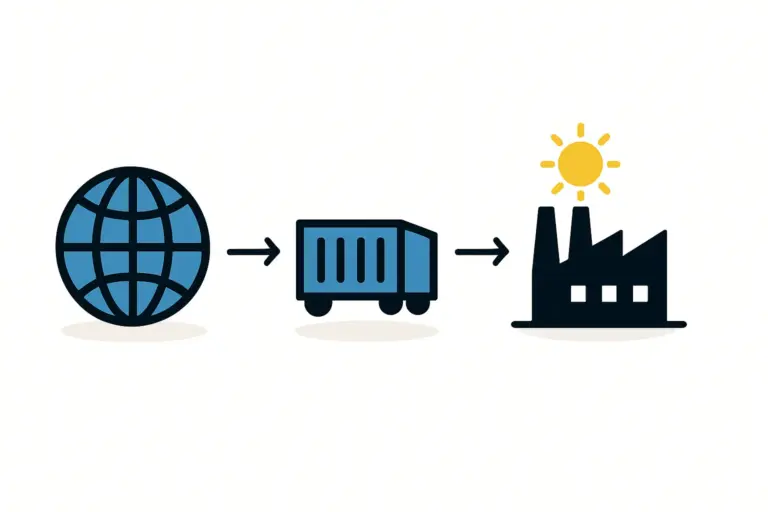
A: Local manufacturing offers several strategic advantages. It reduces transport costs and logistical complexity, allows products to be tailored to local environmental and market needs, creates local jobs, and strengthens the domestic supply chain. It also positions the business as a key contributor to national industrial development.
Q: What is a realistic initial investment for a small-scale factory?
A: The investment varies based on capacity, automation level, and building costs, so a comprehensive financial model is necessary to determine a precise figure. Creating a detailed business plan for a solar module factory is the essential first step in outlining capital requirements, operational costs, and revenue projections.
Q: Is a technical background required to start a solar manufacturing business?
A: No. Strong business acumen, project management skills, and local market knowledge are more critical assets. The technical expertise for plant design, equipment selection, and process optimization can be sourced from experienced partners. Entrepreneurs do not need to be technical experts to succeed in this industry; they just need the right guidance.
Q: How does local manufacturing align with government objectives?
A: The alignment is perfect. Local production directly supports Chad’s “Vision 2030” by contributing to energy independence, fostering industrialization, creating skilled jobs, and reducing reliance on imports. This alignment can often facilitate support from government bodies and international development partners.
From Analysis to Action
The business case for a solar module factory in Chad rests on a fundamental imbalance: an abundance of solar resources coupled with a severe energy deficit. Demand from the agricultural and off-grid sectors provides a clear and sustainable market for locally produced, well-designed solar modules.
For discerning investors, this is an opportunity to build a profitable enterprise that also helps solve a critical development challenge. The path forward requires diligent planning, a deep understanding of the local context, and an unwavering commitment to quality. By focusing on the real-world needs of Chad’s economy, a solar manufacturing venture can become a powerful engine for both commercial success and national progress.