Chile’s Atacama Desert boasts some of the highest solar irradiation levels on the planet, making it a global leader in solar energy potential and a prime opportunity for entrepreneurs. The success of a solar module factory, however, depends not only on sunlight and financing but also on a less visible asset: a skilled workforce. The critical question for any investor is not just where to build, but who will run the machines.
This article takes a realistic look at the technical labor pools in key Chilean regions, exploring the opportunities, skills gaps, and structured training required to transform local talent into a high-performing solar manufacturing team. Understanding the human capital landscape is a crucial step in de-risking a significant capital investment.
Table of Contents
The Chilean Labor Landscape: A Tale of Two Regions
Chile stands out in Latin America with a high GDP per capita and one of the region’s highest rates of tertiary education enrollment, creating a strong foundation of educated and technically literate candidates. However, the availability and specific skill sets of this workforce vary significantly by region, primarily between the industrial north and the metropolitan center.
Santiago Metropolitan Region: A Hub of Skilled Professionals
The capital region is the country’s economic and educational heart. For a new PV venture, it offers distinct advantages:
- Access to Talent: Santiago concentrates the country’s top engineering universities and technical institutes, providing a deep pool of graduates in electrical, mechanical, and industrial engineering.
- Diverse Industrial Experience: Its workforce has exposure to a wider range of manufacturing and service industries, bringing valuable cross-sector experience.
- Infrastructure: Superior logistics, transportation, and access to business services simplify operations.
The main trade-offs are higher labor costs and increased competition for top-tier talent from other established industries. These factors make the region ideal for housing headquarters, R&D, and management functions.
Antofagasta Region: Proximity to Resources and a Mining Legacy
Located in the north, the Antofagasta region is the epicenter of Chile’s solar energy generation and, crucially, its massive copper mining industry. This combination creates a unique profile:
- A Legacy of Technical Skill: The mining sector has cultivated a large, highly skilled workforce of technicians and engineers specializing in electrical systems, process control, and heavy machinery maintenance.
- Transferable Expertise: Many skills developed in modern mining—such as automation, quality control, and adherence to strict safety protocols—are directly transferable to a PV manufacturing environment.
- Proximity to Market: Being close to major solar farms reduces logistics costs for finished modules.
The challenge here is adapting the mindset from heavy industry to the precision requirements of electronics manufacturing. The transition from maintaining large-scale mining equipment to handling delicate solar cells requires a specific, targeted training approach.
Bridging the Skills Gap: From Potential to Proficiency
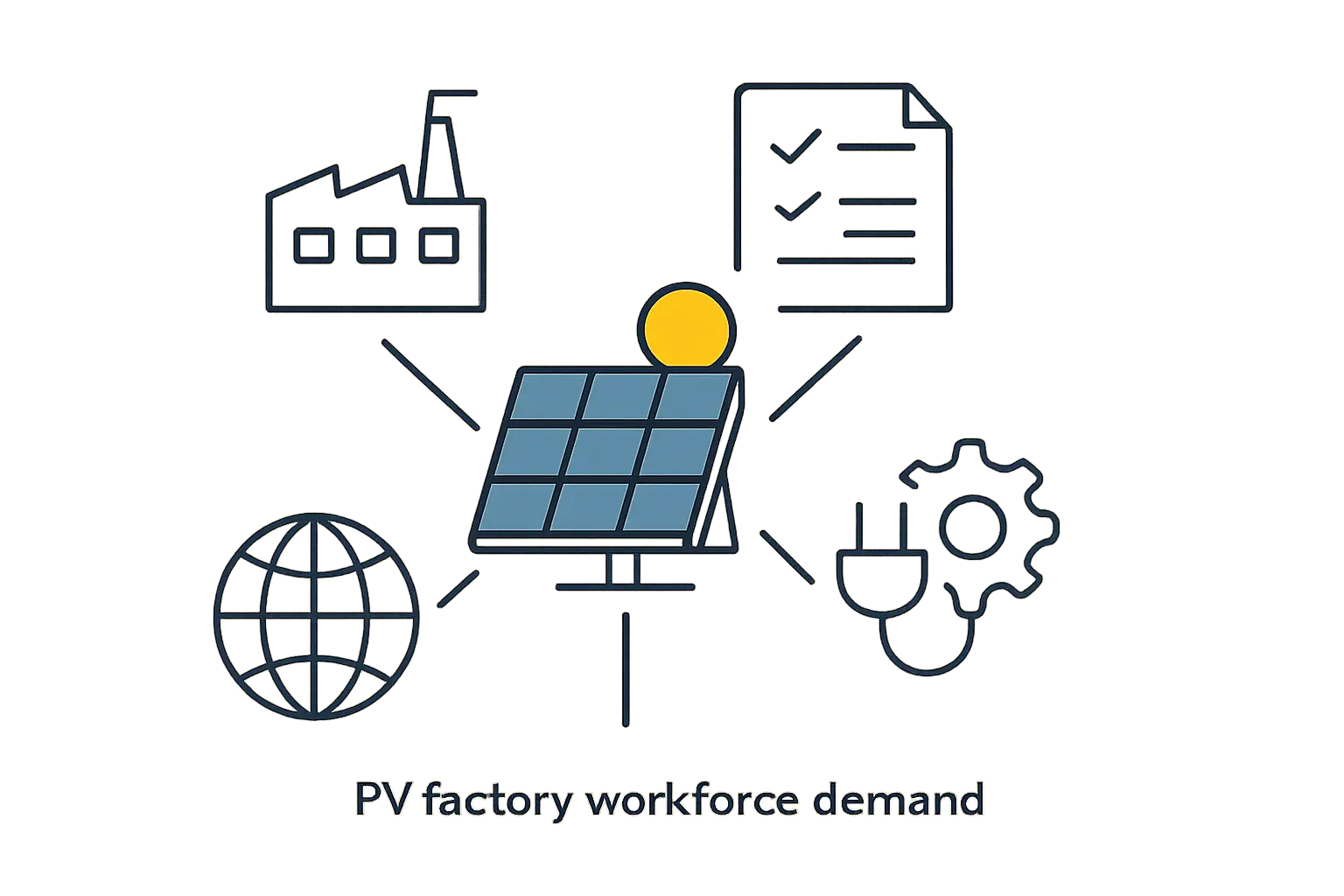
No matter the location, an investor will not find a ready-made workforce with years of PV module assembly experience in Chile. A structured training program is therefore not an option but an essential part of the business plan. The goal is to build upon the strong foundational skills already present in the local market.
Key Roles to Fill in a Starter PV Factory (20–50 MW)
A typical starter-size production line operates with a lean, focused team. For a single shift, an investor should plan for approximately 25 to 30 employees, including:
- Production Manager: Oversees all factory operations.
- Quality Control Supervisor: Manages inspection protocols and material quality.
- Machine Operators: Specialized roles for key equipment like the stringer, layup station, and laminator.
- Maintenance Technicians: Critical for ensuring uptime of the production line.
- Logistics and Warehouse Staff: Manages raw materials and finished goods.
Transferable Skills vs. Specific PV Knowledge
The success of a training program lies in identifying which skills can be leveraged and which must be taught from scratch.
Transferable Skills (Common in Chile):
- Electrical and mechanical maintenance.
- Experience with automated control systems (PLCs).
- Process monitoring and adherence to safety standards.
PV-Specific Knowledge (Requires Training):
- Proper handling of fragile silicon cells.
- Understanding of PV materials (EVA, backsheets, glass).
- Operation of specialized solar panel manufacturing machines.
- Interpretation of test results (e.g., Electroluminescence, IV-Curve).
Beyond the workforce itself, a well-designed factory is crucial for an efficient workflow and safe operations. Before finalizing a workforce plan, it’s essential to define the solar factory building requirements to ensure the facility supports the production process.
Designing an Effective Training Program
Based on experience from J.v.G. turnkey projects in emerging markets, a phased training program has proven most effective. This approach builds knowledge systematically, from theory to hands-on application.
Phase 1: Foundational PV Knowledge (Weeks 1–2)
This initial phase is classroom-based and covers the essential principles of photovoltaic technology.
- Topics: Solar cell functionality, module construction, the role of each material, and an introduction to international quality standards like IEC 61215.
- Objective: To ensure every team member, from operator to supervisor, understands why each step is critical to the final product’s performance and longevity.
Phase 2: Machine-Specific Operator Training (Weeks 3–6)
This phase moves the training to the factory floor for hands-on instruction with the actual production equipment.
- Topics: Safe operation, parameter setting, routine maintenance, and troubleshooting for each machine on the line.
- Objective: This stage, often led by engineers from the machine suppliers, focuses on developing operational competence and confidence. A common challenge in new factories is establishing a disciplined, cleanroom-style work culture, which requires constant reinforcement.
Phase 3: Process Integration and Quality Control (Weeks 7–10)
The final phase focuses on running the line as an integrated system.
- Topics: Material flow from station to station, quality checks at each step, data recording, and understanding how a deviation in one area affects the entire process.
- Objective: To transition the team from operating individual machines to managing a complete production process, with the goal of achieving a stable production yield (e.g., over 98%) within the first quarter of operation.
Leveraging Chile’s Renewable Energy Momentum
Investing in local manufacturing and training aligns directly with Chile’s national strategic goals. The country’s ambitious energy policy—targeting 70% of its electricity from renewable sources by 2030 and carbon neutrality by 2050—creates a stable, growing domestic market for solar modules.
This government-backed push for renewables is expected to generate significant employment opportunities, making a new PV factory a valuable contributor to the national economy and a key beneficiary of this momentum.

Frequently Asked Questions (FAQ)
Q: What qualifications should be prioritized when hiring initial staff?
A: For machine operators, prioritize candidates with experience in any automated manufacturing or technical assembly environment. For supervisors and technicians, an educational background in electrical or mechanical engineering is ideal. Above all, prioritize candidates with a proven ability and willingness to learn precise, detail-oriented processes.
Q: How long does it typically take to get a new team fully productive?
A: Following a structured 10–12 week training program, a team can achieve initial production targets. However, reaching peak efficiency, minimizing waste, and consistently mastering quality control often takes six to nine months as the team gains experience and processes are optimized.
Q: Are there government incentives for training in Chile?
A: Chile’s National Training and Employment Service (SENCE) frequently offers tax incentives and co-financing programs for companies that invest in developing their workforce. Investors should consult with local business advisors to identify and apply for relevant programs.
Q: Is it better to hire experienced expatriates or train a local team?
A: A hybrid model is often the most effective strategy for long-term success. Hiring one or two key expatriates—such as a Plant Manager or a Head of Quality with prior PV manufacturing experience—to lead and mentor the local Chilean team is a powerful way to transfer international best practices while building a sustainable, local talent base.
Conclusion: Building a Foundation for Success
Chile presents a compelling case for investment in solar module manufacturing. The country offers a solid foundation of technically inclined workers, particularly in industrial regions like Antofagasta. Realizing this potential, however, requires a deliberate and significant investment in specialized training.
The primary challenge is not a lack of talent but the need to adapt existing industrial skills to the specific demands of solar PV manufacturing through a structured process. For investors, a clear understanding of the entire process of how to start a solar factory is essential. Workforce planning, in particular, is one of the most critical pillars for success. Platforms like pvknowhow.com provide structured e-learning and consultancy to guide entrepreneurs through each stage of this complex but rewarding journey.