The Democratic Republic of Congo (DRC), a nation with vast mineral wealth and immense economic potential, faces a fundamental challenge: a significant energy deficit. While the country possesses enormous hydropower potential, its grid infrastructure is limited, leaving critical industries to rely on expensive and often unreliable power sources.
This energy gap creates a compelling opportunity for entrepreneurs in solar manufacturing in the DRC.
The country’s largest industrial power consumers—mining and telecommunications—are actively seeking stable, cost-effective energy solutions. For a local solar panel manufacturer, these two sectors represent more than just a potential market; they are a foundational client base that can sustain a new venture from its inception. This article explores the specific energy needs of these sectors and outlines the strategic advantages of meeting their demand with locally produced solar modules.
The Industrial Energy Challenge in the DRC
The DRC’s economic landscape is dominated by industries with substantial and continuous power requirements. However, the national electricity grid cannot consistently meet this demand.
Grid access is extremely low, and even for connected customers, power outages are frequent and disruptive. This reality forces major industrial players to operate their own power generation systems, which are overwhelmingly reliant on imported diesel fuel. This dependence presents several significant business challenges:
- High Operational Costs: Diesel generation is expensive, with costs reaching as high as $0.40 per kilowatt-hour (kWh), drastically inflating operational expenses.
- Logistical Complexity: Transporting and securing large volumes of fuel in remote areas is a constant logistical burden.
- Price Volatility: Fluctuations in global oil prices introduce financial uncertainty into business planning.
- Environmental Concerns: Growing pressure from international partners and investors is pushing companies to adopt more sustainable practices.
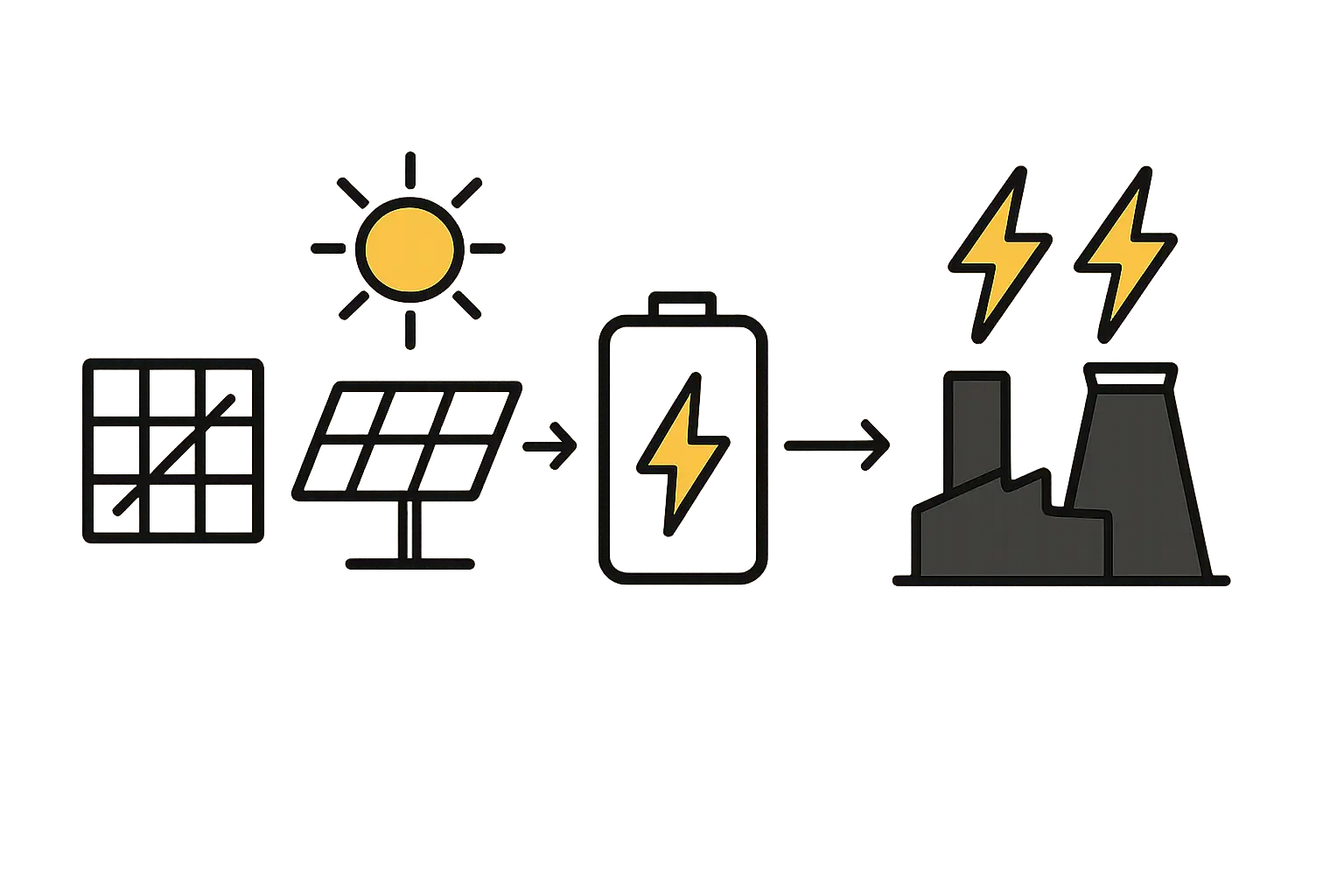
For these reasons, solar power, particularly when paired with battery storage, has shifted from a niche alternative to a strategic necessity.
Market Focus 1: The Mining Sector
The mining industry is the engine of the DRC’s economy and its single largest consumer of electricity, accounting for over 60% of the country’s total consumption. A modern mine operates 24/7, with immense power draws for extraction, processing, and refining.
Specific Energy Needs and Opportunities
A local solar panel manufacturer is uniquely positioned to address the mining sector’s challenges. Mines require robust, durable, and high-output solar installations to offset their diesel consumption.
- Cost Reduction: By integrating solar, a mine can significantly reduce its reliance on diesel, leading to direct and substantial savings on fuel. The business case often shows a rapid return on investment.
- Energy Stability: Solar and storage systems provide a reliable source of power, mitigating the risks of grid failures or fuel supply disruptions. This stability is critical for maintaining uninterrupted production.
- Scalability: Mines frequently expand their operations. A local supplier can provide panels for phased expansions, growing alongside its industrial clients. This offers a key advantage over relying on intermittent, large-scale international shipments.
Supplying a single large-scale mine could absorb a significant portion of a small or medium-sized solar factory’s annual output (e.g., 20-50 MW), creating a stable anchor of demand for a new manufacturing business.
Market Focus 2: The Telecommunications Sector
While mining is a centralized consumer, the telecom industry presents a decentralized but equally vital opportunity. The DRC has over 9,000 telecom towers—a number constantly growing to expand mobile and internet coverage—and many of them are in off-grid or remote areas.
Specific Energy Needs and Opportunities
Each telecom tower requires a constant, low-level power supply to operate. Traditionally, this power has come from small diesel generators.
- Operational Efficiency: The cost of refueling and maintaining thousands of generators across vast distances is enormous. Solar power eliminates fuel costs and drastically reduces maintenance needs, offering a far more efficient operational model.
- Reliability: Solar systems are more dependable than generators, which are prone to mechanical failure and fuel theft. For a telecom operator, uptime is a critical performance metric that solar helps secure.
- Standardized Solutions: Telecom companies require standardized solar kits for their towers. A local solar panel manufacturing plant can produce modules to the exact specifications needed, creating a streamlined and repeatable supply chain.
By becoming a preferred supplier for one or more of the DRC’s major telecom operators, a local manufacturer can secure high-volume, long-term contracts that provide a steady revenue stream.
The Strategic Advantage of Local Production
While importing solar panels is always an option, establishing a local manufacturing facility offers distinct competitive advantages when targeting these industrial sectors.
-
Supply Chain Control and Availability: Local production circumvents international shipping delays, port congestion, and customs complexities. For a mine or telecom operator with urgent needs, the ability to source panels quickly from an in-country supplier is a major benefit.
-
Customization for Local Conditions: Panels can be designed and built to withstand the region’s specific environmental challenges—such as high temperatures, humidity, and dust—ensuring better performance and a longer lifespan.
-
Reduced Logistical Costs and Risks: Shipping finished solar panels over long distances, often on poor-quality roads, increases the risk of damage. Manufacturing locally eliminates this transcontinental leg of the journey, reducing breakage and associated costs.
-
After-Sales Service and Support: A local manufacturer can offer responsive technical support, warranty fulfillment, and replacement services—a level of service difficult for international suppliers to match.
-
Alignment with Local Content Policies: Governments and large corporations are increasingly prioritizing local procurement to stimulate economic development. A local manufacturer is well-positioned to meet these requirements, making them a more attractive partner.
Understanding the cost to start solar panel manufacturing is the first step in evaluating this opportunity. The initial investment can then be targeted to serve the specific, high-value demands of these industrial clients.
Frequently Asked Questions (FAQ)
Why would a mining company choose a new local supplier over an established international brand?
Large industrial clients prioritize supply chain reliability and responsive service. A local manufacturer can offer shorter lead times, reduced transportation risks, and immediate after-sales support. Additionally, procuring locally often aligns with their corporate social responsibility and local content objectives, making a domestic partnership strategically valuable.
Is a large factory needed to supply these sectors?
Not necessarily. A small to medium-sized facility with an annual capacity of 20 to 50 MW can be a highly viable starting point. Such a factory is large enough to fulfill significant orders for a mine or supply panels for hundreds of telecom towers annually, yet it requires a more manageable initial investment than a gigawatt-scale plant.
What are the main challenges for a local manufacturer in the DRC?
The primary challenges include securing initial financing, developing a skilled workforce, and navigating the local regulatory environment. These hurdles, however, are manageable. Forming strategic partnerships and leveraging expert guidance from turnkey line providers can significantly mitigate these risks.
How does local manufacturing impact the final cost of the panels?
While some raw materials will still need to be imported, local assembly significantly reduces costs associated with international shipping, import tariffs on finished goods, and transportation insurance. These savings can make locally produced panels highly competitive, especially when the value of a resilient supply chain is factored in.
Conclusion: A Focused Path to Market Entry
For entrepreneurs exploring the solar industry in the DRC, the mining and telecom sectors offer a clear and immediate path to market. Their pressing need for reliable, cost-effective power creates a high-potential customer base that values the advantages of a local supply chain.
Rather than competing in the broad residential market, a new manufacturer can build a sustainable business by becoming a strategic energy partner to these industrial powerhouses. By focusing on their specific needs, a local solar panel factory can establish itself as a critical component of the DRC’s industrial and economic future.