Entrepreneurs exploring solar manufacturing in the Democratic Republic of the Congo often ask about labor: Where can they find technicians with the specific skills needed to operate a modern solar module factory?
While the country’s large, youthful population is a clear advantage, a 2018 World Bank jobs diagnostic revealed that only 6% of the workforce holds formal wage employment. This highlights a significant gap between existing education and the needs of a technical industry.
For a new industrial venture, this data is not a barrier but a strategic starting point. The real opportunity lies not in finding a pre-trained workforce, but in building one.
A well-structured training program can transform motivated local talent into a world-class technical team and create a powerful competitive advantage.
This article lays out a practical framework for sourcing, training, and retaining the skilled technicians required to run a successful solar module assembly line in the DRC.
The Human Capital Opportunity in the DRC
The demographic landscape of the Congo offers a unique opportunity for industrial development. With over 60% of the population under the age of 25, the country has a vast and energetic pool of potential employees. The formal sector, however, has not kept pace, leading to widespread underemployment in informal agriculture and services.
A solar module factory can directly address this gap. It provides stable, formal employment and, more importantly, a path for skills development in a high-growth global industry.
By investing in human capital, a company does more than fill positions; it builds loyalty, reduces long-term operational risk, and contributes to the local industrial base. The challenge is not a lack of people, but the need for a systematic process to build specialized skills.
A Phased Framework for Workforce Development
Building a technical team requires a disciplined, multi-stage approach. Rushing untrained personnel onto a production floor leads to material waste, equipment damage, and inconsistent product quality. A structured program mitigates these risks.
Phase 1: Sourcing and Aptitude-Based Selection
The initial hiring goal is to identify candidates with the right aptitude, not necessarily direct experience. In a market where specific solar manufacturing experience is rare, focusing on foundational traits is far more effective.
Key selection criteria should include:
-
Attention to Detail: The ability to follow precise, multi-step instructions is critical in module assembly.
-
Technical Curiosity: Candidates from vocational schools or with experience in mechanics, electronics, or even tailoring often possess strong hands-on capabilities.
-
Discipline and Consistency: Manufacturing requires adherence to strict quality and safety protocols on every shift.
Partnering with local technical and vocational training institutes (TVETs) can be an excellent source for pre-screened candidates who have already shown a commitment to technical learning.
Phase 2: Foundational Training and Simulation
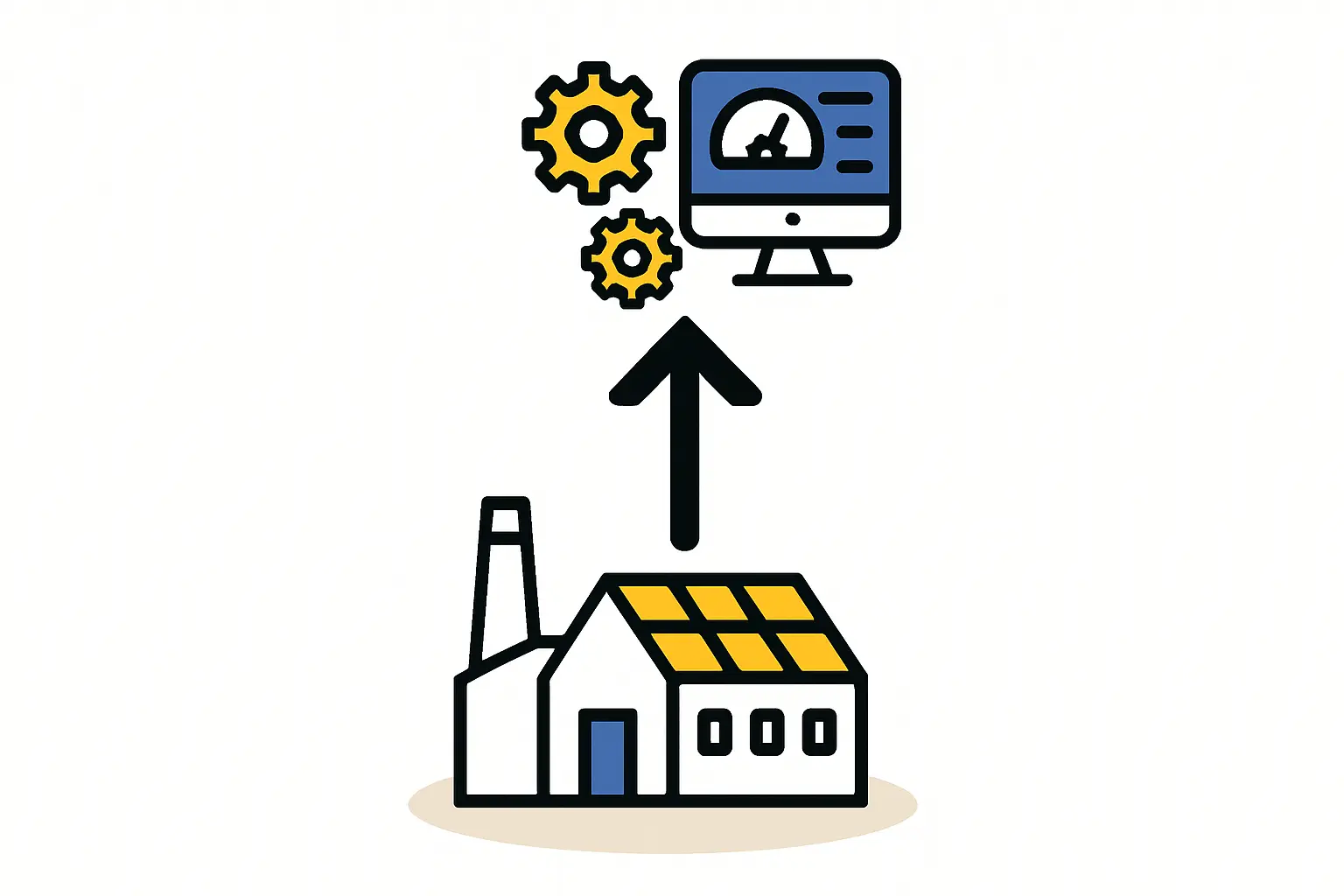
Once a core team is selected, a formal training program begins well before the production line is commissioned. This program bridges the gap between general aptitude and the specific demands of solar manufacturing, ensuring the team is competent and confident when the factory goes live.
A comprehensive training curriculum typically includes:
-
Classroom Instruction: Covering the fundamentals of photovoltaic technology, production process flow, quality control standards (e.g., recognizing cell microcracks), and workplace safety.
-
Hands-on Simulation: Trainees practice core tasks, such as handling solar cells and operating machinery, using non-production or dummy materials. This builds muscle memory and procedural understanding without risking valuable inventory. Based on experience from J.v.G. turnkey projects, this step alone can dramatically reduce material breakage rates during the initial production ramp-up.
Phase 3: Expert Mentorship and Knowledge Transfer
The most critical phase is the direct knowledge transfer from experienced engineers to the new Congolese team. For a new facility, one or two expatriate process engineers are typically on-site during commissioning and the initial months of operation.
Their role is twofold:
-
Technical Commissioning: Ensuring all equipment is installed and calibrated correctly.
-
Training the Trainers: Their primary task is to mentor the local supervisors and team leads, who will then become responsible for ongoing training.
The goal is to create a self-sufficient operation. The expatriate experts systematically transfer their knowledge, ultimately handing over full operational control to the local management team.
From Training to Retention: Building a Sustainable Team
Training is an initial investment, but retention delivers the long-term return. In an environment with few formal career paths, providing clear opportunities for advancement is a powerful retention tool.
Creating a path for a technician to progress into roles like team leader, quality control specialist, or shift supervisor fosters loyalty and motivates employees to master their roles. The result is a stable, experienced workforce—a key asset that translates to higher efficiency, improved product quality, and lower operational costs over time.
Aligning Workforce Skills with Factory Equipment
The training program must be precisely tailored to the technology installed in the factory. The skills needed to operate a tabber-stringer machine differ from those required for an electroluminescence (EL) tester or a laminator.
The curriculum must be developed in parallel with the planning of the solar module assembly line. Each station has its own standard operating procedures (SOPs), quality checkpoints, and maintenance routines. The training must cover the theory and practice for all key machinery to ensure a holistic understanding of the entire production process.

Frequently Asked Questions (FAQ)
Do we need to hire experienced solar technicians from abroad?
Initially, one or two expert trainers or process engineers from the equipment supplier are essential for knowledge transfer and commissioning. However, the long-term strategy should focus on developing a fully local team. Relying on expatriate staff for daily operations is not a financially sustainable model.
How long does it take to train a new technician?
A well-designed program can bring a new employee with the right aptitude to a proficient level on a specific machine within four to eight weeks. This includes classroom theory, hands-on simulation, and supervised practice on the live production line.
What educational background is required for trainees?
A secondary school diploma, particularly from a technical or vocational track, is typically sufficient. The most important qualifications are not academic but practical: a strong work ethic, the ability to follow precise instructions, and a commitment to quality.
How many employees are needed for a small-scale factory?
A semi-automated 20–50 MW assembly line can often be operated with a single shift of approximately 20–25 production and quality control staff, plus a few individuals for administration and management.
A skilled local workforce is the foundation of any successful solar manufacturing venture in the Congo. By viewing the nation’s demographics as an opportunity and implementing a structured approach to training, entrepreneurs can build a team that is not only proficient but also deeply invested in the company’s success.
With the human capital component addressed, the next step is to explore the physical infrastructure and machinery required to bring such a factory to life.