An investor evaluating Costa Rica for a new solar module factory sees an ideal landscape: a stable democracy, a strong commitment to renewable energy, and attractive investment incentives. But the success of such a high-tech venture hinges less on policy and more on people. The critical question, often unasked until it’s too late, is whether the local labor market has the specific technical skills required to run a sophisticated solar panel assembly line.
This analysis provides a realistic assessment of Costa Rica’s technical workforce for solar manufacturing. It explores the availability of qualified engineers, technicians, and operators; outlines common salary expectations; and presents a strategic framework for building a competent team from the ground up. Understanding this human capital equation is essential for any successful Costa Rica factory investment in the renewable sector.
The Costa Rican Labor Landscape: A High-Level Overview
Costa Rica has built a reputation as a regional leader in education and skilled labor, creating a strong foundation for any industrial project. The country boasts a 97.9% literacy rate and invests roughly 7.4% of its GDP in education—both figures exceptionally high for the region. This long-term commitment has cultivated a workforce that is adaptable, educated, and familiar with the demands of international corporations.
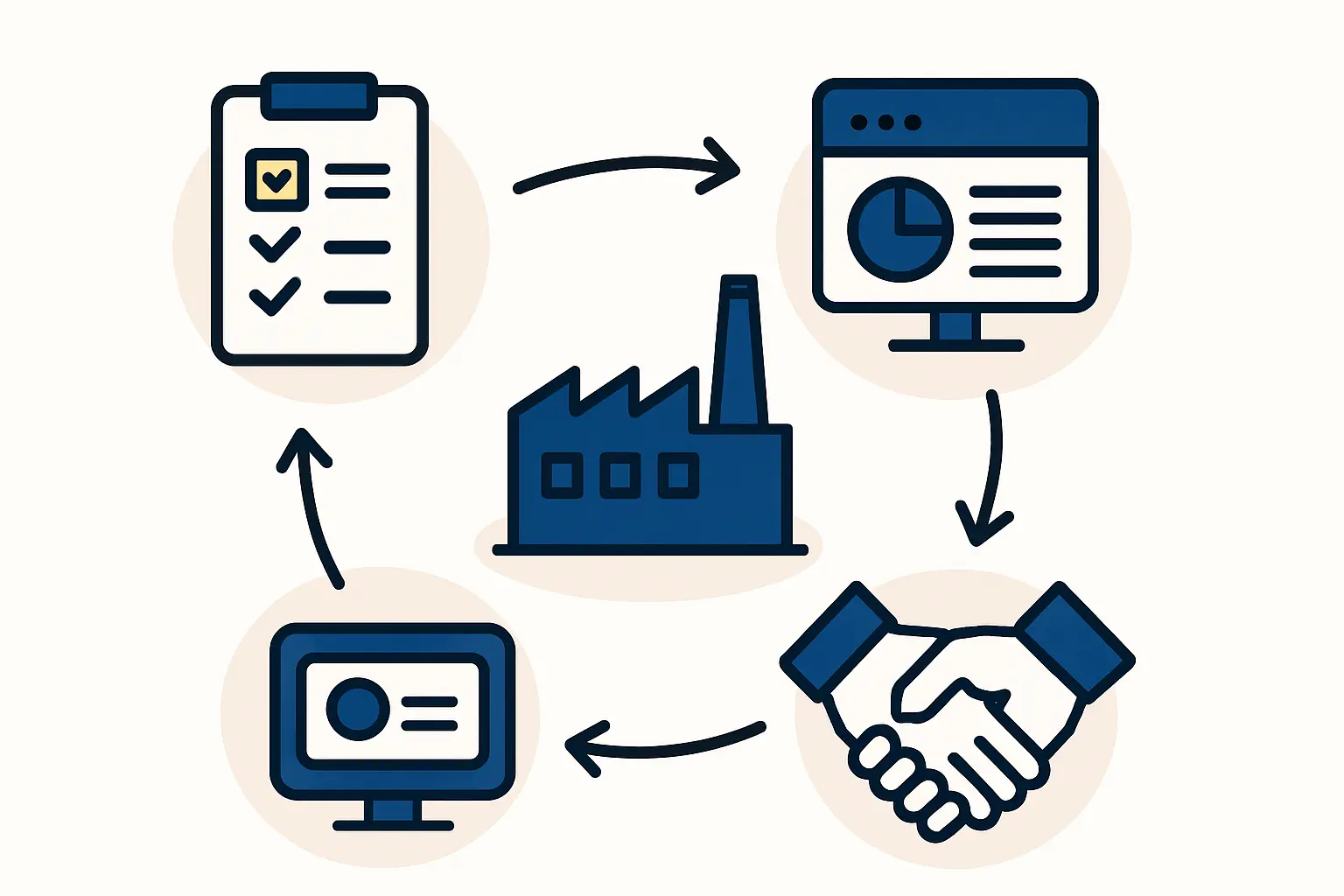
Historically, this talent has been channeled into sectors like medical devices, life sciences, and IT services. As a result, the country has a deep pool of professionals accustomed to quality control standards (like ISO 9001), cleanroom protocols, and process-driven manufacturing. This skilled labor is concentrated primarily within the Greater Metropolitan Area (GAM), which encompasses the provinces of San José, Alajuela, Heredia, and Cartago and serves as the nation’s economic and industrial heartland.
For a prospective solar factory owner, this context is both an opportunity and a challenge. The opportunity lies in a disciplined and technically literate workforce; the challenge is that direct experience in photovoltaic (PV) manufacturing is virtually non-existent.
Key Roles in a Solar Module Factory and Their Availability in Costa Rica
A solar module assembly line requires a well-coordinated team with distinct skills at three primary levels: engineers to design and oversee processes, technicians to maintain the machinery, and operators to perform the hands-on assembly.
Engineering Talent: Strengths and Gaps
Costa Rica’s universities, notably the University of Costa Rica (UCR) and the Costa Rica Institute of Technology (TEC), produce a steady stream of graduates in electrical, mechanical, and industrial engineering. These professionals are highly capable, with the foundational knowledge for roles in process optimization, quality assurance, and production management.
The primary gap is domain-specific knowledge. An industrial engineer from the medical device sector understands efficiency and workflow but is unlikely to know the nuances of solar cell stringing or EVA lamination. The strategy, then, is not to find PV experts, but to recruit bright engineers and provide them with specialized training for planning and managing a solar factory.
Technicians: The Critical Mid-Layer
Technicians are the backbone of factory maintenance, responsible for keeping complex automated equipment running smoothly. Costa Rica’s National Training Institute (INA) is a crucial resource here, offering robust vocational programs in mechatronics, electronics, and industrial maintenance. INA graduates are well-equipped to handle the mechanical and electrical troubleshooting required for machinery like laminators, stringers, and testers.
Much like the engineers, these technicians will require specific training on the PV assembly equipment. Their existing skills in automation and control systems, however, make them fast learners. The transition from maintaining a CNC machine to an automatic bussing machine is a matter of learning the specific application, not the core principles.
Production Operators: The Foundation of the Assembly Line
The role of a production operator in a solar factory demands precision, consistency, and a high degree of attention to detail. This is where Costa Rica’s experience in medical device and electronics assembly becomes a significant advantage. The labor pool, particularly within the GAM’s free trade zones, includes thousands of workers trained in:
-
Following Standard Operating Procedures (SOPs): Adherence to detailed, step-by-step instructions.
-
Quality Control: Performing visual inspections and adhering to strict quality benchmarks.
-
Cleanroom Environments: Understanding the importance of cleanliness and contamination control.
An operator who has previously assembled intricate medical catheters can readily adapt to handling delicate solar cells or preparing modules for lamination. These core skills are directly transferable, dramatically reducing the learning curve for operating solar panel production equipment.
Building Your Team: Sourcing and Training Strategies
Given the lack of direct PV experience, a successful staffing plan must be built on two pillars: strategic sourcing and a comprehensive in-house training program.
Sourcing Strategy: Where to Find Talent
A multi-channel approach is most effective:
-
University Partnerships: Engage with career services at UCR and TEC for engineering talent.
-
INA Collaboration: Work directly with the Instituto Nacional de Aprendizaje to recruit top graduates from its technical programs.
-
Professional Associations: Network through the Federated College of Engineers and Architects of Costa Rica (CFIA) to find experienced professionals.
-
Specialized Recruiters: Use recruitment agencies that focus on the manufacturing and free-trade-zone sectors.
The Importance of a Structured Training Program
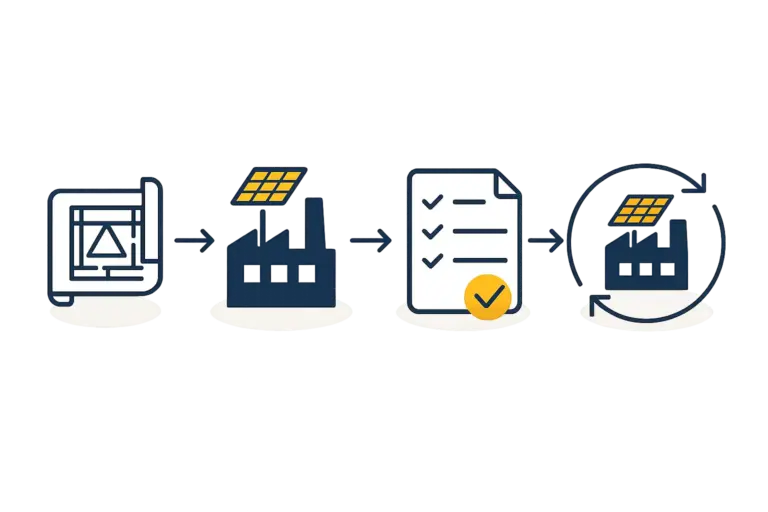
A new factory must function as a training institution before it can become a production powerhouse. An effective training program bridges the knowledge gap and ensures consistent quality from day one. Based on experience from J.v.G. turnkey projects, a phased approach is highly effective.
-
Phase 1: Photovoltaic Fundamentals: All technical staff, from engineers to operators, should receive foundational training on solar cell technology, module components, and industry terminology. This ensures everyone speaks the same technical language.
-
Phase 2: Machine-Specific Training: This is hands-on training using the exact equipment on the production line. Turnkey line providers typically include this as part of the equipment commissioning process, often bringing in specialists to train the initial team of technicians and engineers.
-
Phase 3: Process and Quality Control: The final phase involves training the entire team on the factory’s specific SOPs, quality inspection points, and safety protocols. This training solidifies each person’s responsibilities within the production flow.
This structured approach can transform a capable but inexperienced workforce into a highly competent solar manufacturing team in a matter of months.
Understanding Compensation: Typical Salary Ranges in Costa Rica
Budgeting for salaries is a critical part of any business plan. The following figures are estimated annual gross salaries in USD for roles within the Greater Metropolitan Area. These are baseline estimates and will vary with experience and specific responsibilities.
-
Lead Engineer (5+ years experience): $45,000 – $65,000 USD
-
Process Technician (INA graduate, 2-3 years experience): $18,000 – $25,000 USD
-
Production Operator: $10,000 – $15,000 USD
Foreign investors should also note that employers must pay significant social security contributions (“cargas sociales”) on top of the gross salary, which typically add another 26.5% to payroll costs.
Frequently Asked Questions (FAQ)
Q1: Is it necessary to hire expatriate managers for a new solar factory in Costa Rica?
For key initial roles, such as Plant Manager or Head of Engineering, hiring an expatriate with 5-10 years of direct PV manufacturing experience is strongly recommended. This individual can oversee the setup, implement best practices, and lead the training of the local management team. The long-term goal should be to develop a local successor within two to three years.
Q2: How does the “Pura Vida” work culture affect factory operations?
While Costa Rican culture is famously relaxed (“Pura Vida”), the professional environment in the manufacturing sector is disciplined and performance-oriented. Decades of working with multinational corporations in demanding fields like medical technology have cultivated a workforce that understands the importance of punctuality, productivity, and quality.
Q3: What are the primary language requirements for staff?
Fluent English is essential for senior management and engineering staff to communicate with international equipment suppliers, potential customers, and corporate headquarters. On the production floor, all communication, training, and documentation will be in Spanish.
Q4: How long does it typically take to train a new production team from scratch?
With a well-structured program like the one outlined above, a core team can become operationally ready within three to four months. This timeline includes classroom instruction, hands-on equipment training during the commissioning phase, and process qualification runs.
Costa Rica presents a compelling case for a new solar module factory. It offers a stable, educated, and technically capable workforce. Success will depend not on finding ready-made PV experts, but on a deliberate strategy to recruit adaptable talent and invest in specialized training. By channeling its existing industrial strengths into PV manufacturing, a new venture can thrive, building a world-class team from Costa Rica’s most valuable resource: its people.