An entrepreneur finalizes a comprehensive business plan for a new solar module factory. The equipment is selected, financing is secured, and the project timeline is set.
Yet, a critical line item is often underestimated: the cost and complexity of importing the production machinery. A surprise 10% customs duty or 10% Value Added Tax on a multi-million-dollar equipment purchase can significantly impact project viability before the first solar panel is even produced.
For investors considering Djibouti, understanding the local customs and tax landscape isn’t just a logistical detail—it’s a cornerstone of sound financial planning. This guide provides a clear overview of the import duties, tax regulations, and strategic exemptions available for establishing solar manufacturing operations in the country.
Understanding Djibouti’s Import Framework
As a member of the Common Market for Eastern and Southern Africa (COMESA), Djibouti’s customs tariff structure is generally aligned with the COMESA Common External Tariff (CET). This framework categorizes imported goods, including industrial machinery, and applies a specific duty rate based on that classification.
The primary government body overseeing these procedures is the Directorate General of Customs and Indirect Duties (Direction Générale des Douanes et Droits Indirects). All commercial imports, including a full turnkey solar module production line, must be processed through this authority. While the system is standardized, the most significant financial advantages for investors lie in specific government exemptions designed to promote industrial development.
Key Taxes and Duties on Imported Machinery
When importing capital goods, investors must account for several potential taxes and duties. Understanding each one is the first step toward mitigating its impact.
Customs Duties (Tariffs)
Customs duties are calculated based on the Cost, Insurance, and Freight (CIF) value of the imported goods. The rate is determined by the product’s Harmonized System (HS) code, an international standard for classifying traded products. For capital goods and machinery, CET rates typically fall between 0% and 10%. Correctly classifying your solar manufacturing equipment is crucial, as misclassification can lead to costly penalties and delays.
Value Added Tax (VAT)
Djibouti applies a standard Value Added Tax (VAT) to most goods and services. For an investor, the key question is whether this tax applies to the initial import of production machinery. The standard VAT rate, when applied to the total value of a new production line, represents a substantial upfront cost.
Consumption Tax (Taxe Intérieure de Consommation – TIC)
The TIC is an excise duty typically levied on specific consumer goods like beverages and tobacco. Production machinery for industrial use is generally not subject to this tax, but it is crucial to confirm this during the customs declaration process.
The Strategic Advantage: Djibouti’s Investment Code
The most powerful tool for an international investor in Djibouti is the Investment Code. Administered by the National Investment Promotion Agency (NIPA), the code is designed to attract foreign direct investment into strategic sectors, including renewable energy manufacturing.
Official project approval under the Investment Code grants investors access to substantial fiscal incentives, primarily targeting the high upfront cost of capital goods.
Exemption from Customs Duties and VAT
For an approved project, the Investment Code provides a full exemption from both customs duties and VAT on the importation of all capital equipment, materials, and spare parts required to set up the production facility.
Business-Relevant Metric: Consider an investment of USD 3 million in production machinery. A potential 10% customs duty and 10% VAT would add USD 600,000 in upfront costs. Securing approval under the Investment Code removes this significant financial barrier, freeing up capital for operations, training, and raw materials.
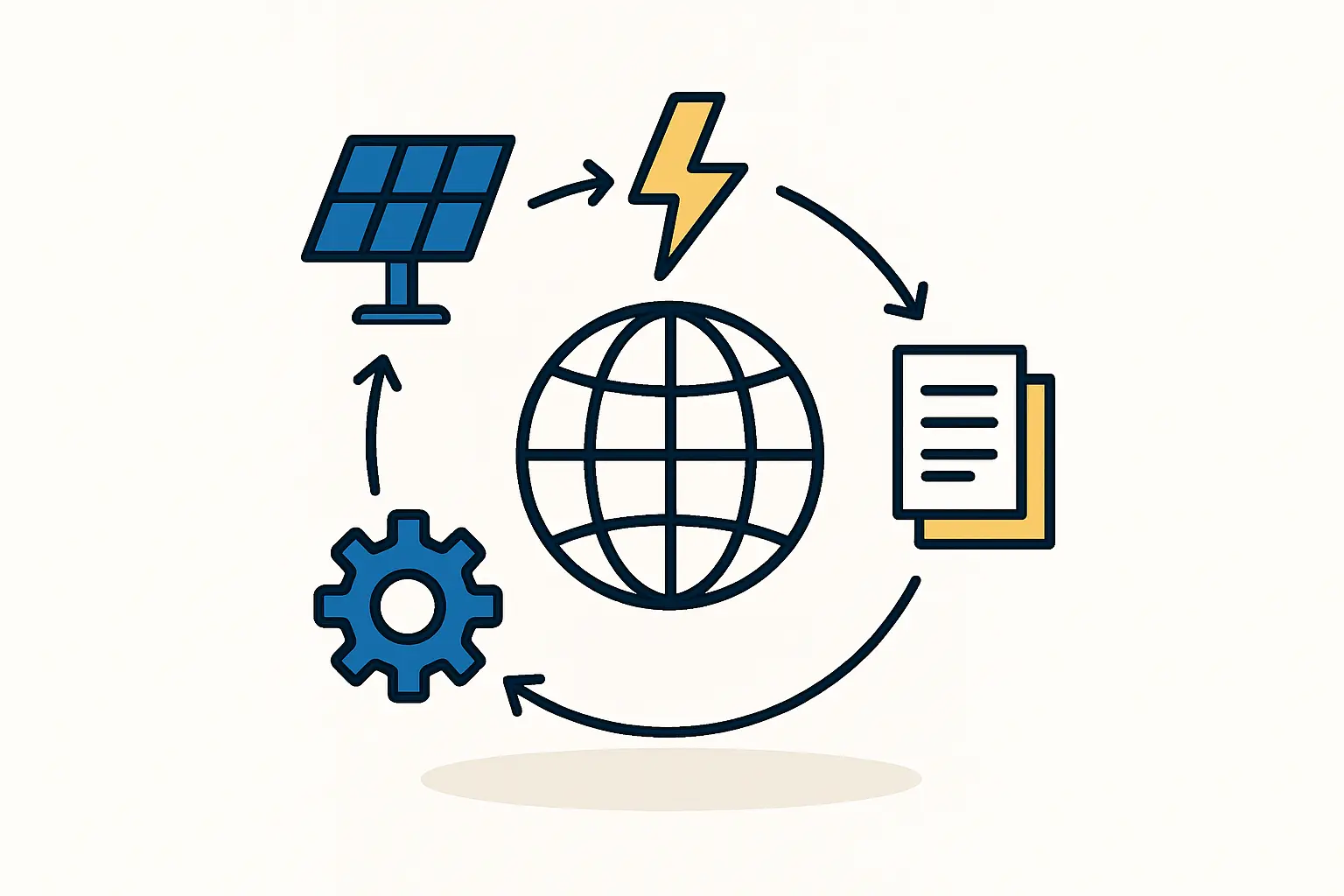
This exemption transforms the financial model of the project, making Djibouti a highly competitive location for establishing a solar factory. J.v.G. Technology GmbH has observed in numerous turnkey projects globally that such government incentives are often the deciding factor for investors.
The Free Zone Advantage: A Special Case
For businesses focused primarily on export, establishing operations within the Djibouti International Free Trade Zone (DIFTZ) offers another layer of benefits. Companies within the DIFTZ operate under a special legal and fiscal regime, which typically includes:
- Complete exemption from all direct and indirect taxes, including customs duties, for the duration of their operation in the zone.
- Streamlined customs procedures for importing machinery and raw materials, and for exporting finished goods.
- Simplified administrative and regulatory requirements.
This option is particularly suitable for entrepreneurs who plan to serve the wider East African or Middle Eastern markets from a strategically located manufacturing hub.
Practical Steps: The Customs Clearance Procedure
Regardless of exemptions, all imported equipment must go through a formal customs clearance process. Following the correct procedure is key to avoiding delays.
-
Engage a Licensed Customs Broker: This is a mandatory and critical step. A reputable local customs agent has the expertise to navigate the system, ensure correct documentation, and liaise with customs officials on your behalf.
-
Pre-Arrival Documentation: Before the shipment arrives at the port of Djibouti, your broker will require a complete set of documents, including the Bill of Lading, a detailed Commercial Invoice, a Packing List, the Certificate of Origin, and any exemption certificates issued by NIPA.
-
Goods Declaration and HS Code Classification: Using your documents, the broker will file a formal goods declaration. The accuracy of the HS codes for each piece of equipment is paramount. A detailed equipment list from your supplier is essential for this step.
-
Inspection and Valuation: Djibouti Customs reserves the right to inspect the shipment to verify its contents and value against the declaration. Proper crating and clear labeling can facilitate this process.
-
Release of Goods: Once the declaration is verified and any applicable (or exempted) duties are settled, customs will issue a release order, allowing the equipment to be transported to your factory site.

Common Pitfalls and How to Avoid Them
Based on experience from J.v.G. turnkey projects in emerging markets, investors should be aware of several common challenges:
-
Pitfall 1: Inaccurate Paperwork. Discrepancies between the commercial invoice, packing list, and the actual contents of a container are a leading cause of significant delays.
Solution: Insist on a final cross-check of all shipping documents by your team before the shipment leaves its country of origin.
-
Pitfall 2: Underestimating Timelines. Assuming customs clearance is an overnight process is a frequent planning error.
Solution: Factor a buffer of at least two to four weeks into your project timeline specifically for port and customs clearance.
-
Pitfall 3: Not Engaging with NIPA Early Enough. The process for gaining approval under the Investment Code takes time and requires a well-prepared application.
Solution: Begin a dialogue with the National Investment Promotion Agency as soon as your solar manufacturing business plan is solidified.
Frequently Asked Questions (FAQ)
What is an HS Code and why is it important?
The Harmonized System (HS) code is an internationally standardized system of names and numbers used to classify traded products. Customs authorities use it to identify products and apply the correct duties and taxes. Using the wrong code can lead to paying the wrong tariff or facing penalties.
Do I absolutely need a local customs broker in Djibouti?
Yes. Using a licensed broker is a practical necessity and often a legal requirement. A licensed broker is authorized to submit declarations into the customs system and has the expertise to manage the process efficiently.
How long does it typically take for equipment to clear customs?
Assuming all documentation is correct and any required exemptions are in place, the process can take anywhere from a few days to two weeks. However, it is wise to budget for potential delays.
Are spare parts for the machinery also exempt from duties under the Investment Code?
Yes, the exemptions granted under the Investment Code typically cover the initial set of spare parts imported along with the main equipment, as they are considered integral to the investment.
What is the primary role of the National Investment Promotion Agency (NIPA)?
NIPA is the central government body responsible for promoting and facilitating private investment in Djibouti. It acts as a one-stop shop for investors, guiding them through the application process for benefits under the Investment Code and coordinating with other government ministries.
While the standard import regulations in Djibouti include duties and taxes, the government has established clear and highly advantageous pathways for strategic investors, particularly in the renewable energy sector. By leveraging the benefits of the Investment Code or the Free Zone regime, entrepreneurs can significantly reduce the initial capital outlay for a solar manufacturing project. The key to success lies in early planning, meticulous documentation, and partnership with experienced local professionals.