For many entrepreneurs in the solar manufacturing sector, the default assumption is to look to Asia as the heart of the supply chain. Yet, a closer look at global trade dynamics reveals strategic opportunities in locations that combine production incentives with market proximity. The Dominican Republic, in particular, presents a compelling logistical case for businesses aiming to serve North American and Caribbean markets efficiently.
This analysis breaks down the practicalities of establishing a solar module assembly plant in the country—from sourcing raw materials globally to exporting finished products through its key maritime ports—and highlights the unique financial and operational advantages available.
The Strategic Advantage of Dominican Ports
The backbone of any import-export operation is its port infrastructure. The Dominican Republic is home to several modern ports, two of which are particularly relevant for industrial manufacturing: the Port of Caucedo and the Port of Haina.
The Port of Caucedo, managed by the global logistics company DP World, is a state-of-the-art, deep-water container terminal. Its modern equipment and efficient operations make it a primary hub for international trade in the Caribbean. Closer to the capital of Santo Domingo, the Port of Haina is the country’s oldest and one of its busiest ports, handling a diverse mix of cargo.
These well-equipped ports are the gateways for a model built on global sourcing and regional distribution, ready to handle both the inbound flow of components and the outbound shipment of finished solar modules.
Navigating the Supply Chain: From Global Components to Regional Exports
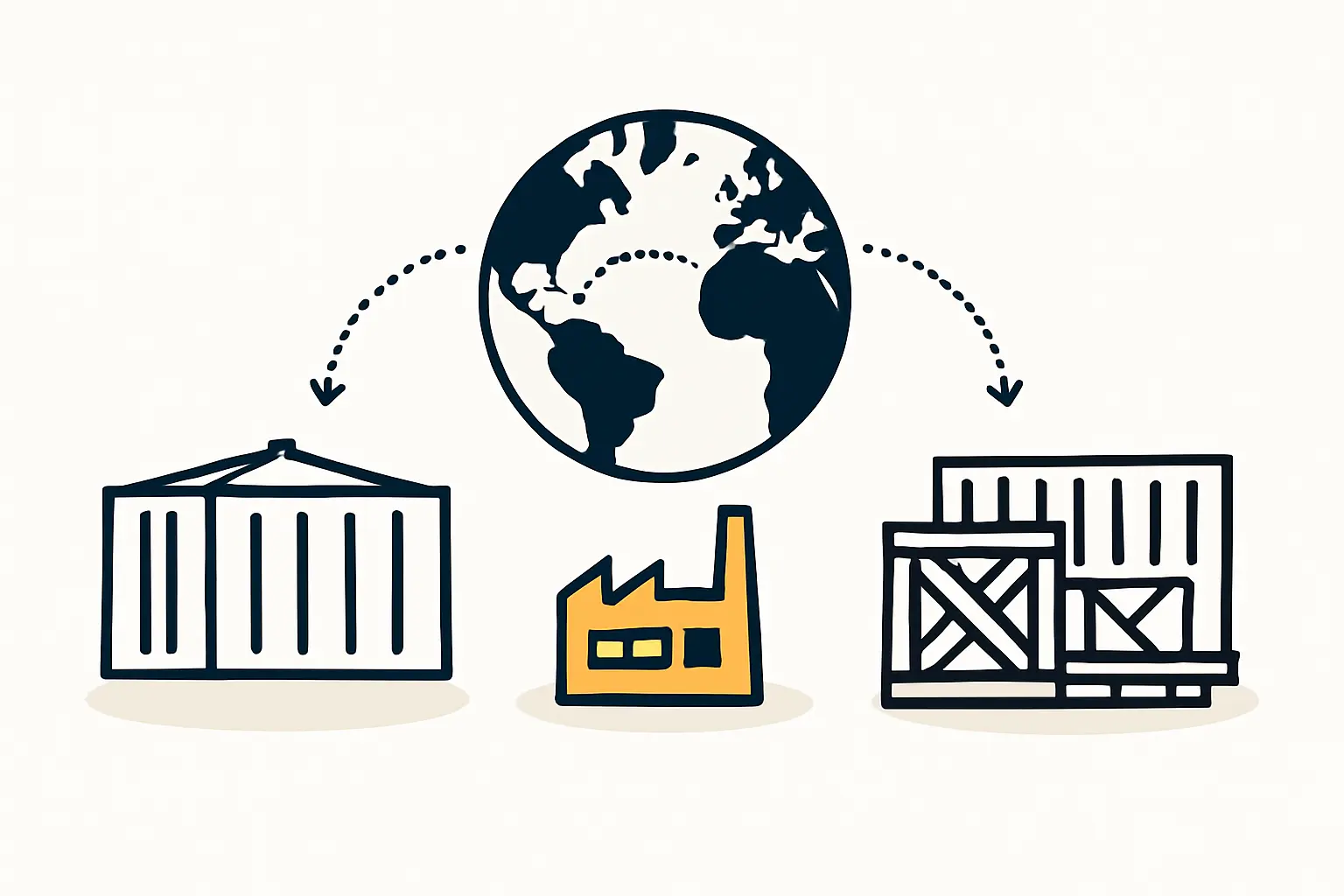
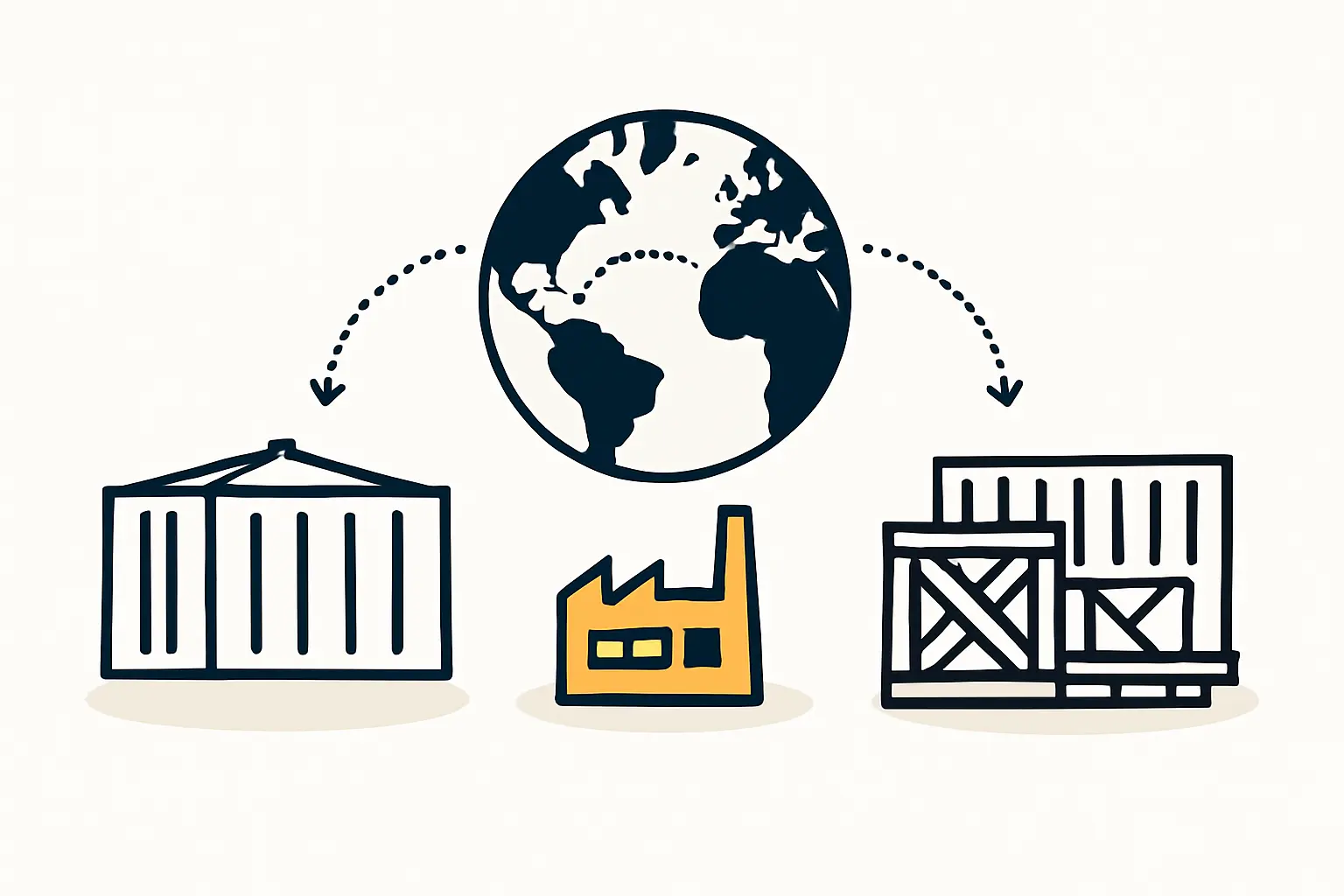
The logistics for a solar manufacturing operation in the Dominican Republic follow a clear, two-step path. Because the country does not produce key components like photovoltaic cells, specialized glass, or encapsulants, these materials must be imported.
-
Import of Raw Materials: The first stage involves sourcing and importing the raw materials for module assembly. These components are typically procured from established suppliers in Asia. Containers arrive at Dominican ports like Caucedo, where they are processed for entry into a designated Free Trade Zone.
-
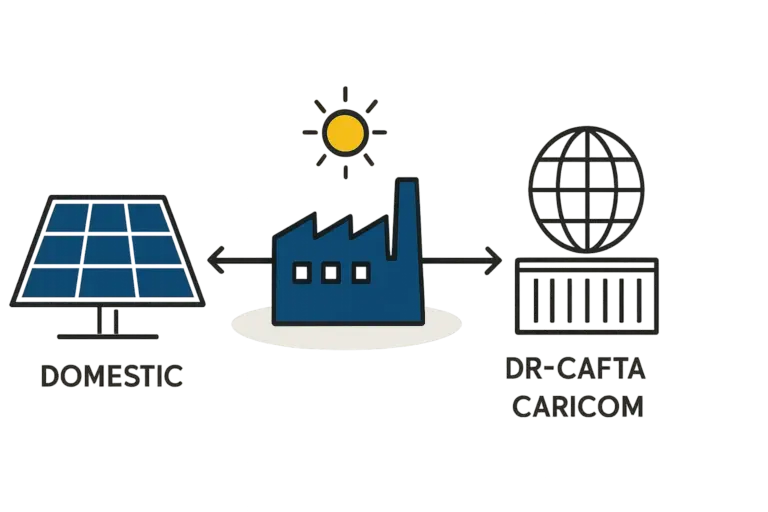
Export of Finished Modules: After assembly, finished solar modules are packaged and loaded into containers for export, primarily targeting the United States, nations within the Caribbean Community (CARICOM), and Central America.
This model leverages the country’s strategic location to transform globally sourced components into regionally distributed, high-value products.
Unlocking Financial Efficiency: The Role of Free Trade Zones (FTZs)
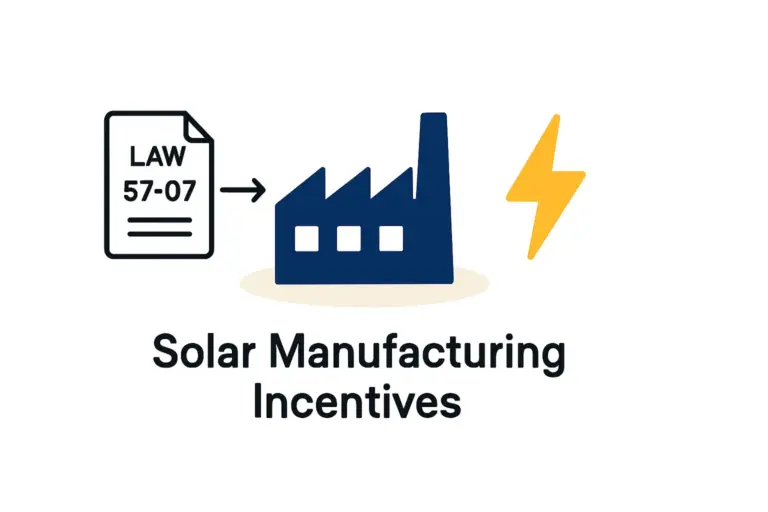
A significant financial advantage of manufacturing in the Dominican Republic comes from its robust Free Trade Zone (FTZ) system. Companies operating within these designated zones benefit from a highly favorable fiscal regime, which includes:
- 100% Exemption on Corporate Income Tax: No corporate income tax is levied on profits generated from export activities.
- 100% Exemption on Import Duties: All raw materials, equipment, and machinery needed for the manufacturing process can be imported completely free of customs duties.
- 100% Exemption on Export Taxes: No taxes are applied to the finished goods being exported.
- 100% Exemption on VAT (ITBIS): Value-added tax is not applied to goods and services within the FTZ.
For an entrepreneur starting a solar module production business, these incentives dramatically reduce both initial investment and ongoing operational costs, allowing for more competitive pricing in target export markets.
The US Market Advantage: Leveraging DR-CAFTA and Proximity
A key driver for considering the Dominican Republic is its preferential access to the United States market. The Dominican Republic-Central America Free Trade Agreement (DR-CAFTA) allows goods manufactured in the country to enter the US duty-free, provided they meet the rules of origin.
This trade agreement, combined with geographic proximity, creates a distinct competitive edge over Asian-based manufacturers.
- Reduced Shipping Times: Transit time for ocean freight from the Dominican Republic to major ports on the US East Coast is typically 2–5 days, a stark contrast to the 4–6 weeks required for shipments from Asia.
- Lower Inventory Costs: Faster shipping allows for a “just-in-time” inventory model, reducing the capital tied up in warehoused stock.
- Increased Responsiveness: Shorter lead times mean manufacturers can respond more quickly to changes in market demand or customer specifications.
This logistical speed translates directly into financial efficiency and operational agility, strengthening the business case for nearshore manufacturing.
Practical Considerations: Customs, Labor, and Internal Logistics
While the FTZ framework simplifies many processes, effective management of customs and logistics remains critical. The Dominican government has streamlined trade through initiatives like the “Ventanilla Única de Comercio Exterior” (VUCE), a single-window system for foreign trade. Even so, navigating the documentation and clearance procedures still requires diligence and local expertise.
On the operational side, the country offers a large and trainable workforce at competitive wage levels, a significant factor in managing production costs. Planning for internal logistics—the transport of containers from the port to the factory and back—is another crucial element of the overall operational plan.

A Framework for a Successful Investment
The combination of a favorable tax environment, duty-free US market access, and significant time savings on logistics creates a compelling business model. These factors directly influence the solar panel manufacturing plant cost and long-term return on investment.
As seen in J.v.G. Technology turnkey projects, understanding these logistical and regulatory frameworks is as crucial to success as selecting the right machinery for a fully equipped turnkey production line. A comprehensive business plan must account for the entire supply chain, from initial component sourcing to final delivery.
Frequently Asked Questions (FAQ)
What are the primary raw materials to import for solar module assembly?
The main components that must be imported include photovoltaic cells, tempered front glass, backsheets (or rear glass for glass-glass modules), EVA or POE encapsulant films, aluminum frames, and junction boxes.
How long does customs clearance typically take for goods entering an FTZ?
For companies operating within a Free Trade Zone, customs clearance is generally an expedited process. With proper documentation, inbound containers can often be cleared within 24 to 72 hours of arrival at the port.
Is the local workforce skilled enough for solar module manufacturing?
The Dominican Republic has a large industrial workforce. While specific skills for solar module assembly may not be widespread, the labor force is highly trainable. An effective setup plan includes comprehensive training programs for all production staff.
Besides the US, what other export markets are viable from the Dominican Republic?
Given its location, the most attractive secondary markets include the CARICOM nations, Central American countries party to DR-CAFTA, and potentially certain markets in South America. The duty-free access often extends to these partner nations, creating broad regional opportunities.
Conclusion: The Dominican Republic as a Strategic Manufacturing Hub
For the discerning entrepreneur, the Dominican Republic offers more than just a location to build a factory; it provides a strategic platform for accessing the Americas. The logistical framework—supported by modern ports, a beneficial FTZ system, and the DR-CAFTA agreement—creates a compelling alternative to traditional manufacturing centers in Asia. By leveraging these advantages, a new entrant can build a resilient, efficient, and highly competitive solar module manufacturing business.