An entrepreneur can have a comprehensive business plan, secured funding, and a prime location for a new solar module factory. Yet, navigating the country’s regulatory landscape is one of the most critical and often underestimated phases.
In the Dominican Republic, a country with significant solar potential, the path from project conception to breaking ground is governed by a structured, multi-stage permitting process.
Understanding this process isn’t merely a bureaucratic formality; it’s a fundamental part of risk management and project planning. This guide offers a clear, step-by-step overview of the environmental and construction permits required to establish a solar manufacturing facility, breaking down a complex legal requirement into a manageable project timeline.
Understanding the Dominican Republic’s Regulatory Framework
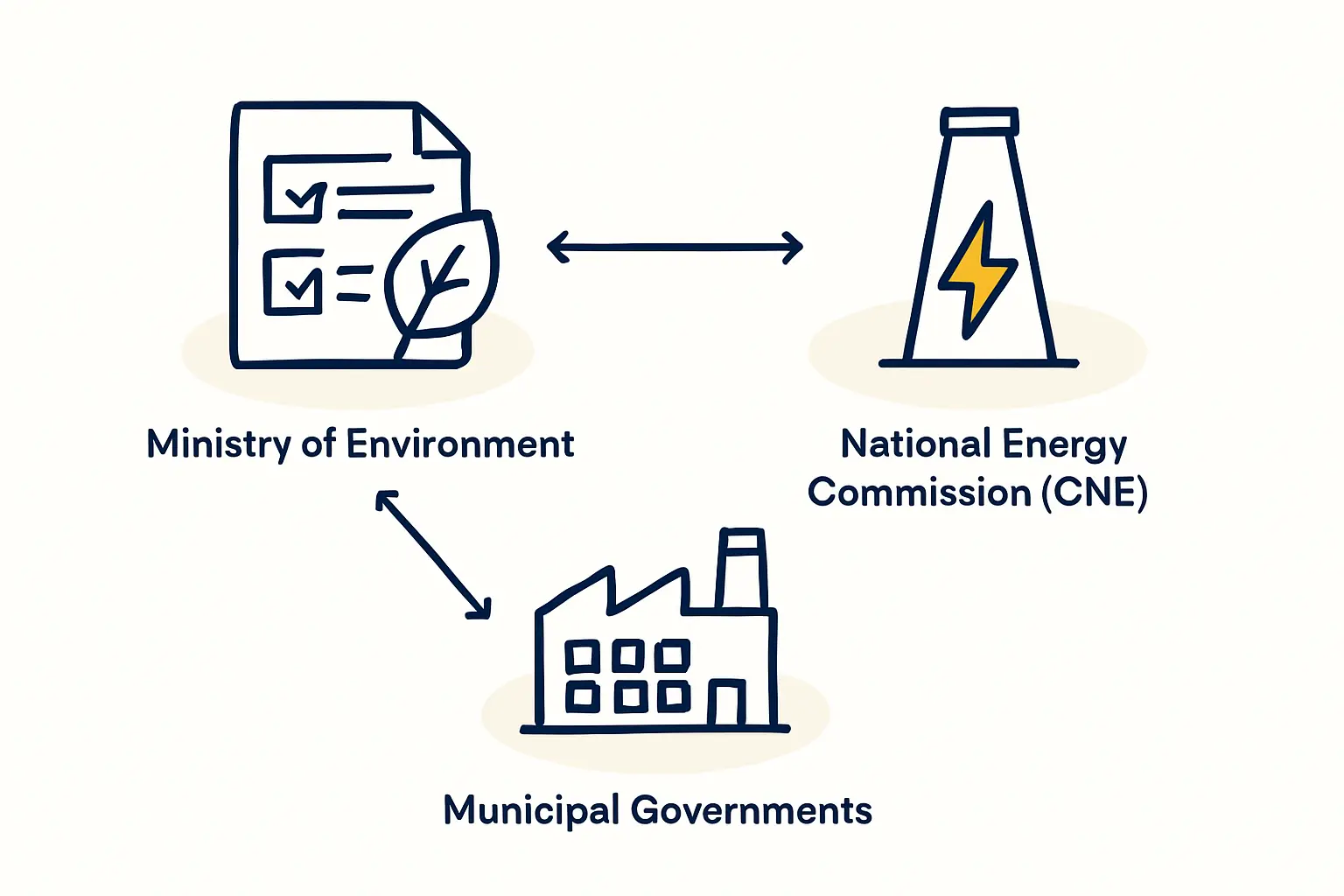
The permitting process for an industrial project like a solar factory is primarily managed by two government bodies, each with a distinct mandate:
-
The Ministry of Environment and Natural Resources (MIMARENA): This ministry is the lead authority for a project’s environmental viability, with its legal basis in Law 64-00 on Environment and Natural Resources. It assesses the potential impact of the factory on the local ecosystem, water resources, air quality, and community.
-
The Ministry of Public Works and Communications (MOPC): This ministry oversees the facility’s physical construction, ensuring that all architectural and engineering plans comply with national building codes, seismic standards, and safety regulations as outlined in Law 195-67 and its associated rules.
A solar module assembly plant, due to its industrial nature, typically falls under Category B in the environmental classification system. This categorization signifies a project with a moderate environmental impact and requires a formal Environmental Impact Assessment (EIA) for approval.
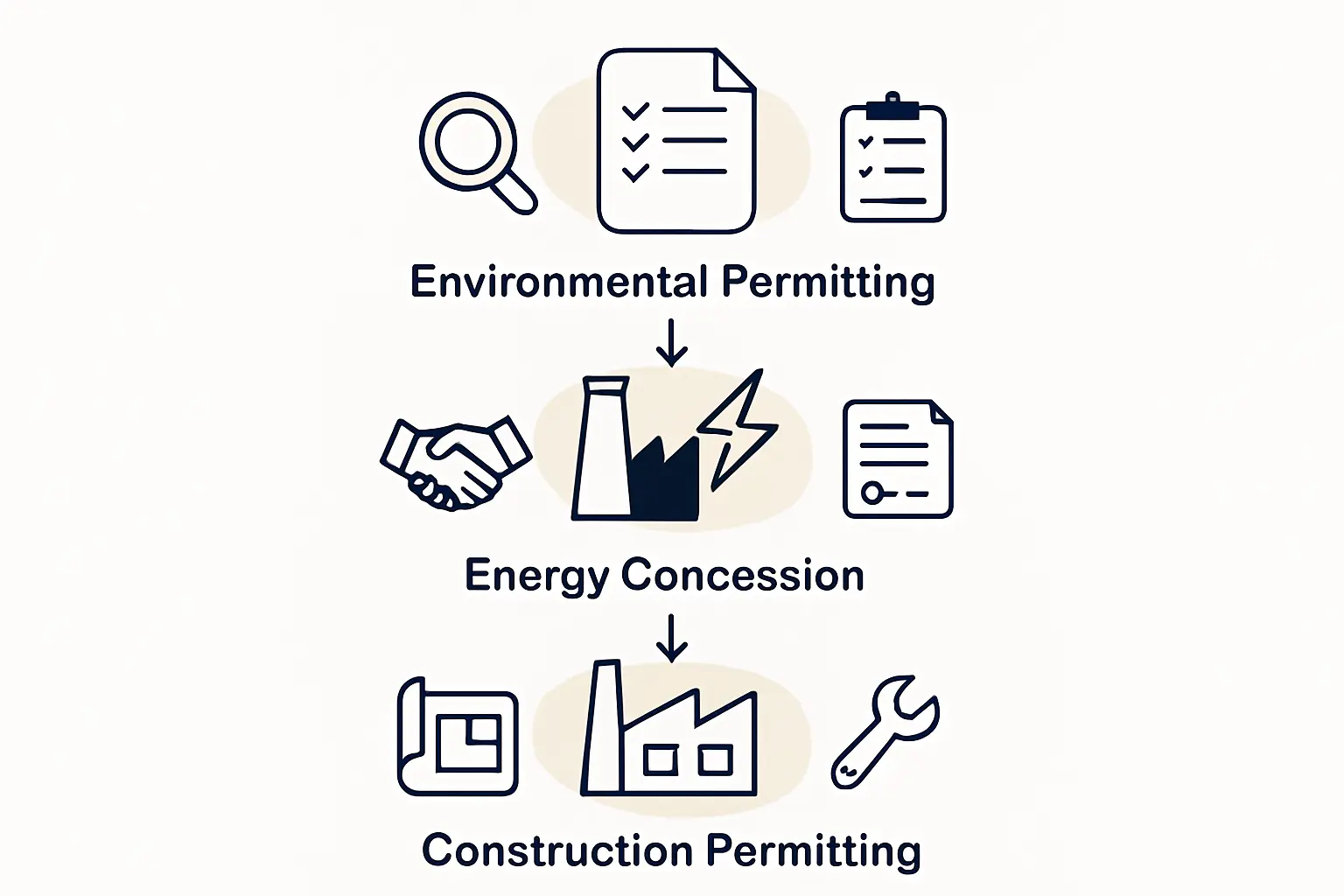
Phase 1: Securing the Environmental License with MIMARENA
Obtaining the Environmental License is the first and most substantial regulatory milestone, as no construction can legally begin without it. The process involves several key steps.
Step 1: Project Registration and Categorization
The initial step is to formally present the project concept to MIMARENA. The applicant submits a dossier containing a detailed project description, preliminary location maps, an outline of the manufacturing process, and an estimate of resource consumption (water, energy) and waste generation. MIMARENA reviews this information to officially confirm the project’s categorization and outline the specific studies required.
Step 2: Developing the Terms of Reference (TdR)
Once the project is categorized, the ministry works with the proponent to issue the Terms of Reference (TdR). The TdR serves as the official rulebook for the main environmental study. It defines precisely which environmental and social factors must be analyzed, the methodologies to be used, and the specific questions the Environmental Impact Assessment must answer. This stage is critical, as a well-defined TdR prevents delays and ensures the final study meets all government expectations.
Step 3: Conducting the Environmental Impact Assessment (EIA)
With the approved TdR in hand, the proponent must engage a specialized and locally certified environmental consulting firm to conduct the EIA. This comprehensive study evaluates:
- Physical Environment: Impact on air quality, water sources, soil, and noise levels.
- Biological Environment: Effects on local flora and fauna.
- Socio-Economic Factors: Impact on the local community, including job creation, infrastructure strain, and public health.
- Mitigation Plan: A detailed plan outlining how the factory will manage, reduce, or eliminate any identified negative impacts. This includes waste management protocols, water treatment systems, and emission controls.
The quality and thoroughness of the EIA are paramount to a successful application.
Step 4: Public Consultation and Review
Transparency is a key component of Law 64-00. After the EIA is submitted, MIMARENA may require public consultations. This process allows local communities, non-governmental organizations, and other stakeholders to review the project’s potential impacts and provide feedback. The project team must be prepared to address concerns and demonstrate its commitment to responsible operation.
Step 5: Issuance of the Environmental License
After a final technical review of the EIA and public consultation feedback, MIMARENA’s technical committee delivers its recommendation. If the project complies with all environmental regulations and the mitigation plans are deemed sufficient, the ministry will issue the Environmental License. This entire process, from initial registration to license issuance, can typically take between 6 and 12 months.
Phase 2: Obtaining Construction Permits from MOPC
While the final stages of the environmental review are underway, the process of securing construction permits from the MOPC can begin. This phase translates the factory concept into compliant engineering blueprints.
Step 1: Submitting Architectural and Engineering Plans
A complete set of technical plans must be submitted to the MOPC’s Office of Processing, Plans, and Regulations. A critical requirement in the Dominican Republic is that all plans be reviewed and signed by an engineer or architect who is a registered member of the Dominican College of Engineers, Architects, and Surveyors (CODIA). The submission package includes:
- Architectural and structural designs
- Electrical and lighting plans
- Sanitary and plumbing schematics
- Fire safety and suppression system plans
- Geotechnical and soil studies for the foundation
Step 2: Plan Review and Approval
The MOPC’s technical teams review the submitted plans against the national building code (Reglamento R-001) and other relevant safety standards. They check for structural integrity, electrical safety, accessibility, and proper sanitary provisions. If any non-compliance issues are found, the plans are returned with comments for revision.
Step 3: The Construction License
Once all plans are approved and the corresponding fees are paid, the MOPC issues the Construction License. This document is the official authorization to begin site preparation and construction, provided the Environmental License from MIMARENA has also been secured.
Key Challenges and How to Navigate Them
While the process is structured, entrepreneurs new to the Dominican Republic often encounter common challenges.
-
Navigating Bureaucracy: The system has many specific requirements and unwritten rules. Experience from J.v.G. turnkey projects shows that retaining a reputable local legal firm or ‘gestor’ specializing in environmental and construction permitting is essential for navigating the process efficiently.
-
Incomplete Documentation: Any missing document or incorrect form can cause significant delays. A detail-oriented, checklist-based submission process is vital from the outset.
-
Managing Timelines: Permitting is not a fast process. Investors must build realistic timelines into their project schedule, accounting for potential government delays and requests for additional information.
Financial and Resource Considerations
Beyond the time investment, entrepreneurs must budget for the ‘soft costs’ associated with permitting. These typically include:
- Government application and processing fees.
- Professional fees for the certified environmental consulting firm to conduct the EIA.
- Fees for the CODIA-certified engineers and architects who design and sign the construction plans.
- Retainer fees for legal counsel or local permitting specialists.
Factoring these regulatory prerequisites into the total investment budget is key to avoiding financial shortfalls during the setup phase.
Frequently Asked Questions (FAQ)
How long does the entire permitting process take in the Dominican Republic?
For a project of this scale, a realistic timeline is 9 to 18 months from initial project registration to receiving both the Environmental and Construction Licenses. The exact duration depends on project complexity, the quality of submitted documents, and agency processing times.
Do I need a local partner to set up a factory?
While not legally mandatory for 100% foreign ownership of a company, engaging local expertise is practically essential. A local legal and environmental consultancy is indispensable for navigating the permitting process with MIMARENA and MOPC.
Can I start any preliminary site work before getting the final permits?
Generally, no. Any activity that disturbs the land—including clearing, grading, or excavation—is prohibited before the Environmental License and Construction License are issued. Non-invasive activities like land surveying or geotechnical borings are typically permissible. Proceeding with unauthorized work can result in substantial fines and project cancellation.
What happens if my environmental permit application is rejected?
If an application is denied, MIMARENA will provide a formal document outlining the specific reasons for the rejection. The applicant then has the opportunity to address these deficiencies—which may involve redesigning parts of the project or amending the EIA—and resubmit the application for reconsideration. This underscores the importance of a high-quality initial submission.
How does the production line layout affect the MOPC technical plans?
When preparing the technical plans MOPC requires, having a clear understanding of the production line’s core components is vital. A comprehensive list of solar panel manufacturing machines provides the necessary context for engineers and architects during the design phase.
Your Roadmap to Regulatory Success
Securing the necessary permits to build a solar module factory in the Dominican Republic is a detailed and rigorous process. Yet it is also transparent and manageable when approached with thorough preparation, professional local support, and a realistic understanding of the timelines involved.
By viewing the regulatory pathway not as an obstacle but as a structured roadmap, investors can confidently lay the foundation for a compliant, sustainable, and successful manufacturing operation. This structured planning is a core focus of the resources provided by platforms like pvknowhow.com, which offer guidance to help entrepreneurs navigate each stage of their entry into the solar industry.