When considering a new solar module factory, investors often focus on machinery, financing, and location. But a critical factor determining an enterprise’s success is the availability and skill of the local workforce.
For a country like the Dominican Republic, with its ambitious renewable energy targets, understanding the labor landscape isn’t just an operational detail—it’s a strategic necessity. A successful venture requires a clear-eyed assessment of the human capital available. This includes evaluating the existing pool of semi-skilled and technical labor, understanding typical wage structures, and planning for the training needed to transform general aptitude into high-precision manufacturing expertise.
The Economic and Energy Context
The Dominican Republic presents a compelling case for local solar manufacturing. The government has set a national goal to generate 30% of its electricity from renewable sources by 2030, a significant increase from current levels. This policy is supported by a robust economic environment, with the country’s GDP growing at an average of nearly 5% annually over the past decade.
This combination of strong economic growth and a clear policy commitment to renewables creates sustained local demand for solar modules. For an entrepreneur, it signals an opportunity to shift from importing panels to producing them locally—capturing more value, creating jobs, and enhancing national energy security. But this raises a crucial question: is the workforce prepared for such a transition?
Analyzing the Dominican Republic’s Labor Pool
A typical semi-automated solar module factory, with a capacity of around 50 MW, requires a team of 30 to 40 individuals. This workforce is generally divided into two categories: semi-skilled line operators and a smaller core of skilled technicians and engineers.
The Semi-Skilled Workforce
The Dominican Republic has a substantial pool of available labor, with a national unemployment rate that has fluctuated around 5-6% in recent years. This suggests a ready supply of workers for roles such as material handlers, laminator operators, and final assembly workers.
These positions do not typically require advanced degrees but demand a high degree of discipline, attention to detail, and the ability to follow standardized procedures precisely. While the national minimum wage for large companies provides a baseline, competitive wages for manufacturing roles will likely need to be higher to attract and retain reliable talent. The primary challenge is not finding people, but instilling the quality-centric mindset essential in electronics manufacturing.
Skilled Technicians and Engineers
More senior roles—such as machine maintenance, quality control, and process engineering—require a higher level of technical education. Here, the Dominican Republic’s educational infrastructure is a significant asset.
Institutions like the Technological Institute of the Americas (ITLA) and the National Institute of Professional Technical Training (INFOTEP) graduate students with strong foundational skills in electronics, mechanics, and industrial processes. The nation’s universities also produce several thousand engineers annually.
Wages for qualified technicians and engineers are competitive within the region. An experienced industrial technician might expect a monthly salary in the range of DOP 35,000 to DOP 50,000, while graduate engineers typically command higher starting salaries. This talent pool forms the technical backbone of a factory, capable of troubleshooting equipment, optimizing the solar module manufacturing process, and upholding quality standards.
The Critical Gap: From General Competence to PV-Specific Expertise
While foundational talent exists, no technical institute in the country provides training specifically for solar module assembly. An excellent automotive mechanic or industrial electrician does not inherently know how to operate and maintain a solar cell stringer, an EVA laminator, or a sun simulator.
This gap between general technical competence and the highly specialized, process-driven world of PV manufacturing is the most significant human resource challenge. Success, therefore, hinges on a structured and intensive training program.
As Rafael Velazquez, a Santo Domingo-based energy consultant, notes, “The potential is here. We have bright, capable people. But they need a system, a process to follow. The investment in training is just as important as the investment in the machines themselves.”
Designing a Structured Training Program
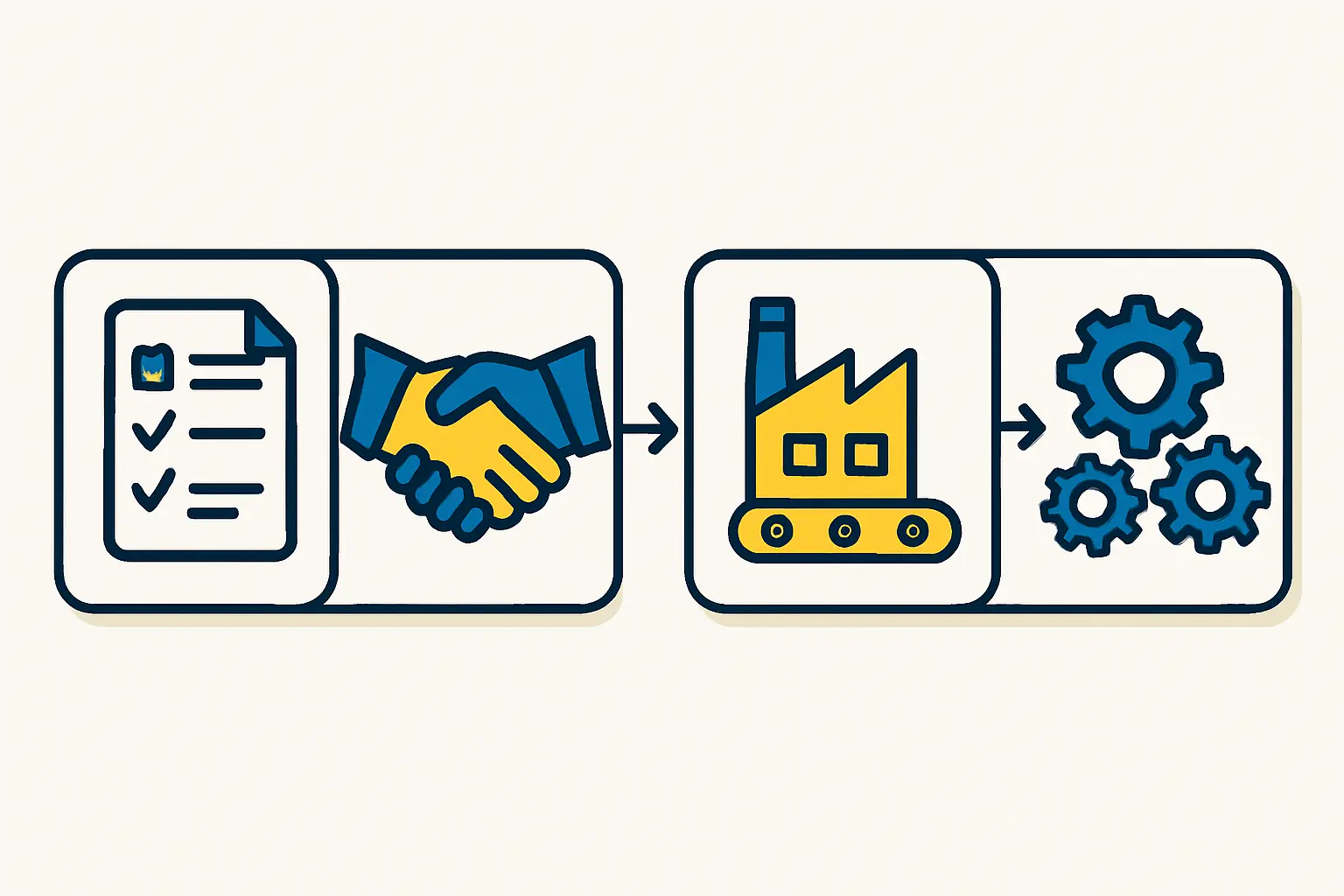
A new solar factory cannot rely on finding ‘plug-and-play’ employees; it must create them. Based on experience from J.v.G. Technology GmbH turnkey projects, a successful training program is multi-phased and begins long before the first module is produced.
Phase 1: Foundational Classroom Instruction
Before any employee touches a machine, they must understand the fundamentals. This initial phase, typically lasting one to two weeks, covers:
- PV Technology Basics: How a solar cell works and how modules are constructed.
- Material Science: The properties of glass, EVA, backsheets, and solar cells.
- Quality Standards: The importance of cleanliness, precise handling, and avoiding microcracks.
- Safety Protocols: Electrical and mechanical safety procedures for the factory floor.
Phase 2: Hands-On Machine Training
This phase is conducted by experienced engineers, often provided by the supplier of a turnkey solar manufacturing line. Each team is trained on the specific equipment they will operate:
- Stringer Operators: Learn to load cells, manage ribbon, and perform quality checks on soldered cell strings.
- Layup Technicians: Practice the precise layering of glass, EVA, cell matrix, and backsheet.
- Laminator and Curing Operators: Understand time, temperature, and pressure cycles for perfect lamination.
- Finishing and Testing Crew: Train on framing, junction box installation, and IV testing with the sun simulator.
This hands-on training typically takes two to four weeks and focuses on repetition, process adherence, and quality control at every step.
Phase 3: Cultivating Leadership and Maintenance Teams
A small group of high-potential employees should receive advanced training. This group includes the local maintenance engineers and shift supervisors. They learn not just to operate the equipment, but to calibrate, troubleshoot, and perform routine maintenance. This process builds self-sufficiency and reduces long-term reliance on external technicians.
Frequently Asked Questions (FAQ)
Q: How many employees are needed to start a 50 MW solar factory?
A: A semi-automated 50 MW line typically requires 30 to 40 employees, including operators, technicians, quality control personnel, and administrative staff, working across one or two shifts.
Q: What are the most critical roles to hire first?
A: The first key hires are typically a Plant Manager or Production Manager with industrial experience, followed by a lead Maintenance Engineer. These individuals can then assist in recruiting and overseeing the training of the operator teams.
Q: How long does it take for a new line operator to become fully proficient?
A: After an initial 2-4 week intensive training program, a new operator typically requires an additional 2-3 months of on-the-job experience to become fully proficient, consistent, and efficient in their role.
Q: Is it better to find experienced staff from other industries or train new people?
A: For operator roles, it’s often more effective to hire individuals with good discipline and a willingness to learn, then train them specifically for PV manufacturing. For senior technical and maintenance roles, however, the standard approach is to hire experienced industrial engineers or technicians and provide them with PV-specific training.
Conclusion: A Viable Opportunity with a Clear Requirement
The Dominican Republic offers a promising environment for establishing a solar module factory. Its labor pool contains the raw material—a sufficient number of available workers and a steady stream of technically educated graduates.
However, investors must recognize that a dedicated, professionally executed training program is not an option but a prerequisite for success. The country’s workforce is an asset whose potential can only be unlocked through a structured investment in knowledge and skills transfer. Planning for this training from the outset is fundamental to ensuring the factory’s long-term efficiency, product quality, and overall financial viability.