Many entrepreneurs considering solar module manufacturing in markets like Guatemala encounter a formidable obstacle: the seemingly unbeatable price of modules imported from large-scale international producers.
The common assumption is that competing on cost with established global giants is an impossible task. But this perspective overlooks the bigger picture—the complex and costly journey a solar module takes from an overseas factory to a project site in Central America.
The competitive landscape isn’t defined by the factory-gate price alone, but by the final “landed cost” and the strategic advantages that local production offers. For a country like Guatemala, with high solar irradiation averaging 5.3 kWh/m²/day and residential electricity costs reaching US$0.22/kWh, the case for local energy production is compelling. The challenge is not whether solar is viable, but how a local enterprise can strategically position itself to serve this growing demand.
The Prevailing Challenge: Competing with Global Volume
Manufacturers in regions like China achieve remarkable economies of scale, allowing them to offer a very low price-per-watt at the point of production. This has been a significant factor in the global adoption of solar energy.
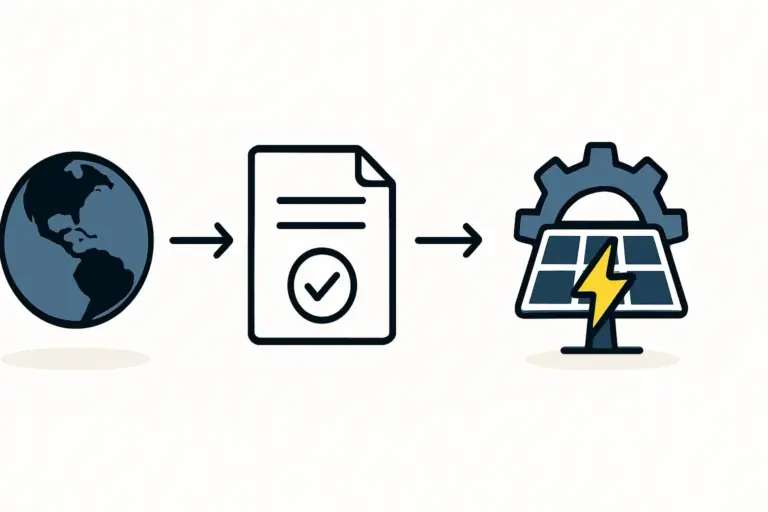
For an investor in Guatemala, however, this factory price is merely the starting point of a long and expensive supply chain. A strategic analysis must look beyond this initial figure to account for all the subsequent expenses, delays, and risks of importation. Once these factors are considered, the economic case for local manufacturing becomes significantly stronger.
Deconstructing the True Cost of Imported Modules
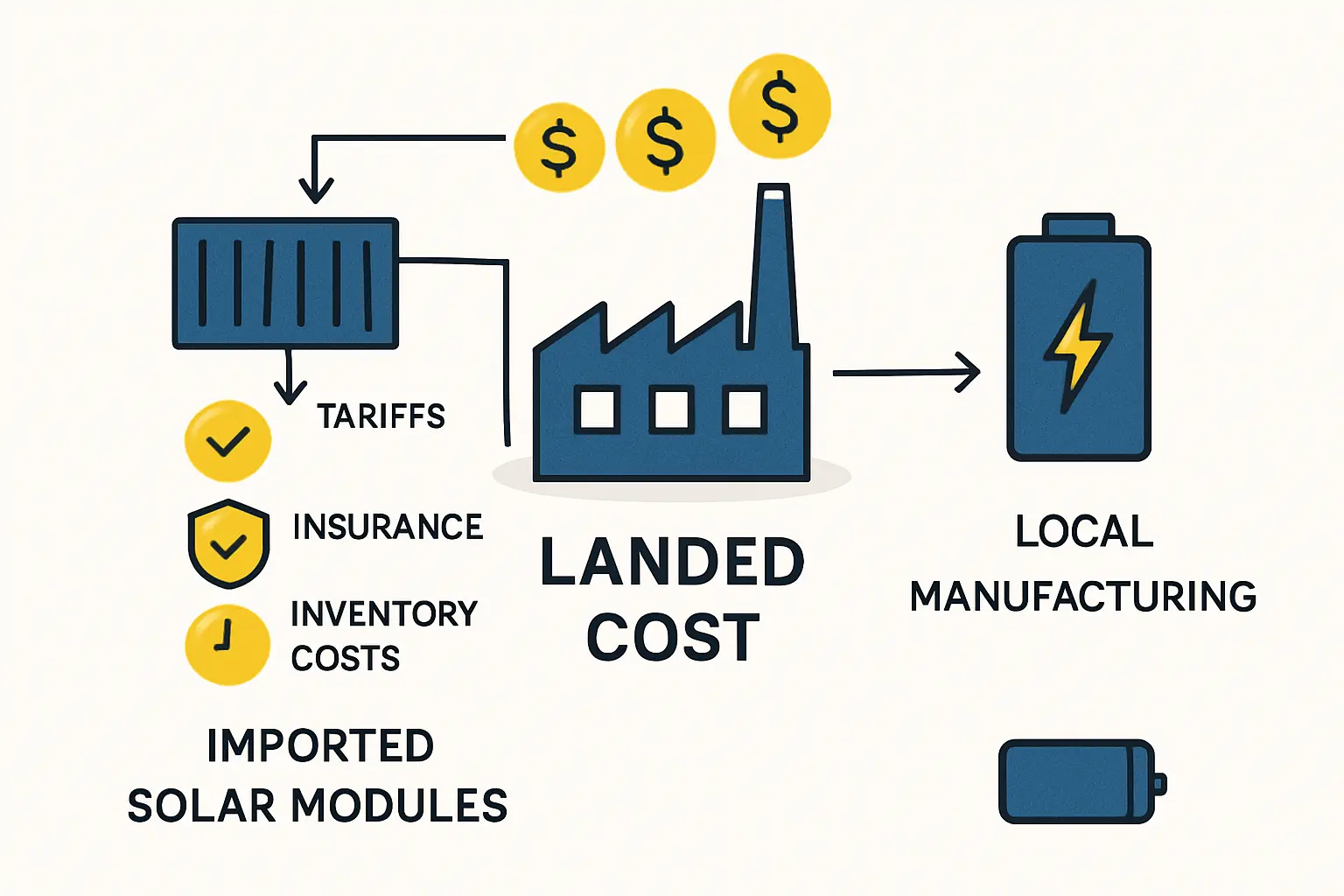
The landed cost of a product is its original price plus all fees for transportation, handling, insurance, tariffs, and currency conversion. For solar modules imported into Guatemala, these additional costs can be substantial.
Shipping and Logistics
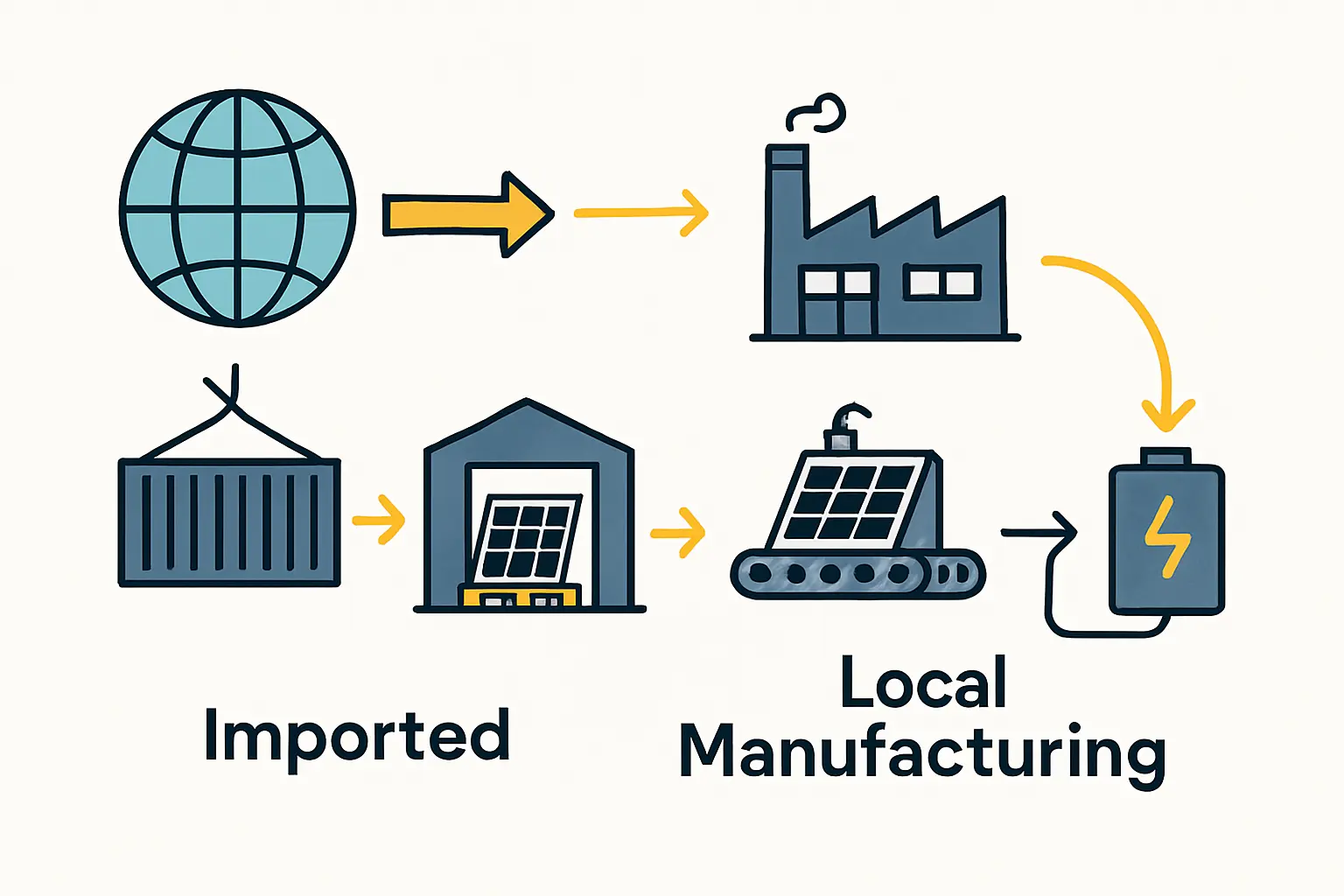
The journey from a factory in Asia to a project site in Guatemala is long and complex. It involves ocean freight, port handling charges at both ends, and inland transportation. Congestion at major ports can introduce unpredictable delays, disrupting project timelines and increasing warehousing costs. These logistical hurdles add a significant percentage to the final cost of each module.
Tariffs, Taxes, and Customs
Importing goods into any country involves navigating customs, a process that includes tariffs, value-added taxes (VAT), and administrative fees. These government-levied charges directly increase the capital needed to procure modules. Customs clearance can also be a slow process, adding days or even weeks to the delivery schedule and creating uncertainty for project developers.
Supply Chain Risk and Delays
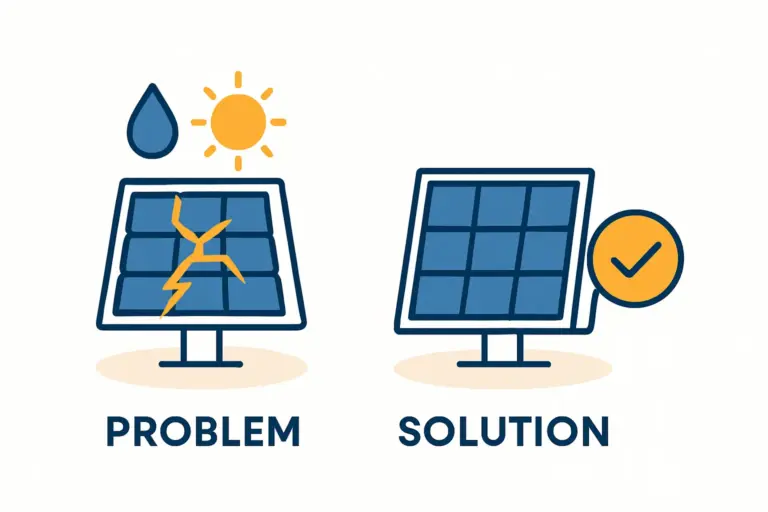
A long international supply chain is inherently more vulnerable to disruption. Geopolitical events, shipping lane crises, or unforeseen production issues thousands of miles away can halt the flow of products. For a developer in Guatemala, this translates into a direct risk to project completion dates and financial viability. A local manufacturer insulates customers from much of this global volatility.
The Local Manufacturer’s Advantage: A Strategic Analysis for Guatemala
Understanding the weaknesses of the import model allows a Guatemalan manufacturer to build a powerful competitive strategy around key advantages that international suppliers cannot replicate.
Advantage 1: Proximity to Market
The most significant advantage is geographical proximity. For projects within Guatemala and the broader Central American and Caribbean regions, a local factory can offer dramatically reduced delivery times and shipping costs.
-
Faster Fulfillment: Orders can be fulfilled in days rather than months, allowing installers and developers to operate with greater agility and lower inventory costs.
-
Regional Hub Potential: Guatemala is well-positioned to serve neighboring markets like El Salvador, Honduras, and Belize, which face similar import challenges. A local factory can become a logistical hub for the entire region.
Advantage 2: Leveraging Government Incentives and National Pride
The Guatemalan government has set a goal to generate 30% of its energy from renewable sources by 2027. To achieve this, the government often provides incentives for local production, such as:
-
Tax Reductions: Favorable tax treatment for companies that manufacture renewable energy components locally.
-
Simplified Permitting: Streamlined processes for establishing manufacturing facilities.
-
Local Content Requirements: Public tenders or large-scale projects may favor or mandate the use of locally produced goods.
Positioning the brand as “Hecho en Guatemala” (Made in Guatemala) can also build strong relationships with public and private sector clients who want to support the national economy.
Advantage 3: Agility and Customization
Large international manufacturers are built for volume production of standardized modules. A local manufacturer can cater to specific, often overlooked market needs.
-
Custom Orders: The ability to produce modules with specific dimensions, frame colors, or electrical characteristics for bespoke architectural or off-grid projects.
-
No Minimum Order Quantity (MOQ): Serving small- to mid-sized installers who cannot meet the high MOQs required by global suppliers. This is particularly relevant for the growing distributed generation market.
Experience from J.v.G. turnkey projects shows that this agility allows new manufacturers to capture valuable market segments that larger players ignore.
Advantage 4: Service, Warranty, and Trust
When a module fails, dealing with a warranty claim from a supplier on another continent can be a slow and frustrating process. A local manufacturer offers a clear advantage:
-
Accessible Support: Direct access to technical support and service personnel.
-
Simplified Warranty Process: Faster and more transparent handling of claims and replacements.
-
Building Trust: A physical presence in the country fosters stronger relationships and builds confidence among customers that they have a reliable, long-term partner. This trust is built on a foundation of high manufacturing standards from the start, requiring a deep understanding of solar module quality standards.
Building the Business Case: A Practical Framework
Establishing a solar module factory requires a clear and realistic strategy.
Initial Investment and Operational Scale
A common misconception is that solar manufacturing requires massive, multi-billion dollar facilities. In reality, a highly efficient small- or medium-scale operation can be established with a focused investment. A manufacturer can enter the market successfully with a capacity of 20–50 MW per year. This scale is sufficient to serve a significant portion of the local and regional market while keeping initial capital expenditure manageable. A detailed solar module manufacturing business plan is the essential first step in defining this scope.
Human Capital and Operations
Guatemala has a workforce capable of technical training. Access to skilled labor at competitive wages is a key operational advantage, helping to manage production costs effectively and keep the final product price competitive.
Frequently Asked Questions (FAQ)
What initial capacity is recommended for a new factory in Guatemala?
For an emerging market, a starting capacity of 20–50 MW per year is a strategic entry point. This balances a manageable initial investment with sufficient output to establish a strong market presence and achieve profitability.
How long does it take to set up a production line?
With a well-structured plan and an experienced partner, a new solar module production line can become operational in under 12 months, from initial planning to the first certified module. A turnkey solar manufacturing line solution is often the most efficient path.
Can a local factory produce modules of the same quality as imported ones?
Absolutely. Module quality depends on the machinery, the raw materials, and the rigor of the quality control processes. By investing in industry-standard equipment and adhering to international certification protocols (like those from TÜV), a Guatemalan factory can produce modules that meet or exceed global quality benchmarks.
Is financing available for such a project?
Yes, financing is often available. Given Guatemala’s renewable energy targets, projects that support this goal may be eligible for support from national development banks, international financial institutions, or climate-focused investment funds. A strong business plan is crucial for securing such funding.
Conclusion: From Importer to Producer
Establishing a local solar module manufacturing facility in Guatemala is not about competing on price with global giants; it is a strategic move to leverage distinct local and regional advantages. By focusing on the true landed cost of imports, faster delivery times, customization, and superior local service, a Guatemalan entrepreneur can build a resilient and profitable business.
The opportunity lies in transforming the country from a passive importer of foreign technology into an active producer and regional leader in the renewable energy sector. With careful planning and the right technical guidance, this vision is well within reach.