For any entrepreneur entering Israel’s solar manufacturing sector, one of the first critical decisions is which components to source locally and which to import. This decision isn’t merely logistical—it fundamentally shapes the business model, cost structure, and quality of the finished photovoltaic modules.
This article examines the strategic trade-offs between leveraging Israel’s industrial capabilities and navigating the complexities of global logistics. Mastering this balance is fundamental to building a solid business plan for this sector.
The Core Dilemma: Building a Resilient Supply Chain
The success of a solar module assembly plant hinges on a reliable, cost-effective supply of its core components. An entire assembly line can halt if even one critical material, like encapsulant foil, is delayed. This makes the decision to source locally or import a strategic one, balancing risk, cost, and quality.
Generally, the primary components fall into two categories: those feasible to source locally and those that are almost exclusively imported.
Analyzing Local Supply Chain Capabilities in Israel
Israel has a robust industrial base, particularly in materials like glass and aluminum extrusion. For a new solar module manufacturer, tapping into this local ecosystem offers significant advantages.
Components with Strong Local Potential:
-
Solar Glass: The front glass of a solar module is heavy and fragile, making long-distance shipping expensive and risky. Israel has established glass manufacturers capable of supplying the low-iron, tempered glass required for photovoltaic applications. The key is to verify their capacity to meet the specific technical standards, like IEC 61215, required for module certification.
-
Aluminum Frames: Similar to glass, aluminum frames are bulky and costly to ship. Israel has a well-developed aluminum extrusion industry. A local supplier can offer shorter lead times, reduced transportation costs, and the flexibility for custom designs. Careful due diligence is needed to ensure a supplier can meet the precise tolerances and anodizing quality required for long-term durability.
-
Junction Boxes and Cables: While many high-spec junction boxes are imported from specialized manufacturers, simpler versions and associated cabling can often be sourced from local electronics suppliers. This can be an effective way to increase local content and simplify inventory management.
Engaging local suppliers requires a thorough vetting process. Manufacturers must assess not only the cost but also the supplier’s quality control systems, production capacity, and financial stability. Experience from J.v.G. turnkey projects shows that establishing strong relationships with reliable local partners is critical to success in new markets.
Navigating Import Logistics for Critical Components
Despite the benefits of local sourcing, certain high-technology components are not produced in Israel at the required scale or cost-efficiency. For these materials, a well-managed import strategy is essential.
Components Typically Imported:
-
Solar Cells: As the ‘engine’ of the solar module, solar cells are the most technologically sensitive component. Their production is a highly sophisticated, capital-intensive process dominated by large-scale manufacturers, primarily in East Asia. Importing cells is standard practice for module assembly plants globally.
-
Encapsulant (EVA or POE Foil): This specialized polymer film is crucial for bonding the layers of the module together and protecting the cells from moisture for over 25 years. Like solar cells, its production is concentrated among a few global chemical companies.
-
Backsheet: This multi-layered polymer film forms the final protective barrier on the rear of the module. Quality is paramount, as backsheet failure can lead to catastrophic module degradation. Sourcing from reputable international suppliers is the industry norm.
Importing these solar module raw materials involves several key logistical steps:
- Supplier Vetting: Identifying and qualifying overseas suppliers who meet stringent quality and reliability standards.
- Quality Control: Implementing pre-shipment inspections to ensure materials meet technical specifications before leaving the factory.
- Freight and Shipping: Managing sea freight logistics, which can involve lead times of 4-8 weeks.
- Customs and Duties: Navigating Israeli customs regulations, tariffs, and taxes, which can significantly impact the final landed cost.
- Warehousing: Maintaining sufficient local inventory to buffer against potential shipping delays and supply chain disruptions.
A Comparative Cost-Benefit Analysis
For a solar manufacturing business in Israel, the optimal strategy is rarely an exclusive choice. It’s a hybrid approach that carefully weighs the pros and cons for each component.
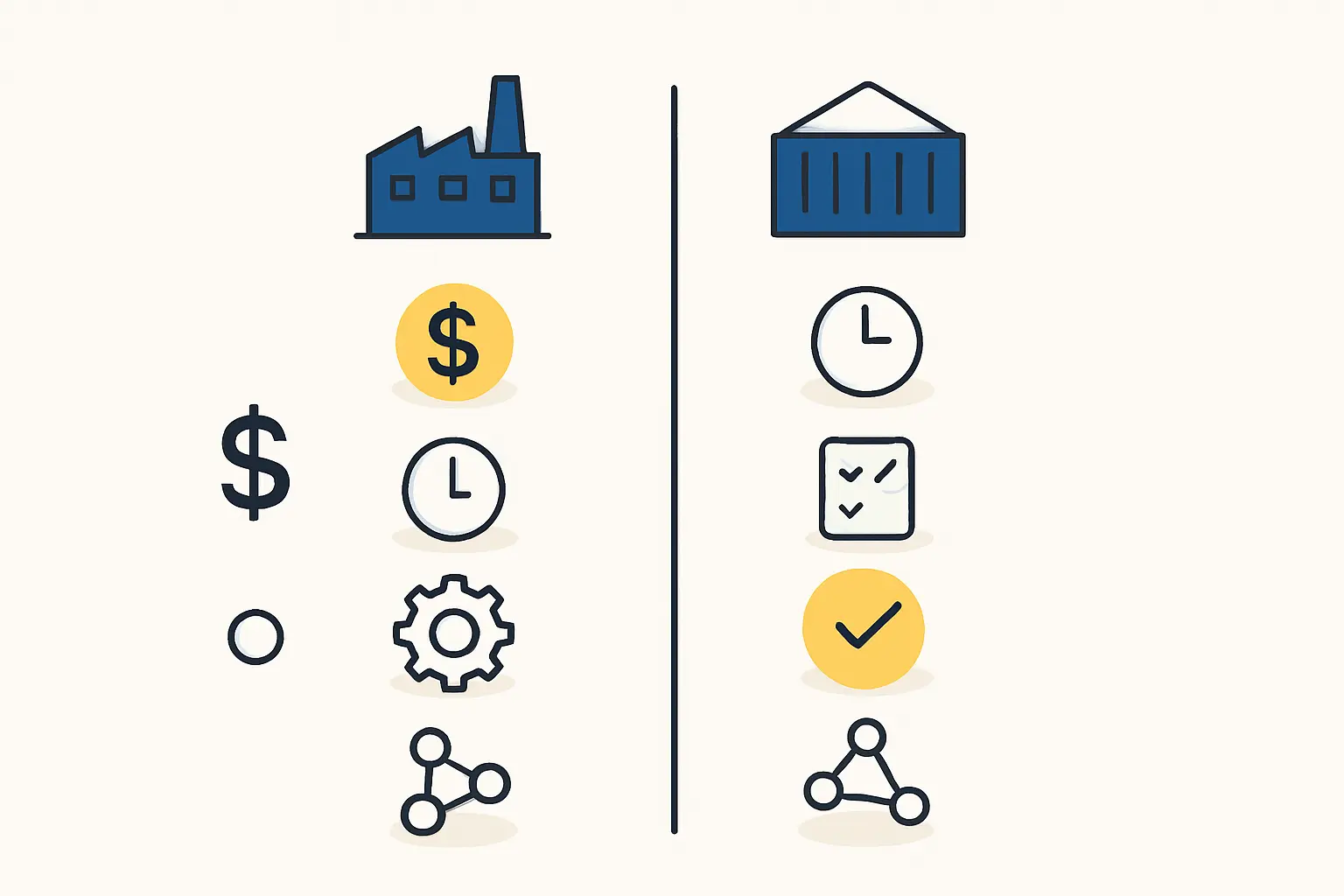
Local Sourcing (e.g., Frames, Glass)
Advantages include lower shipping costs, shorter lead times, easier communication, and reduced inventory needs. Disadvantages can be a potentially higher unit cost, a limited number of local suppliers, the need for rigorous quality verification, and smaller production scales.
Importing (e.g., Cells, EVA)
Advantages include access to the latest technology, lower unit costs due to economies of scale, a wider selection of suppliers, and established quality standards. Disadvantages involve complex logistics and customs, long lead times of 4-8 weeks, currency fluctuation risk, and higher transportation costs and damage risk.
The financial impact of these decisions is significant and must be carefully modeled in the solar factory investment plan. Long import lead times, for example, tie up working capital in inventory that is in transit. Conversely, paying a premium for a locally sourced component may be justified by the resulting reduction in logistical complexity and financial risk.
Conclusion: A Strategic Hybrid Approach is Key
For an entrepreneur planning to establish a solar module assembly facility in Israel, the supply chain is not a problem to be solved, but a strategic advantage to be built. The most resilient and cost-effective model involves a hybrid approach:
-
Source Locally: Focus on bulky, heavy, and lower-technology components like aluminum frames and solar glass, provided that local suppliers can meet international quality standards.
-
Import Globally: Rely on established international supply chains for high-technology, specialized components like solar cells, encapsulants, and backsheets.
This balanced strategy allows a manufacturer to benefit from the stability and speed of local partners while accessing the world’s most advanced and cost-effective core technologies. Successfully managing this dual supply chain is a hallmark of a well-run solar manufacturing operation.
Frequently Asked Questions (FAQ)
-
How do import duties affect the cost of solar cells in Israel?
Import duties and taxes are a significant factor in the landed cost of components like solar cells. It’s essential to thoroughly research these costs and include them in financial projections. As government policies can change, consulting a local customs broker for the most current information is highly recommended. -
Can a small factory rely solely on local suppliers in Israel?
It’s highly unlikely. The most critical components, particularly high-efficiency solar cells, are not manufactured in Israel. Importing these core materials is necessary for any competitive module assembly operation. -
What is the biggest risk when importing components from Asia?
The biggest risks are logistical delays and quality control. A shipment delayed at sea or in customs can halt production entirely. Furthermore, receiving a container of substandard materials after waiting six weeks can be a major financial setback. This is why pre-shipment inspections and working with reputable suppliers are absolutely critical. -
How can one verify the quality of a local aluminum frame supplier?
Verification involves several steps: requesting samples for measurement and analysis, visiting the supplier’s production facility to assess their quality control processes, and asking for certifications or test reports from previous clients. It is also prudent to have a third-party inspection agency audit the supplier.