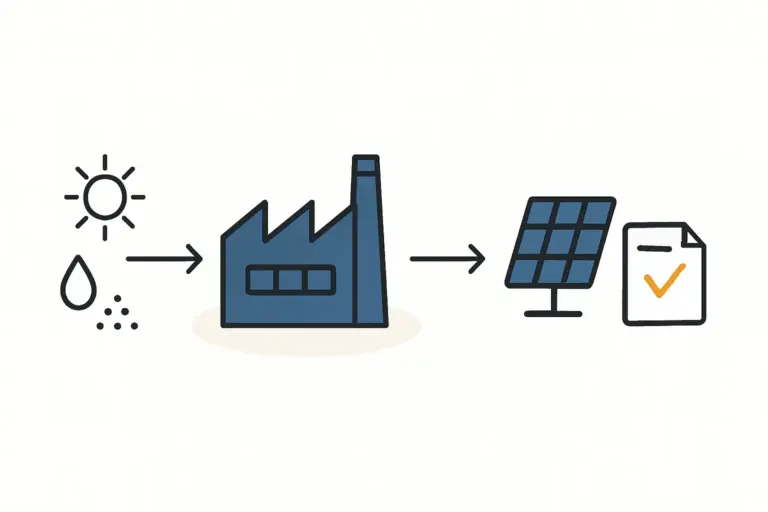
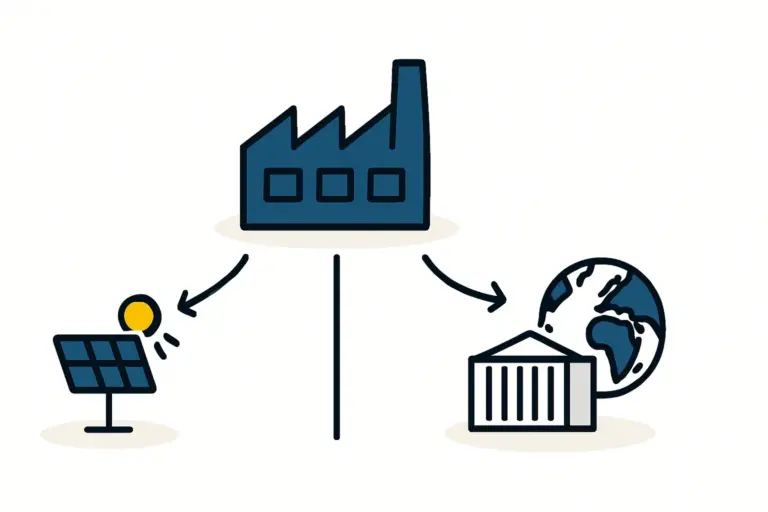
Imagine a state-of-the-art solar manufacturing facility in a nation blessed with abundant sunshine, a clear government mandate for renewable energy, and a growing local market.
Now, imagine the ground beneath it being steadily encroached upon by rising sea levels, threatening the investment within its own lifetime. This is the stark reality for entrepreneurs considering ventures in low-lying atoll nations such as Kiribati.
While the opportunity is clear—Kiribati, for example, is targeting 100% renewable energy—the environmental risks are unlike those in almost any other manufacturing context. A standard factory blueprint is not just suboptimal here; it is destined for failure. This article outlines the critical architectural and engineering considerations for building a solar module factory that is not just productive, but resilient in one of the world’s most vulnerable environments.
Understanding the Unforgiving Context: Kiribati as a Case Study
Designing a resilient facility begins with understanding the specific environmental pressures. Atoll nations such as Kiribati are narrow strips of coral and sand, with an average elevation of less than two meters above sea level. This geography creates a set of interconnected challenges that directly impact long-term infrastructure investments.
Key Environmental Factors:
-
Sea-Level Rise: Conservative scientific projections indicate a potential sea-level rise of 0.5 to 1.4 meters by 2100. For an asset with a 25–30 year operational life, this is not a distant threat but a core planning parameter.
-
Inundation Events: Beyond gradual rise, “king tides” and storm surges already cause significant coastal flooding and erosion. These events contaminate the thin freshwater lens, the primary source of drinking water, with saltwater.
-
High Humidity and Salt Spray: The tropical marine climate is highly corrosive. The air is saturated with moisture and salt, which accelerates the degradation of untreated metals, concrete, and sensitive electronic components. This directly threatens the longevity of expensive solar manufacturing equipment.
These factors mean a factory built on a standard concrete slab-on-grade foundation—a common practice globally—would face an unacceptable risk of frequent flooding, equipment damage, and eventual structural failure.
Foundational Strategies for a Resilient Factory Design
Building successfully in such an environment requires a paradigm shift from conventional industrial architecture. The goal is to design a structure that works with its environment rather than fighting a losing battle against it.
1. Elevation: The First Line of Defence
The most crucial design principle is strategic elevation. Rather than resting on a low-lying slab, the entire factory must be raised significantly above the projected high-water mark, including a buffer for storm surges.
-
Elevated Foundation: The facility should be constructed on reinforced concrete pillars or a similar stilt-based foundation. This approach, reminiscent of traditional Pacific island architecture (te buia), allows storm surges and king tides to pass underneath the structure, preventing damage and operational disruption.
-
Site Selection: Within the atoll, site selection is paramount. Detailed topographical and hydrological surveys are necessary to identify the highest, most stable ground available, furthest from the most erosion-prone coastlines.
An elevated design fundamentally changes the investment’s risk profile, transforming the facility from a vulnerable barrier into a resilient platform.
2. Material Durability and Climate Control
Here, the atmosphere itself is an adversary. A combination of intense UV radiation, high humidity, and salt spray demands careful material selection and environmental control.
-
Corrosion-Resistant Materials: All external structural elements, cladding, and roofing must be made from marine-grade materials. This includes using hot-dip galvanized or stainless steel, corrosion-resistant alloys for fasteners, and specialized coatings engineered for coastal environments.
-
HVAC and Dehumidification: The factory’s interior, especially areas housing sensitive processes like cell stringing and lamination, must be an isolated, climate-controlled environment. A robust HVAC system with industrial-grade dehumidifiers is essential to protect equipment and ensure final product quality. The solar panel lamination process, for instance, is highly sensitive to ambient moisture.
A well-designed building envelope and internal climate system act as a shield, protecting the high-value manufacturing assets within from the corrosive external environment.
3. Resource Independence and Management
In a remote location with fragile infrastructure, a factory cannot rely solely on municipal services. Self-sufficiency is a key component of resilience.
-
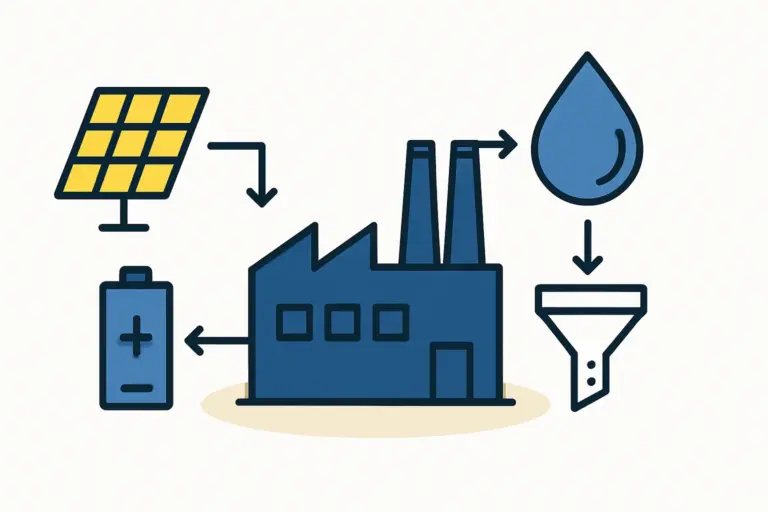
Water Security: Given the salinization risk to groundwater, the facility should be designed for water independence. A large-scale rainwater harvesting system, collecting water from the extensive roof area and storing it in protected cisterns, is a primary solution. For critical processes requiring pure water, a small-scale reverse osmosis desalination unit may be a necessary secondary system.
-
Energy Autonomy: Grid stability can be a challenge in remote island nations. The factory should be its own best customer. A rooftop solar installation, coupled with a battery energy storage system (BESS), can provide reliable, clean power for operations, reducing reliance on a potentially unstable grid and expensive diesel generation. This rooftop PV system should be integrated into the solar factory layout from the earliest design phase.
Operational Planning for a Remote Environment
A resilient factory is more than just a strong building; its operational plan must also account for the logistical and environmental realities of an atoll nation.
Supply Chain and Logistics
The remote location demands a robust logistics strategy. Ports and airports are also vulnerable to climate impacts, so planning must include contingencies for shipping delays. This requires maintaining a larger-than-usual inventory of critical raw materials and spare parts on-site, safely stored in elevated, climate-controlled sections of the warehouse.
Workforce Training and Development
A solar module factory introduces advanced manufacturing to the local economy. A core part of the business plan must be a comprehensive training program for the local workforce. Based on experience from J.v.G. Technology GmbH turnkey projects, a 20–50 MW facility can be effectively operated by a well-trained local team of 25–30 people per shift. This investment in human capital creates lasting local value and ensures operational continuity.

Frequently Asked Questions (FAQ)
Is it financially viable to build a factory with these extensive climate adaptations?
While the initial capital expenditure for an elevated, corrosion-proofed structure is higher than for a standard building, it represents a crucial investment in risk mitigation. The eventual costs of operational downtime, equipment replacement from flood or corrosion damage, and a shortened facility lifespan would far exceed the upfront investment in resilience. It shifts the focus from reactive repair to proactive protection.
Can a standard factory design be retrofitted for these conditions?
Retrofitting an existing slab-on-grade structure for these conditions is often impractical and prohibitively expensive. It is far more effective and economical to incorporate resilience principles from the project’s inception.
What is the first step for an entrepreneur interested in such a project?
The first step is a comprehensive feasibility study conducted by experts with experience in both solar manufacturing and extreme-climate engineering. This study must include detailed site analysis, hydrological modelling, logistical planning, and financial projections that accurately account for the costs of resilient construction. The structured e-courses available on pvknowhow.com can provide a solid foundation for understanding these initial planning stages.
How does high humidity affect the solar module manufacturing process itself?
High humidity is especially detrimental during the lamination stage, where layers of glass, encapsulant (EVA), solar cells, and backsheet are fused together. Any moisture trapped in the laminate can lead to delamination, corrosion of cell interconnects, and a significantly shorter module lifespan. For this reason, a strictly controlled, low-humidity cleanroom environment is non-negotiable for quality manufacturing.