Extracting 1.2 million barrels of oil a day is an energy-intensive operation. In Libya’s oil and gas sector, this process consumes between 10% and 15% of its own output.
At a market price of $100 per barrel, that translates to a staggering internal operational cost of $12 million to $18 million every day—oil that could otherwise be generating export revenue. Annually, this amounts to a potential loss of over $6 billion.
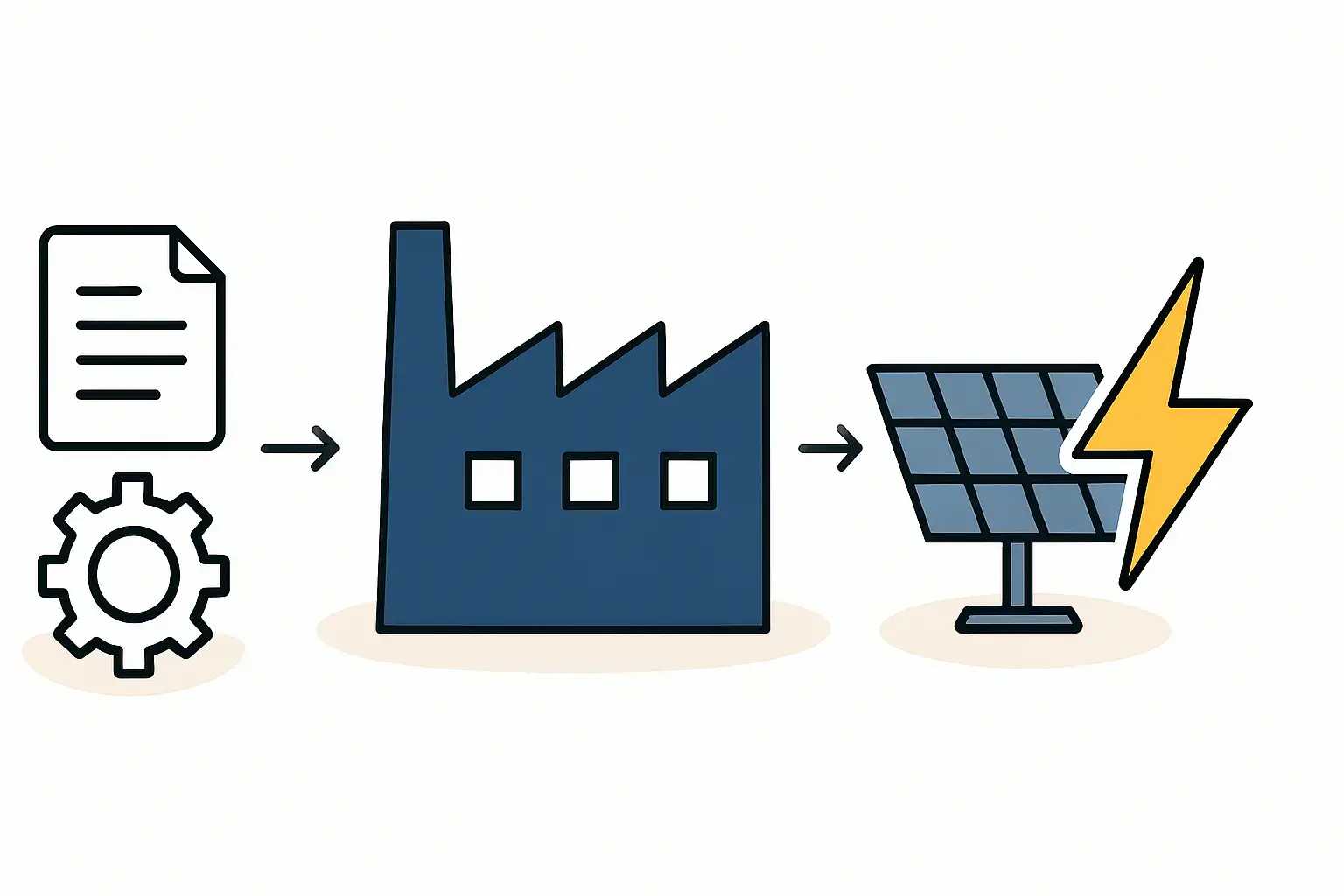
This article outlines a strategic blueprint to address this significant operational expense: building a dedicated solar module factory within Libya to power its critical oil and gas infrastructure. The goal is to convert a major cost center into a strategic asset, ensuring energy independence and maximizing the value of the nation’s primary resource.
The Hidden Cost of Oil Production in Libya
Relying on crude oil or diesel to power remote wellheads, pumping stations, and processing facilities is common practice in the industry. This creates a cycle of inefficiency where a valuable export commodity is consumed simply to produce more of itself. This self-consumption directly impacts national revenue and adds logistical complexity to supplying fuel to remote desert locations.
Libya’s geography—with its vast oil reserves situated under some of the world’s most sun-rich land—presents a unique opportunity to break this cycle. The country boasts a solar potential of up to 2,500 kWh/m²/year, making photovoltaic power both a logical and economically sound alternative.

By harnessing this solar potential, the oil sector can significantly reduce its internal energy consumption, freeing up hundreds of thousands of barrels for the international market and enhancing the overall profitability of its core business.
The Strategic Imperative for Energy Independence
Beyond the direct financial costs, reliance on fossil fuels for internal power generation creates strategic vulnerabilities. The logistics of transporting fuel to remote desert operations are complex and subject to disruption. Any interruption can halt production, impacting both operational stability and national income.

A local energy source dedicated to this infrastructure would mitigate these risks. Solar power provides a reliable, decentralized, and low-maintenance energy supply perfectly suited to the operational realities of the oil and gas industry. This transition is not just about saving costs; it is about securing the operational integrity of the nation’s most vital economic engine.
A Feasible Solution: Local Solar Module Manufacturing
To power an industry of this scale requires significant solar capacity—an estimated 20 to 30 gigawatts (GWp) to fully offset current fossil fuel consumption. While importing modules is an option, establishing a local turnkey solar module factory offers superior long-term strategic benefits, including:
- Supply Chain Control: Eliminates dependence on international suppliers and logistical uncertainties.
- Technology Customization: Enables the production of modules specifically designed for Libya’s harsh desert environment.
- Economic Development: Creates skilled jobs and fosters a new domestic industrial sector.
- Cost Efficiency: Reduces transportation costs and potential import tariffs over the project’s lifetime.
The land required for a 20-30 GWp installation is approximately 200-300 km², a fraction of the unused desert land available, making land acquisition a minor obstacle.
The Factory Blueprint: A 50 MW Production Line
A pragmatic starting point for this initiative is to establish a 50 MW annual capacity production line. Such a facility would serve as a scalable foundation for meeting the long-term energy needs of the oil sector.
Technology Specification: The J.v.G. DESERT+ Module
Standard solar modules are not optimized for the extreme conditions of the Libyan desert—high temperatures, abrasive sand, and intense UV radiation. A local factory can be configured to produce specialized modules engineered for this environment.
The J.v.G. DESERT+ module series is a prime example of such purpose-built technology. Its key features include:
- Glass-Glass Construction: A durable design that protects solar cells from sand abrasion and moisture, extending the module’s lifespan.
- Bifacial Cells: These cells capture reflected sunlight from the ground, increasing energy yield by up to 25%, which is particularly effective over light-colored desert sand. Learn more about bifacial solar modules.
- High-Temperature Performance: Engineered to maintain efficiency even in extreme heat, where standard modules experience significant power loss.

Investment and Operational Profile
The initial investment requirements for a 50 MW turnkey factory is approximately $6 to $8 million. This includes all machinery, technology transfer, and staff training.
Considering the oil sector’s daily energy expenditure of $12-$18 million, the payback period for this investment is exceptionally short. The savings from just one day of operations could theoretically finance the entire factory setup.
Operationally, a 50 MW facility would create 50-70 direct skilled jobs, contributing to local economic diversification. The factory layout and building can be designed for efficient workflow and future expansion as demand grows.
A Collaborative Financing Model: The NOC Joint Venture
A highly effective model for financing and executing this project is a joint venture (JV) between Libya’s National Oil Corporation (NOC) and an experienced international technology partner.
In this model:
- The NOC provides the capital investment and guarantees the purchase of the factory’s output through an offtake agreement, creating a secure market.
- The Technology Partner (such as J.v.G. Technology GmbH) provides the turnkey factory setup, process expertise, technology licensing, and ongoing operational support.
This model aligns with successful local content strategies seen in other energy-rich nations. For instance, projects like the one initiated by Julius Etim in Nigeria demonstrate how local manufacturing can enhance energy security and build industrial capacity. The JV ensures that the project is backed by state-level commitment while benefiting from world-class engineering and operational excellence.
Frequently Asked Questions (FAQ)
Why not simply import solar modules?
While importation may seem faster initially, a local factory provides long-term supply chain security, creates local employment, and allows for the production of modules specifically customized for Libya’s climate. It transforms the country from a technology consumer into a technology producer.
How long does it take to set up a 50 MW factory?
With a proficient turnkey partner, a complete solar module production line can be planned, delivered, installed, and commissioned in under 12 months, enabling a rapid start to production.
Is a 50 MW factory sufficient for the oil sector’s needs?
A 50 MW factory is a strategic first step. It produces approximately 200,000 modules per year, enough to power significant initial projects and build local expertise. This facility is designed to be the first of several, scalable to meet the multi-gigawatt demand over the coming years.
Conclusion: From Cost Center to Strategic Asset
By investing in local solar module manufacturing, Libya’s oil and gas sector can make a profound strategic shift. It can transform its largest operational cost—internal energy consumption—into a model of efficiency and independence.
This blueprint offers a clear path to reducing operational expenditures, increasing export revenue, and creating a new industrial sector, all while securing the energy supply for the nation’s most critical economic assets. It is an investment not just in infrastructure, but in a more resilient and profitable future.