The Republic of Palau is a compelling location for local solar panel manufacturing. With retail electricity costs often exceeding $0.30 per kWh and a national goal of 45% renewable energy generation by 2025, the economic and political drivers are strong.
However, any entrepreneur considering this venture must weigh the promise of a receptive market against a formidable challenge: the Pacific Ocean.
Palau’s geographical isolation means that every component, from a single solar cell to a 2-meter pane of tempered glass, must be imported. This elevates supply chain management from a routine operational task to a core strategic pillar of the business. Success isn’t just about production efficiency; it’s about mastering the complex logistics of sourcing and shipping materials to a remote island nation.
The Strategic Importance of Supply Chain Management in an Island Nation
In continental markets, logistics are often optimized for cost and speed. For a solar factory in Palau, the primary objectives shift toward reliability and continuity. The entire business model hinges on a steady flow of imported raw materials. A single delayed shipment of aluminum frames or EVA encapsulant can halt the entire production line, jeopardizing delivery schedules and revenue.
A 2021 report from the Asian Development Bank highlights Palau’s heavy reliance on imported diesel fuel for power generation—a key vulnerability that local solar production can address. Yet, realizing this opportunity hinges on overcoming the logistical hurdles of its remote location. With the nearest major international ports thousands of kilometers away, a resilient supply chain is paramount.
Core Challenges in Sourcing Materials for Palau
An effective logistics strategy for a facility in Palau begins with a clear understanding of three primary obstacles.
Geographical Isolation and Freight Costs
Palau isn’t a primary stop on major global shipping routes. Materials sourced from manufacturing hubs in East Asia will likely be transshipped through larger ports like Guam, Singapore, or Kaohsiung in Taiwan. This multi-stage journey has two main consequences:
-
Extended Lead Times: A typical ocean freight shipment from China to a major European port might take 4-6 weeks. A shipment to Palau could take 8-12 weeks or longer, factoring in waiting times at transshipment ports.
-
Elevated Costs: Each leg of the journey adds cost. Freight rates for a standard 40-foot container to a remote destination like Palau can be substantially higher than to a high-volume port.
These factors must be meticulously calculated in the business plan, as they directly impact production costs and the final price of the solar modules.
Ready to make big Profits?
The solar Industry is Booming
WE HELP NEWCOMERS to the solar industry start their own solar module production line. Customers can make BIG PROFITS by selling modules and finding investors, without wasting money and time on things they don't need!

Import Duties and Regulations
According to Palauan regulations, most imported goods are subject to a 12% import tax. However, a critical provision for ‘inputs for production’ may allow for tax exemptions. Verifying this eligibility with the Palau Customs Office and the Foreign Investment Board is a crucial early step. A 12% duty on all raw materials could significantly impact the factory’s financial viability, making this clarification essential during the feasibility study phase.
Supplier Landscape
Palau has no local manufacturing base for specialized solar components. Every raw material must be sourced internationally. The primary solar panel components include:
- Photovoltaic (PV) cells
- Tempered solar glass
- EVA (Ethylene Vinyl Acetate) encapsulant
- Backsheets (or a second pane of glass for glass-glass modules)
- Anodized or powder-coated aluminum frames
- Junction boxes with diodes and cables
This complete reliance on imports makes it essential to build strong relationships with multiple suppliers, primarily in Asia, to mitigate the risk of disruption from a single source.
A Framework for a Resilient Supply Chain
Addressing these challenges requires a proactive, structured approach. The following strategies offer a framework for building a robust supply chain for a solar factory in Palau.
1. Strategic Sourcing and Supplier Consolidation
Instead of managing dozens of small shipments from various suppliers, a more efficient approach is to consolidate materials at a major port. An entrepreneur could partner with a logistics firm in a hub like Shanghai or Singapore to receive goods from different suppliers—cells from one, glass from another. These goods can then be packed into a single Full Container Load (FCL) for the final leg to Palau. This strategy often reduces overall freight costs, simplifies customs clearance, and minimizes handling risks.
2. Understanding the True Landed Cost
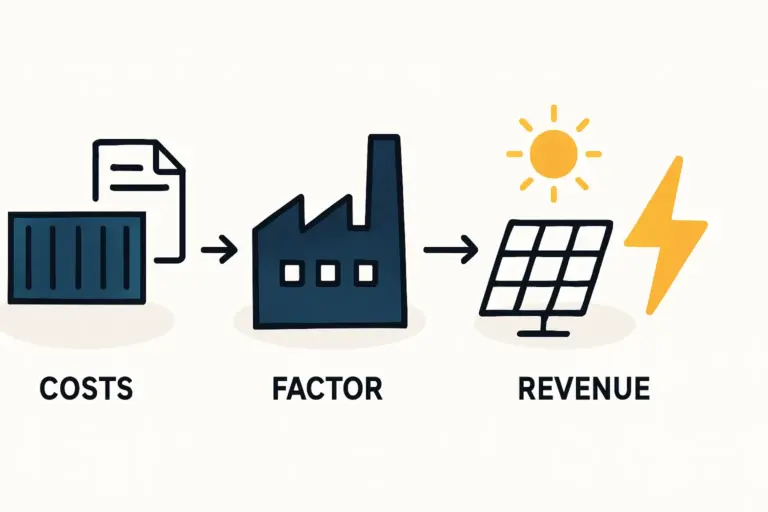
The ‘ex-works’ (EXW) price from a supplier is only the beginning. The ‘landed cost’ represents the total expense to get a component from the supplier’s factory to your factory floor.
The landed cost includes:
- Product purchase price
- Export and freight forwarding fees
- Ocean freight and insurance
- Import duties and taxes (if applicable)
- Customs brokerage fees
- Local port handling and inland transportation in Palau
Failing to accurately forecast the landed cost can lead to severe budget overruns. A detailed analysis is a cornerstone of a realistic business plan when planning to start a solar panel factory.
3. Inventory Management and Production Planning
With lead times measured in months, a ‘just-in-time’ inventory strategy is simply unfeasible. A factory in Palau must maintain a significant buffer stock of raw materials. A common practice is to hold enough inventory for at least two to three months of production. This provides a cushion against shipping delays, supplier issues, or unexpected demand surges.
This requirement directly impacts working capital and physical space. The necessary warehouse capacity for this buffer stock must be part of the factory layout from day one. As J.v.G. Technology has observed in its turnkey solar production line projects in emerging markets, allocating sufficient space and capital for inventory is a common oversight for first-time manufacturers.
Material Selection for a Tropical Marine Environment
Beyond logistics, Palau’s climate—high humidity, salt spray, and the risk of typhoons—demands careful material selection. The specifications for components should exceed standard requirements:
- Frames: Anodized or powder-coated aluminum with a thicker coating to resist saltwater corrosion.
- Encapsulant and Backsheets: High-grade materials with low water vapor transmission rates (WVTR) to prevent moisture ingress and delamination.
- Junction Boxes: A minimum IP67 rating, preferably IP68, to ensure complete protection against dust and water.
Sourcing slightly more expensive, higher-quality materials is a prudent investment that enhances the product’s longevity and reliability, ultimately building a strong brand reputation in the local market.

Frequently Asked Questions (FAQ)
Q1: What are the primary raw materials needed for a solar panel factory?
A complete solar module assembly requires solar cells, solar-grade tempered glass (front), a backsheet or second pane of glass (rear), EVA encapsulant film, aluminum frames, a junction box, and tabbing and busbar ribbons. These components are foundational to the manufacturing process.
Q2: How much buffer stock should a factory in a remote location maintain?
As a general rule, a buffer stock sufficient for two to three months of production is advisable. This depends on the reliability of your shipping lanes and suppliers. Maintaining this buffer is a critical step to ensure uninterrupted operations.
Q3: Can air freight be used for emergencies?
Air freight can be a viable option for small, lightweight, and critical items, such as a specific spare part for a key machine. However, it is prohibitively expensive for bulk raw materials like glass, aluminum frames, or rolls of EVA film and should not be part of the regular logistics plan.
Q4: How does one find reliable suppliers in Asia?
Finding and vetting suppliers is a specialized skill. It typically involves engaging industry consultants, conducting third-party quality audits, requesting and testing material samples, and ideally, visiting factories in person. Working with experienced technical partners who have pre-vetted supply networks can significantly de-risk this process.
Conclusion: From Logistical Challenge to Competitive Advantage
Establishing a solar panel factory in Palau is a venture defined by its logistical challenges. The ‘tyranny of distance’ is a constant factor that must be managed with strategic foresight, meticulous planning, and a deep understanding of true costs.
But these hurdles aren’t insurmountable. By implementing a framework of supplier consolidation, precise landed cost calculation, and robust inventory management, an entrepreneur can build a resilient supply chain. In a market with high local demand and significant barriers to entry for competitors, mastering logistics is more than just an operational necessity—it becomes a powerful and sustainable competitive advantage.