An entrepreneur examining a map of the Caribbean might see a collection of individual island nations. A strategic investor, however, sees something different: an interconnected economic bloc with significant, untapped potential for renewable energy.
The key to unlocking this potential lies not just in technology, but in understanding the powerful trade frameworks that govern the region. Establishing a solar module factory in Saint Kitts and Nevis offers a decisive competitive advantage for serving the Caribbean Community (CARICOM) and beyond. The business case for local manufacturing is compelling, focusing on unique market access, tariff benefits, and growing regional demand for solar energy.
Understanding the CARICOM Single Market and Economy (CSME)
The Caribbean Community (CARICOM) is an organization of fifteen member states and five associate members throughout the Caribbean. Its primary purpose is promoting economic integration and cooperation among its members. The cornerstone of this integration is the CARICOM Single Market and Economy (CSME).
Established by the Revised Treaty of Chaguaramas, the CSME is designed to create a single, unified economic space. For businesses operating within this framework, this means the largely unrestricted movement of goods, services, capital, and skilled labor across member state borders. A manufacturing facility based in a CARICOM nation like Saint Kitts and Nevis is effectively a local producer for the entire region.
The Strategic Advantage of Manufacturing in Saint Kitts and Nevis
While several member states offer opportunities, Saint Kitts and Nevis presents a particularly compelling case as a manufacturing hub. The nation combines the benefits of full CSME membership with a stable and welcoming environment for international investors.
Key advantages include:
-
Political and Economic Stability: The country has a history of stable governance and a strong legal framework rooted in English common law, providing a predictable and secure environment for long-term investments.
-
Investment Incentives: The government of Saint Kitts and Nevis actively encourages foreign investment through a range of incentives. These often include multi-year tax holidays, exemptions on import duties for raw materials and equipment, and streamlined processes for business establishment.
-
Strategic Location: Situated within the Eastern Caribbean, the nation serves as a logical starting point for shipping to other islands in the Lesser Antilles as well as larger markets like Jamaica or Trinidad and Tobago.
These factors create a solid foundation for building a new solar module manufacturing plant, allowing investors to focus on production and market penetration.
Ready to make big Profits?
The solar Industry is Booming
WE HELP NEWCOMERS to the solar industry start their own solar module production line. Customers can make BIG PROFITS by selling modules and finding investors, without wasting money and time on things they don't need!
Core Benefits for Solar Module Exporters
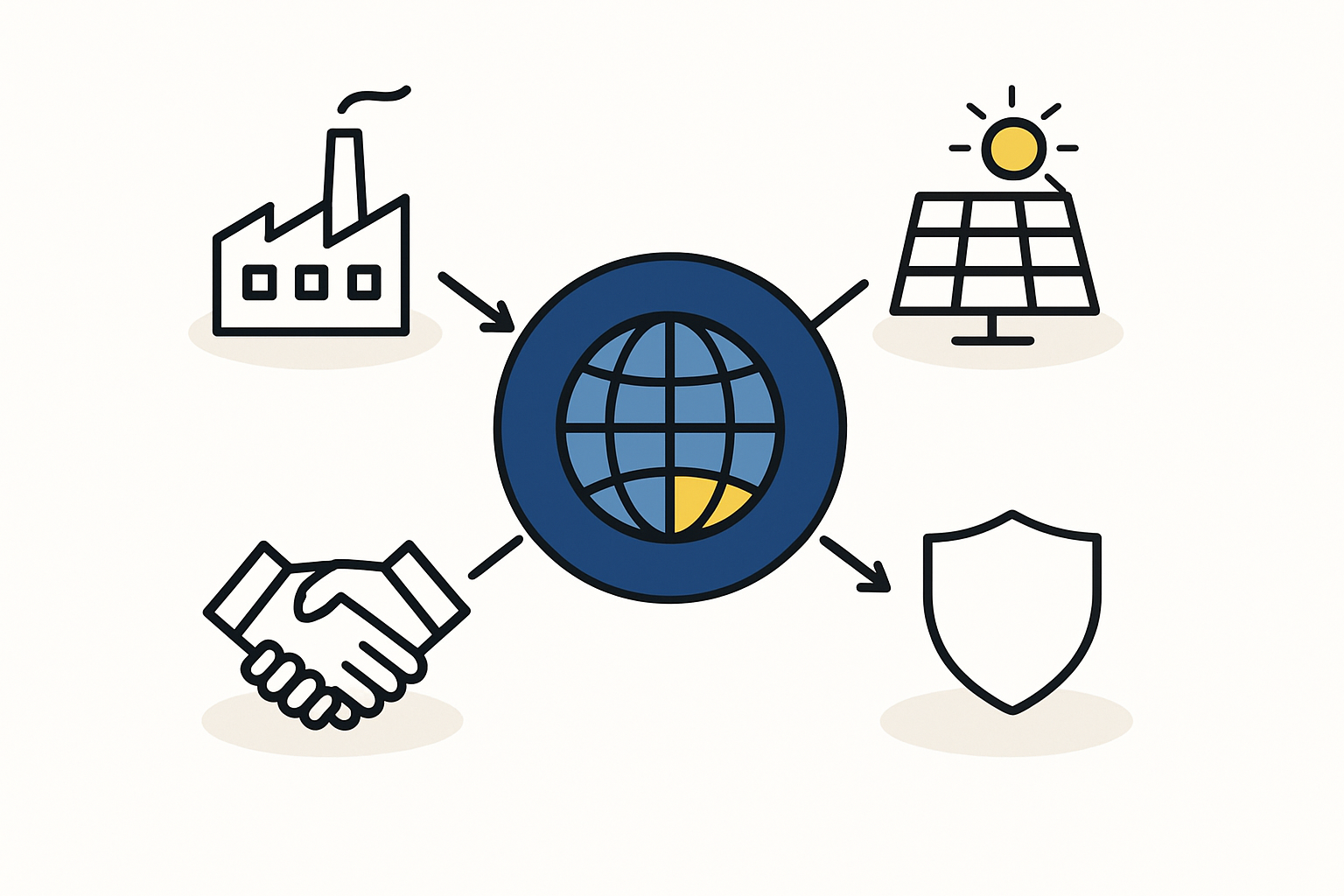
Operating from within the CSME provides tangible financial and logistical advantages over competitors based outside the region. The two most significant benefits are duty-free market access and preferential terms with non-CARICOM trading partners.
Duty-Free Market Access within CARICOM
The most direct benefit of manufacturing in Saint Kitts and Nevis is that finished solar modules can be exported to any other CSME member state without incurring import tariffs. This is possible because of the Common External Tariff (CET).
The CET is a single, standardized tariff rate applied to goods imported from countries outside of CARICOM. For example, a solar panel imported from Asia or Europe into Jamaica would be subject to the CET. However, a panel produced in Saint Kitts and Nevis—within the single market—can enter Jamaica duty-free. This creates an immediate price advantage and simplifies regional distribution.
Access to a Wider Market Through External Trade Agreements
The benefits extend beyond the borders of CARICOM. The community has established several bilateral and multilateral trade agreements that provide preferential market access to other countries and economic blocs.
Notable agreements include:
-
CARIFORUM-EU Economic Partnership Agreement (EPA): This agreement provides duty-free, quota-free access to the European Union market for goods originating in CARIFORUM states (CARICOM members plus the Dominican Republic).
-
Agreements with Latin American Countries: CARICOM has trade agreements with Colombia, Costa Rica, Cuba, the Dominican Republic, and Venezuela, creating opportunities to serve these nearby markets under favorable terms.
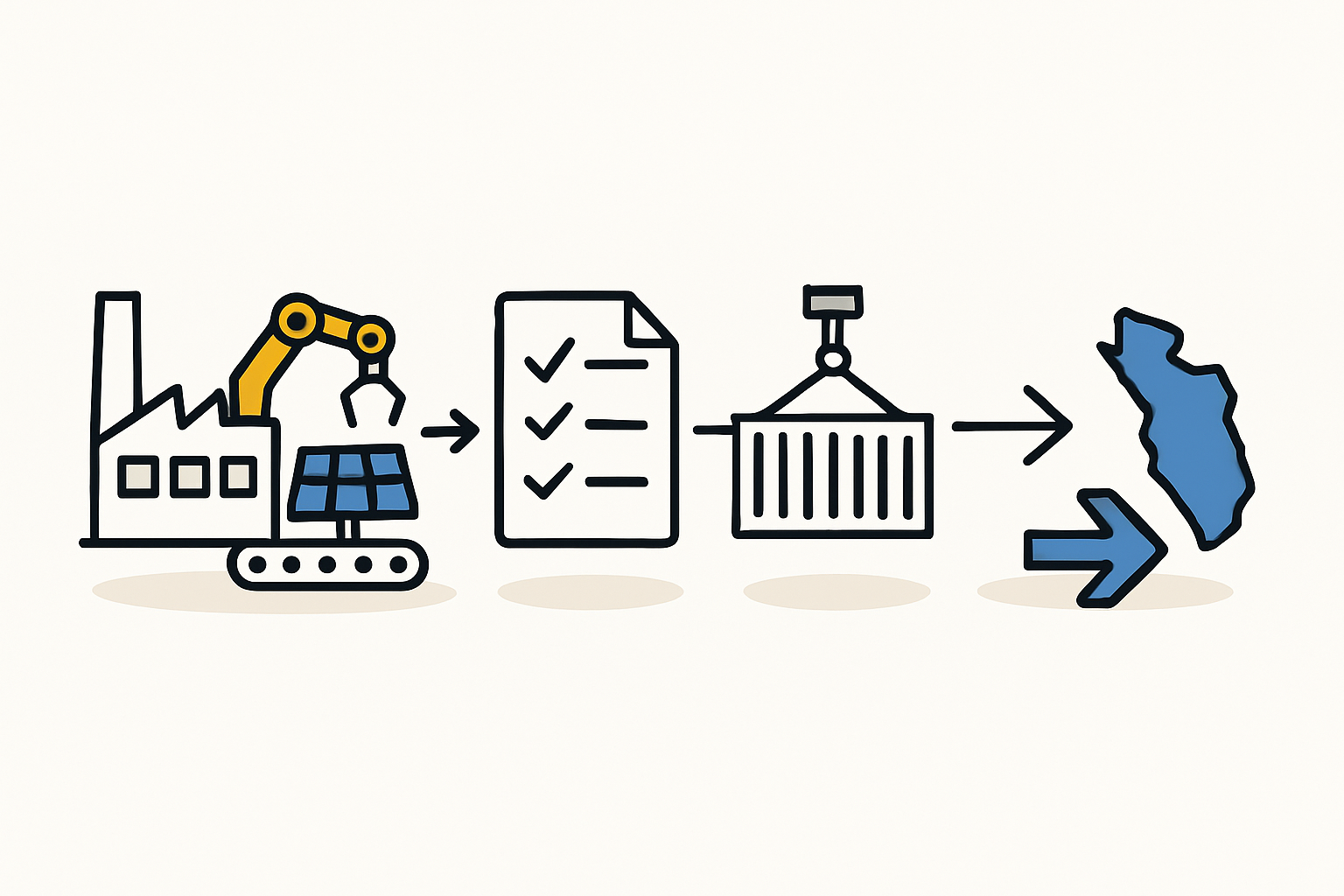
A manufacturing base in Saint Kitts and Nevis thus serves as a gateway not only to 15 CARICOM nations but also to key international markets.
The Growing Regional Demand for Solar Energy
The strategic advantages of a CARICOM production base are amplified by strong and growing market demand. For decades, many Caribbean nations have depended on imported fossil fuels for electricity generation, leading to some of the highest energy costs in the world and significant vulnerability to global price fluctuations.
In response, governments and private sector actors across the region are aggressively pursuing renewable energy solutions. This push is driven by two main factors:
-
Economic Imperative: Reducing reliance on expensive imported fuels lowers electricity costs for citizens and businesses, freeing up capital and improving economic competitiveness.
-
Climate Resilience: As small island developing states, Caribbean nations are highly vulnerable to the effects of climate change. Transitioning to renewable energy is a core part of their national climate action plans and commitments.
A local manufacturing presence allows an enterprise to respond to this demand more quickly and flexibly than international suppliers, catering to specific project requirements and reducing shipping times and costs.
Navigating the Practical Challenges
While the opportunity is significant, new investors must be aware of the practical realities of operating in the region. Inter-island logistics can be complex, and some individual national markets are relatively small. A successful strategy requires careful planning of shipping routes, potential warehousing, and possibly consolidating demand from several smaller markets.
Understanding these operational factors is just as critical as analyzing the technical investment requirements for a production line. Experience from J.v.G. Technology GmbH turnkey projects shows that this level of strategic planning is a core part of establishing a successful operation. It is often addressed during the initial feasibility studies for a turnkey production line.
Frequently Asked Questions (FAQ)
What exactly is a ‘Common External Tariff’ (CET)?
The CET is a single tariff rate applied by all CARICOM members to goods imported from outside the community. It is designed to protect and encourage trade and production within the single market. Goods produced inside CARICOM, like solar modules from a factory in St. Kitts, are not subject to the CET when traded between member states.
Do I need a local partner in Saint Kitts and Nevis?
While not always mandatory, having a local partner can be highly beneficial for navigating administrative processes, understanding the local business culture, and building relationships. Investment promotion agencies in Saint Kitts and Nevis can often provide guidance and facilitate connections.
How large is the CARICOM market for solar panels?
The market is dynamic and growing. While it does not compare in volume to markets like the EU or North America, its high-value nature (due to high electricity costs) makes it very attractive. The demand is spread across residential, commercial, and utility-scale projects, and significant year-over-year growth is projected as countries work toward their renewable energy targets.
Are the investment incentives in St. Kitts difficult to obtain?
Saint Kitts and Nevis has a well-established framework for attracting foreign direct investment. The process is generally clear and supported by government agencies like the St. Kitts Investment Promotion Agency (SKIPA). A well-prepared business plan and a clear demonstration of the project’s economic benefits are essential for a successful application.
Understanding these trade frameworks is a critical first step in developing a sound business plan. A production facility in Saint Kitts and Nevis offers more than a physical location; it provides a strategic key to unlock the full economic potential of the Caribbean’s clean energy transition. Building a comprehensive investment case requires a detailed analysis of market size, production costs, and logistical pathways.