Imagine the critical final stage of a production run at a new manufacturing facility. Machinery is at peak capacity, materials are in process, and deadlines loom. Suddenly, the lights flicker and the entire operation grinds to a halt.
While this might be a rare inconvenience in many industrial regions, for a facility in Saint Lucia, it represents a significant and recurring business risk that demands a strategic solution.
For any entrepreneur planning a high-value manufacturing operation, such as a solar module manufacturing plant, consistent power isn’t a luxury—it’s the foundation of profitability. This article examines the specific energy challenges in Saint Lucia and makes the business case for integrating on-site solar and battery storage to ensure operational continuity and long-term success.
The Energy Landscape in Saint Lucia: A Closer Look
Understanding the risk begins with the local context. The electricity grid in Saint Lucia, managed by the sole utility provider LUCELEC, faces a unique set of challenges that directly impact industrial consumers.
-
Dependence on Imported Fuel: The island’s power generation is roughly 99% reliant on imported diesel fuel. This dependency exposes electricity prices to global oil market volatility, creating some of the highest electricity tariffs in the region, often ranging from $0.30 to $0.40 per kilowatt-hour (kWh).
-
Vulnerability to Weather Events: Located within the Atlantic hurricane belt, Saint Lucia’s grid is susceptible to damage from tropical storms and hurricanes. Such events can lead to prolonged, widespread power outages that halt all commercial and industrial activity.
-
Aging Infrastructure: Like many island grids, the infrastructure requires constant upgrades to maintain stability. Although the government has set a target of generating 35% of its energy from renewables by 2025, this transition is a gradual process.
For a business owner, these factors translate into two primary risks: high operational costs from expensive electricity and the unpredictable threat of production downtime from grid failures.
The True Cost of a Power Outage in Manufacturing
A grid outage is far more than a temporary inconvenience; it’s a costly event with cascading effects across a manufacturing facility. The financial impact extends well beyond lost man-hours.
-
Material Spoilage: In processes like solar module lamination, a sudden power loss during a heating or cooling cycle can render an entire batch of materials useless. The laminator, a critical and expensive piece of equipment, needs an uninterrupted cycle to function correctly.
-
Equipment Damage: Abrupt shutdowns can stress sensitive machinery, potentially leading to expensive repairs and extended downtime.
-
Production Delays: Halting a production line disrupts schedules, delays shipments, and can damage a company’s reputation for reliability, especially in its early stages. A single hour of lost production in a medium-sized plant can mean thousands of dollars in lost revenue.
Given these severe consequences, relying solely on the local grid presents an unacceptable risk for any serious industrial investment.
A Strategic Solution: On-Site Solar and Battery Storage
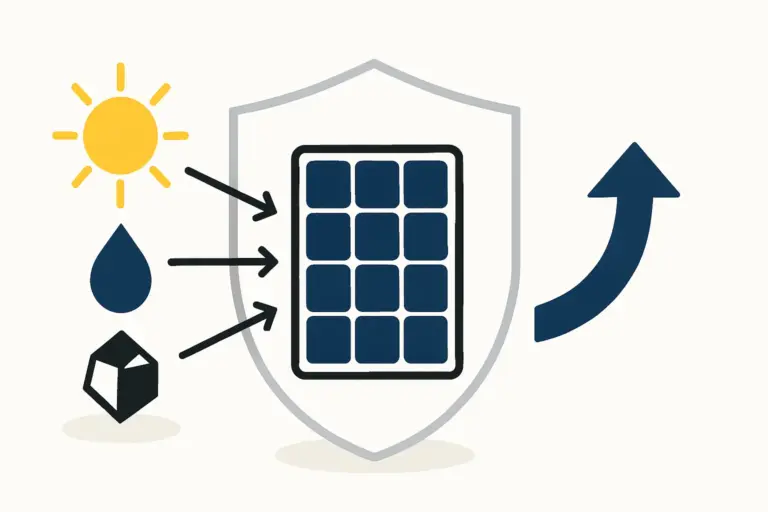
The most effective way to mitigate these risks is to develop on-site power generation and storage. A hybrid system combining a Solar Photovoltaic (PV) array with a Battery Energy Storage System (BESS) offers a comprehensive solution that addresses both cost and reliability.
This integrated system operates on a simple, effective principle:
-
Solar PV for Daytime Operations: During daylight hours, solar panels on the factory roof generate clean electricity. This power is consumed directly by the facility, significantly reducing the amount of expensive electricity drawn from the grid.
-
Battery Storage for Excess Energy and Backup: Any solar energy generated beyond the factory’s immediate needs is used to charge the BESS. This stored energy can then be used in the evening or, most critically, provide seamless, instantaneous backup power the moment a grid failure is detected.
This setup creates a private, resilient microgrid for the facility, allowing production to continue uninterrupted even when the main grid is down. Experience from J.v.G. turnkey projects in regions with similar energy challenges has shown this hybrid approach to be essential for ensuring operational stability.

Analyzing the Business Case for Energy Independence
While the initial investment for a commercial-scale solar and battery system is significant, the financial returns are compelling when considering both direct savings and risk mitigation.
Cost Reduction
By generating a substantial portion of its own electricity, a factory can drastically lower its monthly utility bills. In a high-tariff environment like Saint Lucia, the payback period for a solar and storage system can be as short as five to eight years, after which the electricity generated is virtually free.
Risk Mitigation and Business Continuity
The value of avoided downtime, often the primary driver for the investment, is immense. By preventing just a few significant production stoppages per year, the BESS component can effectively pay for itself. This transforms the energy system from a cost center into a form of operational insurance that protects revenue and safeguards valuable assets.
Long-Term Predictability
On-site generation insulates a business from future electricity price hikes and geopolitical fuel market volatility. This provides stable, predictable energy costs—a powerful advantage for long-term financial planning and maintaining competitive pricing.
Planning Your On-Site Energy Infrastructure
Integrating an on-site energy solution requires careful planning and should be considered early in the project development phase. Key steps include:
-
Conducting an Energy Load Analysis: A thorough assessment of the factory’s projected electricity consumption, including the power demands of all machinery, is necessary to accurately size the solar array and battery system.
-
Structural and Spatial Planning: The facility design must account for the physical space and structural load capacity required for rooftop solar panels. The factory building requirements should incorporate these considerations from the outset.
-
System Integration: The electrical systems must be designed to switch seamlessly between grid power, solar power, and battery power without disrupting operations.
For specialized facilities, like those from providers of turnkey solar production lines, energy resilience planning is a core part of the initial design and engineering process.

Frequently Asked Questions (FAQ)
How much roof space is needed for a factory solar installation?
A typical 20–50 MW solar module factory might require a 1–2 MW solar PV system for its own use. This would need approximately 5,000 to 10,000 square meters of suitable, unshaded roof space.
How long does a Battery Energy Storage System (BESS) last?
Modern industrial-grade batteries, such as those using Lithium Iron Phosphate (LFP) chemistry, are designed for longevity. They typically come with warranties for 10 years or a specific number of charge-discharge cycles and can often perform effectively for 15 years or more with proper maintenance.
Is it possible for a factory to go completely off-grid?
While technically possible, it is usually not economically practical for a large manufacturing facility. An off-grid system would need to be oversized to handle several consecutive cloudy days, significantly increasing the cost. A grid-connected hybrid system offers the best balance of reliability, resilience, and cost-effectiveness.
What are the maintenance requirements for a solar and battery system?
Solar PV systems require minimal maintenance, usually just periodic panel cleaning and inspection of electrical components. A BESS requires professional monitoring and servicing according to the manufacturer’s specifications to ensure optimal performance and safety.
Can this energy solution be applied in other Caribbean or island nations?
Absolutely. This model is highly relevant for any island or remote region characterized by high dependence on imported fossil fuels, expensive electricity, and a grid vulnerable to weather-related disruptions. The business case is strong across the Caribbean and in parts of Africa and Southeast Asia.
Conclusion: From Energy Risk to Strategic Advantage
For entrepreneurs establishing manufacturing operations in Saint Lucia, stable and affordable power is a primary concern. Relying solely on the public grid introduces unacceptable risks of production stoppages, material waste, and equipment damage.
By investing in an on-site solar and battery storage system, a business can transform this critical vulnerability into a strategic advantage. Such a system not only provides a powerful defense against grid instability but also delivers substantial long-term savings on energy costs. It’s an investment in resilience, predictability, and the fundamental continuity of the business itself. Navigating the technical and financial decisions involved requires careful, expert-led planning, but the reward is a robust operation built to thrive in any condition.