
4 Powerful Incentives in Saint Lucia’s Fiscal Act: A Guide for Solar Manufacturing Investment
An entrepreneur looking at a map of the Caribbean sees more than just tourist destinations. They see abundant, untapped solar energy. In a region defined by high electricity costs and reliance on imported fossil fuels, the business case for local solar panel manufacturing is compelling.

The initial capital investment, however, can be a significant hurdle. Strategic government support, such as the incentives offered by Saint Lucia, can be the critical factor for success.
For any business professional considering the solar manufacturing sector, understanding the local regulatory and financial landscape is paramount. Saint Lucia’s Fiscal Incentives Act of 1974 is a cornerstone of its economic development policy, designed specifically to attract and support ventures that contribute to the island’s industrial growth. This article offers a clear overview of the key provisions relevant to establishing a solar module factory.
What is the Fiscal Incentives Act?
In essence, the Fiscal Incentives Act is a legal framework that provides specific financial advantages to companies in approved sectors, with manufacturing being a primary focus. Administered by Invest Saint Lucia, the official investment promotion agency, the Act aims to reduce the initial financial burden on investors and improve the long-term profitability of their operations.
The government grants these benefits to businesses, designated as ‘Approved Enterprises’, that are expected to create local employment, introduce new technologies, and diversify the national economy. For an entrepreneur planning a solar manufacturing facility, qualifying as an Approved Enterprise unlocks a powerful set of incentives for de-risking the investment.
Key Incentives for Solar Manufacturing Operations
The Act offers several distinct advantages that directly address the main cost centers of setting up and running a factory. These are not minor rebates but substantial waivers that can fundamentally alter a project’s financial projections.
1. Corporate Tax Holiday
Perhaps the most significant incentive is a complete waiver of corporation tax for a set period. A new enterprise can then retain its profits during the crucial early years for reinvestment, expansion, or recovery of initial capital.
The duration of the tax holiday is determined by the value the enterprise adds locally and its classification:
- Group I Enterprise: Up to 15 years tax-free
- Group II Enterprise: Up to 12 years tax-free
- Group III Enterprise: Up to 10 years tax-free
- Enclave Enterprise (producing exclusively for export): Up to 15 years tax-free
A solar panel manufacturing plant, given its capital-intensive nature and alignment with national energy goals, would be well-positioned to qualify for the maximum 15-year holiday, especially if a portion of its output is destined for export to other CARICOM nations.
2. Import Duty Exemptions
A solar factory requires a significant amount of imported goods, from complex machinery to raw materials. The Fiscal Incentives Act provides a 100% waiver of customs duties on these items during the tax holiday period, directly reducing the investment required for a solar factory.
This exemption typically covers:
- Machinery and Equipment: Essential production line items like cell stringers, laminators, and testers.
- Raw Materials: Photovoltaic cells, EVA film, backsheets, glass, and aluminum frames.
- Building Materials: Components needed for the construction or renovation of the factory.
- Spare Parts: Critical for maintaining operational uptime.
This exemption dramatically lowers the barrier to entry, as import duties can otherwise add a substantial percentage to the initial setup cost.
3. Exemption from Withholding Tax
For international investors, the ability to repatriate profits is a key consideration. Under the Act, payments such as dividends from a local company to a foreign parent or shareholder, which are typically subject to withholding tax, are exempt during the tax holiday period. Profits generated in Saint Lucia can thus be returned to investors without additional tax liabilities, enhancing the overall return on investment.
4. Carry-Forward of Net Losses
Business operations do not always generate profits from day one. The Act recognizes this reality by allowing an Approved Enterprise to carry forward any net losses incurred during the tax holiday for up to five years after the holiday expires. This loss can be offset against future profits, providing a valuable financial buffer as the company transitions into its normal tax-paying phase.
The Application Process: A Practical Overview
While the benefits are substantial, accessing them requires a formal application and approval process. An investor must present a convincing case to Invest Saint Lucia, demonstrating the project’s viability and its positive impact on the local economy.
The typical pathway involves:
-
Submission of Application: The investor submits a detailed application to Invest Saint Lucia, supported by a robust business plan for solar manufacturing complete with financial projections, market analysis, and an operational plan.
-
Review and Recommendation: Invest Saint Lucia evaluates the proposal based on its economic merits and alignment with national development priorities.
-
Cabinet Approval: Upon a positive recommendation, the application is forwarded to the Cabinet of Ministers for final approval.
-
Publication of Order: Once approved, an official Order is published in the Government Gazette, formally granting the company its status as an ‘Approved Enterprise’ and detailing the specific incentives conferred.
Based on experience from J.v.G. Technology GmbH turnkey projects in various emerging markets, a meticulously prepared application is critical. Authorities need a clear, professional, and realistic plan that moves beyond ambition to demonstrate a deep understanding of both the manufacturing process and the market.
Strategic Context for the Caribbean Investor
For an island nation like Saint Lucia, developing a local renewable energy manufacturing base is not just an industrial goal; it is a matter of energy security and economic resilience. High solar irradiation makes the region ideal for solar power generation, but reliance on imported technology perpetuates economic dependency.
By establishing a local factory, an investor does more than just build a business; they contribute to:
- Stable Electricity Costs: Reducing dependence on volatile global oil markets.
- Grid Resilience: Decentralized energy production can prove more robust during extreme weather events like hurricanes.
- Skilled Job Creation: Introducing advanced manufacturing roles and technical training.
The Fiscal Incentives Act is the government’s recognition of this shared value, creating a symbiotic relationship where the investor’s success directly translates into national progress. Understanding and leveraging this framework is the foundational step toward transforming the vision of a Caribbean solar factory into a profitable reality.

Frequently Asked Questions (FAQ)
Who is eligible for these incentives?
Any individual or company, local or foreign, that plans to establish an enterprise in a qualifying industry (like manufacturing) can apply. The enterprise must be incorporated locally in Saint Lucia.
How long does the tax holiday last?
The duration can be up to 15 years. The exact period is determined by the enterprise’s classification, which depends on factors like the level of local value added, export potential, and the nature of the industry.
Are the incentives limited to large-scale factories?
No. While the benefits are particularly impactful for capital-intensive projects like a 50 MW or 100 MW solar factory, the Act is designed to support enterprises of various sizes. The key is the project’s potential contribution to the economy.
What happens after the tax holiday ends?
After the incentive period expires, the company becomes subject to the standard corporate income tax rates applicable in Saint Lucia. However, the initial tax-free years provide a critical window to achieve profitability and a strong financial footing.
Is there a minimum investment amount required?
The Act does not specify a rigid minimum investment. Approval is based on the project’s overall merit, viability, and potential economic impact rather than a single monetary threshold. A well-planned project with a clear path to sustainability is more important than a large but poorly conceived one.

I have a company for solar technology.
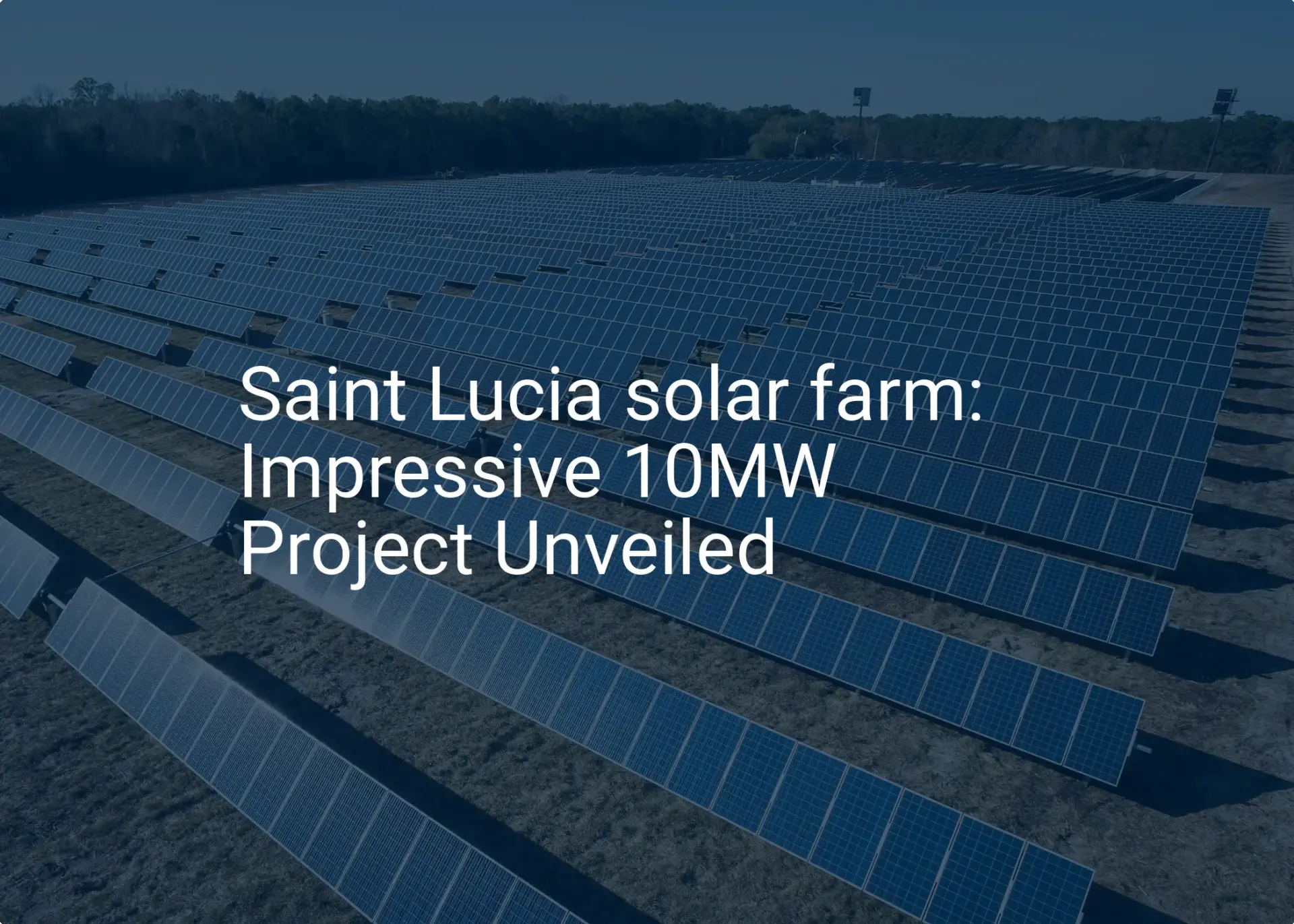
Several years ago l offered StLucia (Mr S. King) to build a 10 MW solar farm and operat it and including financing. In return l have a so called PPA power purchase agreement with the government and Lucelec. At the time of my offer l would have been able to sell the electricity for a price about 0,38 ECD per kWh. This was about the same amount that Lucelec at this time, payed for the fossil fuel to run their generators.All risks concerning financing, building and operating this solar farm were born by me, they only pay what they get kWh.
I never got a reply, no call, no e-mail or letter, nothing.