Market Focus: Supplying the Grenadines’ Tourism and Marine Sectors with Local Solar Modules
An investor evaluating St. Vincent and the Grenadines (SVG) for a solar venture might initially focus on the abundant sunshine. The true opportunity, however, lies not in large-scale solar farms but in understanding the islands’ unique economic landscape.
With electricity costs often ranging between USD 0.25 and USD 0.40 per kWh, energy is a significant operational expense for the two pillars of the local economy: high-end tourism and the international yachting community. For these sectors, a reliable and cost-effective power supply is not a luxury—it is a critical business necessity.
This overview explores the primary off-taker markets in SVG, detailing the specific energy demands of luxury resorts, private islands, and the marine sector. It highlights the compelling case for a local solar module manufacturing facility focused on specialized, high-durability products.
Understanding the Core Energy Challenge in St. Vincent and the Grenadines
Island nations like SVG face a distinct ‘island energy dilemma.’ They are typically dependent on imported fossil fuels for power generation, leading to several challenges:
- High Electricity Costs: The logistics of shipping and handling fuel result in some of the highest energy prices in the world.
- Price Volatility: Local energy costs are directly tied to fluctuating global oil markets, creating budgetary uncertainty for businesses.
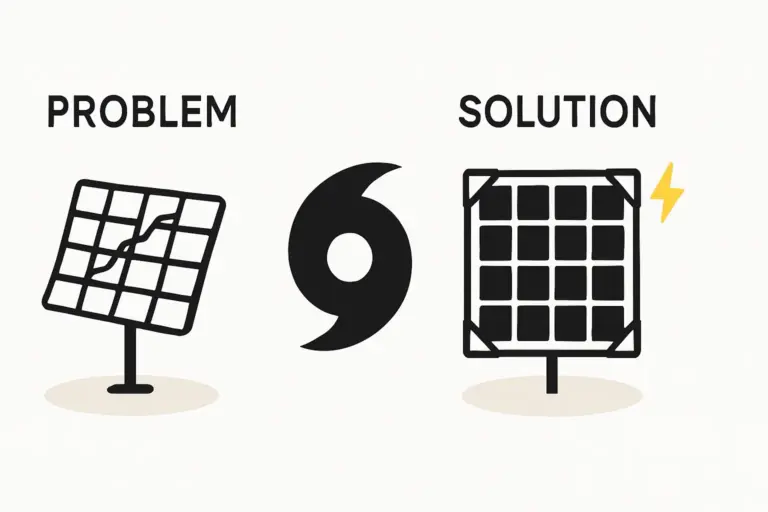
- Grid Vulnerability: Centralized power systems are susceptible to disruption, particularly from hurricanes and tropical storms, which can cripple business operations for extended periods.
Local solar module production directly addresses these issues, offering a path toward greater energy security, cost stability, and economic resilience. Furthermore, by manufacturing within the Caribbean Community (CARICOM), a venture can leverage regional trade incentives, further strengthening the business case.
Primary Off-Taker Market 1: Luxury Resorts and Private Islands
The Grenadines are home to over 30 luxury resorts and exclusive private islands, such as Mustique and Canouan, that cater to a high-net-worth clientele. For these properties, energy is a defining operational factor.
Their primary needs include:
- Energy Independence and Cost Reduction: Solar power offers a direct way to offset substantial electricity bills from air conditioning, water desalination, and general operations.
- Operational Resilience: On-site power generation ensures that services remain uninterrupted during grid failures—a crucial factor for guest satisfaction and safety, especially during post-hurricane recovery.
- Sustainability Branding: In a competitive luxury market, ‘green’ credentials are a powerful differentiator. Marketing a resort as being powered by locally produced, clean energy appeals to the modern, eco-conscious traveler.
A local manufacturer can provide these clients with tailored solar solutions, rapid replacement modules in case of damage, and on-the-ground technical support—advantages that distant international suppliers cannot match.

Primary Off-Taker Market 2: The Yachting and Marine Community
SVG is a premier destination for the international yachting community, hosting a large number of private yachts and charter fleets. This mobile, off-grid market has highly specialized energy requirements that standard solar products often fail to meet.
Key requirements for the marine sector:
- Extreme Durability: Modules must be built to withstand constant vibration, physical impacts, and the harsh, corrosive effects of the marine environment.
- Superior Corrosion Resistance: This is the most critical factor. Standard solar modules with aluminum frames and conventional junction boxes degrade rapidly when exposed to salt mist, leading to system failure in as little as two to three years.
- Specialized Form Factors: Yachts have limited and often-curved deck space, creating a demand for flexible, semi-flexible, and custom-sized modules that can be integrated seamlessly.
The constant failure of standard panels in this environment creates a recurring and high-value replacement market. A local factory specializing in marine-grade, salt-mist-resistant modules could capture this niche, high-margin segment.
The Critical Importance of Specialized Module Technology
The failure of conventional solar panels in coastal and marine settings is a well-known technical problem. The combination of high humidity, salinity, and UV exposure accelerates the degradation of module components, leading to power loss and eventual failure.
The solution lies in modules engineered specifically for these conditions. Superior salt-mist resistance is achieved through specific design choices and materials, including:
- Glass-Glass Construction: Using a second pane of glass instead of a polymer backsheet provides a hermetic seal that protects solar cells from moisture and salt ingress.
- Specialized Encapsulants and Edge Seals: Using advanced materials that prevent delamination and protect the electrical connections within the module.
- Corrosion-Proof Components: Utilizing junction boxes and connectors with high IP ratings (e.g., IP68) to prevent saltwater from reaching the wiring.
A local facility could configure its production line to manufacture these robust modules, creating a product with a clear technical advantage and a longer operational lifespan in the target environment.
The Business Case for a Local Solar Module Manufacturing Plant
Establishing a local solar module manufacturing plant in SVG is not about competing with global commodity producers on price. It is a strategic investment focused on serving specific, high-value local markets with a superior, specialized product.
The business case is built on several key advantages:
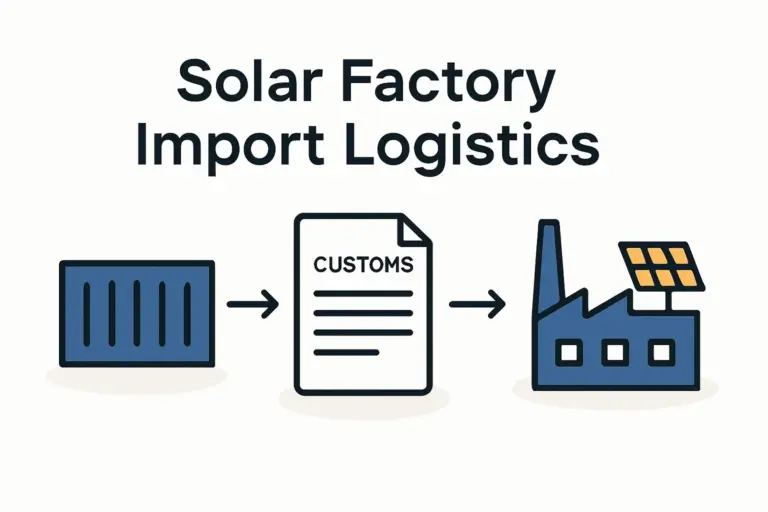
- Logistical Superiority: Eliminating international shipping costs, import duties, and lengthy lead times provides a significant competitive edge. Breakage during transport is also minimized.
- Customization and Service: The ability to produce custom-sized or flexible modules for marine applications and offer immediate replacement services is a powerful value proposition.
- Economic Alignment: The project aligns with national goals for increasing renewable energy adoption and creates skilled local employment, fostering support from government bodies.
Planning and implementing a turnkey production line for this specialized purpose requires expert guidance, from initial feasibility studies to equipment sourcing and staff training. Experience from J.v.G. Technology turnkey projects shows that a small-scale, specialized factory can be highly profitable when focused on the right market niche.

Frequently Asked Questions (FAQ)
What kind of investment is needed for such a factory?
A small-scale, semi-automated line with a capacity of 20-50 MW can be established with a targeted capital investment. The exact amount depends on the level of automation, building specifications, and choice of technology.
How difficult is it to produce salt-mist resistant modules?
Producing high-quality, salt-mist resistant modules requires specific machinery (e.g., for glass-glass lamination) and adherence to strict quality control processes. While more technically demanding than standard module production, it is achievable with the right equipment and training.
Can a small factory compete with large international manufacturers?
A small, specialized factory does not compete on the price of standard modules. It competes by providing a tailored, high-durability product with superior local logistics, service, and availability—factors for which the target marine and luxury tourism markets are willing to pay a premium.
What are the first steps to assess this business opportunity?
A thorough feasibility study is the essential first step. This involves detailed market analysis, financial modeling, a review of the regulatory landscape, and the development of a comprehensive business plan.
Next Steps for Exploring This Opportunity
The opportunity in St. Vincent and the Grenadines is a clear example of how a solar manufacturing venture can succeed by focusing on specialization rather than scale. The captive markets of luxury tourism and yachting have persistent, specific needs that a local, technically proficient manufacturer is uniquely positioned to meet.
Properly evaluating this venture requires a deep understanding of the manufacturing process, investment requirements, and operational planning. A structured approach, beginning with education and a detailed business plan, is the foundation for a successful entry into this promising market.