For international entrepreneurs exploring the European solar market, the Republic of San Marino offers a unique and often overlooked strategic advantage. While not a member of the European Union, this microstate provides a powerful, tariff-free gateway to the entire EU single market. This access is not automatic, however; it hinges on specific rules that must be understood and factored into a business plan from the outset.
This article breaks down the practical implications of San Marino’s customs union with the EU, analyzing the opportunities for solar module manufacturers and outlining the critical requirements for successfully exporting ‘Made in San Marino’ products to European customers.
Understanding San Marino’s Unique Position with the EU
San Marino’s market access is founded on the Agreement on Cooperation and Customs Union between the European Economic Community and the Republic of San Marino, originally signed in 1991 and since updated. This agreement establishes a customs union, which is fundamentally different from a standard free-trade agreement.
In practical business terms, this means:
-
No Customs Duties: Products originating in San Marino are not subject to the EU’s Common External Tariff when imported into any EU member state. This removes a significant cost barrier that affects competitors from many other non-EU locations.
-
Free Circulation: Once a product from San Marino enters an EU country (typically Italy), it can move freely throughout the entire EU single market without further customs checks or tariffs.
-
No Quantitative Restrictions: There are no quotas or limits on the volume of goods that can be exported from San Marino to the EU.
This arrangement effectively places a San Marino-based factory on a level playing field with factories located within the EU itself, at least in terms of tariffs and trade flow.

The Core Advantage: Tariff-Free Market Entry
The most direct benefit of manufacturing in San Marino is financial. For solar modules, which fall under the industrial products category (Chapters 25-97 of the Harmonized System), the customs union eliminates tariffs that can significantly impact competitiveness. This allows a manufacturer to price products more aggressively or achieve higher profit margins compared to competitors facing import duties.
Beyond direct cost savings, streamlined logistics offer another key advantage. With no formal customs border between San Marino and Italy, the physical movement of goods is simplified, reducing transit times and administrative delays. For businesses serving the time-sensitive European project market, this proximity and efficiency are valuable assets.
The Critical Prerequisite: ‘Originating Product’ Status
The benefits of the customs union are exclusively for ‘originating products.’ This is the most crucial concept for any investor to understand, as misinterpreting it can invalidate the entire business case.
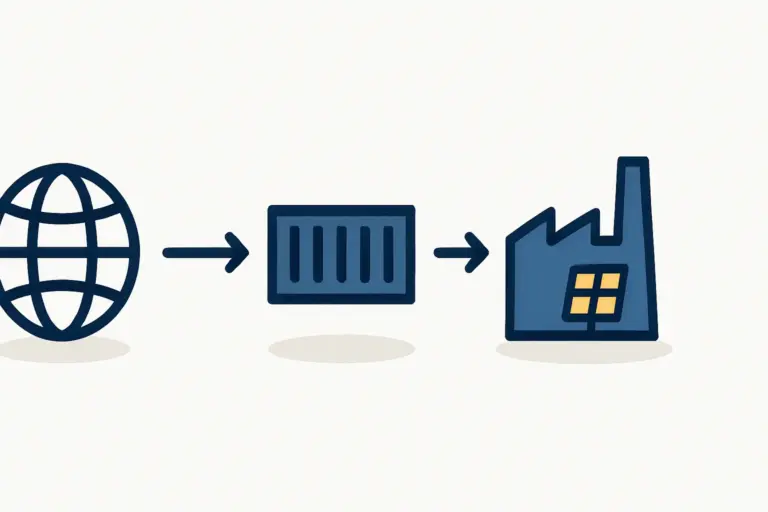
A product is considered to originate in San Marino if it has been wholly obtained or has undergone ‘sufficient working or processing’ within the country. For a complex product like a solar module, this means that simple final assembly of components imported from third countries (e.g., China) is not enough to confer origin.
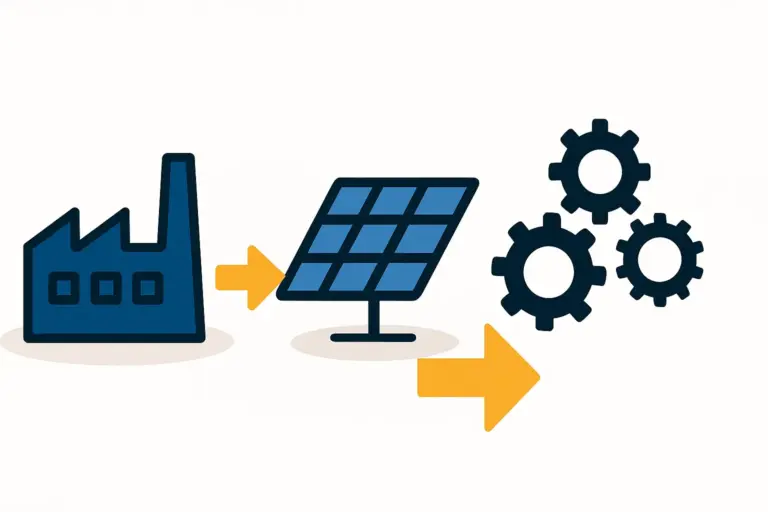
The manufacturing process must involve a substantial transformation. While the exact requirements are detailed in the rules of origin protocols, this typically involves significant value-add activities within the San Marino facility. Simply connecting imported solar cells into a module would likely fail to meet the threshold, making the scope of the solar module manufacturing process planned for the factory a central strategic decision. Based on experience from J.v.G. turnkey projects, underestimating the rules of origin is a common and costly planning error.
Navigating Regulatory and Administrative Requirements
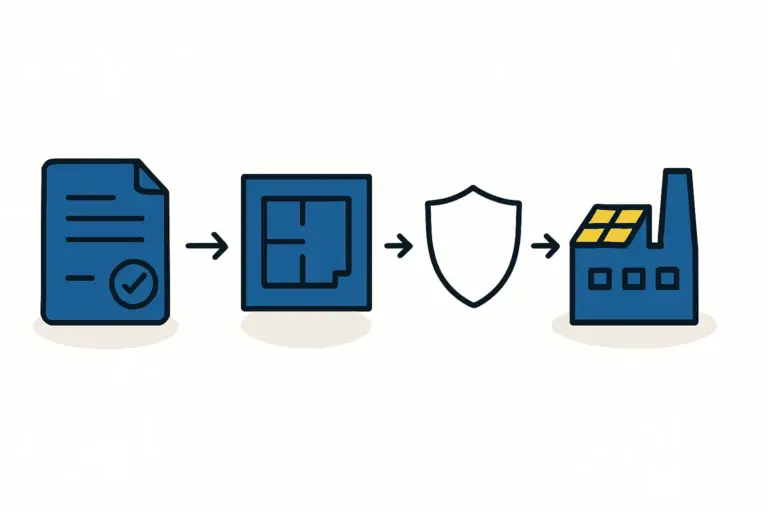
Tariff-free access does not mean freedom from regulation. A San Marino-based manufacturer must comply with all EU technical standards, directives, and administrative procedures as if it were located within the Union.
EU Technical Standards are Non-Negotiable
For a solar module to be legally sold in the EU, it must meet a rigorous set of safety, performance, and environmental standards. The customs union provides no exemptions. Key requirements include:
-
CE Marking: This declares that the product meets EU standards for health, safety, and environmental protection.
-
IEC Certifications: Compliance with international standards such as IEC 61215 (performance) and IEC 61730 (safety) is a commercial necessity.
-
WEEE Directive: The Waste from Electrical and Electronic Equipment directive mandates producer responsibility for the end-of-life collection and recycling of modules.
-
RoHS Directive: This restricts the use of specific hazardous materials in electrical and electronic products.
Obtaining the necessary certifications is mandatory for market entry and must be factored into production timelines and costs.
Managing Value-Added Tax (VAT)
While goods move without customs duties, Value-Added Tax (VAT) must still be handled correctly. San Marino has its own consumption tax, the imposta monofase.
-
Export: Goods exported from San Marino to the EU are exempt from the imposta monofase.
-
Import: The goods are then subject to the VAT of the EU country of destination.
To manage this process, shipments must be accompanied by a T2 transit document, which proves the goods have Community status and are eligible for free circulation. Proper accounting and administrative systems are essential for handling these cross-border VAT transactions smoothly.

A Competitive Analysis: San Marino vs. Other Locations
When evaluating locations, an entrepreneur should consider how San Marino compares to other options.
| Factor | San Marino | EU Member State | Non-EU Country (No Agreement) |
|---|---|---|---|
| EU Tariffs | None (if origin rules met) | None | Subject to Common External Tariff |
| Market Access | Full, free circulation | Full, free circulation | Requires customs clearance per shipment |
| Logistics | Excellent proximity to EU | Varies by location | Longer transit times, higher costs |
| Regulatory Burden | Full EU compliance required | Full EU compliance required | Full EU compliance required |
| Operational Costs | Potentially favorable | Generally higher | Varies widely |
This comparison highlights San Marino’s hybrid advantage: it combines the market access of an EU location with the potential for a more favorable operating environment, while decisively outperforming locations that face EU tariffs.
Frequently Asked Questions (FAQ)
What is the difference between being an EU member and being in a customs union?
An EU member state is part of the full political and economic union, adopting the Euro (in most cases) and participating in all EU institutions. San Marino is not an EU member; its agreement is focused specifically on creating a common customs territory. This allows goods to move freely without tariffs, but San Marino remains a sovereign state with its own laws and tax system.
How do I prove my solar modules ‘originate’ in San Marino?
Proof is established by demonstrating that your manufacturing process involves sufficient transformation. This requires detailed documentation of your supply chain, bill of materials, and production steps. The specific criteria are outlined in the EU-San Marino agreement’s protocol on rules of origin. A consultant can help design a process that ensures compliance.
Are San Marino-made modules automatically certified for the EU?
No. Certification is entirely separate from trade status. All products, regardless of origin, must be independently tested and certified to meet EU standards (like CE and IEC) before they can be legally sold on the market.
What is a T2 document and why is it important?
The T2 is a customs transit document used to prove that goods moving between an EU member state and a country with a customs union agreement (like San Marino) have ‘Community status.’ It ensures the goods can circulate within the EU without being subject to import duties, effectively proving they are not third-country imports.
Conclusion: A Strategic Gateway, Not a Shortcut
San Marino offers a compelling and legitimate strategic gateway to the European solar market. Its customs union with the EU delivers the powerful benefits of tariff-free access and simplified logistics.
However, this opportunity is conditional. Success depends on a rigorous approach to meeting the rules of origin, complying with all EU technical and environmental standards, and managing cross-border administrative procedures correctly. For the well-prepared entrepreneur, starting a solar module factory in San Marino is not a shortcut, but a calculated move that can create a sustainable competitive advantage in one of the world’s most important solar markets. While the complexity is significant, with structured guidance, it is entirely manageable.