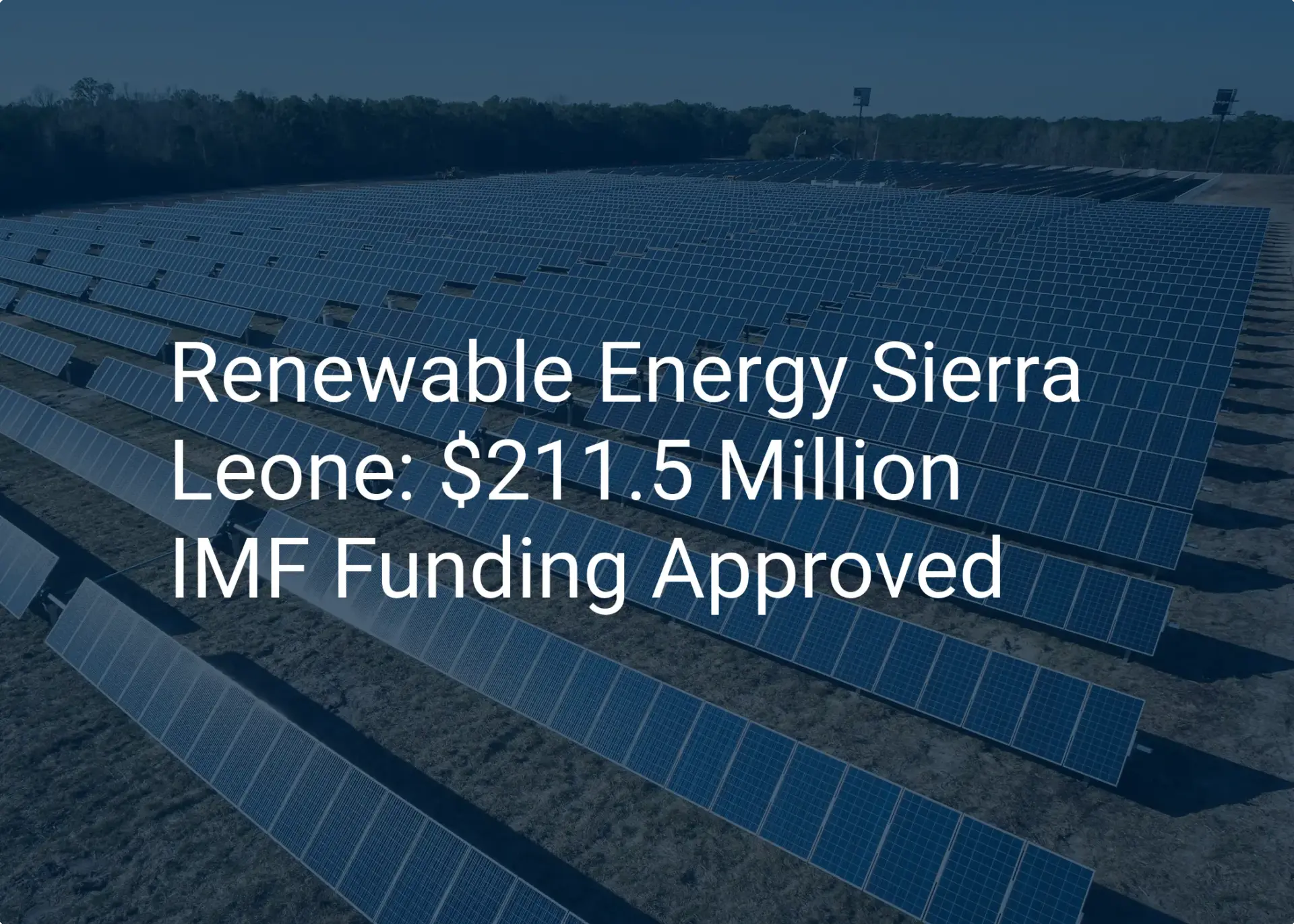
Imagine a new solar panel factory in Sierra Leone. State-of-the-art lamination and testing equipment stand ready, and skilled personnel are on the factory floor. Suddenly, the power cuts out. Production grinds to a halt. This scenario, common in many emerging markets, poses a critical question for any entrepreneur with a high-tech venture: how can you guarantee the stable, high-quality power essential for modern manufacturing when the national grid is unreliable?
For investors looking to establish a solar module manufacturing business in a location like Sierra Leone, the power supply is not a secondary concern; it is a foundational element of the business plan. This article explores the realities of the country’s power infrastructure and presents solutions that turn this operational challenge into a significant competitive advantage.
The Power Infrastructure Reality in Sierra Leone
Understanding the local context is the first step in strategic planning. Sierra Leone’s national grid, managed by the Electricity Distribution and Supply Authority (EDSA), faces considerable challenges that directly impact industry.
According to data from international development agencies, the national electrification rate hovers around 26%, with a stark disparity between the capital, Freetown, and the rest of the country. For those who are connected, this limited reach is compounded by reliability issues. Industrial users frequently experience:
-
Power Outages: Unscheduled blackouts can last for hours, disrupting production schedules and causing significant downtime.
-
Voltage Fluctuations: Inconsistent voltage and frequency can damage sensitive manufacturing equipment, leading to costly repairs and replacements.
-
High Tariffs: The cost of grid electricity for industrial consumers can be substantial, impacting the factory’s overall operational expenditure.
For instance, much of Freetown’s power is supplied by a floating power plant—a solution that underscores the grid’s limitations. For a business that depends on precision and consistency, relying solely on this infrastructure introduces an unacceptable level of operational and financial risk.
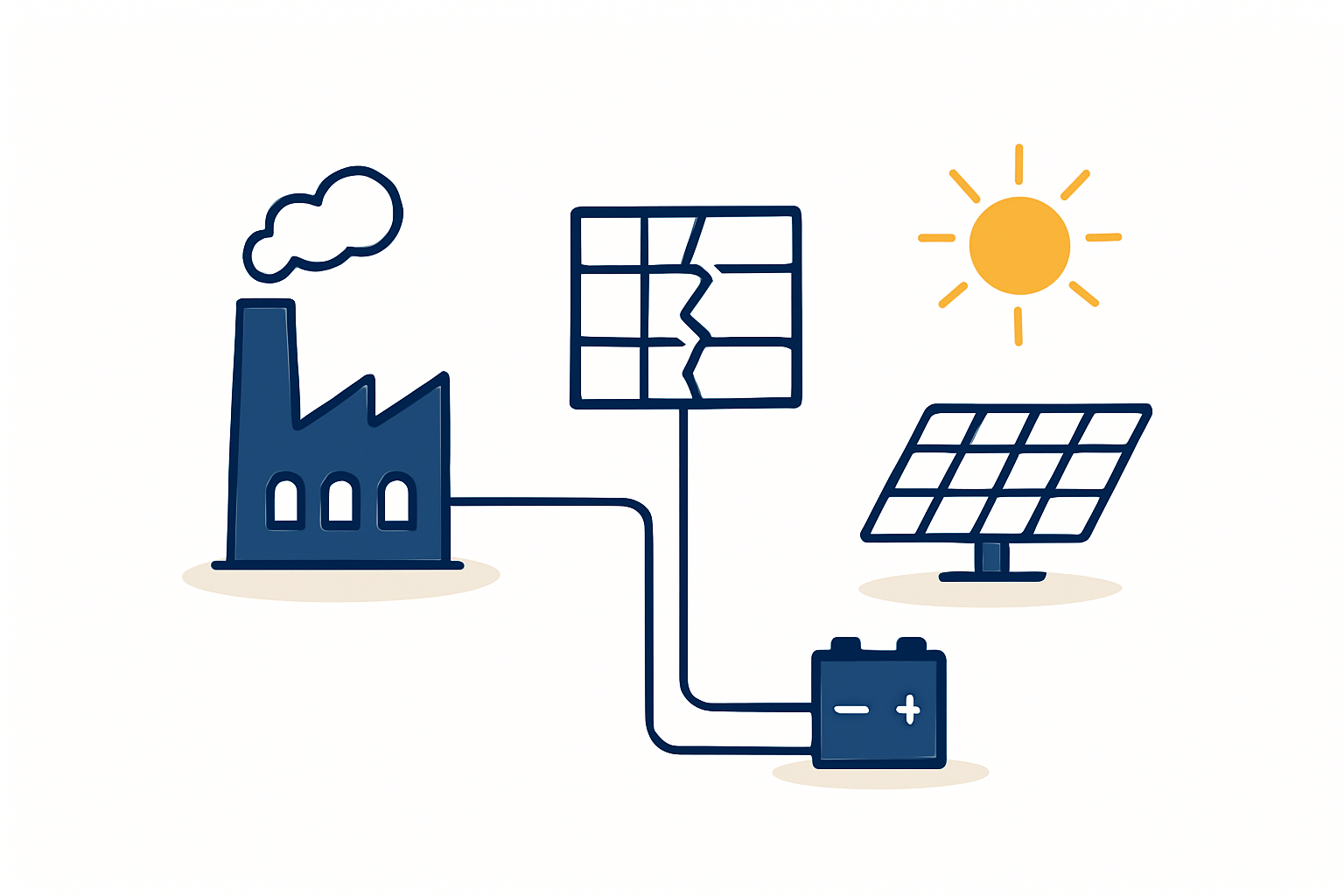
The High Cost of Unreliable Power in Manufacturing
The consequences of unstable power extend far beyond mere inconvenience. For a solar module factory, the costs are direct and substantial:
Ready to make big Profits?
The solar Industry is Booming
WE HELP NEWCOMERS to the solar industry start their own solar module production line. Customers can make BIG PROFITS by selling modules and finding investors, without wasting money and time on things they don't need!
-
Production Downtime: Every hour the production line is stopped means lost revenue. In a competitive market, consistent output is key to meeting contractual obligations.
-
Material Waste: An abrupt shutdown during a critical process like lamination can destroy an entire batch of materials.
-
Equipment Damage: Automated machinery, such as cell stringers and testers, requires stable power. Surges and brownouts can cause electronic components to fail, leading to expensive and time-consuming repairs.
-
Reputational Risk: Failure to meet production targets and delivery schedules can damage a new company’s reputation with customers and partners.
These factors make a robust power strategy essential to the long-term success and viability of the enterprise.
Evaluating Power Solutions for a Manufacturing Facility
When planning a factory’s power needs in this environment, two primary models emerge: the traditional grid-plus-diesel approach and the forward-looking captive solar-plus-storage model.
The Traditional Approach: Grid Power with Diesel Backup
Historically, the standard solution has been to use the national grid as the primary power source and rely on diesel generators during outages.
Advantages: The initial capital investment for a generator is lower than for a comprehensive solar and battery system. The technology is also familiar and widely available.
Disadvantages: This model exposes the business to significant and volatile operational costs. Diesel fuel prices fluctuate, and securing a reliable supply can be a logistical challenge. Generators also require regular maintenance, produce emissions, and generate noise—concerns for environmental standards and community relations alike. Over time, the high running cost of diesel can severely erode profitability.
The Modern Solution: A Captive Solar-Plus-Storage System
A more strategic approach is to create an independent power island for the factory, often called a ‘captive’ power system. This involves installing a dedicated solar PV array combined with a Battery Energy Storage System (BESS).
This setup is designed to provide 100% of the factory’s power needs, making the facility fully independent of the grid.
Advantages:
-
Energy Independence: The factory is insulated from grid outages and voltage fluctuations, ensuring uninterrupted production.
-
Cost Predictability: After the initial investment, the fuel—sunlight—is free. This eliminates exposure to volatile diesel prices and rising electricity tariffs, making financial forecasting more accurate.
-
Operational Excellence: A properly designed system provides clean, stable power that protects sensitive equipment and maximizes its lifespan.
-
Brand Synergy: A solar module factory powered by solar energy is a powerful marketing statement, demonstrating a deep commitment to sustainability.
This self-sufficient model is increasingly the standard for serious industrial projects in regions with grid limitations. Experience from J.v.G. turnkey projects shows that planning for energy independence from day one is a critical success factor.
A Financial and Technical Comparison
While the initial capital expenditure for a captive solar-plus-storage system is higher, a Total Cost of Ownership (TCO) analysis over 10 or 20 years consistently reveals its financial superiority. The savings on diesel fuel and grid electricity typically lead to a payback period of five to seven years, after which the factory benefits from nearly free electricity for the system’s 25+ year lifespan.
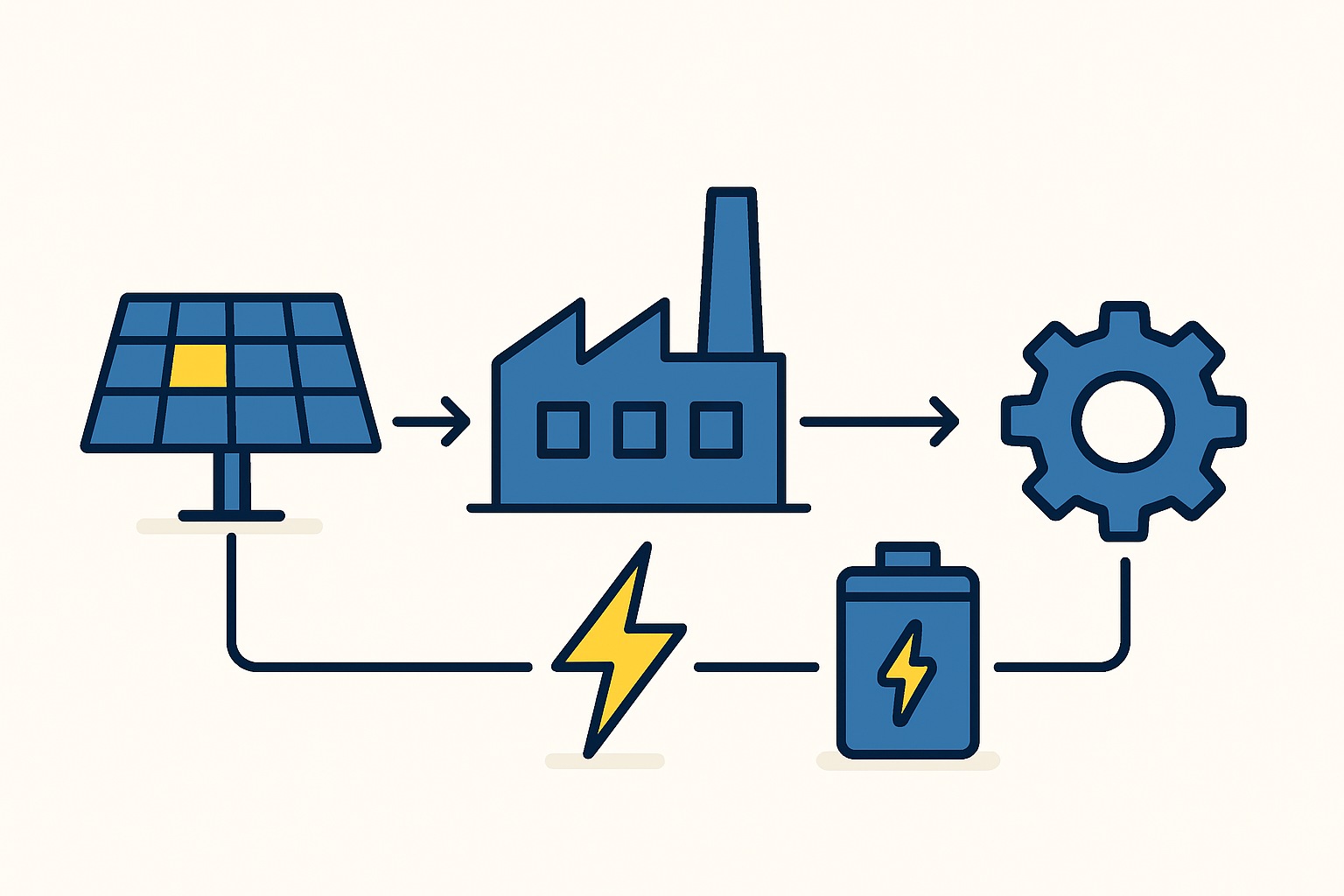
Technically, the system is designed for resilience. During the day, the solar array generates power to run the factory and charge the batteries. At night or on overcast days, the factory draws power from the BESS. The national grid can be maintained as a tertiary backup for extreme circumstances, providing multiple layers of redundancy.
The Strategic Advantage of Energy Independence
Choosing to build a captive power plant is more than a technical decision; it is a strategic business move. It signals to the market, investors, and customers that the operation is built on international standards of reliability and quality.
In a country like Sierra Leone, which has an established National Renewable Energy Action Plan, such an investment aligns perfectly with national development goals. This alignment can facilitate smoother project approvals and position the company as a key player in the nation’s industrial and energy future. An investor planning a turnkey solar manufacturing line gains a critical advantage by integrating this power solution from the earliest design phase.

Frequently Asked Questions (FAQ)
-
How much land is required for a captive solar system for a 50 MW solar factory?
A 50 MW per year solar module factory typically requires 250–350 kW of power. A solar system to meet this demand would require approximately 3,000–4,000 square meters of land for ground-mounted panels, though panels can also be installed on the factory roof. -
Can the factory still be connected to the national grid?
Yes. It is advisable to maintain a grid connection as a third-tier backup. The primary system is the solar array and battery, with a small diesel generator for secondary backup and the grid as the final option. -
What is the typical payback period for a captive solar-plus-storage system?
Compared to running diesel generators during frequent grid outages, the payback period is typically five to seven years. The exact figure depends on local diesel costs, solar irradiation levels, and system cost. -
Is this power strategy applicable to other countries in the region?
Absolutely. This model of energy independence is an effective strategy in any region where the national grid is unreliable or expensive. It is a proven solution for de-risking industrial investments across Africa, the Middle East, and parts of Asia.
From Challenge to Competitive Edge
The power infrastructure in Sierra Leone presents a clear challenge for any industrial investor. With strategic planning, however, this challenge can be transformed into a durable competitive advantage. By investing in a captive solar-plus-storage system, an entrepreneur not only guarantees the operational stability required for high-tech manufacturing but also builds a financially robust and sustainable business model for decades to come. This approach ensures that the factory’s success is determined by its own efficiency and market strategy—not by the limitations of the local power grid.