Any investor looking at Somalia sees two compelling facts: some of the highest solar irradiation levels in the world and a national grid with limited reach and reliability. The result is a clear opportunity for local solar module manufacturing to power the nation’s growth.
However, the success of such a venture hinges on a foundational decision: where to build the factory. The choice of location influences everything from supply chain logistics and operational costs to market access and long-term security. A strategic location can be a powerful business accelerant, while a poor choice can create persistent operational friction.
This analysis evaluates key economic zones in Somalia—Mogadishu, Berbera, and Kismayo—from the perspective of a solar manufacturing investor.
Key Factors in Site Selection for Solar Manufacturing
Before comparing locations, it’s crucial to understand the unique requirements of a solar module factory. Unlike a simple assembly workshop, this type of facility involves semi-automated processes and the handling of fragile, high-value materials. The following criteria are non-negotiable.
Logistics and Port Access
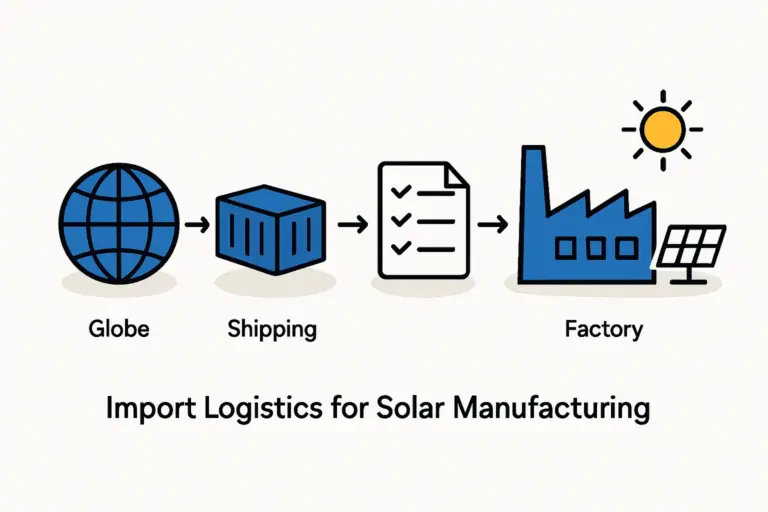
A solar factory depends on continuous import and export. Raw materials such as solar glass, EVA encapsulant, backsheets, and solar cells are typically imported in containers. Finished solar modules are then distributed domestically or exported. Proximity to an efficient, modern port is paramount for minimizing transport costs, reducing the risk of material damage, and ensuring reliable production schedules.
Infrastructure and Utilities
Manufacturing lines require a stable, high-quality electrical supply. While a solar factory can meet some of its own energy needs, it still depends on the grid for baseline power and during non-production hours. Access to clean water for cooling and cleaning, alongside robust road networks for inland distribution, is also critical for operations.
Security and Political Stability
Protecting a significant capital investment is a primary concern for any investor. A location’s security profile directly impacts insurance premiums, the cost of securing the facility, and the ability to attract and retain skilled personnel. Political stability within the region ensures a predictable regulatory environment and operational continuity.
Economic Incentives and Labor
Government support, often in the form of Special Economic Zones (SEZs), can offer significant advantages such as tax holidays, streamlined customs procedures, and investment protection. The availability of a local workforce that can be trained for technical and operational roles is key to managing long-term operating expenses.
Comparative Analysis: Mogadishu vs. Berbera vs. Kismayo
Each of these strategic port cities offers a distinct combination of advantages and challenges. The ideal choice depends on the investor’s specific business model, risk appetite, and market focus.
Mogadishu: The Federal Capital Hub
As the nation’s capital and largest city, Mogadishu is the primary economic and political center of Somalia.
Advantages:
- Market Proximity: Direct access to the largest domestic market for finished solar modules.
- Port Infrastructure: The Port of Mogadishu is the country’s busiest, handling a high volume of container traffic.
- Government Access: Proximity to federal ministries can facilitate regulatory approvals and engagement on potential government tenders.
- Labor Pool: A larger and more diverse urban population provides a substantial pool of potential employees.
Challenges:
- Security Overheads: The security situation remains complex, necessitating significant investment in physical security and risk management.
- Operational Costs: Higher land values and urban congestion can drive up initial setup and ongoing logistics costs.
- Infrastructure Strain: While improving, the city’s infrastructure is under considerable strain, which can lead to inconsistencies in utility services.
Berbera: The Strategic Gateway
Located in Somaliland, Berbera is rapidly emerging as a critical trade gateway for the Horn of Africa, driven by massive investment in its port and connecting trade corridor.

Advantages:
- Political Stability: Somaliland has enjoyed relative peace and stability for decades, creating a more predictable operating environment.
- World-Class Port: The DP World-developed Berbera Port is a modern, deep-water facility designed for high efficiency, significantly reducing logistical risks.
- Export Focus: The Berbera Corridor provides a direct, modern highway connecting the port to Ethiopia, opening up one of Africa’s largest and fastest-growing economies as a potential export market. The business case for a turnkey solar production line here is often built on this export potential.
- SEZ Potential: The Berbera Economic Zone offers attractive incentives for manufacturing and logistics companies.
Challenges:
- Distinct Legal Framework: Investors must navigate the legal and regulatory system of Somaliland, which operates independently from the federal government of Somalia.
- Smaller Domestic Market: The immediate local market is smaller than Mogadishu’s.
Kismayo: The Southern Growth Frontier
As the main port city in southern Somalia and the capital of the Jubaland State, Kismayo presents a frontier opportunity with significant long-term potential.
Advantages:
- Strategic Location: It is ideally positioned to serve the developing markets of southern Somalia and potentially cross-border trade with northern Kenya.
- Untapped Potential: As the region stabilizes, a first-mover could establish a dominant market position.
- Lower Initial Costs: Land and labor costs are likely to be lower compared to the more developed hubs of Mogadishu and Berbera.
Challenges:
- Infrastructure Deficit: The port and inland road networks require substantial upgrades to efficiently support industrial-scale manufacturing and logistics.
- Historical Instability: The region has faced security challenges, and a thorough, on-the-ground assessment is essential. A sound understanding of the investment requirements for a solar factory must include a substantial contingency for security and infrastructure development.
A Structured Approach to Your Decision
The information presented here is a high-level overview. A final decision requires a more granular, data-driven feasibility study. Drawing on experience from J.v.G. turnkey projects in emerging markets, we recommend a phased approach to site selection:
-
Align with Your Business Model: First, define your primary market. Is the focus on domestic sales in Somalia, or is it an export-oriented play targeting neighboring countries like Ethiopia? An export model would favor Berbera, while a domestic model might lean toward Mogadishu.
-
Conduct a Desktop Analysis: Conduct a detailed analysis of all available data on logistics costs, utility rates, labor laws, and security incidents for each shortlisted location.
-
Perform On-the-Ground Verification: A physical visit is indispensable for meeting with port authorities, utility companies, local business leaders, and security consultants to validate assumptions. The final solar factory layout and design should be informed by these local insights.
Frequently Asked Questions (FAQ)
What is the typical land requirement for a small-scale solar factory?
A semi-automated production line with an annual capacity of around 50 MW typically requires a facility of 5,000 to 10,000 square meters. This includes space for raw material warehousing, the production line, finished goods storage, and administrative offices.
How does security risk impact operational costs?
Security risks translate directly into higher operational expenditures. These include costs for physical security (walls, guards, surveillance), increased insurance premiums, and potential supply chain disruptions that can halt production. These factors must be modeled financially from the outset.
Are there Special Economic Zones (SEZs) available in these locations?
The development of SEZs is a priority for both federal and regional governments. The Berbera Economic Zone is the most advanced and offers specific incentives. For Mogadishu and Kismayo, investors would need to engage directly with the relevant investment promotion agencies to understand the available incentives.
Can a turnkey provider assist with site selection?
Yes, an experienced turnkey partner can provide invaluable support. Leveraging data from previous projects in similar markets, consultants can perform detailed comparative analyses of potential sites, evaluate infrastructure readiness, and deliver a data-driven recommendation that aligns with the investor’s business plan.
Conclusion: Your Next Steps in Site Evaluation

The choice between Mogadishu, Berbera, and Kismayo is not a matter of one being definitively ‘better’ than the others; it is a strategic decision that must align with your business objectives. Mogadishu offers market depth, Berbera provides logistical excellence and stability, and Kismayo represents a high-potential frontier.
This initial analysis is the first step on a complex but rewarding journey. Your next stage is to commission a detailed feasibility study to transform this strategic overview into a bankable business plan. Building a strong foundation of knowledge is the best way to ensure your investment is built on solid ground.