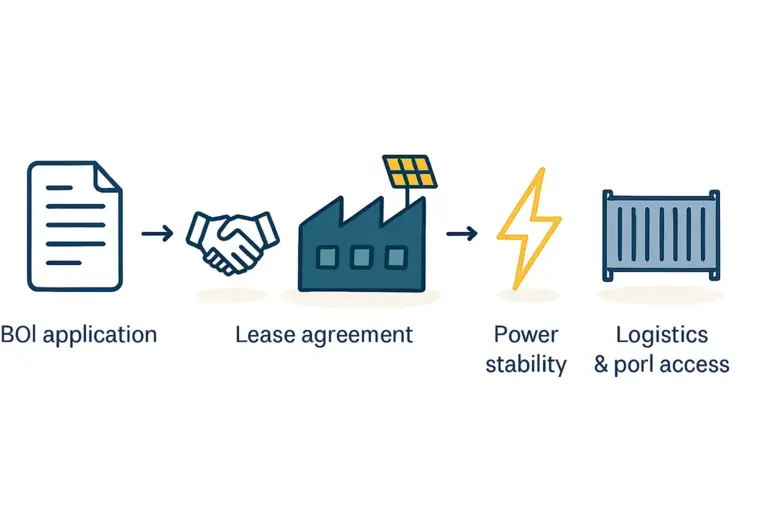
An ambitious entrepreneur envisions a state-of-the-art solar module factory. He downloads a generic financial model, plugs in standard international figures for construction, labor, and utilities, and the initial numbers look promising. Months later, during the implementation phase, costs begin to spiral.
Local construction materials are more expensive than anticipated, skilled labor commands a higher salary, and industrial electricity tariffs are far more complex than a single per-kilowatt-hour figure. Suddenly, the project’s viability is in question.
This scenario is a common pitfall. For investors considering a 20–50 MW solar module manufacturing facility in Sri Lanka, a robust financial model is the cornerstone of a successful venture, yet its accuracy depends entirely on the quality of its inputs. Relying on global averages is a significant risk; success lies in understanding and integrating the economic realities of the local market.
Why Generic Financial Models Can Mislead Investors in Sri Lanka
A financial model is more than a spreadsheet—it’s a strategic tool that simulates the financial future of a business. When tailored to a specific market like Sri Lanka, it provides a realistic projection of profitability, cash flow, and return on investment.
A generic model often fails because it overlooks critical local variables:
- Cost of Construction: Varies significantly based on local material costs, labor rates, and building codes.
- Utility Tariffs: Industrial electricity rates are tiered and can differ based on consumption levels and connection type.
- Labor Market: The availability and cost of skilled technicians and engineers are unique to the national context.
- Logistics and Taxes: Import duties on raw materials and machinery, coupled with inland transport costs, can substantially impact the budget.
- Financing Conditions: Local interest rates and the availability of industrial loans are fundamental to calculating the cost of capital.
Building an accurate forecast means moving beyond international benchmarks to conduct detailed, on-the-ground research.

Capital Expenditure (CAPEX): Grounding Your Initial Investment in Local Reality
The initial investment, or CAPEX, covers all one-time costs required to establish the factory. While the core machinery of a turnkey solar manufacturing line may have international pricing, the surrounding infrastructure costs are distinctly local.
Building and Civil Works
The physical structure of your factory is a major cost component that a generic per-square-meter estimate cannot capture. In Sri Lanka, factors like land acquisition costs in designated industrial zones and specific construction expenses must be carefully budgeted.
For context, data from the Ceylon Electricity Board (CEB) on ground-mount solar farm projects indicates that civil works can range from LKR 100-120 million per MW. While a factory’s construction needs are different, this figure illustrates the scale of local construction costs and highlights the need to get quotes from reputable local contractors who understand regional material prices and labor.
Machinery Installation and Logistics
The cost of equipment extends beyond its purchase price. Your budget must also include:
- Import Duties and Taxes: While the Board of Investment (BOI) of Sri Lanka offers customs duty exemptions for qualifying renewable energy projects, it is essential to confirm eligibility and procedural requirements.
- Inland Transportation: The cost of moving heavy machinery from the Port of Colombo to your factory site must be accurately calculated.
- Installation and Commissioning: This may involve costs for both international specialists from the equipment supplier and local engineering support teams.

Operational Expenditure (OPEX): The Day-to-Day Costs of Manufacturing
Once the factory is operational, its profitability will hinge on how efficiently it manages recurring costs, or OPEX.
Utility Costs: A Critical Variable
Energy is one of the most significant operational costs for a solar module factory. The CEB’s industrial tariff structure is tiered, meaning the price per kilowatt-hour (kWh) changes with consumption. A medium-scale factory will likely fall under the I-2 or I-3 industrial categories with a medium-voltage supply.
Recent tariffs indicate rates can be around LKR 25-30 per kWh during peak hours. Forecasting monthly electricity expenses accurately requires a detailed analysis of the factory’s projected load profile, not just a single, blended rate.
Labor Costs and Skill Availability
While Sri Lanka has a skilled workforce, its cost structure is specific to the local market. A financial model must incorporate realistic salary expectations for different roles. Based on current market data, typical monthly salary ranges are:
- Production Line Engineers: LKR 80,000 – 150,000
- Skilled Technicians: LKR 40,000 – 60,000
- General Labor / Operators: LKR 30,000 – 45,000
These figures are essential for accurately projecting payroll, a major component of OPEX.
Financing and Government Incentives: The Local Financial Landscape
A project’s feasibility often comes down to the cost of capital. In Sri Lanka, interest rates for industrial projects from major local institutions like the Bank of Ceylon or Commercial Bank typically range from 8% to 12% per annum. This rate is a critical input for calculating debt service payments in your financial model.
The Sri Lankan government, through the Board of Investment (BOI), also actively encourages investment in the renewable energy sector. These incentives can include:
- Corporate Tax Holidays: Periods of significantly reduced or zero corporate income tax.
- Customs Duty Exemptions: Waivers on duties for imported machinery and, in some cases, raw materials.
Factoring these potential incentives into a financial model can dramatically improve a project’s projected profitability and payback period.
The Importance of On-the-Ground Due Diligence
Based on experience from J.v.G. turnkey projects in emerging markets, no amount of desktop research can replace direct engagement with local stakeholders. To build a truly reliable financial model, it is crucial to:
- Consult Local Construction Firms: Obtain detailed quotes for factory construction.
- Engage with Logistics Providers: Get firm pricing for customs clearance and inland freight.
- Speak with Local Banks: Understand the specific terms and conditions for industrial project financing.
- Meet with the Board of Investment (BOI): Clarify the exact incentives your project qualifies for and the application process.
This diligence transforms a financial model from a theoretical exercise into a practical planning tool.
Frequently Asked Questions (FAQ)
How accurate can a pre-feasibility financial model be?
A well-researched model based on local data can be highly accurate, typically within a 10–15% margin of error. The goal isn’t to predict the future with absolute certainty but to create a realistic financial roadmap that accounts for the most significant variables in the Sri Lankan context.
What is the most commonly underestimated cost for new investors?
Working capital is often overlooked. Beyond the initial CAPEX, a business needs funds to cover the first few months of OPEX—including salaries, utilities, and raw material purchases—before revenue stabilizes. This should be a distinct line item in the financial plan.
How often should the financial model be updated?
A financial model is a living document. It should be updated whenever a major assumption changes—for example, after receiving a firm construction quote, a change in CEB electricity tariffs, or securing a financing agreement. Once the factory is operational, it should be reviewed at least quarterly.
Conclusion: From Abstract Model to Actionable Blueprint
For an entrepreneur in Sri Lanka, entering the solar manufacturing industry presents a significant opportunity. Translating that opportunity into a profitable reality, however, requires meticulous planning. By replacing generic assumptions with hard data sourced from the local market, a financial model becomes more than just a document—it becomes a reliable guide for decision-making.
A detailed, locally-tuned financial projection is the first step toward building a resilient and successful manufacturing operation. It provides the clarity and confidence needed to secure financing, manage resources effectively, and navigate the path to profitability. The logical next step is to integrate these financial insights into a comprehensive business plan.