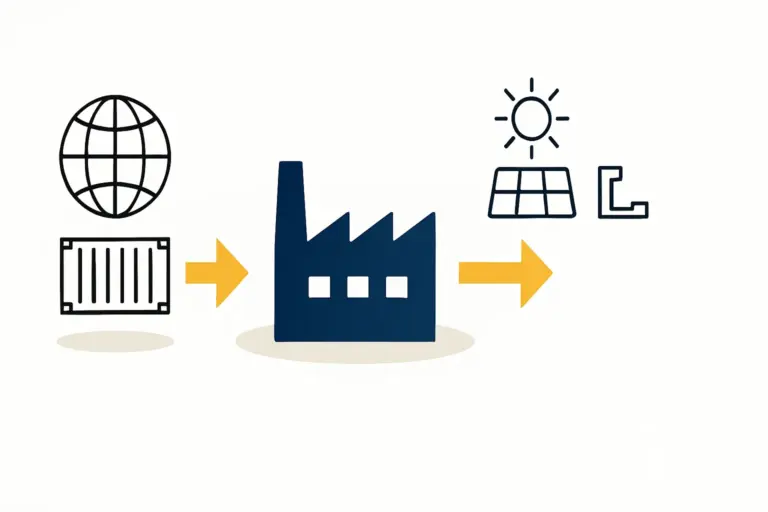
An entrepreneur’s vision for a new solar module factory often focuses on state-of-the-art machines, production targets, and market opportunities. The complex reality of logistics, however, is often the first significant hurdle.
Imagine millions of dollars of precision-engineered equipment arriving at a port, only to be delayed for weeks by incorrect paperwork or a lack of specialized transport. In Suriname, where infrastructure poses unique challenges, understanding the logistics of importation is not just an operational detail—it’s a critical component of a successful business plan.
This guide provides a foundational overview of the process, from navigating the Port of Paramaribo to managing inland transportation, to help ensure your equipment’s journey from the manufacturer to your factory floor is as efficient as possible.
The Gateway to Suriname: The Port of Paramaribo
Nearly all sea freight destined for Suriname passes through the Dr. Jules Sedney Port of Paramaribo. As the country’s primary container and general cargo terminal, its operations are central to any import-dependent venture. Understanding its capabilities and limitations is the first step in effective logistics planning.
As the country’s main economic lifeline, the port handles a significant volume of traffic and can experience periods of congestion. The efficiency of unloading, staging, and clearing cargo depends heavily on coordination between shipping lines, port operators like DP World Paramaribo, and local customs authorities. For an investor importing large, heavy crates containing sensitive [internal link: solar module manufacturing equipment], a delay of even a few days can result in significant demurrage charges and disrupt the project timeline.

It is also crucial to consider the port’s capacity to handle oversized or heavy-lift cargo. While standard containers are processed routinely, specialized equipment like a solar module laminator, which can weigh several tons, may require specific handling arrangements. Proactive communication with your freight forwarder is essential to ensure the port is prepared when your shipment arrives.
Navigating Customs and Import Duties
Once your shipment arrives, it must clear Surinamese customs. This process is often perceived as complex, but with proper preparation, it can be navigated smoothly. Failure to provide accurate and complete documentation is the most common cause of costly delays.
Essential Documentation
At a minimum, every shipment requires a standard set of documents to be cleared by the ‘Douane’ (Customs Authority of Suriname):
- Commercial Invoice: Details the transaction between the seller and buyer, including the value of the goods. This is used to calculate duties.
- Bill of Lading (B/L): The contract between the owner of the goods and the carrier. It serves as a receipt and title for the shipment.
- Packing List: An itemized list of the contents of each crate or container.
- Certificate of Origin: Verifies the country where the equipment was manufactured.
Drawing on insights from J.v.G. Technology’s global turnkey projects, we strongly advise having all documents reviewed by a local customs broker before the shipment leaves its port of origin. A minor discrepancy in the declared value or HS code (Harmonized System code) can lead to inspections and reassessments, freezing your assets at the port.
Tariffs and Duties
Industrial machinery for manufacturing purposes may be subject to import duties and other taxes. These rates can change based on government policy. A competent customs broker can provide an accurate estimate of the total costs, allowing you to budget accordingly. New investors often underestimate these ‘soft costs,’ which can impact the overall [internal link: investment required for a solar factory].
The Final Mile: Inland Transportation Challenges
Successfully clearing customs is only half the battle. The journey from the Port of Paramaribo to your designated factory site—the ‘final mile’—presents its own logistical hurdles, particularly if your facility is located outside the capital’s immediate vicinity.
Suriname’s road network can be challenging for heavy transport. While major arteries are generally maintained, secondary roads may be unpaved, narrow, or have bridges with strict weight limitations. Transporting a multi-ton, high-precision stringer machine requires specialized low-bed trucks, experienced drivers, and detailed route planning.
Key considerations for inland transport include:
- Route Surveys: A logistics partner should conduct a physical survey of the proposed route to identify potential obstacles like low bridges, tight turns, or poor road conditions.
- Specialized Equipment: Confirming the availability of suitable cranes for unloading at the factory site and trucks capable of handling the cargo’s weight and dimensions.
- Seasonal Conditions: The rainy season can render certain roads impassable for heavy vehicles, making timing a critical factor in your project plan.
These factors underscore the importance of integrating logistics with your [internal link: solar factory site selection] process. An ideal location must balance factors like labor availability and utility access with the practical feasibility of delivering heavy machinery.
Frequently Asked Questions (FAQ)
What are the typical import duties for industrial machinery in Suriname?
Import duties vary based on the specific type of machinery and current trade regulations. The best course is to consult with a licensed Surinamese customs broker who can provide up-to-date tariff information for the specific HS codes of your solar manufacturing equipment.
How long does the customs clearance process usually take?
With all documentation prepared correctly and submitted in advance, customs clearance can often be completed within three to seven business days. However, delays can occur due to random inspections, document discrepancies, or port congestion. It’s wise to factor a buffer of at least one to two weeks into your project timeline.
Is it necessary to hire a local logistics partner or customs broker?
For any serious industrial project, it is not just recommended—it’s practically essential. A local partner has invaluable knowledge of domestic regulations, established relationships with port and customs officials, and an understanding of the on-the-ground realities of inland transport. Their expertise helps prevent costly mistakes and delays.
What is the most common mistake first-time importers make?
The most frequent and costly error is assuming the logistics process is simple or can be managed remotely without local expertise. Underestimating the importance of precise documentation and failing to plan for the ‘final mile’ are common pitfalls that can jeopardize a project’s budget and schedule.
From Port to Production Floor
The journey of your solar manufacturing equipment is a critical path in your overall project plan. While the technical aspects of module production are paramount, the logistical chain that brings your machinery to the factory floor is the foundation upon which everything else is built. By treating logistics with the same strategic importance as equipment selection or factory design, an entrepreneur can mitigate significant risks and set a project in Suriname on a firm course for success.