Imagine the final, critical stage of solar module production. Inside a laminator, multiple layers of materials are bonded under precise heat and pressure. Suddenly, the power cuts out. The machine stops, the pressure releases, and the heating elements cool. The entire batch of nearly finished solar modules, representing thousands of dollars in materials and labor, is now scrap.
This scenario highlights a critical business risk for any entrepreneur considering industrial operations in regions with developing power grids. Tonga presents a unique combination of high ambition for renewable energy and tangible infrastructure challenges. For any business planning to establish a solar panel factory, understanding and mitigating the risks associated with the local grid is not just a technical detail—it is a cornerstone of a viable business plan.
This article examines the state of Tonga’s electrical grid and outlines strategies for designing a manufacturing operation that is resilient, productive, and profitable from day one.
Understanding Tonga’s Electrical Grid Landscape
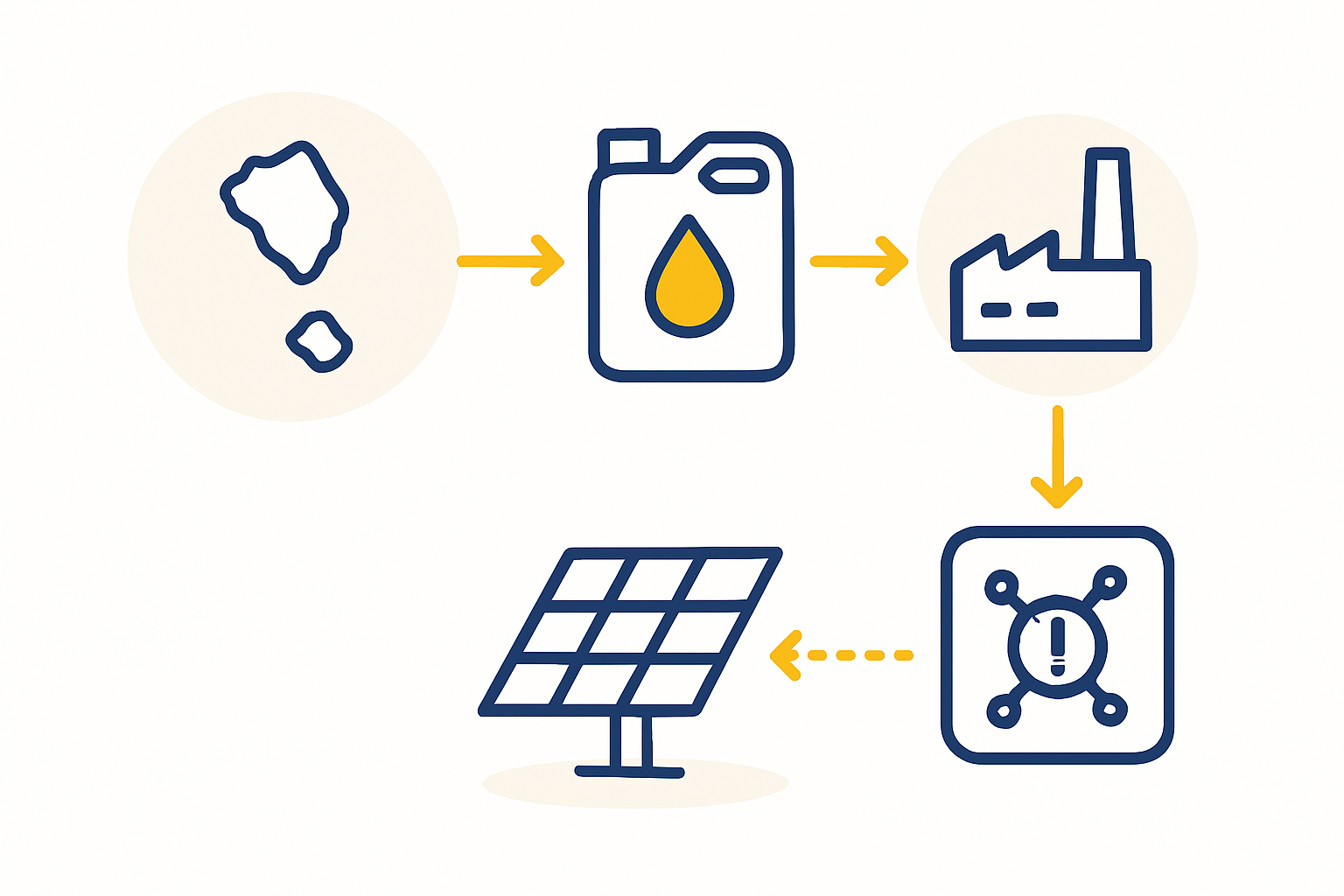
The Kingdom of Tonga’s power infrastructure, managed by Tonga Power Ltd (TPL), is in a period of significant transition. Historically, the grid has relied almost exclusively on diesel generators. On the main island of Tongatapu, for instance, the installed diesel generation capacity stands at 18.9 MW. While reliable to a degree, this system is characterized by high fuel costs and vulnerability to disruptions from both aging components and the severe weather events common in the Pacific.
To address this, the government has implemented the ambitious Tonga Energy Road Map (TERM), with a goal of achieving 70% renewable energy generation by 2025. This has led to the successful integration of solar power, including:
- A total of 13.2 MWp of solar capacity on Tongatapu.
- A 6 MW solar farm supported by a 6 MW Battery Energy Storage System (BESS).
- Plans for an additional 10 MW solar farm with a corresponding 10 MW BESS.
While this progress is commendable, the process of integrating intermittent renewable sources like solar into a legacy diesel-powered grid can introduce new forms of instability. Power fluctuations, frequency variations, and outages remain a daily reality for industrial consumers. Any plan for a sophisticated manufacturing facility must treat the grid as a partner to be supplemented, not a utility to be taken for granted.
The Business Impact of Grid Instability on Solar Manufacturing
For a solar panel factory, consistent, high-quality power is non-negotiable. The financial consequences of grid failures extend far beyond a few hours of lost productivity.
Production Halts and Material Waste
The solar panel manufacturing process involves several stages that are highly sensitive to power interruptions. A sudden stop can ruin all work-in-progress materials within a machine.
- Stringers: These automated machines delicately solder solar cells together. An interruption can cause misalignments and breakage, scrapping valuable cells.
- Laminators: This heating and pressing cycle is irreversible. A power loss during the 15-20 minute cycle typically results in a complete loss of the modules inside.
- Testing Equipment: Electroluminescence (EL) testers and sun simulators require stable power to provide accurate quality-control readings.
Equipment Damage
Modern manufacturing equipment relies on sensitive electronics, control boards, and motors. Voltage sags (brownouts) or surges that can occur when power is restored can cause permanent damage, leading to expensive repairs and extended downtime.
Ready to make big Profits?
The solar Industry is Booming
WE HELP NEWCOMERS to the solar industry start their own solar module production line. Customers can make BIG PROFITS by selling modules and finding investors, without wasting money and time on things they don't need!
Financial and Reputational Costs
The cumulative effect of these issues is significant, encompassing the direct cost of wasted materials and idle labor, the expense of equipment repair, and the long-term reputational damage caused by delayed shipments and an inability to meet customer orders.
Strategic Solutions for Power Resilience in a Tongan Solar Factory
A successful factory in Tonga must be designed with energy independence in mind. The solution is not to operate completely off-grid, but to create an intelligent, hybrid power system that insulates critical operations from grid instability.
1. On-Site Power Generation and Storage
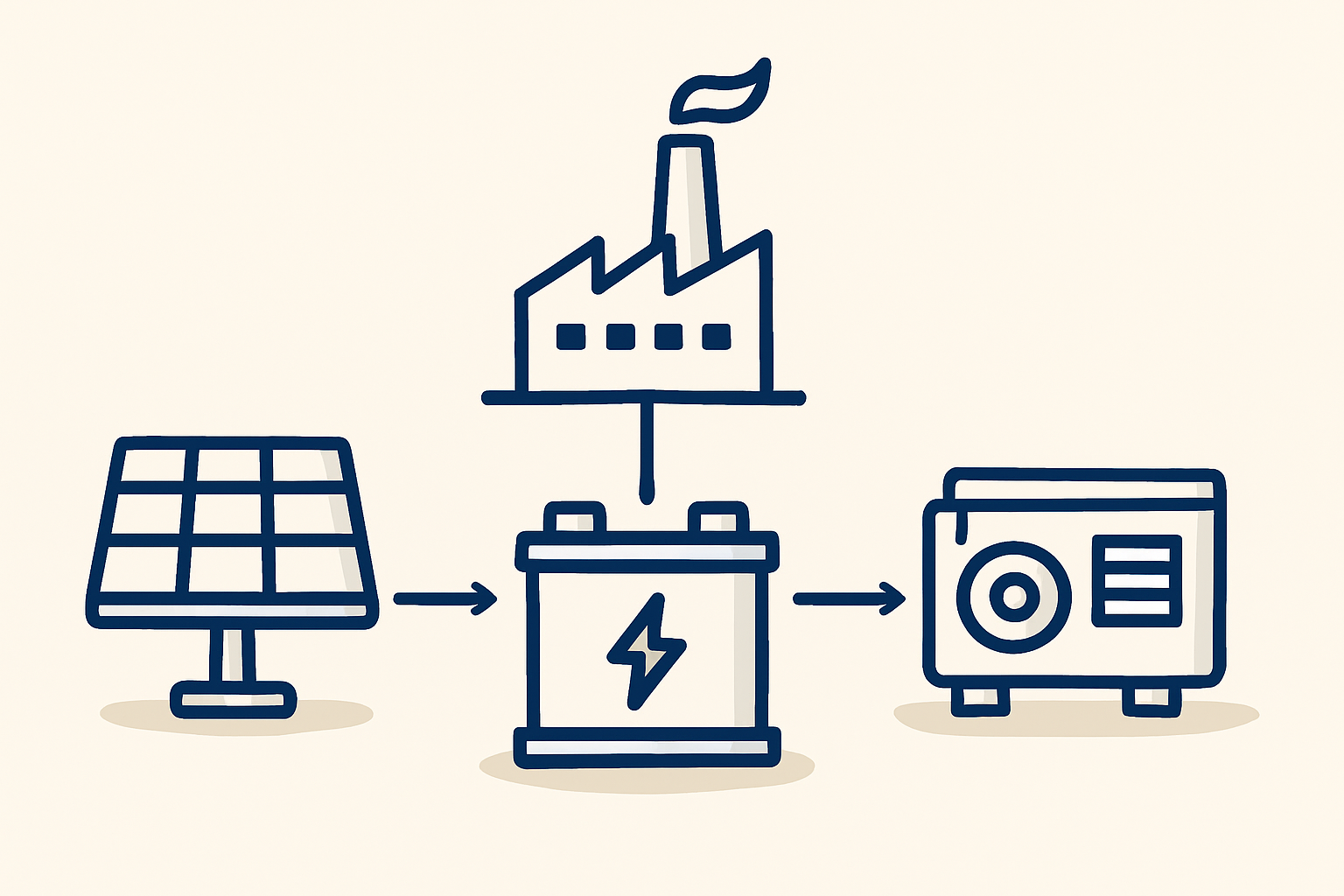
The most robust strategy is to develop a microgrid for the factory itself. This system combines on-site generation with storage, using the local grid as a primary or backup power source. The core components are:
- Rooftop or Ground-Mounted Solar Array: A dedicated solar installation on the factory’s roof or adjacent land can generate a significant portion of the facility’s daytime energy needs, drastically reducing electricity costs.
- Battery Energy Storage System (BESS): This is the heart of the resilience strategy. A BESS serves two functions: it stores excess solar energy for use when the sun isn’t shining, and more importantly, it acts as an uninterruptible power supply (UPS). When it detects a grid failure, it can switch over instantaneously, providing seamless power to critical machinery without any interruption.
- Intelligent Power Management System: This system automatically manages the flow of energy between the solar array, the BESS, the factory, and the grid, ensuring optimal use of resources and maximum uptime.
This integrated approach ensures that the factory’s most critical production processes continue seamlessly, even if the Tongan grid fails.
2. Tiered Power Backup Systems
Not all equipment requires the same level of power protection. A cost-effective approach involves segmenting the factory’s electrical loads into tiers:
- Tier 1 (Critical Loads): This includes the stringer, lay-up stations, laminator, and final testing equipment. These must be connected directly to the BESS/UPS system for instantaneous, no-break backup power.
- Tier 2 (Essential Loads): This may include compressed air systems, basic lighting, and server rooms. These could be supported by the BESS for a shorter duration or by a backup diesel generator that takes a few seconds to start.
- Tier 3 (Non-Essential Loads): This includes office air conditioning, general office equipment, and external lighting. These loads can be shed during a grid outage without impacting production.
3. Integration into Factory Design
Power resilience cannot be an afterthought; it must be a foundational element of the facility’s design. Initial factory designs must account for the space needed for a BESS, switchgear, and potentially a backup generator. The roof structure must also be assessed for its capacity to support a solar array.
This level of integrated planning is a standard component of well-designed turnkey solar module manufacturing lines, where the facility and equipment are planned as a single, cohesive system. Drawing on experience from J.v.G. Technology GmbH projects in similar markets, this foresight prevents costly retrofits and ensures the plant is designed for resilience from day one.
Frequently Asked Questions (FAQ)
Why not just use a large diesel generator as a backup?
A diesel generator alone is insufficient for sensitive manufacturing. There is a 5-10 second delay between a power outage and the generator reaching full power. In that short time, the laminator and stringer will have already failed, causing material loss. A BESS provides instantaneous power, bridging that critical gap. A generator can be used as a secondary backup for extended outages, but not as the primary protection for critical machines.
Is a solar-plus-storage system a large upfront investment?
It is a significant capital expenditure. However, it should be viewed as essential production infrastructure, much like the laminator itself. The return on investment comes from several key areas: drastically reduced operational costs from using self-generated solar power, the prevention of costly production losses and material waste, and the enhanced marketability of modules produced in a facility powered by clean energy.
Can the factory sell excess solar power back to the Tongan grid?
Technically, the factory can export power to the grid. However, its feasibility depends on the prevailing regulations and feed-in tariff policies set by Tonga Power Ltd. For initial business planning, the primary purpose of the on-site system should be to ensure operational self-sufficiency and lower electricity costs. The potential for selling power back to the grid can be considered a secondary, long-term opportunity.
Conclusion: Building a Resilient Future
Establishing a solar module factory in Tonga is a forward-thinking venture that aligns perfectly with the nation’s renewable energy goals. However, commercial success depends on confronting the practical realities of the local infrastructure. The electrical grid, in its current state of transition, poses a significant operational risk if not properly addressed.
By designing the factory around a core of energy resilience—integrating on-site solar, battery storage, and intelligent power management—an entrepreneur can transform this potential liability into a strength. Such a facility is not only protected from downtime but also benefits from lower energy costs and a stronger environmental profile. With careful planning and the right technical strategy, the challenges of Tonga’s grid are not a barrier, but simply a parameter around which to build a robust and successful enterprise.