Imagine an entire nation betting its future on solar energy. The Pacific Island state of Tuvalu aims for 100% renewable energy by 2030, but this ambition faces a formidable adversary: the environment itself. Constant salt spray, high humidity, and intense UV radiation create conditions that can ruin standard solar modules in a fraction of their expected lifespan.
This challenge isn’t unique to Tuvalu; it represents a significant and growing market for specialized, durable solar technology in coastal regions, island nations, and offshore installations worldwide. For entrepreneurs entering the solar module manufacturing business, the ability to produce modules that thrive in these harsh conditions is a critical competitive advantage. This isn’t about finding a cheap supplier, but mastering the technical specifications to build a superior, long-lasting product.
Why Standard Solar Modules Corrode in Coastal Regions
A typical solar module is engineered for durability, but its design assumes a standard continental climate. When placed in a marine environment, several key components become vulnerable to salt mist corrosion.
Salt-laden moisture acts as an electrolyte, accelerating the electrochemical reactions that degrade materials. This degradation manifests in several ways:
-
Frame Degradation: The aluminum frame, typically protected by a thin anodized layer, begins to pit and corrode, weakening the module’s structural integrity.
-
Junction Box Failure: Moisture ingress into the junction box can corrode electrical contacts, leading to increased resistance, heat generation, and eventual power loss or complete failure.
-
Cell and Interconnector Corrosion: If moisture penetrates the module’s laminate through micro-cracks or poor edge sealing, it can corrode the delicate silver lines on the solar cells and the copper interconnecting ribbons, disrupting the flow of electricity.
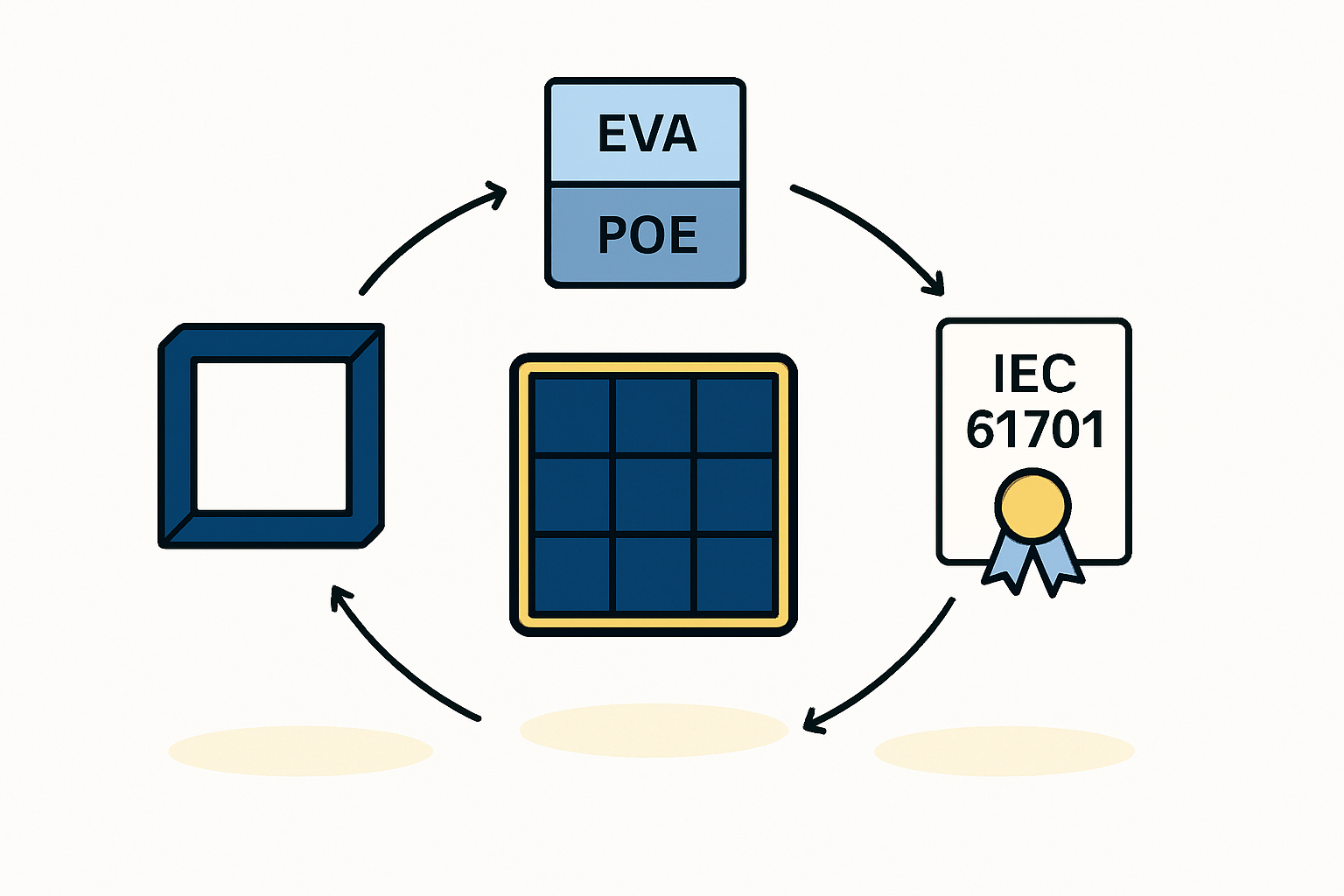
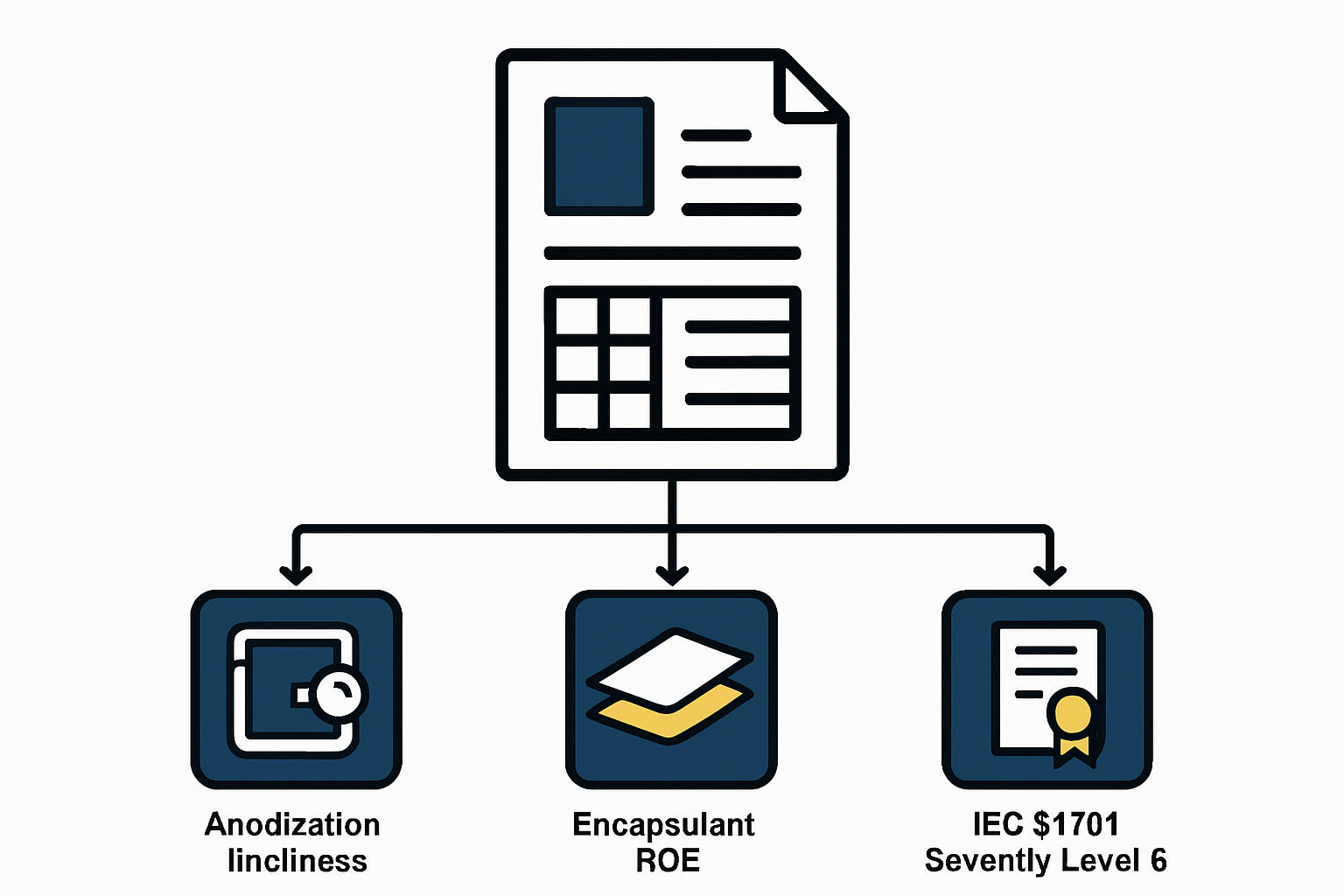
The industry standard for measuring resistance to these conditions is IEC 61701: Salt mist corrosion testing of photovoltaic (PV) modules. This certification involves subjecting modules to a saline fog in a controlled chamber for an extended period. The test has multiple severity levels, with Level 6 or higher typically required for equipment intended for marine deployment.
A Specialized Bill of Materials (BOM) for Marine Durability
To produce a module that can pass stringent salt mist testing, manufacturers must fundamentally rethink the materials they use. The foundation of this process is a carefully specified Bill of Materials (BOM) designed for longevity in corrosive atmospheres.
Ready to make big Profits?
The solar Industry is Booming
WE HELP NEWCOMERS to the solar industry start their own solar module production line. Customers can make BIG PROFITS by selling modules and finding investors, without wasting money and time on things they don't need!
The Frame: The First Line of Defense
The structural frame is the most exposed metallic component. While standard frames have an anodization layer of around 15 micrometers (μm), a marine-grade specification demands more.
-
Enhanced Anodization: The thickness of the protective anodized layer should be increased to 20-25 μm to provide a more robust barrier against salt.
-
Corrosion-Resistant Alloys: Using aluminum alloys with higher resistance to corrosion, such as those in the 5xxx or 6xxx series with specific surface treatments, can significantly extend the frame’s life.
-
Powder Coating: A high-quality powder coating applied over the aluminum offers an additional, resilient protective layer.
The Junction Box: Sealing the Electrical Core
The junction box is arguably the most critical component for preventing catastrophic failure. Its primary function is to protect the electrical connections from the elements.
-
IP Rating: A minimum Ingress Protection (IP) rating of IP67 is essential, and an IP68 rating is preferable, signifying that the enclosure is completely dust-tight and can withstand continuous immersion in water.
-
Material Quality: High-grade, UV-stabilized plastics (like PPO/PPE) are crucial to resist degradation and cracking.
-
Potting Compound: The entire interior of the junction box should be filled with a high-quality silicone or epoxy potting compound, leaving no air gaps where moisture could condense.
Encapsulants and Backsheets: Protecting the Cells
The solar cells themselves are sealed within a laminate, protected by an encapsulant and a backsheet. In a humid, saline environment, the choice of these materials is vital to prevent delamination and moisture ingress.
-
Encapsulant: While Ethylene Vinyl Acetate (EVA) is the industry standard, Polyolefin Elastomer (POE) offers superior resistance to moisture penetration (a lower Water Vapor Transmission Rate) and is less prone to hydrolysis, a chemical breakdown caused by water.
-
Backsheet: A standard PET-based backsheet can degrade under combined UV and moisture stress. A better choice is a multi-layer backsheet using hydrolysis-resistant materials like PVDF (Tedlar®) or specialized coatings that act as an impermeable barrier.
Design and Process Modifications in Manufacturing
Beyond the BOM, the assembly process itself must be adapted. A premium material can be rendered ineffective by a flaw in manufacturing.
-
Edge Sealing: An edge sealant applied after lamination provides an extra barrier, preventing moisture from creeping in from the sides of the module laminate.
-
Lamination Process Control: Precise control over temperature and pressure during the lamination cycle is critical for ensuring a void-free bond between all layers and eliminating potential pockets for moisture accumulation.
-
Quality Control: Rigorous quality checks, such as enhanced electroluminescence (EL) testing before and after lamination, can identify micro-cracks in cells that could become future entry points for moisture.
From Niche Requirement to Market Opportunity
The Pacific Islands are a proving ground for this advanced solar technology, and the lessons learned in these demanding environments are directly applicable to a much larger global market. Every coastal city, port facility, desalination plant, and offshore platform requires solar modules that can withstand salt mist.
By developing the capability to manufacture modules certified to IEC 61701 (Severity 6 or higher), a new manufacturer isn’t just building a product; they are creating a high-value solution for a market segment that standard, mass-produced panels cannot serve. This specialization can command premium pricing and build a reputation for quality and reliability. Based on experience from J.v.G. turnkey projects, clients who invest in these capabilities often secure contracts with government agencies, utilities, and industrial partners that prioritize long-term performance over minimal upfront cost.
Frequently Asked Questions (FAQ)
What is the primary difference between standard and salt mist-resistant modules?
The primary difference is the selection of materials for the Bill of Materials (BOM) and specific controls in the manufacturing process. Salt mist-resistant modules use corrosion-resistant frames, junction boxes with a high IP67/68 rating, and specialized encapsulants (like POE) and backsheets for superior moisture protection.
How much more does a salt mist-resistant module typically cost to produce?
The cost increase can vary but is generally 10-20% higher than a standard module. This premium comes from the higher cost of specialized components such as POE encapsulant, high-grade backsheets, and thicker frame anodization. However, the increased production cost is often justified by the module’s significantly longer operational life and reliability in harsh environments, leading to a much lower Levelized Cost of Energy (LCOE).
Is IEC 61701 certification mandatory for all coastal projects?
While not always legally mandatory, it is increasingly becoming a standard requirement in project tenders for coastal and offshore installations. Project financiers and insurance companies often demand this IEC certification to mitigate risk and ensure the long-term viability of their investment. A manufacturer without this certification will find it difficult to compete for high-value projects in these markets.
Can any solar module factory produce these specialized modules?
In principle, yes, but doing so requires a deliberate focus on sourcing the right materials and adapting quality control processes. It isn’t simply a matter of swapping one component for another. Manufacturers need a structured approach to validate suppliers, adjust machine parameters (e.g., for lamination), and implement rigorous testing protocols to ensure the final product meets the required standards.
Next Steps in Your Planning Journey
Understanding the technical requirements for manufacturing salt mist-resistant modules is the first step toward addressing a valuable and underserved market. The challenge lies not in a single component, but in the holistic integration of the right materials, processes, and quality controls.
For entrepreneurs and business professionals planning to enter this sector, a deep understanding of these nuances is essential for developing a sound business plan and a competitive product. A structured educational resource, such as the e-courses from pvknowhow.com, can provide a clear roadmap for navigating these technical and business decisions.