Establishing a solar module manufacturing facility in a location like Tuvalu presents a unique opportunity—to create not just a source of renewable energy, but a foundation for long-term economic resilience. Yet, even the most advanced machinery is only as effective as the team operating it. For investors, the central question is not merely, ‘Can we build a factory?’ but rather, ‘How do we build a skilled local workforce capable of running it to international standards?’
This question is especially critical for a Small Island Developing State (SIDS), where the local labor pool may lack direct industrial experience. The success of the entire enterprise hinges on a strategic approach to recruitment, training, and knowledge transfer. This article lays out a practical framework for developing a self-sufficient, highly skilled local team for a solar manufacturing plant in Tuvalu.
Understanding the Unique Labor Landscape of Tuvalu
Any workforce development strategy must begin with a clear understanding of the local context. Tuvalu presents a distinct set of challenges and advantages that must be factored into planning.
A closer look at the local environment reveals several key points for investors:
- Small and Dispersed Population: With a relatively small population spread across several atolls, the talent pool is inherently limited. This requires a highly efficient and targeted recruitment process.
- Limited Industrial Precedent: The local economy is not heavily industrialized, so few candidates will have prior experience in a factory setting. Training must therefore begin with foundational concepts of industrial safety, process flow, and quality control.
- Potential for ‘Brain Drain’: Like many island nations, retaining skilled talent can be a challenge. Creating competitive, meaningful, and long-term employment is crucial to building a stable workforce.
Yet, these challenges are balanced by significant strengths:
- Strong Foundational Education: The country’s high literacy rate provides a solid base for technical instruction.
- Existing Vocational Infrastructure: Institutions like the Tuvalu Maritime Training Institute (TMTI) demonstrate a capacity for specialized vocational training, offering a model and potential partner for developing a solar-specific curriculum.
- Governmental Alignment: The government’s focus on renewable energy and climate resilience creates a supportive environment for initiatives that foster green jobs and energy independence.

A Phased Approach to Workforce Development
Building a competent local team is not a single event but a structured process. Experience from J.v.G. Technology GmbH turnkey projects shows that a three-phase approach is most effective.
Phase 1: Strategic Recruitment and Talent Identification
The initial goal is to identify individuals with the right aptitude, not necessarily direct experience. In a context like Tuvalu, focusing on transferable skills and inherent potential is key.
Collaboration with local community leaders and educational institutions is essential for outreach. The ideal candidate profile may include individuals with backgrounds in mechanics, electronics repair, or other trades requiring manual dexterity and attention to detail. The recruitment process should assess problem-solving skills, a methodical approach to tasks, and a commitment to quality. This upfront planning for labor is also a critical component when calculating overall solar factory investment costs, as it influences both operational expenditures and the initial training budget.
Phase 2: Foundational Technical Training
Once the core team is recruited, the next step is a comprehensive foundational training program. Taking place before the main production equipment is fully operational, this stage focuses on classroom instruction and hands-on simulation.
Ready to make big Profits?
The solar Industry is Booming
WE HELP NEWCOMERS to the solar industry start their own solar module production line. Customers can make BIG PROFITS by selling modules and finding investors, without wasting money and time on things they don't need!
Key modules in this phase include:
- Introduction to Photovoltaics: Understanding how a solar cell becomes a finished module.
- Materials Science Basics: The properties of glass, EVA, backsheets, and solar cells.
- Industrial Safety Protocols: Establishing a culture of safety from day one.
- Quality Control Principles: Introducing the concept of ‘right first time’ and the cost of defects.
- Introduction to Process Flow: Mapping the journey of a module through the production line.
This phase ensures that when the machinery is commissioned, the team has the necessary background knowledge to understand their roles within the larger system.
Phase 3: Specialized Skill Development and Knowledge Transfer
This is the most critical phase, transforming general knowledge into specific operational skills. It runs alongside the installation and commissioning of the essential solar manufacturing machines. During this period, experienced engineers from a technical partner like J.v.G. work directly with local trainees on the actual production floor.
Here, the objective is not for foreign experts to run the line, but to systematically train their local successors. This involves:
- One-on-One Mentorship: Each local operator is paired with an expert for their specific station (e.g., stringer, laminator, tester).
- Standard Operating Procedure (SOP) Training: Trainees learn to follow documented procedures for consistent output.
- Basic Maintenance and Troubleshooting: Empowering the local team to handle routine issues independently.
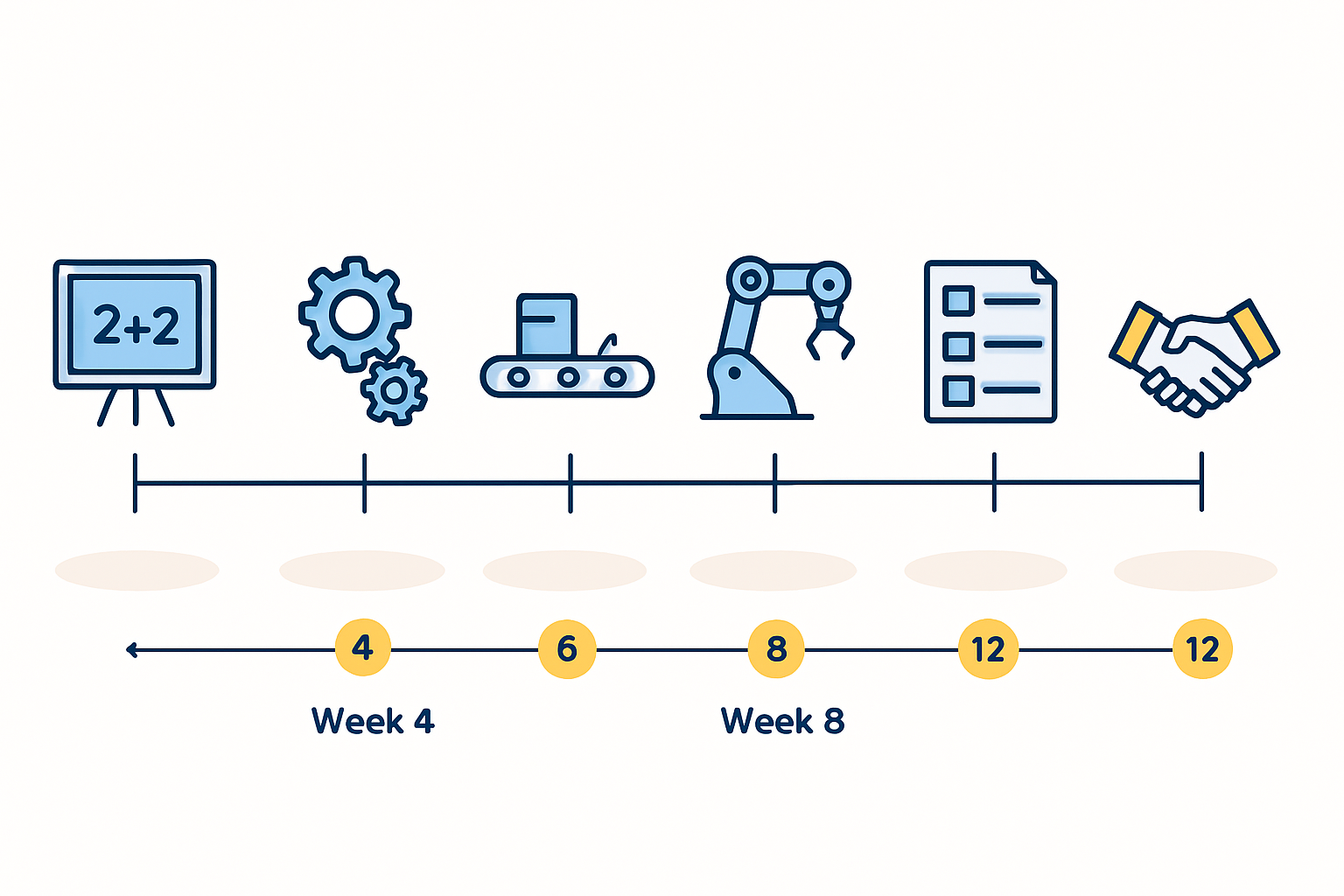
A typical 20–50 MW production line requires approximately 25 to 30 trained personnel across shifts. The ultimate goal of this phase is to make the local team fully autonomous in running daily operations within a defined timeframe, typically 6 to 12 months.
Creating a Culture of Quality and Continuous Improvement
Technical training alone is not enough. For a factory in Tuvalu to compete globally—or even serve regional markets effectively—it must produce modules that meet international certification standards. That requires a deeply embedded culture of quality.
Building this culture involves:
- Implementing a Quality Management System (QMS): From the outset, all processes should be documented and audited.
- Empowering Operators: Empowering team members with the authority and responsibility to stop the line if a quality issue is detected.
- Data-Driven Decisions: Using production data from testers and inspection stations to identify areas for improvement.
Establishing this framework is a core part of a comprehensive turnkey project, ensuring the facility is not just operational but capable of producing bankable, high-quality solar modules.
The Long-Term Vision: From Local Workforce to Regional Hub
Developing a skilled solar manufacturing workforce in Tuvalu is an investment that pays dividends far beyond the factory walls. It creates high-value employment, reduces reliance on imported energy, and provides a powerful response to the challenges of climate change.
Over time, a well-run Tuvaluan facility can become a center of excellence for photovoltaic technology in the Pacific, training technicians and engineers from neighboring island nations. This transforms the initial challenge of ‘brain drain’ into an opportunity for ‘brain gain,’ positioning Tuvalu as a leader in the renewable energy transition.
Frequently Asked Questions (FAQ)
How many employees are needed for a small-scale solar factory?
A semi-automated production line with an annual capacity of 20–50 MW typically requires a workforce of 25 to 30 employees, including operators, technicians, quality control staff, and administrative personnel, spread across one or two shifts.
What is the typical timeframe for training a new local team?
A comprehensive training program, from foundational instruction to full operational autonomy, generally takes between 6 and 12 months. The initial phases can be completed in two to three months, with the remainder of the time dedicated to on-the-job knowledge transfer from expert engineers.
Is prior experience in manufacturing necessary for trainees?
While helpful, it is not a prerequisite. The most important attributes are a strong work ethic, attention to detail, mechanical aptitude, and the ability to learn and follow systematic processes. Effective training programs are designed to build skills from the ground up.
How can a company ensure knowledge is effectively transferred from foreign experts?
Success depends on a structured ‘train the trainer’ approach. The role of expatriate experts must be explicitly defined as one of mentorship and coaching, with clear milestones for handing over responsibilities to the local team. Documentation through Standard Operating Procedures (SOPs) is vital for consistency.
What role does government support play in workforce development?
Government support can be highly beneficial. This may include partnerships with local vocational training institutes, providing subsidies for trainee salaries, or streamlining visa processes for essential foreign technical experts during the initial knowledge-transfer phase.
Planning Your Next Steps
Building a skilled local workforce is a strategic pillar for the successful launch of any solar manufacturing facility. It demands careful planning, a structured approach, and a commitment to genuine knowledge transfer. This process transforms a capital investment in machinery into a sustainable, long-term asset for both the community and the business.
For entrepreneurs and investors, understanding the complete project lifecycle is essential. Exploring the components of a turnkey solar module production line provides a clearer picture of how workforce development integrates with equipment selection, factory layout, and certification processes.